Showing posts with label fiction. Show all posts

Sunday, 1 March 2015

Reading Journal #6: Catching Up


As predicted, I simply didn't have time to post during the week, and unfortunately I didn't get to visit many blogs either. By the time I have taught all day, attended meetings, got Giles home, cooked dinner, eaten dinner, given Giles his bath, put him to bed and sorted out everything for the next day, including planning and marking, I'm not in much shape for anything! Happily, one of the things I am in shape for is reading, so I've still been steadily going through books. Here's what I have read over the past two weeks or so:

Bad Pharma by Ben Goldacre is a non-fiction expose of the pharmaceutical industry and how trials, biased publications and access to doctors' training can lead to drugs being prescribed incorrectly, and patients not always getting what is the best for them. Prior to reading this, I had heard about the pharmaceutical industry in the USA, but had naively thought that we were more protected here in the UK, because we have the NHS and our medical system isn't for-profit. Goldacre quickly disabused me of this notion, pointing out how missing data, where nine unsuccessful trials could be buried and one successful one published, skews prescribing habits in all countries. It turns out that our regulators are no good at enforcing their own rules, that doctors can be paid to add their names to papers they did not write, and that drugs reps are allowed way too much sway over GPs. The single scariest fact in the book was that drugs are rarely if ever compared against the best available treatment, only against a placebo. This means we have no idea which drugs are the most effective for a whole host of common treatments.

Bad Pharma is well researched and it helps that Goldacre is a UK trained doctor, but at times his rhetoric was a bit over the top. I could have done without lots of the repeated anger, especially in a book as long as this one. It did however make me appreciate my own GP, who prescribes generic medications rather than the fancier branded ones that have the exact same ingredients, and who has explained this to me before prescribing. Bad Pharma covers an important topic and is well researched and written, so I would recommend it if you don't mind a bit of repeated anger on the part of the author.  3.5 out of 5

After non-fiction, I always need a bit of palate-cleansing fiction.  I've read White Teeth and On Beauty by Zadie Smith, and liked them both, so I decided it was time to pick up N-W. It tells the story of four Londoners from the same area - Leah, who is trying to avoid growing up and starting a family; Natalie, who has worked hard to leave her working class roots behind; Felix, who is trying to start again, and Nathan, who is angry.

Reviews of N-W seem to be very mixed, with readers tending to rank it lower than her other books. This is mainly due to the experimental writing style; parts of this novel are written in numbered sections, in fragments of sentences and in lists. Personally I loved that Smith had chosen to write like this, as she is definitely talented enough to pull it off.  The chaotic writing style matched the chaotic lives of the characters and I was hooked within a few pages. This book was challenging to read at times and the style didn't always work, but I found it thoroughly engrossing and a realistic portrait of London today.  3.5 out of 5.

And finally, an audio-book.  I was excited to start China Dolls by Lisa See, as See is one of my favourite historical fiction authors. Shanghai Girls in particular is up there with the best historical fiction I've read, and I've never read a bad book by her. Until now. China Dolls is the story of Ruby, Helen and Grace, who meet when they are auditioning to become dancers in a Chinese night-club in 1930s San Francisco. They soon become firm friends, and the narrative follows them through several decades, as they move through disappointments and traumatic times. Each is hiding a powerful secret.

To start with what I liked - I had no idea about the way 'Orientals' were treated in America at this time, and it was fascinating to learn about the 'Chop Suey Circuit' and the interment camps for American citizens of Japanese descendants during WW2. I liked the epic-ness of the story, how it covered many decades and events and gave a real sense of time passing. However, the three main characters were a major let-down. The only one I could ever really like was Grace, which wouldn't have been a problem if their storylines weren't so unbelievable.  Ruby, Helen and Grace kept on and on hurting each other, and their friendship seemed based only on jealousy and a common race. I just couldn't comprehend how they kept forgiving each other some pretty unforgivable things, and why they were so keen to hurt each other. It completely ruined what could have been an interesting novel, if only the portrayal of female friendship was more nuanced.  2 out of 5 stars.

So that's me almost up to date.  I've also finished The Bronte Myth by Lucasta Miller, but as it has led directly on to a reread of Jane Eyre, I'm going to save it for a joint post another time.  What have you been reading lately?

Friday, 20 February 2015

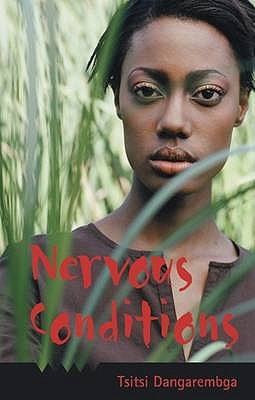
Nervous Conditions by Tsitsi Dangarembga

"The business of womanhood is a heavy burden.  How could it not be? Aren't we are the ones who bear children? When it is like that you can't just decide today I want to do this, tomorrow I want to do that, the next day I want to be educated!  When there are sacrifices to be made, you are the one who has to make them. And these things are not easy: you have to start learning them early, from a very early age."

Nervous Conditions is the coming of age story of fourteen year old Tambudzai, who lives in rural Zimbabwe but is able to attend a missionary school following the death of her older brother, Nhamo. Living with her aunt and uncle in a house on the mission grounds, Tambu is at first overwhelmed by their lifestyle. But the more she becomes accustomed to it, the more she starts to feel herself better than her beginnings. Tambu is determined to be educated and to provide for herself, but she keeps coming up against prejudices and barriers based on her gender, meaning that she has to battle for what she wants. Her story is contrasted with the stories of the complex women in her life; her Westernised cousin Nyasha, starting to examine the effects of colonisation, her uneducated mother, tied to a man she doesn't love by her children, and her mother's sister, forceful, outspoken and determined to do what is right for her and the people she loves.

Nervous Conditions is a wonderful book, and lots of that is to do with Tambu herself. As a narrator she is self-aware, honest, intelligent and full of complicated thoughts about the people around her. It helps that Dangarembga's writing is vivid, peppered with Shona vocabulary; reading Nervous Conditions is like being immersed in the Shona culture of the mid twentieth century.  This isn't a novel written with a Western audience in mind, and I liked that.

What I loved most about Nervous Conditions is that Dangarembga never over-simplifies the complex issues of gender, race and colonisation. Tambu is quick to realise the limitations placed on her by her gender, for example when her father states that it isn't worth educating her, as she will only get married and belong to another family.  Tambu also notes the powerlessness of her mother in the family, and the negative effect of her many pregnancies, but Dangarembga also writes about powerful Shona women, who are uneducated, but still refuse to accept gender boundaries. And the same is true of race and colonisation - Tambu views a Western education and lifestyle as her ticket to happiness, but her cousin Nyasha, who has actually lived in England for a spell, is torn between her conflicting identities and feels isolated from her Shona heritage. The portrait of both of these issues is complicated, many-layered and realistic,

To be honest, the only thing I didn't like about Nervous Conditions was the cover, which I think looks too cheaply made for the quality of the book. Although this book is set in a specific place and time period, it's coming of age theme is universal and it's one I would highly recommend.

Source: Library
First Published: 1988
Edition Read: Ayebia Clark
Score: 5 out of 5


Project 1001 Books: Book 2/80
My list of titles and reviews can be found here.

Saturday, 7 February 2015

Cannery Row by John Steinbeck

Cannery Row is the third John Steinbeck novel that I have read,  but it was completely unlike the other two.  Lacking what anyone could call a real plot, Cannery Row is best described as a series of vignettes that star the inhabitants of the Row, that work together to build up a vivid portrait of a particular place at a particular time.  Steinbeck takes as his subjects the misfits of society - prostitutes, drunks, artists and squatters, and he describes their lives and the everyday occurrences that happen in them.  Homeless Mack and his group of boys move into an abandoned building and set about improving it.  Lee Chong, the grocery owner, is called upon to accept payment in frogs rather than cash.  Doc, a lonely biologist, journeys to the coast to collect specimens.  And the prostitutes at Dora's place face a busy season.

I loved that Steinbeck set this novel among the 'low-life' inhabitants of the Monterey area, and that he infused it with such humanity and hope.  Despite the miserable surroundings the characters find themselves in, their lives are essentially happy.  They aren't caught up in consumerism and the desire for status, and they are able to appreciate some things about life that we can miss, such as how valuable simple acts of kindness can be.  Perhaps because they have found themselves at the bottom rung of society, they live without judgement and simply take people for who they are.  That's a message that we all need to be reminded of every now and again, that beauty and kindness can be found anywhere.

The sense of place in Cannery Row is fantastic.  Steinbeck's writing seemed more poetic in this novel, particularly when he was describing the quality of light over the row, or the sunrise over the sea.  It made the novel extremely visual, and by the end I felt as if I knew Cannery Row myself, as I could imagine it all so clearly.

My only complaint with the novel is that, in common with the other Steinbeck novels I have read, there was too much focus on the male characters.  The character of Doc was fascinating, and so was Mack, but I wanted to read more about Dora and the women who worked for her.  There's a great little section where Dora schedules the girls to deliver soup and company to families during a flu outbreak between clients, but it's never expanded on.  I wanted to know their thoughts and motivations, and experience their lives too.  Similarly, it's hinted that Lee Chong has a wife, daughters and daughters-in-law, but they are entirely absent from the novel.

Still, Cannery Row is a beautiful novel.  The writing and the characters combined to give me such a feeling of hope, that people anywhere can live their lives in a decent and caring way.  I'm looking forward to getting to the sequel, Sweet Thursday.

Source: Personal copy
First Published: 1945
Edition Read: Penguin Modern Classics, 2000
Score: 4.5 out of 5


The Classics Club: Book 33/72
My full list of titles and reviews can be found here.

Friday, 30 January 2015

Reading Journal #4: Two More for the End of January


I'm still reading books more quickly than I can review them, which is a shame as both of these titles deserve full reviews.  First up is Ann Patchett's State of Wonder, which I've been meaning to read since it was short-listed for the Orange Prize in 2012.  The story opens with Marina, a pharmacologist for a large drugs company, learning about the death of her colleague Anders in the Amazon rainforest.   Anders was checking up on the progress of the mysterious Dr Swenson, who had claimed to find a tribe where the women bear children right up until their death, and who was developing a drug to enable Western women to do the same.  Marina is given the task of finding out what happened to Anders, and of completing his assignment, and Patchett follows her into the rainforest, where she doesn't find what she is expecting to.

Patchett touches on a lot of big themes in State of Wonder, including race, colonisation, research ethics, the agendas of pharmaceutical companies and the decision of when to have children. However, she also combines this with a fast paced and interesting plot, which is surely the best of both worlds.  I enjoyed the character of Dr Swenson, who was full of contradictions, and Marina's personal growth was well done. Patchett's writing was lovely too, especially in the section where Marina has to inform Anders' wife of his death. My only complaint is that the final section moved way too quickly, with too many plot points resolving themselves in a way that seemed a bit too coincidental to be true. Reading State of Wonder was an enjoyable experience and I'm looking forward to picking up Bel Canto now.  4 out of 5.


Next I picked up an essay collection from the library.  Where I'm Reading From was a random pick from the shelves; I'd never heard of Parks before but I'm always susceptible to books about books (and pretty covers), so I was keen to give this one a go.  Where I'm Reading From contains 37 essays divided into four sections, covering world literature, bookish issues, being a writer and translated fiction. Inevitably, I enjoyed some essays more than others.  For example, I enjoyed Parks' thoughts on e-books, that in a sense they are a truer reading experience as you get the text of the book without the distractions of covers or publisher decisions, and there isn't the impulse to acquire them as they look good on your shelves, or because they make you look 'well read'.  It's not an opinion I agree with, as I think there is more to physical books than Parks gives them credit for, but it was still interesting to read.

One of Parks' main arguments throughout the collection is that 'world literature' is leading to everything becoming too similar, with the variety of local experiences being lost.  He quotes authors who make decisions based on the fact that their work will be translated into English, if they aren't writing in English themselves.  Characters with complicated names are avoided, and local customs are either left out completely or over-explained.  Authors paint a picture of their country that they think will satisfy the West, as so much emphasis is now placed on global sales and translation rights as a mark of author status.  Parks argues that this means that lots of the variety and richness of fiction rooted in a particular culture is being lost.  Again, I'm not sure that I agree, but it's something I had never thought about before.

Whilst Where I'm Reading From was definitely thought provoking, I found it too repetitive.  Lots of the essays basically say the same thing, just from a slightly different angle, and this made the collection feel over-long.  I enjoyed mentally debating with Parks, but think Where I'm Reading From would have been a lot stronger if it was shorter.  3 out of 5.

Wednesday, 21 January 2015

Reading Journal #3: A Bumper Reading Month


This month, I am in love with reading again.  I always enjoy reading, but sometimes I get into a phase where I want to spend every free minute lost in a book, and happily that's where I am now.  I'm reading during Giles' naps and all evening after he has gone to bed, and I'm simply loving it.  What's more, I'm picking up some fantastic books too.

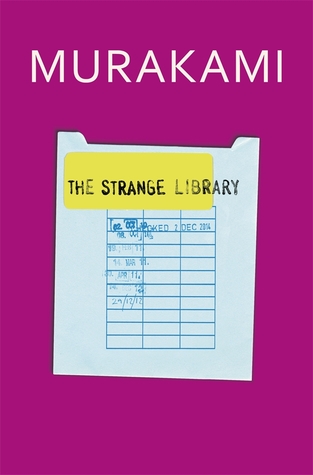
The first book I have to write about is Haruki Murakami's novella, The Strange Library.  I've read one other Murakami book, Norwegian Wood, and whilst I thought it was OK, I was disappointed to find out that it's one of his straightest novels, lacking in the surreal and magical elements that he is more famous for.  The Strange Library seemed like a good way of getting to grips with his more usual style.  Told with words and pictures, it's about a young boy who wanders into a library one day, as he wants to find out how taxes were collected in the Ottoman Empire.  He is directed to a special 'reading room' in an underground maze, and here he is imprisoned with a sheep-man and a girl that only he can see.

The Strange Library isn't really much of a story, and I read it in under an hour, but it had a beautifully haunting quality about it, a bit like a fairy tale.  I'm sure there is some deeper meaning to all of the strangeness, to do with grief and obedience, but I was happy just to revel in it and enjoy the experience.  It helps that this is a truly beautiful book, and the images add a lot to the story.  Now that I've finished this one, I'm looking forward to exploring the more surreal side of Murakami, starting with The Elephant Vanishes, a collection of short stories I already own.   4 out of 5.

After finishing The Strange Library, I was in the mood for some non-fiction so I picked up Chinua Achebe's There Was A Country. Ever since reading Chimamanda Ngozi Adichie's excellent Half of a Yellow Sun a few years ago, I've wanted to learn more about the Biafran war, in which Biafra decided to declare itself independent of Nigeria.  Achebe was deeply involved in this part of history, being Biafran and acting as a Biafran envoy in countries all across the world, as well as living through the conflict.

There was a Country is a powerful book.  Achebe blends history, politics, memoir and poetry together to create a personal account of the time.  Starting from his childhood during the British Empire, Achebe gives a brief overview of Nigeria gaining independence, and the problems that came after, before launching into the Biafran war.  Achebe manages to impart a lot of information without it ever feeling dull, and the poems were haunting.  Whereas the actual text occasionally lacked emotional engagement, the poems more than made up for it.  Sometimes Achebe's straight-forward writing made the book all the more impacting, particularly when he was discussing the deliberate policy of starvation employed against the Biafrans, and the near-misses encountered by his family. My only complaint is that sometimes Achebe became too bogged down in names and individual events rather than showing the whole picture.  But the tone of regret, of Achebe's sadness at the lost opportunity Nigeria's independence represented, permeates the whole book and makes it devastating.  4 out of 5

After the heaviness of war and corruption, I turned the L.M. Montgomery's The Blue Castle, a novel I picked up on impulse from the library.  I have read and enjoyed Anne of Green Gables, so I was keen to read Montgomery's adult novel.  The heroine is Valancy, a twenty-nine year old woman who has been written off  as an old-maid.  Unquestioningly obedient, she has allowed her family to stifle her, and the only joy she has is escaping to a fantasy land, in which she lives in a magnificent blue castle.  But when she is told by a doctor that she only has a year to live, due to a heart condition, Valancy resolves to actually live.  Throwing off her fears, she sets out to experience as much as possible, and to do things that please her, of course scandalising her rather staid community.

The Blue Castle has a lot of comic moments and a perfectly swoon-worthy love story, but at heart it's a coming of age story, about finding yourself and having the courage to make your own choices in life.  I loved watching shy, obedient Valancy stand up for herself, and act according to her own personal values.  In a way, this book was ahead of it's time, what with Valancy moving out, getting a job to support herself, and even making her own marriage proposal.  The Blue Castle is a dream of a book, that made me smile, inspired me, and reminded me of the joys that life can bring.  5 out of 5.

Thursday, 15 January 2015

The Good Earth by Pearl Buck

The Good Earth opens on Wang Lung's wedding day.  As the son of a farmer, his only option is to marry O-lan, a slave working in the great house of the village.  Although they start off as strangers and with next to nothing, Wang Lung and O-lan make a good pair, making the most of their land and growing family.  When a famine strikes and the family are forced to flee to the city, it is O-lan's determination and luck that keep them alive, and even enables them to return to their farm much richer than before.  As Wang Lung starts to accumulate more land and become more than just a peasant farmer, his expectations start to alter the family dynamics.  He starts to view O-lan as too simple, too plain and not enough for him.  As his sons grow up with more security than Wang Lung thought possible, the family begins to change for ever.

I really enjoyed The Good Earth.  Although Buck isn't Chinese, she lived in China for the majority of her life, and she presents the customs and attitudes of the time without judgement or condescension.  In fact, she doesn't even stop the story to explain things that would have been self-evident to Wang Lung, such as foot binding and the role of women, and this makes the story stronger.  Buck doesn't impose any Western ideas or views on her Chinese characters, even when their attitudes will make Western readers uncomfortable.

For me, The Good Earth was all about O-lan.  Having suffered through her childhood and adolescence, she is ready to live a quiet life with Wang Lung and devote herself to their family.  She suffers constantly throughout the book and yet is always thought of last.  Although Wang Lung does come to respect her in some way, for most of the book he ignores her presence, does not appreciate all that she does, and he is never able to love her.  When she returns to work the fields after literally just giving birth, he accepts this as what she should do.  O-lan made me wonder how many women there are like this in the world, forced by custom and attitudes to do everything for their family, never getting any reward or potential for personal growth, essentially giving up their own lives.  O-lan had so much inside her, but Wang Lung never thought to find out who she really was.

Another thing that struck me whilst reading The Good Earth was the parallels with Dickens' Great Expectations (this may sound strange, but bear with me).  Like Pip, Wang Lung starts to think of himself as grand, and therefore deserving things according to his new station.  A more attractive wife. Sons that are scholars rather than farmers.  Many rooms to their house.  Tenants that defer to him and treat him with respect.  As in Great Expectations, this can only end in misery for Wang Lung, something that is perfectly summed up in the last scene of the novel, which coincidentally was one of the strongest endings I've read in a long time.

I would definitely recommend The Good Earth.  I had my reservations about a book narrated by Chinese characters written by a Westerner, but these were unfounded.  The Good Earth is very well written with memorable characters, and I can't wait to read more of Buck's work.

Source: Personal copy
First Published: 1931
Edition Read: Simon & Schuster, 2005
Score: 5 out of 5


The Classics Club: Book 32/72
My list of titles can be found here.

Wednesday, 7 January 2015

World War Z by Max Brooks

World War Z is about a zombie apocalypse, but rather than being told as a narrative, Brooks has instead written a faux-history book. In this world, humanity has only just come out of a devastating global war with zombies, and the 'author' is someone who has worked on a UN report into the war, examining the spread of and human response to the zombies.  Upon being instructed to leave everything personal out of the final report, he decides to use his material to make a popular history book.  And thus we get World War Z, a collection of interviews with the movers and shakers of the war, covering the initial outbreak in China through to the post-war reconstruction efforts.

I really wanted to like World War Z.  It was a favourite with my husband, and I think the premise of the novel is very clever.  I like the idea of it being a history book rather than a story, and it allows Brooks to bring in stories from people all around the world.  We get to be there when a doctor arrives on the scene of the first outbreak, when Israel decided to shut themselves off completely, when the bold decision was made to abandon parts and populations of whole countries, in order to save the few and avoid the total destruction of humanity.  I liked the descriptions of what it was like to face the zombies, and to be on the run from them.

Unfortunately, there were a few things that stopped me from enjoying World War Z.  Although it was a quick read and never hard to get through, it ultimately disappointed me.  The first problem was the lack of tension.  The 'history book' conceit of the novel means that you know that everyone who is narrating their account survives.  No matter how dangerous the situations they find themselves in, no matter how slim the chance of survival seems, you know they are going to survive, and this ruins it a bit.  Another issue was that all of the accounts were of people who made key decisions or were in key places.  Of course, that is who would make it into a history book if this were to happen, but I missed the run of the mill accounts of everyday people.  I can only think of one like this, and it's a shame there wasn't more.

However, the main problem I had with World War Z is that it was too focused on being technical and clever.  Brooks is very concerned with how the outbreak spread, the politics of the different countries and their reactions to it (and these were extremely stereotypical, another negative) and the military responses.  There are pages and pages of descriptions of weapons, and of arguments between different forces on effective responses and which weapons should be scrapped.  I can't deny that Brooks' scenario is plausible, and he has obviously thought everything through carefully, but I missed the emotional connection.  I didn't want to read about weapons and battle tactics, I wanted more human impact, more of the feelings that would come with your world being turned upside down. Perhaps diary entries of those that couldn't cope, or stories from families who had lost members could have been included, anything to make it more emotionally engaging.

Overall, the history book format is both the strength and weakness of World War Z.  It's a clever idea, and Brooks' scenarios are extremely plausible but it also completely destroys the tension and the emotional connection to the story.

Source: Personal copy
First Published: 2006
Score: 2.5 out of 5

Friday, 2 January 2015

Pride and Prejudice by Jane Austen


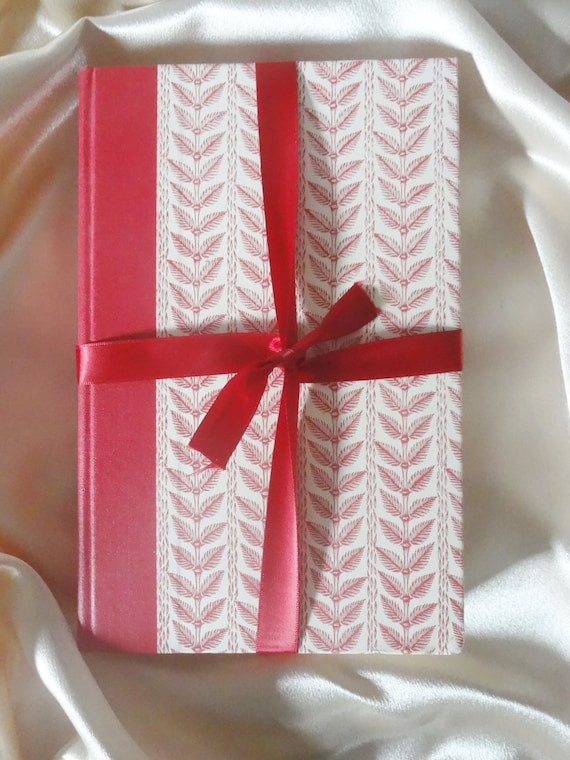
When starting this post, I was so excited to find an image of the edition of Pride and Prejudice that I have just finished.  You see, I was browsing one of my favourite second hand bookshops at the weekend when I came across a complete Folio Society set of Austens, all hardback and stunning and gorgeous, for an amazing price.  It was one of my best bookish finds in years, and I knew that as soon as I finished the book I was currently reading, I'd have to read an Austen. In the end, I chose Pride and Prejudice, it's a reread that's on my classics club list, and it felt fitting as it was my first Austen.

I'm sure that most people are familiar with the story of Elizabeth Bennet and her four sisters, who are unable to inherit their father's property and will therefore have to live in poverty unless they make sensible marriages.  But set against Elizabeth and her older sister Jane's chances are Mrs Bennet's lack of taste or social decorum, Mr Bennet's bluntness, and the silliness of their younger sister Lydia. Of course there are a lot of misunderstandings as Elizabeth navigates the marriage market, but in the end both she and her sister manage to marry for love, conveniently falling in love with men who have the fortune to support them.

Pride and Prejudice will always be a special book to me as it was the first Austen I was ever able to complete on my own.  My older sister was a huge Austen fan from her teens, and even studied her work at university, but I could just never get into any of her books.  I didn't understand the wit, the social commentary or the understatement of Austen's prose.  But finally (and only after watching the BBC mini-series), I was able to fully appreciate Pride and Prejudice and since then, I've not looked back.  The more Austen I read and re-read, the more I understand why she is as respected as she is.

On this read, I found myself thinking a lot about mistakes.  Both Jane and Lizzy make mistakes, Jane in thinking that Miss Bingley is a good friend, and Lizzy about the characters of Mr Darcy and Mr Wickham.  But both are honest about their mistakes and set about fixing them.  Although Lizzy in particular feels ashamed after discovering the truth, she is able to explain herself and move on. This is something I struggle with, as I tend to want to hide any mistakes I make and find it hard to forgive myself, let alone others.  Jane in particular was good at this - her kindness towards others was matched by her kindess towards herself, and this is something I can learn from.

Now that I have read more (but still not all) of Austen's major novels, Pride and Prejudice is no longer my favourite.  I prefer the flawed characters of Emma and particularly Catherine from Northanger Abbey.  But it's still a special book, one that I'm sure I will reread many times in the future, getting something new out of each read.


The Classics Club: Book 31/72
My list of titles and reviews can be found here.

Tuesday, 30 December 2014

Reading Journal #2: Race, Fairies and Epic Fantasy


With Tom on Christmas holidays for the past week and a bit, I've had more time to sink into some fantastic books.  Christmas makes me crave something magical from the fantasy genre, something full of wonder and delight and escapism.  One year I devoured the whole Inkheart series by Cornelia Funke, and it was just perfect for the season.

Aside from The Hobbit, which I have a full review of here, I also decided to pick up Jo Walton's Among Others this Christmas, which I've heard great things about.  It features one of the strongest protagonists I've come across in a long time, Morwenna Phelps, a fifteen year old girl in 1979 who has just run away from her mother, a dark witch, after the death of her twin.  She ends up at an English boarding school and the book is told in the form of a diary.  The real magic in Among Others is the way that Mori's love of reading is expressed.  Any book lover will relate to her descriptions of her feelings as she reads various books, and how books have become her solace in difficult times. When she has to be thankful for something as she prays, she is thankful for the interlibrary loan system.

I think Among Others would be even more special for someone who grew up reading science fiction.  I've read my fair share, but nowhere near as much as Mori, and I didn't catch all of the references.  But as a book lover, her enthusiasm got to me and I ended up writing a list of all the books she mentioned that I must get my hands on, Ursula Le Guin prominent among them (should I start with Earthsea?).  The main plot of the book follows Mori's attempts to use magic to stop her mother and her attempts to come to terms with the death of her sister, but the fantasy elements are written with a light touch.  In fact, I'm not even sure whether I believed Mori at all, or whether she just had an over-active imagination.  I treasured the book mostly as a coming of age story, in line with Dodie Smith's I Capture the Castle. Highly recommended.

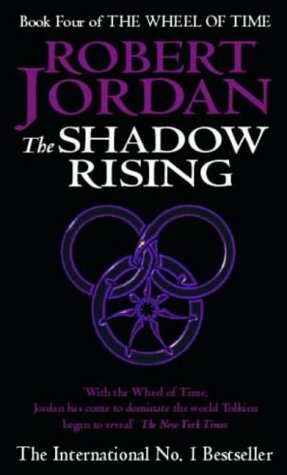
A lot of my December reading has been taken up with the fourth installment in Robert Jordan's epic Wheel of Time series, The Shadow Rising.  These are really immersive books and by now I know enough about the world and characters that reading them is just pure escapism.  As always, the writing was a bit meandering, and the way that the female characters are written leaves a lot to be desired, but I have so much fun reading them.  This volume was roughly 1000 pages, but it just flew by.  I loved visiting the Aiel Waste and finding out more about women who can channel (do magic) in the different societies of the world, and the varying ways they are treated.  I found the sections where Perrin returns to the Two Rivers, his homeland, to defend it rather boring, and I'm optimistic that he will feature less in the next volume, which I'm sure I will pick up before too long.

And now for something completely different - race relations in the Deep South.  Earlier in the month, I wrote a blog post about all the fantastic books on my kindle I have yet to get to, and Scottsboro got a lot of love in the comments.  And well deserved all of that love was.  It's based on the true case of a group of nine black boys arrested in Alabama in 1931, accused of raping two white girls, which they didn't.  One of the girls stubbornly sticks to her story, but the other keeps changing her statements, and it's soon clear to anyone with a brain that the boys are innocent.  But this is the Deep South in the 1930s, and the political powers in Alabama have no interest in freeing the boys - indeed, they think they have been remarkably fair by giving them a sham trial, rather than just lynching them on the spot.

The story is told mainly from the perspective of a female journalist from New York, who becomes part of the campaign to free the boys.  She is a great voice as she's remarkably perceptive on the subtle nuances of the different prejudices of those supporting and condemning the boys.  She points out that a lot of the support is for personal or political gain, observing that if the boys were to suddenly turn up in the middle of a New York party full of their 'friends', no one would know quite what to do with them.  We are also introduced to Ruby, one of the two girls who originally cried rape. Feldman deftly uses Ruby's poverty and life history to show why she lied, and why she would tell the truth.

In places, Scottsboro was a depressing read.  There's one point late in the novel where I had to set it aside for a minute, disgusted by the selfishness of humans in general, and how willing we as a society are to knowingly allow others to suffer for our gain.  Somehow, no one in this book is doing the right thing for the right motives, and it made for grim reading.  I take my hat off to Feldman's wonderful writing and perceptiveness, and this is surely an important book. I can't see I enjoyed all of it, but it had a powerful impact on me.

And that's my recent reading up to date.  At the moment, I'm in a bit of a classics mood, and I'm thinking of rereading Pride and Prejudice by Jane Austen over the next few days.  After that, I'm intending to look through my classics club list and pick a few more titles to immerse myself in. Happy reading in 2015!

Saturday, 27 December 2014

The Hobbit by J.R.R. Tolkein


I have a bit of a long history with The Hobbit. I tried (and failed) many times to read it as a child, but never got out of the Shire.  It was enough to make to decide that Tolkein was just not for me, but then I saw the Lord of the Rings films, loved the books on a second reading, and now I've come full circle and picked up The Hobbit again.  It's the story of Bilbo Baggins, a hobbit who accidentally gets caught up with a group of dwarves off to kill the dragon who is guarding the stolen treasure of their ancestors.  Along the way, Bilbo will learn a lot about himself.

The Hobbit was a surprising read for me, in that it didn't turn out in the way I expected it to at all. From the initial chapters, I had Thorin, the leader of the dwarves, pegged as the hero of the novel, and was imagining him smiting Smaug and generously sharing his treasure in the final chapters. But it wasn't like that at all, and the characterisations were surprisingly complex for a children's novel. Thorin is shown as brave, determined, and a good leader, but he is also greedy and blinded by his desire for Smaug's treasure.  Similarly, the Master of one of the towns is morally ambiguous too.

Really, The Hobbit is all about Bilbo.  Like most good children's books, it's main themes are centred around growing up and developing as a person.  Bilbo starts the novel as reluctant to leave his home, scared of the world around him, and overly dependent on Gandalf and the other dwarves. When Gandalf leaves the group around half-way through the story, Bilbo gets a chance to come into his own.  He starts making decisions, believing in himself, and in the end he emerges as one of the few characters untainted by greed for Smaug's treasure.  There are a lot of opportunities for him to learn to be resolute, and to never give up, even when the going gets tough.

The other main theme of the novel is money and greed.  We see good characters caught up in their desire to hoard the treasure, even when there is more than enough of it.  Thorin doesn't want to give any of it away, even though there is no way he could use or transport more than a small quantity of it. The Hobbit is very much focused on friendships, personal strength and doing the right thing, as opposed to acquiring money or possessions.  So it was perhaps a good read for the Christmas season!

I was surprised by how much I enjoyed The Hobbit, even more so than I did the  Lord of the Rings trilogy.  Perhaps because it is aimed at children, the adventure moves on at a brisk pace, and there is always something going on.  Highly recommended.

Source: Personal copy
Score: 4.5 out of 5


The Classics Club: Book 30/72
My list of titles and reviews can be found here.

Tuesday, 9 December 2014

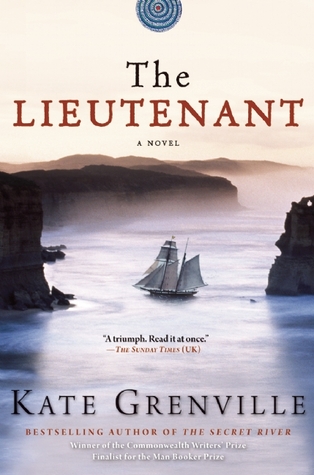
The Lieutenant by Kate Grenville

I picked up The Lieutenant because I thoroughly enjoyed Grenville's The Secret River, also about the colonisation of Australia.  Whereas The Secret River focused on a family deported after the father is convicted of theft, The Lieutenant takes as its subject Daniel Rooke, an outsider with a fascination for numbers and the stars.  He travels to New South Wales as a naval astronomer charged with charting a comet through the Southern Hemisphere.  On arrival, Daniel becomes fascinated by the language of the Aborigines and this leads to an unexpected friendship with a girl named Tagaran.  But he can not escape the fact that he is a representative of the British, and that he is compelled to follow orders or face trial.  The closer he becomes to Tagaran, the more the starts to view the Aborigines as equals, and the more he is conflicted by their treatment.  Eventually, Daniel will have to decide where his loyalties truly lie.

The Lieutenant was a quick read that dealt with some interesting issues.  Although I didn't enjoy it nearly as much as The Secret River, I appreciated Grenville's writing and how she approached big topics with a light touch.  The awakening of Daniel's conscience is gradual, and Grenville avoids any preaching.  The complexity of the Aboriginal characters establishes them as equals from the moment they are introduced, and Daniel, with his social awkwardness, is the only British character able to take them at face value.  He hasn't got the social skills to absorb stereotypes or prejudices, and his academic fascination with their language soon leads to a respect for the people.  Daniel is able to appreciate that their language and lifestyle is as complex as the British one, and therefore can not morally treat them as savages.  Sometimes it does take someone who is an outsider, who doesn't fit in, to see what should have been staring everybody in the face.

Although I liked the way Grenville wrote the Aboriginal characters, I would have liked to have seen more of them.  Their society was left largely as a mystery, and I would have liked it if Daniel had been able to interact with Tagaran more before being forced to make a big decision at the end of the novel.  I understand that Daniel is based on a real British astronomer, William Dawes, but I still think Grenville could have done more to really show that the British were disturbing a whole society.

On paper, The Lieutenant ticks all of the boxes of what I love reading about, but the reading experience somehow fell a little flat.  Daniel wasn't as compelling as the Thornhill family were in The Secret River, and I never felt any dramatic tension, as it was always clear what Daniel was going to end up doing.  Overall, I would recommend it, but you should start with The Secret River first.

Source: Personal copy
Score: 3.5 out of 5

Friday, 21 November 2014

Blogging Break Reads

Whilst I wasn't blogging over the last month or so, I was most definitely still reading.  Here are some quick thoughts on the titles I finished:

Rivers of London by Ben Aaronovitch

Peter Grant thinks he is headed for a dull life of police paperwork when he finds himself interviewing a ghost following a murder in central London.  This leads him to Chief Inspector Nightingale, the last wizard in England, and the person in charge of policing the parallel, magical London.  The number of gruesome murders across the city is increasing, and it's up to Grant and Nightingale to find out and apprehend the supernatural culprit.

I had high hopes going into this book, as it's the first of a very well regarded series, but I was disappointed.  I liked the urban fantasy atmosphere and the originality of the supernatural elements, but ultimately this book was too much crime, too little fantasy for me.  I wasn't interested in solving the crime alongside Peter and as a result the pages dragged.   This one has been donated to the charity shop, and I won't be continuing with the series.
2.5 out of 5


A Little History of Literature by John Sutherland

I love the Little History series, and this literature based volume did not disappoint.  Covering everything from Greek myths to the future of printed books, this book is divided into short, bite-sized chapters that give an overview of authors and trends from the Western canon.  There's also chapters dealing with the development and history of the publishing industry.

I studied science at university, so I was missing a general overview of the history of literature, and this book filled that gap nicely. It's perfect to dive in and out of, as each chapter only takes a few minutes to read. Although I would have liked to have seen more on non-Western literature, I loved this book as it inspired me to pick up more classics.  Highly recommended.
5 out of 5


The Impressionist by Hari Kunzru

Pran Nath is the son of an Indian woman and English man.  Throughout his life he experiences being a privileged son, a cast out, exploited in a backstreet brothel, a political pawn, a student at Oxford university and finally an anthropologist.  Pran is able to flit between these roles effortlessly, assuming new identities, but what are the consequences of lacking a true identity?

This book is truly epic in scale, covering three countries and a dazzling array of side characters.  It's also utterly engrossing, mainly for the minor characters and the settings, which are bought vividly to life.  I really enjoyed this for the story, but have a feeling I missed some of the deeper meanings involving post-colonialist identity.
4 out of 5


The Dragon Reborn by Robert Jordan

The third volume in Jordan's epic fantasy series, The Wheel of Time. This series is a bit of a guilty pleasure for me.  Objectively, I know there is lots to dislike about it - the repetitive descriptions, the fantasy clichés, the gender stereotypes, the unnecessary, pace-slowing detail - but I just can't help but find this series utterly compelling.  It's just wonderful escapism, especially now Jordan has broadened the world somewhat and introduced new places in this volume.

I wouldn't recommend this series to everyone, and I'm not even sure why I like it so much, but like it I do.

4 out of 5

Tuesday, 14 October 2014

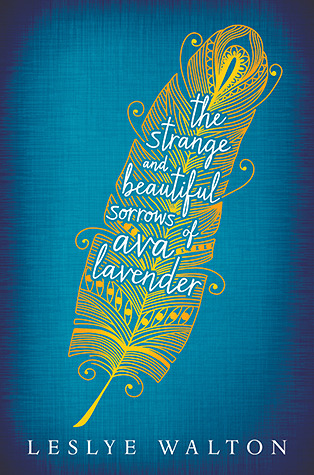
The Strange and Beautiful Sorrows of Ava Lavender by Leslye Walton

Ava Lavender is the daughter of a woman scorned in love and the granddaughter of a woman haunted by the ghosts of her past.  She also happens to have wings, which she was born with.  In The Strange and Beautiful Sorrows of Ava Lavender, Ava traces the history of the women in her family, and the ways in which love in all its forms has caused them pain.  Their stories lead naturally on to her own, as her wings make her the focal point of a dangerous obsession.

The Strange and Beautiful Sorrows of Ava Lavender is an unusual book that is hard to describe.  The thing I enjoyed most about it was the quirky tone and narrative voice.  Walton's world just hints at the magical, and at the fairy tale, a world in which wings, ghosts, children with different coloured eyes, and cakes infused with the feelings of the baker, are possible.  I love books with atmospheres like this - our normal world painted in vivid technicolour.  Ava Lavender is as a result a very visual book, and one that would be great turned into a film.

I mentioned above that this story is a bit like a fairy tale, and therefore there is a darker side lurking underneath the surface.  Emilienne and Viviane (Ava's mother and grandmother) are troubled by love in rather ordinary ways, but Ava really experiences the darker side of obsessive love.  The later sections of the novel deal with brutal events, which seem even harsher set against the imaginative setting. I found what happened to Ava to be problematic, not because I don't think violence against women shouldn't be written about, but because there was a glamour to the scene.  Ava's sorrows are beautiful, it's all in the title, and her attack and it's consequences are written about in the same, fairytale, beautiful-tragic way.  When really it's just tragic and there are fewer things in life that would feel less beautiful.  I'm sure this was completely unintentional, but it still bothered me.

I found that I connected with Emilienne and Viviane better than Ava herself, as Ava remained a bit of a mystery throughout the novel.  I particularly connected with Viviane's story, her years spent pining after a lost love that didn't really turn out to be a love after all.  Including all three women in the narrative was definitely a good decision.

On the whole, I did enjoy The Strange and Beautiful Sorrows of Ava Lavender.  The writing style and the magical elements worked fantastically together, and it was a pleasure to pick up.  Fans of Sarah Addison Allen will enjoy this one.

Source: From the publisher, in exchange for an honest review.
Published: 2014
Score: 3.5 out of 5

Thursday, 9 October 2014

Water for Elephants by Sara Gruen

Jacob Jankowski is a veterinary student about to sit his final exams when he receives the devastating news that his parents have been killed.  Desperate and unable to cope, he hitches a ride on a freight train that turns out to house the Benzini Brothers Most Spectacular Show on Earth.  The circus has fallen on hard times due to the Great Depression but Jacob's background ensures him a job as the circus vet.  Jacob is seduced by the exotic animals, glamour and romance of the circus life, but there are darker currents running underneath the sequins and glitter.  When he falls in love with married performer Marlena and the circus acquires Rosie the elephant, Jacob finds himself tested.

As always, I bought this book when it was surrounded by a lot of hype but then failed to read it in a timely manner.  I also failed to see the film, so I went into Water for Elephants with completely fresh eyes.  I was expecting a light, sentimental type read, and that's exactly what it was.  Even though Water for Elephants discusses some heavier themes such as animal cruelty, murder and the brutality of circus life, it does so in a Spielberg-esque way that left me in no doubt that things would be OK in the end.  It's like life without the sharp edges, and it makes for comfortable if not challenging reading.

My favourite element of Water for Elephants was the setting.  I'm not surprised this novel was turned into a film, as it's so visually evocative of both the time period and of the circus.  I could almost smell the popcorn and taste the excitement that the circus bought to the dreary towns it stopped in.  I also really enjoyed the character of Marlena, who had more guts than I initially took her to have.  The bits dealing with Rosie and the other animals made me want to try Gruen's novel Ape House, as I liked the way the animals were characters in themselves.

However, there were some flaws.  Jacob falls in love with a married woman, which could have made for some interesting complexity in the novel, but Gruen shies away from this by making her husband to be a bad guy.  This seemed a little too convenient for the plot.  As I mentioned above, there's never any doubt that things will end well for Jacob, and this takes away some of the tension.   Despite this, Water for Elephants is a really fun, escapist read.  I loved immersing myself in the world of the circus for a while.

Source: Personal copy
First Published: 2006
Edition Read: Two Roads, 2011
Score: 3.5 out of 5

Tuesday, 23 September 2014

The Bellwether Revivals by Benjamin Wood

Oscar is a care assistant working at a nursing home in Cambridge. Despite being very intelligent, his academic career was cut short and he has always dreamed of attending one of the famous colleges near by.  One night, he finds himself drawn into a concert by the haunting sound of the organ, and there he meets Iris Bellwether, a medical student at King's College.  Through his relationship with Iris, Oscar becomes part of a group of students revolving around Iris' brother Eden, a gifted musician.  Eden is charismatic, bizarre, brilliant and perhaps a little insane.  As Eden begins to develop strange and possibly dangerous theories about the power of his music, Iris reaches out to Oscar for help.  Is Eden a great genius, or will his arrogance and instability damage the group?

I should start this review by pointing out that I've never read The Secret History or Brideshead Revisited, although plenty of other reviewers have noted similarities to these titles.  I went into The Bellwether Revivals with fresh eyes and I found it a bit of a mixed bag.  There were parts I loved, and parts where the narrative seemed to drag a bit.  Mostly, I loved the setting and the characterisation of Eden.  I'll read pretty much anything set at Oxbridge or amongst privileged individuals (I know, I really do need to get to The Secret History). so I was guaranteed to love this part of the book, the exams and colleges, textbooks and bicycles, grand houses and wealthy parents.  Wood's Cambridge has a slightly gothic atmosphere as well, which only added to my enjoyment of the setting.

The characterisation of Eden was superb too.  Wood perfectly captures that kind of person who is either manically clever or completely insane.  Eden has a magnetic personality that draws other people to him and his charisma is almost a force.  I enjoyed all the little details about Eden, like his notebooks full of scrawling, his air of superiority towards Iris, and the crazed way he plays the organ.  Wood keeps plenty of ambiguity about Eden, so you're not quite sure whether he is what he says he is throughout the novel.  Although Eden was such a well developed character, some of the others felt flatter.   Oscar was a bit of a bright-boy-held-back-by-working-class-family stereotype, and some of Eden's friends (Jane and Marcus particularly) just seemed to be there to make up numbers.

My main issue with The Bellwether Revivals was one of pace.  The book opens and closes with the same dramatic event, but the middle section felt a bit heavy by comparison.  I was keen to keep reading to find out what was going to happen, and I enjoyed the big reveal at the end, but it felt like I had to wait a long time to get there.  I'm not sure what Oscar's favourite patient Dr Paulsen added to the narrative; I know he had to be there for the plot to work, but his sections could have been cut considerably.

On the whole, The Bellwether Revivals was a worthwhile read.  If you enjoy books with academic settings or mysteries, you're sure to like this one.

Source: Personal copy
First Published: 2012
Score: 3.5 out of 5

Friday, 12 September 2014

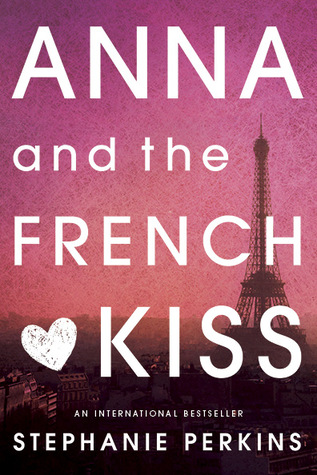
Anna and the French Kiss by Stephanie Perkins

I don't read much YA, but I would have to be living under a rock to not notice the massive success of this series.  With the third instalment, Isla and the Happily Ever After, recently published, I decided it was time to give Anna a go.  The basic story-line goes as follows - Anna is looking forward to starting her senior year and getting closer to her almost-boyfriend Toph when her father decides to send her to boarding school in Paris.  At first Anna is determined to hate being uprooted from her life in America, but she soon makes new friends.  One of these is Etienne St. Clair, who she finds herself developing feelings for despite him already being in a relationship.  As the year goes on, Anna and St. Clair have to deal with their conflicting feelings.

I can see why Anna and the French Kiss is so popular.  It's super fun to read and the romance between the two main characters is well written.  There's no insta-love here - Anna may be attracted to St. Clair initially, but we only see her fall in love as their friendship develops and they spend more time together.  At first they have an easy-going friendship, but as time goes on, they become closer and support each other through some major life events, and it was good to read a relationship grow in such a realistic way.  It also helps that Anna is a likeable main character.  She's aware that she shouldn't have feelings for St. Clair and so does her best to suppress them and just be his friend.    She isn't perfect and comes across as a normal, relatable teenage girl, and I'm sure this has contributed to this book being so loved by so many.

So I liked Anna, but I wasn't so keen on St. Clair.  Yes, he is described as being dreamy, and he is a great friend to Anna, but I thought he was terrible in the romance department.  He knows his friend Meredith has feelings for him, and chooses to let her hope rather than address it.  He's in a relationship with Ellie, despite having deep feelings for someone else.  He's not technically cheating, but he is on an emotional level, and he continues to stay with Ellie despite knowing that Anna likes him back.  I know that some of this is necessary for the plot, but St Clair just comes across as a bit spineless.  I was also sick of Perkins constantly reminding me that St. Clair is short - who cares?!

Anyway, Anna and the French Kiss was a really fun read.  It's not perfect but it's quick and engaging and I enjoyed reading it.  I'll definitely be picking up the next two books.

Source: Personal copy (kindle)
First Published: 2010
Score: 3.5 out of 5

Sunday, 7 September 2014

The Sisterhood of the Travelling Pants by Ann Brashares

Carmen, Tibby, Lena and Bridget have been friends for years and are used to spending their summers together.  But when circumstances force them to all go separate ways one summer, they decide to keep in touch through letters and by exchanging a pair of blue jeans, that miraculously suit each and every one of them.  As the jeans travel with the girls across the world, they all have some defining experiences.  Carmen thinks she is spending a quiet summer with just her Dad, only to be confronted with a big surprise.  Lena is off to Greece to visit her grandparents, Bridget is at a soccer summer camp and Tibby is stuck at home, working in a shop.  Through the stories of the four girls, Brashares addresses common teenage experiences such as falling in love for the first time and coming to terms with new step-parents.

I really enjoyed The Sisterhood of the Travelling Pants (although not it's awful cover!).  I'm currently reading Moby Dick, so I picked up this book as I needed something light, quick and engaging to go alongside it.  And Sisterhood certainly filled that brief.  Within a few pages, I was hooked into the story and the switching of perspectives between the four girls made the pacing really snappy. It's sometimes very satisfying to be reading a book that you can immerse yourself in completely and get through in only a few days.

What's clever about Sisterhood is that Brashares manages to create four main characters that are diverse enough for every reader to relate to one of them, or at least one of their experiences.  Tibby feels left behind and like she doesn't quite fit in anywhere.  Bridget is loud and confident, but rushes into sexual experiences too quickly.  Lena struggles with shyness and finds it hard to express how she feels, and Carmen has to deal with a new step-family.  I personally related most to Lena, as I know that I am too much of a closed book sometimes, so I enjoyed her character development and how she started to learn to open herself up and share what she was feeling.

I finished Sisterhood excited to read the next volume in the series.  I won't be picking it up straight away, but I'm sure I will be reading this who series sooner rather than later.

Source: Personal copy
First Published: 2002
Score: 3.5 out of 5

Friday, 29 August 2014

A Natural History of Dragons by Marie Brennan


A Natural History of Dragons is the story of a young woman trying to overcome the prejudices of her age in order to become a scientist. It's set in a fantasy world similar to Victorian England (but with the inclusion of dragons) and follows a fictional memoir format, with Lady Trent looking back on her early life and first scientific expedition.  Isabella (Lady Trent) recounts her childhood and how her fascination with her father's library led to her passion for science and dragons.  After a chance encounter with a dragon as a young child, she is keen to devote her life to studying them.  But in this world, the role of a young lady is to act politely ignorant and find a husband, something Isabella finds herself chafing against.  It's only when she meets a man who is a scientist himself, and supportive of her radical-for-the-times ambitions, that she is able to make contacts and secure a place on an expedition to the dangerous mountains of Vystrana, where she hopes to catalogue and understand dragons of all species.

I really enjoyed A Natural History of Dragons.  It's set in a Victorian-type world, and the writing style harks back to that era too.  It reminded me a lot of Jonathan Strange & Mr Norrell in this regard, and it's something I definitely appreciated.  Isabella's voice felt authentically Victorian, and I loved the slower pace, although this is something that might not be for everyone.  I've read quite a bit on the history of science and I loved the little echoes of this process in Brennan's book, it felt as though this all could have happened, if only dragons were real.  We get to read about the 'scientific' reason why dragons can fly, despite being so heavy, and what their wings are made of.  Little details like this can really make a book for me.

Of course, I loved the theme of a woman overcoming the prejudices around her, and it was interesting to see the contrast between Isabella at an early age, and Lady Trent writing her memoirs, sometimes reflecting on the naivety of her younger self.  A Natural History of Dragons is the first in a series, and I can't wait to read the next installment.  The only problem with the book, and the reason it wasn't a 5 star read, was that the secondary plot involving smugglers and deception in the village felt a little bit forced to me and didn't engage me.  I wanted to read about dragons and science, not worry about who wanted Isabella out of the Vystrani village.  Still, I'm very much looking forward to getting my hands on the next volume.

Source: Library
First Published: 2013
Score: 4.5 out of 5

Read Alongside:

  1. Jonathan Strange & Mr Norrell by Susanna Clarke - A story of magicians set in Regency England, where everything is the same but magic exists.  This one has a similar writing style and is one of my favourite books, I really need to revisit it soon.
  2. Remarkable Creatures by Tracy Chevalier - Historical fiction centred around Mary Anning, who discovered dinosaur fossils along the Dorset coast of England.  This has similar themes of a woman trying to break into science, and is an excellent read.

Monday, 18 August 2014

A Concise Chinese-English Dictionary for Lovers by Xiaolu Guo


"London, by appearance, so noble, respectable, but when I follow these Alis, I find London a refugee camp."

Z is a recent migrant from China to London, sent to the West in order to learn English and make contacts to help build her parents' manufacturing business.  She's keen to immerse herself in British culture, but finds that things aren't as she was expecting, as her finances force her to live in run-down areas and she struggles to express herself.  It's not until Z meets an older English man and starts a relationship that she starts to get to grips with her new life.  But the man she has fallen in love with is a free spirit, something completely outside Z's sphere of understanding, and she finds their relationship as tricky as the new language.

The absolute best thing about A Concise Chinese-English Dictionary for Lovers is the way it is structured and written.  Each chapter is titled with a new word that Z has learned, and a dictionary definition for each word is included.  Z's narration starts off as very choppy, with her language skills improving as the book goes on.  I just loved that - it really helped me get inside Z's head and appreciate how difficult it must be to move to another country by yourself when you aren't fluent in the language.  Z's mis-communications and observations about British life and culture are remarkably perceptive and one of the strengths of the novel.

There's also a lot of commentary on the nature of language.  Z struggles with the tenses and grammar of English, and the way that English as a language is more 'individualistic' than Chinese, with the subject being the key element of a sentence.  Guo uses observations like this to explore whether your language can affect who you are and your culture - does language mirror culture or shape it?  I studied the development of language a bit at university, so I found it very interesting to reflect on questions like these.

So what I liked about A Concise Chinese-English Dictionary for Lovers was the voice of Z and her experience of moving to London and learning English.  However, I didn't particularly enjoy the way her relationship with the older English man was written, and this was one of the main elements of the novel. There was no explanation of why she became so attached to him, it was something that just seemed to happen without any feelings being involved.  Similarly, it was very convenient how Z seemed to find a man wherever she went on her European trip, and these experiences felt a bit forced.  I would have liked more focus on the migrant experience, and less on her relationships.

On the whole, A Concise Chinese-English Dictionary for Lovers is a good book that's well written.  The immigrant experience is handled perceptively and the structure of the book is interesting.  I enjoyed it, but it didn't exactly set my world on fire.

Source: Personal copy
First Published: 2007
Edition Read: Vintage, 2008
Score: 3.5 out of 5

Read Alongside (links to my reviews):
  1. The Newlyweds by Nell Freudenberger - A Bangladeshi woman moves to America to live with her new husband.  The issue of culture clash is dealt with fantastically here, and I ended up giving this book 5 out of 5.
  2. Girl in Translation by Jean Kwok - The migrant experience told through the eyes of eleven year old Kim, who moves to America from Hong Kong with her mother.  This isn't a happy book, but it is a powerful one.
  3. The Good Children by Roopa Farooki - The story of four siblings who spread out in the world in an attempt to get away from their overbearing mother.  Lots of contrasting experiences here.

Wednesday, 23 July 2014

My Last Duchess by Daisy Goodwin

Cora Cash comes from one of the wealthiest families in America and is used to the best of everything.  Her ambitious mother arranges for them both to travel to England in the hope of securing a match with a titled but relatively impoverished English gentleman, thus raising the status of their family.  Well aware of the game her mother is playing, Cora isn't expecting to actually fall in love, and when she does, this blinds her to the intrigues around her.  Nothing in England is quite what it seems, and Cora soon finds herself vulnerable.

I picked up My Last Duchess looking for a fun, easy read and I wasn't disappointed.  It's the kind of book where you have to suspend your disbelief a little bit, plunge in head first and just enjoy it.  It's not a believable story by any stretch of the imagination, but it's certainly an entertaining one.  Cora herself is a well rounded character but some of the other characters are merely stereotypes or one-dimensional, such as Cora's mother the fortune hunter and her love interest Ivo, the mysterious and reserved English gentleman.

What I did like about this book was that it went further into Cora's story than I was expecting it to. I thought it would be a straight-forward marriage plot with Cora's wedding and happy ever after in the final chapters.  But it wasn't - Cora gets married very early on and we follow her as she attempts to be happy.  And to give credit to Goodwin, this isn't easy for her.  Cora has married for love, but it's unclear whether her husband has, and she's married into a society that isn't welcoming at all.  There's plenty of ups and downs and even at the end, it's unclear whether Cora will ever be truly happy.  I liked the lack of a definitive happy ever after, and I liked that we got to see beyond the wedding.

You'll enjoy My Last Duchess if you like books that are purely escapist and you don't mind if the story is unrealistic in parts.  I had a lot of fun reading it and it was perfect for when I was up in the small hours of the morning feeding the baby.

Source: Personal copy
First Published: 2011
Score: 3.5 out of 5