Showing posts with label asia. Show all posts

Friday, 28 November 2014

Chinese Cinderella by Adeline Yen Mah

Chinese Cinderella is a memoir of growing up as an unwanted child.  After her mother died giving birth to her, Adeline is regarded as bad luck and a nuisance to her new stepmother.  Although she shows great academic promise and would do anything for love and acceptance, Adeline is ignored at best or treated with cruelty at worst.  Her coming of age story is told alongside the history of the Chinese civil war and the emergence of the Communists as the ruling party of China.

I had no idea that this memoir was aimed at children until I started reading it, so I had to adjust my expectations accordingly.  I really enjoyed the tone of the memoir, how Adeline's experiences are relayed without sentimentality, as this gives the book more power.  Had I picked this up as a child, I would have loved it and would have inspired me to learn as much as possible about China.  As I am an adult and I've already studied Chinese history a bit, I found some of the explanations of what was going on around Adeline too simple.

The real power of the book is in Adeline's grit.  At one point, she writes about how she read Frances Hodgson Burnett's A Little Princess, and resolved to be as strong as Sara.  And she is.  Although we see Adeline being damaged by a total lack of affection and abandonment, she manages to overcome her experiences.  There's no fairy godmother in this Cinderella story, instead we get Adeline working hard and finally earning her right to travel abroad to study.  This message, of inner strength and persistence is a great one for all of us, regardless of our age.

This book is definitely one I will be recommending to the children I teach, and to Giles when he is old enough.  It's a good example of a well written memoir aimed at children.

Source: Personal copy
First Published: 1999
Score: 3.5 out of 5

Friday, 21 November 2014

Blogging Break Reads

Whilst I wasn't blogging over the last month or so, I was most definitely still reading.  Here are some quick thoughts on the titles I finished:

Rivers of London by Ben Aaronovitch

Peter Grant thinks he is headed for a dull life of police paperwork when he finds himself interviewing a ghost following a murder in central London.  This leads him to Chief Inspector Nightingale, the last wizard in England, and the person in charge of policing the parallel, magical London.  The number of gruesome murders across the city is increasing, and it's up to Grant and Nightingale to find out and apprehend the supernatural culprit.

I had high hopes going into this book, as it's the first of a very well regarded series, but I was disappointed.  I liked the urban fantasy atmosphere and the originality of the supernatural elements, but ultimately this book was too much crime, too little fantasy for me.  I wasn't interested in solving the crime alongside Peter and as a result the pages dragged.   This one has been donated to the charity shop, and I won't be continuing with the series.
2.5 out of 5


A Little History of Literature by John Sutherland

I love the Little History series, and this literature based volume did not disappoint.  Covering everything from Greek myths to the future of printed books, this book is divided into short, bite-sized chapters that give an overview of authors and trends from the Western canon.  There's also chapters dealing with the development and history of the publishing industry.

I studied science at university, so I was missing a general overview of the history of literature, and this book filled that gap nicely. It's perfect to dive in and out of, as each chapter only takes a few minutes to read. Although I would have liked to have seen more on non-Western literature, I loved this book as it inspired me to pick up more classics.  Highly recommended.
5 out of 5


The Impressionist by Hari Kunzru

Pran Nath is the son of an Indian woman and English man.  Throughout his life he experiences being a privileged son, a cast out, exploited in a backstreet brothel, a political pawn, a student at Oxford university and finally an anthropologist.  Pran is able to flit between these roles effortlessly, assuming new identities, but what are the consequences of lacking a true identity?

This book is truly epic in scale, covering three countries and a dazzling array of side characters.  It's also utterly engrossing, mainly for the minor characters and the settings, which are bought vividly to life.  I really enjoyed this for the story, but have a feeling I missed some of the deeper meanings involving post-colonialist identity.
4 out of 5


The Dragon Reborn by Robert Jordan

The third volume in Jordan's epic fantasy series, The Wheel of Time. This series is a bit of a guilty pleasure for me.  Objectively, I know there is lots to dislike about it - the repetitive descriptions, the fantasy clichés, the gender stereotypes, the unnecessary, pace-slowing detail - but I just can't help but find this series utterly compelling.  It's just wonderful escapism, especially now Jordan has broadened the world somewhat and introduced new places in this volume.

I wouldn't recommend this series to everyone, and I'm not even sure why I like it so much, but like it I do.

4 out of 5

Monday, 9 June 2014

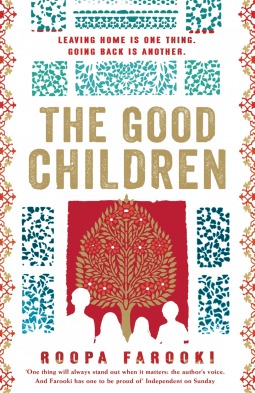
The Good Children by Roopa Farooki


Sulaman, Jakie, Mae and Lana grew up in Pakistan under the shadow of their controlling and somewhat abusive mother.  The two brothers are sent abroad to become doctors, one to England and one to America, but the two sisters are left behind and expected to make good marriages, to bring honour to the family.  But being a 'good child' is harder than it seems and in one way or another, all four children fail to meet their mother's exacting standards.  Sulaman becomes a renounced academic and expert on torture, but marries an unsuitable Hindu girl he meets in America.  Jakie does become a respected doctor, but starts a relationship with a white man in London.   Mae and Lana both marry suitable men, but their marriages suffer as they refuse to compromise their lives for the men they are married to.  When all four grown up children are called back to Lahore for a family emergency, they have to come to terms with their past, and the role their mother has played in their lives.

The Good Children is the first book I've read by Farooki, and I will definitely be reading more as soon as possible.  Prior to starting this, I was in a bit of a reading funk as I just wasn't reading anything amazing, but The Good Children restored my reading mojo almost instantly as it's simply a very good book.  It may be 600+ pages, but I raced through it in under three days.  The stories of all four children were distinct and engaging, and splitting up the narrative with their different points of view maintained the pace of the novel.  Farooki touches on a lot of important themes, such as mixed race relationships, domestic abuse, homosexuality and adoption, but The Good Children never feels like an 'issues' book, it always feels like a good story that happens to involve all of those things.

Although I enjoyed reading about all four children, I was most drawn to the stories of Jakie and Mae.  Jakie starts a relationship with Frank during a time in London when homosexuality was still a crime, and Farooki explores the prejudice he faced, and the reactions of those around him.  Mae was interesting as she was the child most like her mother, and her struggle to succeed for herself without crushing others was well done. Mae also leaves her husband when he takes a mistress, something that is frowned upon at the time, and I liked reading about her determination to ignore what others thought and forge her own path.

I'm really glad I read The Good Children, as it has introduced me to Farooki as an author.  I'm thinking of trying Bitter Sweets next, unless anyone has any other recommendations?

Source: From the publisher, in exchange for an honest review
UK Publication Date: 19th June 2014
Score: 4.5 out of 5

Saturday, 7 June 2014

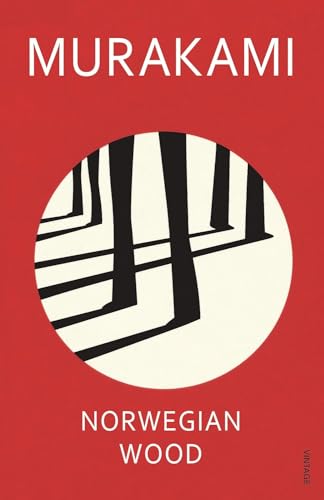
Norweigan Wood by Haruki Murakami


A coming of age story, Norwegian Wood is set in 1960s Tokyo and tells a classic tale of love and heart-break.  After the suicide of his best friend Kizuki, university student Toru finds himself drawn to Kizuki's girlfriend, Naoko.  He falls in love with Naoko, but she is damaged herself and may be incapable of giving Toru everything that he wants.  When quirky Midori marches into his life, Toru finds himself torn between the two girls, as he also struggles with the process of becoming an adult.

I am new to Murakami, and I'm also new to Japanese literature in general.  It's something I've wanted to try for a long time, but this is my first real attempt.  Having done some research since finishing the novel, it's clear that I probably shouldn't have started with Norwegian Wood, as it's not at all typical of Murakami's work in general.  I went into it expecting something kooky and slightly surreal, full of unusual elements, so was somewhat disappointed when it turned out to be a straight story.  The story of Toru's growing up is interesting, and Murakami is no doubt a talented writer, but it just didn't match what I was expecting it to be, and that made the whole experience a bit jarring.

I did enjoy Murakami's characterisation, especially that of Midori.  Midori is outgoing, lively and not afraid to say what she wants, even demanding it at times.  In fact, all of the women in the novel were like this and I found it quite refreshing.  I liked that Murakami captured the complex emotions of being a young adult, and that none of the situations were simplified.  Toru's experiences had the feel of real life experiences, full of contrasting wants and desires. A large portion of the novel deals with mental health and suicide, and again I thought this was handled well by Murakami.  Things do feel big and overwhelming when you're Toru's age, and the sections on mental health captured this perfectly.

As I'm writing this, I'm trying to work out exactly why I didn't love this novel.  It has so many strong elements, but the reading experience was underwhelming for me.  I found it a bit too long and repetitive in places, and it's not a book that I enjoyed picking up and diving into.  I could understand Toru, but it was hard to relate to him.  I'm leaving the book keen to try another Murakami (perhaps The Wind Up Bird Chronicle?), but I can't see myself ever reading this one again.

Source: Personal copy
First Published: 1987
Edition Read: Vintage, 2003
Score: 3 out of 5

Wednesday, 29 January 2014

The Glass Palace by Amitav Ghosh


"What are we?  We've learned to dance the tango and we know how to eat roast beef with a knife and fork.  The truth is that except for the colour of our skin, most people in India wouldn't even recognise us as Indians.  When we joined up we didn't have India on our minds; we wanted to be sahibs and that's what we've become."

Set in Burma, Malaya and India during the dying days of the British Empire, The Glass Palace is a multi-generational epic spanning a hundred years and involving several families.  Rajmakur is an Indian orphan from a poor family when he arrives in Burma during the British Invasion of 1885.  Able to get a glimpse inside the infamous Glass Palace during the chaos, he falls in love with Dolly, attendant to a Princess.  As Burma changes and the world draws closer to World War Two, Rajmakur's fortunes rise and fall with that of the Empire.  Decades later, Indian soldier Arjun is forced to face some difficult questions on the nature of identity and what a free India would mean.

I'm glad I finally took The Glass Palace off my shelf and read it.  I've owned it for at least ten years, and it was on the list of twelve books I've challenged myself to read in 2014.  I think I was worried it would be overly literary, or pretentious, or stuffy, but it didn't feel like that at all.  The writing was surprisingly smooth and although the book is 500+ pages, it didn't feel long.  The constant changing of the setting gave events a nice pace and Ghosh avoids dwelling for too long on any one character.  I loved reading about Burma in the days of royalty and the sumptuous hall of mirrors in the Glass Palace, as this is something I knew nothing about before starting the book.  Ghosh has a way with description and Burma really came alive for me.

I think if I hadn't read A Suitable Boy by Vikram Seth already, The Glass Palace would probably have become a favourite.  But a lot of the themes and aims are similar and in my opinion, Seth just does a multi-family epic so much better.  Ghosh introduces a lot of characters with a lot of links between them, and sometimes it was hard to keep track of who knew who, and how they knew each other.  An appendix with a family tree would have been ideal.  Also, sometimes twenty years or more were skipped through very quickly in the space of a chapter or so, and this felt a bit jarring.

The real strength of the book was in the two characters of Rajkumar and Arjun.  Rajkumar has a bit of a rags to riches story but Ghosh is careful not to idealise him too much.  As a reader you root for him in the initial sections of the story, but as he starts to earn many through whatever means possible, including exploitation of others, Ghosh makes you question how you really feel about him.  And Arjun, an Indian officer in the British army, is a great vehicle for Ghosh to explore identity and the complex realities of how the British related to India.  Arjun doesn't have too much of a plot, but I like how nuanced Ghosh wrote his situation, how torn he was between what he knew and what he hoped for.

On the whole, The Glass Palace is a well written epic with some important themes, that remains easy to read and enjoy.  I'm glad I read it, even if I didn't love it quite as much as I loved A Suitable Boy.

Source: Personal Copy
First Published: 2000
Edition Read: Harper Collins, 2001
Score: 4 out of 5

TBR 2014: Book 1/12

Thursday, 3 October 2013

Four Mini Reviews

Although I've been reading just as much as ever, my review writing and posting has kind of gone out of the window since the start of the new academic year!   Rather than go back and write individual reviews, I've decided to just write brief thoughts on some of the books I have read recently.

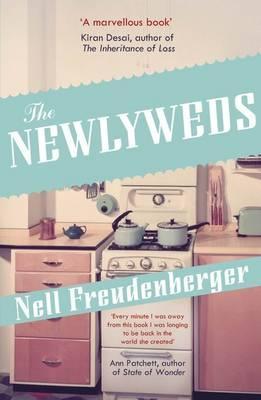
The Newlyweds by Nell Freudenberger
Amina met her new husband, George, on an online dating site in which Western men can meet non-Western women.  After leaving behind her life in Bangladesh for a new one in America, Amina has the complexity of a marriage to deal with, as well as getting used to a brand new culture.

I found The Newlyweds to be a simply stunning book.  It was well written and showed life in full technicolour glory, with all it's trials, complexities and disappointments.  Despite the unconventional way that George and Amina came together, the ups and downs of their marriage and the development of their relationship is one that most people would be able to relate to.  The issue of infertility was dealt with sensitively and realistically, and all of the characters have to face some hard truths.  There was a wonderfully bitter-sweet ending, in which all of the characters got what they thought they had wanted, only to question whether they wanted it at all.  Don't expect a fairy-tale.  5 out of 5 stars.

Fevre Dream by George R.R. Martin
I am a big fan of the Song of Ice and Fire Series, so was keen to pick up Fevre Dream for the RIP VIII challenge.  Abner Marsh is a destitute steamboat captain on the Mississippi river when he is offered a lucrative proposal by Joshua Yorke, a man has odd eating habits and keeps strange hours.  As you might have guessed, Joshua is a vampire and Abner is soon pulled into the murky and blood-thirsty world of vampire politics, when Yorke comes into contact with a vampire that leaves a trail of horror behind him.

If you like Anne Rice, you'll love Fevre Dream.  It's got the same atmosphere and I loved the idea of vampires on steamboats on the historical Mississippi.  It had some genuinely creepy moments, the story moved on at a decent pace and Martin may have come up with the idea of True Blood before the TV show.  All in all, it was good fun and an ideal autumn read.  3.5 out of 5 stars.


Neverwhere by Neil Gaiman
Another RIP read.  There is a parallel London alongside real London, populated by the people that have fallen through the cracks of modern society.  When Richard Mayhew takes pity on an injured girl, Door, he becomes sucked into London Below, full of monsters, angels and knights.  There really is an angel at Islington and friars at Black Friars tube station.  As he helps Door find out what happened to her family, he comes up against danger at every step.

As always with Neil Gaiman, I was in awe of his creativity and the genius of his ideas.  However, something about Gaiman's writing just doesn't click for me and this prevents his books from being truly enjoyable.  I admire them, but I don't love them.  I did enjoy Richard's character growth and the choice he eventually makes about who he wants to be, but I just couldn't connect with the writing and that made the whole experience sadly underwhelming.  3 out of 5 stars.


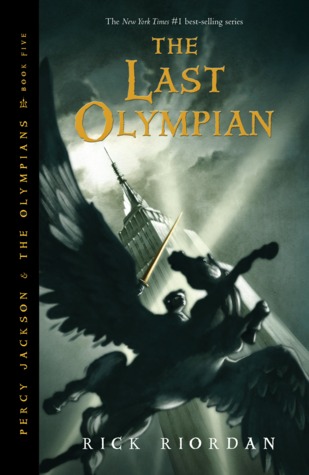
The Last Olympian by Rick Riordan
In the last volume of the Percy Jackson and the Olympians series, Percy, Annabeth and the rest of the half-bloods must battle to save Mount Olympus from the invading Titans, and the Prophecy about Percy's 16th birthday is finally played out.

I don't want to say too much about this one as I don't want to spoil the ending of the series, but I found it to be a most satisfying finale to the whole thing.  As always, the events were fast paced, the plot was action packed and there was a good amount of character development mixed in for good measure.  In fact, the whole thing wrapped up so nicely that I'm not sure why Riordan went on to write the Sons of Olympus series, featuring some of the same characters.  Although I didn't enjoy this one quite as much as The Battle of the Labyrinth, it still gets top marks for being such a great final volume.  The whole series was such fun and I loved racing through them.  5 out of 5 stars.

Have you read any of these books?  If so, I'd love to know what you think of them.

Thursday, 20 June 2013

The Gods of Heavenly Punishment by Jennifer Cody Epstein


The firebombing of Tokyo during World War Two forms the centerpiece of The Gods of Heavenly Punishment, a novel that follows the lives of several people before and after the war.  Cameron is an American pilot, newly married, who takes part in the firebombing mission only for things to go wrong afterwards.  Yoshi is the daughter of a Japanese father intent on capturing Manchuria and a Westernised mother.  She gets caught up in the bombing and must deal with the consequences.  Anton is an architect who lived in Japan but who is now involved in designing Japanese buildings in America, so the military can practise destroying them.  The lives of all the characters intertwine as they are changed by one dramatic event, the firebombing.

From the cover of The Gods of Heavenly Punishment, I was expecting quite a gentle read, but it was anything but!  The actual firebombing itself is graphically described and the novel doesn't shy away from the grittier side of life.  There are no guaranteed happy endings for any of the characters and Epstein does a great job at showing how brutal war is, as the killing is indiscriminate.  In addition to this, the novel also deals with homophobia and how cities are permanently changed after war.  Yoshi was living comfortably before the attack but after the destruction, she is forced down paths she never expected she would have to go.

I was extremely impressed by the writing in The Gods of Heavenly Punishment.  Epstein has a lot of characters to deal with but she manages to keep them all distinct in the reader's mind and manages to give a sense of their personalities in a very short time.  This meant that the book quickly sucked me in and I rushed through it in only two days, as I couldn't put it down.  I'll definitely be getting hold of her other book, The Painter from Shanghai.

The only complaint I have with the book is that sometimes the links between characters felt contrived.  A bit like how everyone knows each other in Dickens' London, all of the characters in this story were linked in ways that just wouldn't happen in real life.  I don't mind a few coincidences, but there seemed to be a few too many of them.  Despite this, I really enjoyed reading The Gods of Heavenly Punishment and think it's a great example of a historical fiction book that can pack a punch.

Source: Review copy via Historical Fiction Virtual Book Tours
Published: 2013
Score: 4.5 out of 5

Read Alongside:
  1. Shanghai Girls by Lisa See - Another novel that examines the destruction of a city in Asia, as Japanese forces occupy Shanghai.  This one also doesn't shy away from portraying the gritty effects.
  2. Next to Love by Ellen Feldman - This one links in with the Cameron storyline.  What was it like for the families of American soldiers during World War Two and afterwards, when they returned home?

Friday, 26 April 2013

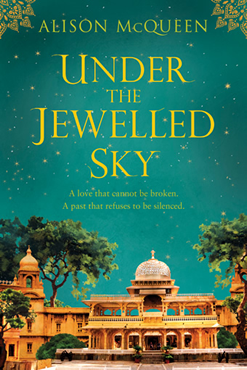
Under the Jewelled Sky by Alison McQueen: Thoughts and Giveaway

It's 1957 and Sophie Schofield is arriving in Delhi as the new wife of ambitious British diplomat Lucien Grainger.  Living in a specially designed ex-pat compound and mixing only with Brits trying to preserve the days of the Raj, Sophie finds herself yearning for the India she experienced as a teenager, living in the palace of a Maharaja with her doctor father.  The India she knew then, of heat and spices, is completely different from post-partition India, full of stifling social etiquette.  And the more she recalls the past, the more it becomes clear that it may not have left her at all.  Lucien doesn't measure up in any way to her first love, the Indian son of an employee of the Maharaji, and Sophie is soon caught up trying to keep the secrets that could bring her new life crashing down.

Under the Jewelled Sky was an enjoyable read.  Sophie is instantly likable as a main character and the book has a fast pace that makes it a quick and fun read.  It's obvious the author has a passion for India, as the beauty of the setting comes off clearly on every page.  McQueen is good at this kind of broad theme writing, as the decadence of the Maharaja and the absurdity of British diplomatic high society are also dealt with well.  I closed this book with a desire to visit India for myself.

Whilst I liked the themes of the book, particularly the issue of children born to parents of different race at this time, I wanted the book to be a bit more gritty than it was.  It left me with a nice cosy feeling (which is fine), but the skeptic in me was hesitant to believe all of the positive events.  For example, I couldn't believe that Sophie's mixed race child would even have been found by Jag's family in the carnage of Partition, let alone accepted so unequivocally by all family members.  McQueen does spend quite a bit of time writing about partition (one character is caught up in a camp), but I never truly felt the horror of the events.  The writing was very good, but I was seeking more balance and the positive atmosphere meant I was never scared for Sophie, even when events took a turn for the worse.  There was this sense that everything was pre-destined.

Despite this, Under the Jewelled Sky was perfect escapism.  It contains a good story set in an interesting setting, so is bound to appeal to fans of historical fiction.

Source: From the publisher, in exchange for an honest review.
Published: 25th April 2013
Score: 3.5 out of 5.


Thanks to the publisher, Orion Books, I am able to offer a giveaway of ten new women's fiction hardbacks.  The prize will include Under the Jewelled Sky as well as the latest books by Erica James and Kate Mosse. As the giveaway is hosted by the publisher, entrants must have a UK or Ireland address.  You don't have to be a blogger.  To enter, simply fill  out the form below:

Saturday, 3 November 2012

A Disobedient Girl by Ru Freeman

Latha is a servant girl, bought up alongside the daughter of a rich Sri Lankan family.  Exposed daily to the luxuries that wealth can bring, she resents her status as a servant and disobeys in small ways - stealing a bar of rose-scented soap for her own use or making extra lime juice to drink.  As she grows up, the differences between her and Thara become more apparent but their lives are so entwined that Latha has no option to break free.  Caught in a complex mix of love and hate and against the back drop of a violent civil war, her small acts of disobedience gradually grow larger, with consequences for everyone.  Told alongside Latha's story is that of Biso, a women fleeing an abusive husband with three small children in tow.   She hopes to make it to the hills to be taken in by an Aunt, but the war is escalating and her journey is rife with danger.

I really enjoyed A Disobedient Girl, mainly because of Latha herself.  I've seen reviews complaining that Latha is an unlikable main character as she's not the most moral of people.  And whilst that is true, I think this would have been a weaker book if Latha was simply written as a martyr.  I liked that she was stubborn, proud and determined not to take her situation lying down; she wouldn't roll over and accept things the way they were.  Throughout the book, Latha fought with whatever weapons she had available to her, even if that led to her doing questionable things, for example using sex to get back at her mistress early in the novel.  I loved her spirit and resourcefulness and her constant hope that she could make a better life for herself.   Even though she was in an impossible situation due to prejudice, she rarely gave in to bitterness.  Freeman is also a political journalist and this is very apparent in the way she writes about the situation Latha faced;

"There is was again: a proper servant.  That was all they had expected of her.  Despite her education, regardless of it, and her looks, she was supposed to be no more, no less.  Servant.  The thing that had concealed her intentions, her desires, her womanliness, her very soul."

I also enjoyed the dual narrative aspect of the book.  Chapters are alternated between Latha and Biso, and whilst it took me some time to get to grips with the fact that Latha's story unfolds over decades and Biso's only over a few days, the break in perspectives worked well.  I was happy with the link between the two characters when it was revealed and also felt the ending was in keeping with plot.  I also liked that the civil war stayed in the background of the story; too often it feels like authors from countries that have experienced war or political upheaval feel pressure to make this the center of their novels, like this is the only way people in the West will want to read their work.  The war in A Disobedient Girl is there, but only ever as a backdrop to the story of Latha and Biso.  I liked reading about other aspects of Sri Lankan life.  In the same way, I liked that Freeman didn't feel the need to explain every new thing to the reader, she just immersed us in Sri Lankan culture and let us find our own way.

The only criticism I would make of this book is that it was a bit over-long and slow at the start.  It seemed to be a long while before events started to happen and the middle section could have been edited down.  Other than that, it was a great read and I'll be keeping an eye out for any more books written by Freeman in the future.

Source: Library
First Published: 2009
Edition Read: Penguin UK, 2011
Score: 4.5 out of 5

Monday, 22 October 2012

A Suitable Boy by Vikram Seth


I've finally finished it!  Three months and 1474 pages of tiny print later, I can consign A Suitable Boy to my 'read' shelf on goodreads.  This post will contain first a general review of the book without spoilers, then a discussion of the third section for the readalong.  The discussion part will contain spoilers, so steer clear if you haven't read or finished the book yet.

Review:
A Suitable Boy is the inter-connected tale of four families in post-independence India.  Although the central story is Mrs Rupa Mehra's quest to find a suitable husband for her daughter Lata, Seth's novel is more than that and is best described as a panoramic of Indian society.  From racial tension to religious festivals to adultery, ambition and politics, A Suitable Boy is an epic in every sense of the word.  The many individual stories are told alongside each other in nineteen parts and cover the human condition in all its forms.  I enjoyed reading about Savita's journey into motherhood, Pran's struggle to become an academic, the Nawab Sahib's bewilderment as the world he knew disappeared and the eccentric Chatterji family, who were more liberal and liked to speak in couplets.

If you have the time to invest in it, A Suitable Boy is a very rewarding book.  For me, it's up there with Gone with the Wind and Anna Karenina as a book that I will always remember.  Lata and the cast of characters feel like members of my friends and family; two days after putting this book down for good, I'm missing them.  Towards the end of the book when things start to happen and events get resolved, I was emotionally invested in the outcome each character would have.  Seth made me connect with each one (even if I didn't like them all) and I have a clear visualisation of what each character is about, which is not easy to pull off.  It felt almost like the book got into my soul.

As the scope of Suitable Boy is so broad, there's guaranteed to be something in it for each reader.  I'm a fan of multiple perspective books anyway and the rapid shifting between points of view stopped this long book from becoming tedious to read.  I'm in utter awe at the way Seth managed to wind all of his characters and events together without losing the impact of the story.  There are some plot points not resolved by the end and everything doesn't tie up nicely, but then it's not the kind of book where everything would.  A Suitable Boy does require an investment of time and effort but most definitely repays anything you put into it.

Discussion - Part Three (Spoilers):
I had mentioned in my review of Part Two that events were dragging and the book was becoming a bit of a slog - not so in Part Three!  Suddenly everything seemed to be happening at once and the pace was whirlwind by the last two or three hundred pages.

The main event was clearly Lata's marriage to Haresh.  I must admit to being disappointed with her choice, especially as it seemed to be one so clearly based on the head rather than the heart.  My opinions conicided with Malati's, who felt that Lata had turned down the gold and silver prize in order to settle for the bronze.  Whilst I agree that she could never have married Kabir, much as I liked him (the attitude of her family would have made their life very difficult), I had a soft spot for Amit.  There's one section where Lata is thinking about his poems and Seth writes something like 'they were already a part of her, without her knowing it'; from that point on I was rooting for Amit.  Lata's reasoning sold Amit short; I didn't find him selfish or demanding at all.  Besides, if anyone proposed to me with a beautifully written poem like that, I would certainly accept!  Haresh seemed very drab and unispiring compared to her other choices and it felt like Lata had chosen sensibly rather than for happiness. 

Religious tension was a theme throughout the whole book but it was really hammered home in this section with both the stampede at the Hindu event and the clashes between Hindus and Muslims when their festivals coincided.  I feel like Seth must feel strongly about clashes like this, as the sections dealing with them were powerfully written.  A message of the whole book seemed to be how futile religious quarrels are. I didn't expect events with Maan to take the turn they did, especially after he saved Firoz earlier in the story.  But I saw a different side to him and to Mahesh and this made me appreciate their characters more. 

The third part was my favourite of the three, mainly as so much happened and the pace was brisk.  I'm still reflecting on all the events and looking forward to the release of A Suitable Girl sometime in 2013, that follows Lata's search for a wife for her grandson eighty years after the events of Suitable Boy.  I hope Seth is on track and the book gets published on time.

Thanks to all the readalong participants for giving me the motivation to finally tackle this book; it had sat on my shelf for years prior to this.  I'm glad I finally got the chance to read and enjoy it.

Source: Personal copy
First Published: 1993
My Edition: Phoenix books UK, 1993 (purchased second hand)
Score: 5 out of 5

Saturday, 13 October 2012

The Joy Luck Club by Amy Tan

In the 1940s, four women recently arrived in San Francisco from China start a joy luck club, a chance to get together over dim sum and mah jong and discuss their lives.  As they raise their children the gap between Chinese and American culture becomes more apparent and there are many mother daughter clashes.  The mothers demand the obedience and ambition of Chinese culture but the daughters tend to want the freedom of the American.  Fourty years later, Jing-Mei Woo takes up her mother's place at the mah jong table following her death.  Only by listening to the stories of the older women does she discover that there was much more to her mother than she ever realised.  In her rush to flee the Japanese invaders, her mother was forced to abandon her two young daughters, sisters that Jing-Mei never knew she had.  Her journey to China to meet them sets her on a path to reconcile her Chinese and American backgrounds.

The Joy Luck Club is an excellent rendering of the immigrant experience.  By choosing to focus on four mothers and four daughters, Tan covers in detail what it is like to be a first or second generation immigrant to America and how difficult it can be to pass on your culture in a different country.  As a reader you feel for both the mothers and the daughters;

"They are frightened.  In me, they see their own daughters, just as ignorant, just as unmindful of all the truths and hopes they bought to America.  They see daughters who grow impatient when their mothers talk in Chinese, who think they are stupid when they explain things in fractured English.  They see daughters who will bear grandchildren born without any connecting hope passed from generation to generation."

Although the daughters were easier for me as a Westerner to relate to, the stories of their mothers were more interesting.  The fourth part of the book, Queen Mother of the Western Skies, is all about their lives in China before immigrating to America and this was the most fascinating part.  I was expecting the book to feel a little dated given that it was initially published in the 1980s but this wasn't the case at all.  The actual experiences of the women might have been time-linked but The Joy Luck Club is about more than just that, it's about mother-daughter relationships too and that theme was universal enough to make the book stand the test of time.

The only problem I had with the book was linked to one of its strengths.  I liked that many stories were included as this covered the immigrant experience so well but at times The Joy Luck Club felt more like a collection of short stories rather than a novel.  There's a list of mothers and daughters provided at the beginning but I did find it hard to keep all of the characters straight and especially to remember who was related to who.  I had to keep flipping through the book to find out which mother experience matched with this daughter experience and that was frustrating at times.  Organising the book by generation was a good choice in many ways but the consequence was that at times it was hard to link the characters.

Overall, I'm glad that I finally picked up The Joy Luck Club.  It's deservedly a classic amongst books about immigration to the West and all of the stories in it were engaging and well written. 

Source: Personal copy
First Published: 1989
My Copy: Vintage UK, 1998 (purchased second hand)
Score: 4 out of 5

Read Alongside:
1. Shanghai Girls by Lisa See  - Two sisters, May and Pearl, move to America following Japanese attacks on Shanghai.  This is more gritty than Joy Luck Club but is also strong on the immigrant experience and mother-daughter relationships.
2. Girl in Translation by Jean Kwok - Kimberly Chang moves with her mother from Hong Kong to New York.  Again, this really shows the gritty side of struggling to survive in a new country and is beautifully written.
3. The Weight of Water by Sarah Crossan -This one is a bit different as it's YA and a novel in verse, but it's all about the experiences of Polish girl Kasienka who migrates to the UK as a teenager.  Although it's a different culture and setting, much about starting over in a new country is universal.

Monday, 6 August 2012

Empires of the Indus by Alice Albinia

Summary (from back cover):
The Indus rises in Tibet, flows west across India, and south through Pakistan.  For millennia it has been worshipped as a god; for centuries used as a tool of imperial expansion.  Following the river upstream and back in time, Empires of the Indus takes the reader on a voyage through two thousand miles of geography and more than five thousand years of history.


Thoughts:
It's not often I copy a summary into my reviews but in this case the back cover sums up the book perfectly.  Albinia starts in Pakistan and works her way up the course of the river, meeting the people that currently live around it and also informing us of the history of the river, from the partitioning of India right back to prehistoric times. I was very excited to start this one as travel and history are two of the non-fiction genres I enjoy and I was interested to see whether Albinia could pull off a fusion of the two.

For the most part, Empires of the Indus is a very successful book.  Albinia clearly loves her subject matter and is very well read in terms of the history of the different peoples and nations.  I must admit to enjoying the travel parts of the book more than the history parts, mainly because Albinia could speak several of the languages of the area, meaning that she could talk directly to people and present their stories.  As a woman travelling through strict Muslim and Hindu areas, she also got access to women's stories that were often just as fascinating as the men's.  Albinia writes about what it is like to wear a burqa, to travel through the lawless regions of Pakistan, to arrive at a place without knowing anyone at all and having nowhere to stay.  She is an adventurous traveller and one of the themes of the book was how hospitable all of her hosts were, no matter where she went.  Even in the "terrorist breeding grounds" of Pakistan and Afghanistan, Albinia was greeted warmly and people were always keen to welcome her to stay in their homes and share their food with her.  Would that happen in the West?

As I read this book, I realised how little I knew about some of the countries featured in it, especially Pakistan.  I had always imagined Pakistan as a solely Muslim country.  But Albinia uncovers other sides of Pakistan, for example the Sheedi, descendants of a freed African slave, that blend Islam with their own cultural traditions.  I learned that perhaps I had been stereotyping some countries in the area, and that the real situation is far more complex than I had realised.  I enjoyed the chapter that included a history of Sikhism as this is something I knew relatively little about.

Some of the history was a little dense.  I knew a bit about the general history of the area before starting this but did find it hard to keep some of the rulers and invaders straight.  Although the book is roughly 300 pages long, it felt a lot longer at times as some chapters were heavy on the history and required a mental slog to get through.  I became used to this as I read through the book and consequently found the later chapters 'easier' than the first.

I'm going to end with my favourite passage from the book;
"I press my nose against the burqa and stare out into the world.  I see a young man with a pink rose tucked behind his ear sitting on a boulder, his AK47 lovingly upholstered in blue and pink stickers.  I see sand-coloured fortresses, the sky cloudless blue behind them.  I see graveyard after graveyard fluttering with flags of jihadi martyrs.  I see a gun on every male shoulder.  And I see no women at all - not grannies in burqas, not even a little girl."

Source: Library
First Published: 2008
Score: 4 out of 5