Showing posts with label horror. Show all posts

Tuesday, 7 January 2014

Night Film by Marisha Pessl


One night, twenty-four year old Ashley Cordova, the daughter of cult film director Stanislas Cordova, is found dead in an apparent suicide.  Disgraced journalist Scott McGrath begins to investigate her death in an attempt to solve the mystery surrounding Cordova and his later works, which can only be bought on the black market.  The films are legendary, shown in underground screenings all over the world, and have even been reported to make viewers insane.  But as McGrath begins to follow Ashley's trail, he comes across a web of sinister rumours and connections that prove difficult to get to the bottom of. Just what is real and what is made up for the films?

Night Film is going to be a very difficult book to review, because it's one of those books where the less you know about it, the better.  It's full of twists and turns as the line between reality and myth is blurred throughout the book, and you never quite know what the truth is.  I'd love to say more about the plot, but I can't without ruining the reading experience.  You'll have to take it from me - Night Film is a clever page turner and will certainly keep you guessing.

One thing I loved about the book was the inclusion of different types of media.  Alongside the written story, Pessl has included screenshots of websites, personal records, police files, magazine clippings and transcriptions of messages.  There's even an app you can download as you read, which I chose not to use, but which has more elements of the same sort.  I really enjoyed these parts of the book as it gave you the feeling of solving the mystery along with McGrath and allowed you to make up your own mind as you went.

Night Film is a chunky book but I raced through it in under three days as I simply could not put it down.  It's certainly an active reading experience, as the book and the characters got into my head and have stayed there ever since.  I found parts of it genuinely creepy and haunting as Pessl plays with horror and how reality can be manipulated to create certain experiences.  I don't think I'm doing a good job of articulating just why I loved this book so much, but it's so different from everything else I read and it's just one of those books that worm their way into your very being and stay there.  It's not a book I'm likely to forget any time soon.

So the take-home message from this review is: read Night Film, and read it as soon as possible.  You wont be disappointed!

Source: Personal copy
First Published: 2013
Score: 5 out of 5

Monday, 28 October 2013

The Turn of the Screw by Henry James

A group of friends are visiting together at an old house and telling ghost stories when one of them states that he has a story so terrifying it will make all other stories pale in comparison.  It's about a young governess who has been left in charge of Miles and Flora, after the previous governess died.  The children are beautiful, friendly and intelligent and at first, everything seems wonderful.  But then she discovers that Miles has been expelled from his school for unknown reasons and worse still, she starts seeing visions of people who should be dead.   These visions continue and the governess becomes convinced that they have sinister designs on the children, and that only she can protect them.  But is everything as it seems?

I was so looking forward to reading The Turn of the Screw.  It's on my classics club list and I've been saving it for Halloween as that seemed to be the most appropriate time of the year to try it.  I adore gothic fiction, particularly when it has horror elements (Dracula is one of my all-time favourite books) and I also know from reading Daisy Miller that I like James' writing style, so I felt sure I would like it.

Maybe my expectations were simply too high, but I didn't love this book in the way I wanted to.  I liked it well enough, it was a decent read, but it was just missing that spark that would have made it special.  I think a lot of the problem was the deliberate ambiguity.  The governess is the main narrator of the story, and boy is she unreliable.  You never get to find out whether any of her visions are real or indeed what the motivations of any of the characters are.  I do like unreliability and uncertainty in books, but I felt there was just too much of it.  Were the children evil or was the governess simply mad?  Although I have my own favoured interpretation, based on my modern beliefs, it bugged me that James gives us nothing.  And I mean nothing.  I wanted to know what really happened!

The other problem I think the book had is that there was this long build up in which Douglas is basically like "this is the scariest story ever told" and then we have to wait for the manuscript written by the governess to arrive and there's just so much suspense and build up.  Rundown houses, fog, crumbling towers, it's all there and the scariness of the story doesn't measure up to all that build up.  I know scary in classics is very different to modern scary standards, but even so, the book felt like a lot of build up for not much in the way of scary events.

All this isn't to say that I disliked The Turn of the Screw; I still found it engaging, well written and it definitely made me think about what happened.  The more I think about it, the more I come up with new theories and I know that makes James a clever author.  It just wasn't the book I was hoping it would be.

Source: Personal copy
First Published: 1898
Edition Read: Vintage, 2007
Score: 3 out of 5


The Classics Club: Book 18/72

Thursday, 3 October 2013

Four Mini Reviews

Although I've been reading just as much as ever, my review writing and posting has kind of gone out of the window since the start of the new academic year!   Rather than go back and write individual reviews, I've decided to just write brief thoughts on some of the books I have read recently.

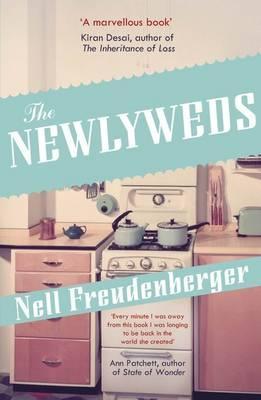
The Newlyweds by Nell Freudenberger
Amina met her new husband, George, on an online dating site in which Western men can meet non-Western women.  After leaving behind her life in Bangladesh for a new one in America, Amina has the complexity of a marriage to deal with, as well as getting used to a brand new culture.

I found The Newlyweds to be a simply stunning book.  It was well written and showed life in full technicolour glory, with all it's trials, complexities and disappointments.  Despite the unconventional way that George and Amina came together, the ups and downs of their marriage and the development of their relationship is one that most people would be able to relate to.  The issue of infertility was dealt with sensitively and realistically, and all of the characters have to face some hard truths.  There was a wonderfully bitter-sweet ending, in which all of the characters got what they thought they had wanted, only to question whether they wanted it at all.  Don't expect a fairy-tale.  5 out of 5 stars.

Fevre Dream by George R.R. Martin
I am a big fan of the Song of Ice and Fire Series, so was keen to pick up Fevre Dream for the RIP VIII challenge.  Abner Marsh is a destitute steamboat captain on the Mississippi river when he is offered a lucrative proposal by Joshua Yorke, a man has odd eating habits and keeps strange hours.  As you might have guessed, Joshua is a vampire and Abner is soon pulled into the murky and blood-thirsty world of vampire politics, when Yorke comes into contact with a vampire that leaves a trail of horror behind him.

If you like Anne Rice, you'll love Fevre Dream.  It's got the same atmosphere and I loved the idea of vampires on steamboats on the historical Mississippi.  It had some genuinely creepy moments, the story moved on at a decent pace and Martin may have come up with the idea of True Blood before the TV show.  All in all, it was good fun and an ideal autumn read.  3.5 out of 5 stars.


Neverwhere by Neil Gaiman
Another RIP read.  There is a parallel London alongside real London, populated by the people that have fallen through the cracks of modern society.  When Richard Mayhew takes pity on an injured girl, Door, he becomes sucked into London Below, full of monsters, angels and knights.  There really is an angel at Islington and friars at Black Friars tube station.  As he helps Door find out what happened to her family, he comes up against danger at every step.

As always with Neil Gaiman, I was in awe of his creativity and the genius of his ideas.  However, something about Gaiman's writing just doesn't click for me and this prevents his books from being truly enjoyable.  I admire them, but I don't love them.  I did enjoy Richard's character growth and the choice he eventually makes about who he wants to be, but I just couldn't connect with the writing and that made the whole experience sadly underwhelming.  3 out of 5 stars.


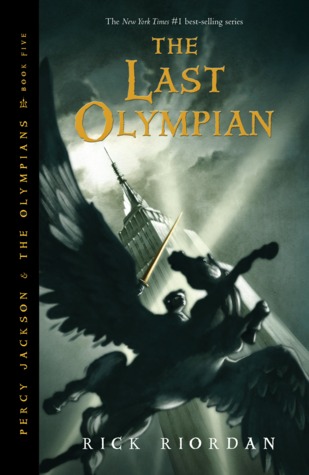
The Last Olympian by Rick Riordan
In the last volume of the Percy Jackson and the Olympians series, Percy, Annabeth and the rest of the half-bloods must battle to save Mount Olympus from the invading Titans, and the Prophecy about Percy's 16th birthday is finally played out.

I don't want to say too much about this one as I don't want to spoil the ending of the series, but I found it to be a most satisfying finale to the whole thing.  As always, the events were fast paced, the plot was action packed and there was a good amount of character development mixed in for good measure.  In fact, the whole thing wrapped up so nicely that I'm not sure why Riordan went on to write the Sons of Olympus series, featuring some of the same characters.  Although I didn't enjoy this one quite as much as The Battle of the Labyrinth, it still gets top marks for being such a great final volume.  The whole series was such fun and I loved racing through them.  5 out of 5 stars.

Have you read any of these books?  If so, I'd love to know what you think of them.

Wednesday, 18 September 2013

Warm Bodies by Isaac Marion


R is a zombie.  He exists in a slow-paced, endlessly repetitive world broken only by short bursts of feeding until he meets Julie, a normal human.  Rather than feeding on her, R decides on impulse to capture her and protect her.  But being around a living human for such a long period of time starts to have unusual effects and R finds himself changing, becoming different from all of the zombies around him.  Can a relationship between a human and a zombie ever work?

My first read for RIP!  Sadly it was less than stellar but it was still exciting to get my participation in the event under-way.  I never had massively high hopes for Warm Bodies, but it did come recommended from someone who isn't normally a paranormal romance fan, so I was hoping that it would be fun and enjoyable.  And to a certain extent, it was.  I liked the tongue in cheek tone of the novel and the moments of dry humour Marion sprinkles throughout the story.  Warm Bodies doesn't take itself too seriously and I liked that.

The romance itself was surprisingly sweet and believable too.  I'm still not quite sure how Marion pulled it off, but R falling in love felt sweet in a non-tacky way.  There was no insta-love and the interactions between the two leads were sensitively written, with just enough humour to keep them from being sappy.   I was most definitely rooting for them.

The issue I had with Warm Bodies wasn't the romance, but rather the way the zombie issue itself was dealt with.  Now I'm not an expert on zombies, but I know the basics and I wasn't cool with the zombie mythology in the book.  There was no explanation of how the zombies came to exist in such large populations across the world and as soon as I could predict where the ending was going with R, it felt like a cop out.  I don't want to spoil it for anyone but the whole zombie idea was altered too much for my liking.  It felt like the easy way out.

And that wasn't the only easy way out.  R initially meets Julie on a feeding/hunting trip with other zombies and Julie's boyfriend is killed.  This could have been an interesting source of conflict/tension between them and could have led to some real-life complications, but everything was brushed aside by Marion in order to make the romance 'easy'.  This didn't sit well with me.

On the whole, Warm Bodies was a short, fun read full of dry humour but it required just too much suspension of belief when it came to the zombies themselves.

Source: Personal copy 
First Published: 2010
My Edition: Vintage, 2013
Score: 3 out of 5


Friday, 15 February 2013

The Last Werewolf by Glen Duncan

Jacob Marlowe is the last living werewolf.  For two hundred years he has wandered the world, amassing a fortune and murdering humans every full moon.  Now, as the last of his kind, he is a target for WOCOP (World Organisation for the Control of Occult Phenomenon).  Initially, he is willing to be hunted, fed up of a life without attachment and worn down by the mundane routine of everyday life.  But when Jacob realises that he may not be the last living werewolf at all, his eagerness to live returns, even as he is slowly drawn into a trap.

I'm going to be upfront and state that I did not like this book at all.  I thought there was a gem of a story in there but unfortunately it was hidden in the most unnecessarily pretentious writing I've come across in quite some time.  Duncan writes as though he has just ingested a thesaurus and we end up with sentences like this:

"It was getting the primary admission, that we knew what we were, that we had both felt the peace that passeth understanding, that this, now, sex in human form, was the imperfect forerunner, the babbling prophet, mere Baptist to the coming Christ."

That was just a random sentence from a randomly opened page.  They are all like this!  Duncan never writes one word if he can write ten, and each sentence has so many subordinate clauses and commas that reading it becomes quite difficult at times.  And I don't mind challenging writing (I like classics after all), but it seemed so unncessary in this case. Some of the metaphors Duncan uses are bizarre and there's many pages of Jacob complaining about how bored of life he is, full of overly descriptive prose.

It's frustrating as I like the general idea of taking a horror concept and making it more mainstream. It worked for Elizabeth Kostova in The Historian and Matt Haig in The Radleys and the concept here was a good one.  The execution was just lacking.  I didn't mind the violent sex or the strangeness of the ending but the writing was just too big of an obstacle for me to get over.  Too much description and too much philosophy.

On the whole a disappointment.  I don't think I've written a review as negative as this one for quite some time!

Source: Personal copy
First Published: 2011
Score: 1 out of 5

Monday, 27 August 2012

The Vampire Lestat by Anne Rice

Last summer, I read and reviewed Interview with the Vampire.  I was a big fan of the film but unfortunately found the book disappointing.  Whilst I enjoyed the actual story, I thought the writing was long winded and Louie irritating.  Nevertheless, I decided to try the second volume of the series because Lestat is more appealing as a character to read about and several people mentioned that The Vampire Lestat is more action packed than Interview with the Vampire.

 The Vampire Lestat opens in San Francisco in 1984 with Lestat realising that the journalist from the first book has published Interview with the Vampire. It's riding high in the fiction charts and humans have no idea that the 'story' inside the pages is actually true.  Despite it being taboo, Lestat decides to respond by writing his own account of his life and this is what he bulk of The Vampire Lestat covers.  We follow him from his aristocratic beginnings in Revolution-era France through his travels around the world as he attempts to find out why vampires exist before finally settling in New Orleans.  Along the way we meet many more vampires and hear their stories as Lestat traces the source of vampirism back to Ancient Egypt.  But will the vampire population allow Lestat to publish his book?

The Vampire Lestat is a chunky book at 500+ pages but it reads quickly and fluently.  I enjoyed it much more than I enjoyed Interview with the Vampire.  One of the reasons for that is simply that Lestat is an easier character to read than Louie, he doesn't indulge in self-pity and is very impulsive, which leads to a lot more 'action'.  Lestat is also curious about the world around him and other vampires, which opens the door for Rice to bring in some more stories alongside his.  Although Lestat is the centerpiece of the novel he finds older vampires and they tell their story to him, meaning the book covers a wide time period and many perspectives.  I appreciated this variety.

There's also a lot more information about vampires in this book.  We find out why vampires exist, more about the rules that govern their existence and how vampires can differ from each other.  I don't know if world-building is the right world for a novel such as this, but the 'vampire theory' feels more thought-out than it did in Interview with the Vampire and it makes sense as a whole.  I especially appreciated that the vampires themselves couldn't agree about how best to be a vampire and what they should/shouldn't do.  This made for some interesting conflicts as the book progressed.

The Vampire Lestat is pure escapism.  I breezed through it and thoroughly enjoyed it.  However, some parts crossed the line into silly/tacky, especially the Lestat as a twentieth century rock-star sub-plot at the very beginning and end.  Having said that, I enjoyed it much more than Interview with the Vampire and would definitely read the third in the series, Queen of the Damned.

Source: Library
First Published: 1985
My Edition: Source Books, 2008
Score: 4 out of 5

Monday, 5 March 2012

Carmilla by Joseph Sheridan Le Fanu


Published in 1872, Carmilla was one of the first vampire books written, preceding Dracula by a good twenty-five years. It's about Laura, who lives in a gothic castle in Styria, Austria with her father.  One day they witness a carriage accident near their home and offer to shelter a young woman whilst she recovers. Laura's loneliness is answered by Carmilla's friendship and the two become close, although this coincidences with a rapid decline in Laura's health....

I loved this little book.  At only 95 pages, it can be read in one sitting but somehow still manages to contain all of my favourite elements of both gothic and vampire/horror fiction.  There's the wonderful setting of the dark woods and deserted castle, the leisurely writing pace, the creepy sense of foreboding but above all, the atmosphere.  From the moment I picked this book up and started to read I felt as though I had been transported into the author's imagination and could practically see the mist rising over the moon and hear the tree branches creaking ominously.

Of course, Carmilla isn't really scary to modern readers.  When you read it, you have to bear in mind that readers at the time of publication weren't familiar with the vampire myth.  So blindingly obvious 'VAMPIRE - RUN AWAY!' clues go undetected by Laura (pale skin? sharp teeth?..what could it possibly mean??) and the horror is largely only hinted it.  It's like an old fashioned horror film where things are suggested rather than just gore being shown.  It might send a little shiver down your spine, but all the real fun is in the gothic writing style and atmosphere.

Dracula is one of my favourite books and reading Carmilla, it's easy to see that Stoker was massively influenced by it.  The setting is practically identical, and both books contain a vampire hunter (Baron Vordenburg and Van Helsing) and an innocent female victim.  Normally it would bother me to think that a book I like so much isn't completely original, but as I like both books equally, I will instead just put Carmilla where it belongs next to Dracula on my shelf.

Verdict: A must-read for gothic or horror fans.
Source: Library (got lucky whilst browsing)
First Published: 1872
Score: 5 out of 5

Sunday, 2 October 2011

From Demons To Dracula by Matthew Beresford

Anyone who has read this blog for a while will know that I have a weakness for  vampires.  And not the paranormal romance variety - the proper, old-fashioned, murderous, bloodsucking variety.  Two of my favourite books are Dracula and The Historian.  So I was excited to find this non-fiction history of the creation of the modern vampire myth at my library.

Happily, I wasn't disappointed with it.  From Demons to Dracula is a chronological history of the vampire through time, touching on ancient beliefs, middle age myths, Transylvania and peasant superstition, Vlad Tepes and the vampire in modern media.  As with any history like this, some chapters were more interesting than others.  I most enjoyed reading about the 'historical' Dracula (Vlad the Impaler) and the Romanian superstitions.  It was fascinating to see how the old myths had become twisted over time into the vampire that we all think of now - in Romanian folklore, vampires don't drink blood and they are born, not made.  Reading about classic vampire literature made me want to go out and immediately read Carmilla and The Vampyre.

Although the subject matter was excellent, the writing was a bit hit and miss throughout the course of the book.  In the beginning few chapters, I felt as though I was reading Beresford's PhD dissertation rather than a published book, but luckily the writing began to feel more natural towards the half way point of the book.  I found some of the conclusions Beresford was making a bit far-fetched; the vampire myth being related to suckling being a good example of this, but there is no denying that he had completed a great deal of research and presented lots of interesting information well.

In conclusion, I would recommend this book to anyone interested in vampires, myths or folklore, purely for the information inside of it.  There is also an excellent biography included, from which I have added quite a few books to my wishlist.

Verdict: Fascinating history of vampires.
Source: Library
Published: 2008
Score: 4 out of 5

Saturday, 13 August 2011

Interview With The Vampire by Anne Rice

I should start by saying that I was a bit hesitant to read Interview With The Vampire as the film is one of my all-time favourite films.  Which is weird, as I don't like Brad Pitt or Tom Cruise that much, but I've loved the film for years now and was worried the book wouldn't live up to my expectations.

The book opens with a vampire, Louie, telling his story to a young journalist in New Orleans.  It covers him becoming a vampire and his life after, focusing on the moral dilemmas of killing humans and the relationships and power struggles within the vampire community.

Whilst reading it I suffered from that problem you always get when you've seen the film or TV show first - I couldn't picture the characters in my mind as any different from the film.  Louie was Brad Pitt in my head, and Lestat was Tom Cruise.  Which was fine for me, as the film adaptation in this regard did seem faithful to the book, but perhaps I missed some parts of their characters because of this.

The actual story itself was wonderful.  I've read quite a few books with vampires in them and I think Anne Rice strikes the right balance between human and monster; her vampires aren't sparkly and even though they have human emotions they are still vicious killers.  Claudia, who was made a vampire as a little girl, is a truly fascinating character and it's interesting to wonder what it must be like for your mind to become adult but not your body.

The main problem I had with this book was that it was waffly.  A character couldn't take an action without deliberating over it for several pages and then explaining him or herself to everyone in the vicinity over and over again.  Louie was especially guilty of this.  You know that bit at the end of the film where Lestat pops up and is listening to the recording of Louie's interview and he says "for centuries I've listened to this whining!" - that's the way I felt at the end of this book!  Some parts are essentially nothing more than an extended monologue on morality and self-pity, which got very repetitive and boring to read.  Louie wasn't great as the main character.

I think I will read the next one in the series, as Lestat is a much more interesting character than Louie.  I hope it has less whining.

Verdict: Great story but very slow paced
Source: Bought in New Orleans!
Score: 3.5 out of 5

Monday, 8 August 2011

Sunday, 19 June 2011

A Discovery of Witches, Or, Why are So Many New Books Part of a Series?

I placed a hold on A Discovery of Witches by Deborah Harkness from my library anticipating a cosy, bookish, supernatural read in the manner of The Historian.  It was all of those things and I very much enjoyed the first 400 pages or so.  Diana, a witch who refuses to use her powers, accidentally uncovers a rare and powerful alchemy manuscript in a library in Oxford.  By breaking the spell on the book she attracts the attention of supernatural creatures, who all hope the manuscript can tell them something about their nature, reason for existing and future.  There is abrooding anti-hero vampire, an evil witch, torture and lots of passages about books, manuscripts and meeting Shakespeare in person.  It was a bit of a guilty pleasure, but I was loving it.

But then I got into the final section, in which Harkness left the realm of the cosy, Historian kind of story and veered into the epic battle realm.  Lots of plot points were introduced and I was thinking that surely Harkness can't hope to resolve all of this within the next two hundred pages?

Sure enough, the ending was vague and a bit of a cliff-hanger.  A quick look around the internet revealed that Harkness is intending to make her story into a trilogy.  And maybe it's because I read The Passage recently and had the same issue, but I can't help but wonder:

Why can't anyone tell a story in a single volume anymore?

A Discovery of Witches has almost 600 pages and I'm sure Harkness could have told a great story in that space, especially if she had stuck to the cosy side of things.  The Passage is even longer.  Whenever I look for kindle books they always have brackets by them saying (series title #1).  Now I don't mind reading a good series, but I'm sure they are becoming much more common than they used to be.

Maybe it's down to publishers?  Maybe having found a lucrative stream of revenue they want to exploit it by having lots of books about the same characters.  But it's definitely not what I as a reader want.  A series shouldn't feel dragged out like lots of them do now.

What's your opinion?  Do you agree that there are more series' now?  Is it a good thing?

Tuesday, 14 June 2011

Salem's Lot by Stephen King

You probably already know that this book is about vampires.  And not sparkly, friendly, romantic vampires as in Twilight or True Blood, but proper, old-fashioned, rip your throat out vampires.  As King says in his introduction to my copy (for which I sadly couldn't find the right cover for on the internet), he loved Dracula growing up, and it really shows. 

In fact, the main vampire, Barlow, could be seen as a bit of a Dracula rip-off.  He's Eastern European, has a smooth, persuasive voice and smells of decay.  When he arrives in Salem's Lot, him and his human assistant, Straker, set about slowly taking over the town and infecting it's residents one by one until the town is deserted by day but active at night.

There are other Dracula parallels too - there's a band of heroes, including a pretty woman/love interest who gets attacked by the main vampire at some point.  The vampire 'rules' are Stoker's as well- to become a vampire you only need to be bitten three times, none of this also drinking from the vampire stuff.  But to be fair to King, the parallels read more as a homage than as copying. King's story is distinct enough for it not to matter.

The real strength of Salem's Lot was the setting, the Lot itself.  It's made clear in the book that Barlow chose Salem's Lot because it was a town in the grip of lots of minor, human evils and therefore conducive to bigger evil.  There's a great section at the beginning of the book where we meet all of the town characters (drunks, abusive parents, agnostic priests, loveless families), and for a minute I thought I was reading Peyton Place.  This led to the uncomfortable feeling later in the book where as a reader you were glad that the characters were being harmed, and almost on Barlow's side.

This book was scary to me, but I am a bit of a wimp.  I'd say it's amongst King's scarier books but not as scary as It or The Shining.  Vampire horror is much more graphic than this now so for some it could seem a bit tame.

Verdict: Read it on a dark night
Source: Library
Score: 4 out of 5

Friday, 22 April 2011

The Passage by Justin Cronin

I received this book as a Christmas present and started reading it without really knowing what it was about, apart from a vague idea that it might have something to do with vampires. I was hoping for an epic adventure, and I definitely got it!  Without revealing too much of the plot, it is sort of about vampires, but mainly about how humans deal with an apocalyptic event and what happens afterwards.

The book is split into two parts - before and after the life-changing events and the first part was amazing.  I just loved all the stuff about humans trying to contain a crisis, FBI involvement, child smuggling, medical research gone wrong and crazy nuns.  The pace was brisk, the plot was interesting and it was easy to engage with and relate to all of the characters.

But unfortunately, the part about after everything had gone wrong was just OK.  And this was about two thirds of the book.  There was a really abrupt shift between before and after, which was a bit disorienting, and I found the newer characters harder to relate to and identify with.  The writing seemed to suddenly get a lot more waffly too, and the book began to remind me of a Stephen King novel.  A character couldn't be introduced or reintroduced without Cronin telling us everything about them, including their early history, likes and dislikes and probably even what they had for breakfast this morning.  This slowed the book down considerably and there were parts where I was thinking "just get on with the story already!".

That's not to say I didn't enjoy reading the second section - I did - I just think it could have done with a good edit.  The story ideas were still good (although I think Cronin copped out by giving someone superpowers to keep everyone else safe) and the plot still interesting, I just wanted things to move faster and the tension to remain high.

When I read this, I wasn't aware that it's apparently the first book in a series or trilogy and consequently was a bit disappointed with how unresolved the ending was.  Now I know it's a series it does make more sense to leave some loose ends but I can't help but think that Cronin should have been able to tell the whole story in a book of this size.  Maybe it's because series are popular with publishers?

After all of the above moans, I should say that I did enjoy reading this book.  It's hefty, for sure, but it's an easy read and some parts are truly unputdownable.  I'm unsure as to whether I'll read the next one when it comes out.

Score: 3.5 out of 5

Tuesday, 11 January 2011

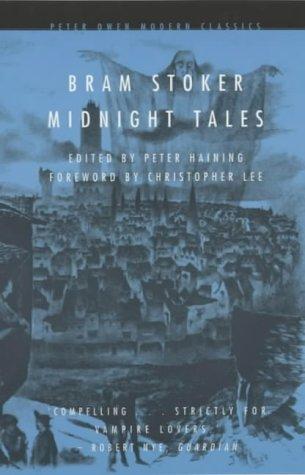
Midnight Tales by Bram Stoker

As some of you know, I love the novel Dracula and gothic fiction in general.  So I was excited when I came across this collection of short stories by Bram Stoker at the library.  It promised to be "chilling", "terrifying" and full of horror classics such as vampires, werewolves and mummies.

Unfortunately it wasn't really what it said on the tin.  The collection had twelve stories and at least three of them were definitely not horror.  For another one or two it would be debatable.  Now that wasn't always a bad thing - I really enjoyed The Red Stockade, an adventure story in which sailors battle pirates - but I do think that if you call a book Midnight Tales and advertise it as a horror collection, you should stick to it.

As with most short story collections, some of the tales were much more enjoyable than others.  The Squaw, about the Iron Maiden torture device, was very creepy.  One of the tales, The Dream in the Dead House, had originally been included in Dracula (Jonathan Harker on his way to Dracula's castle) but was cut at the publisher's insistence. The Spectre of Doom was originally written for children and had a lovely macabre fairy tale feel.

Unfortunately two of the stories contained my literary pet peeve - writing in another dialect.  I know Bram was Irish but I absolutely can not stand reading a story where the spelling has changed to reflect the accent.  These two stories were not bad, but all my enjoyment was sucked out of them by the writing technique.  Take this example from The Shorrox Man; "She had shkin like satin, wid a warrm flush in it, like the sun shinin' on a crock iv yestherday's crame".  If you enjoy that, I admire you, because it is beyond me.

Content aside, this collection was generally well editied.  There was a historical/biographical introduction at the beginning and a brief but interesting intro before each story outlining Bram's inspiration and how the story was originally published.  I just feel that if the editor had kept the collection strictly horror it would have felt more cohesive and functioned better as a whole book.

Score: 3 out of 5

Friday, 5 November 2010

Literary Blog Hop: Dracula

This weekend, The Blue Bookcase is hosting a literary blog hop.

The prompt is to highlight one of your favourite books and discuss why you think it is literary.  I've chosen Dracula by Bram Stoker. 

I've chosen this particular book as it is my favourite kind of literary book - one that is also easy to read and contains a great story.  Although I have enjoyed most of the literary books I have read, some of them can be a hard slog and can sometimes seem like more effort than they are worth.

Not so Dracula.  It opens perfectly with a chilling diary sequence from Jonathan Harker, sent to Eastern Europe to conduct property negotiations for Count Dracula.  Although the clues that Dracula is a vampire seem a bit heavy handed to a modern audience (he has fangs and only appears at night - run!), the writing is a masterpiece of slowly building suspense and tension.  Although this section is not at all gory compared to modern horror, I found it genuinely creepy.

The book continues as a "band of heroes" attempt and finally suceed to hunt down Dracula and destroy him.  Again, it's not a gory book but it's wonderfully descriptive, and for me that makes it creepy.  Every time I read it I get sucked right in to the world of the characters.

So why is Dracula literary?  For me most of all, it's down to the language and writing style.  I love old gothic books, and enjoy the slow, descriptive style.  For me it all adds to the tension.  And secondly, Dracula is literary due to it's impact.  Whilst I am not a fan of Twilight, the impact of Dracula can not be ignored - Bram Stoker took some folkore and turned it into one of th defining stories of all time.  There are countless vampire books and imitations, although for me none are as good as the original.

Have you read Dracula?
Were you scared?

Sunday, 17 October 2010

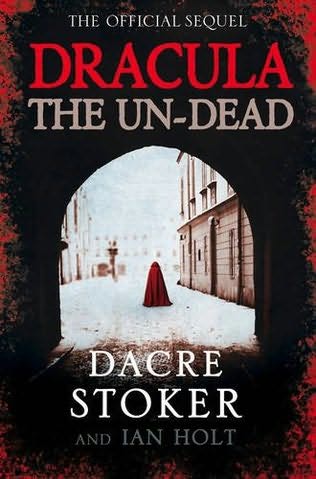
Dracula: The Un-Dead by Dacre Stoker & Ian Holt

Dracula: The Un-dead by Dacre Stoker & Ian Holt

The original Dracula by Bram Stoker is on my top ten list of all-time favourite novels.  I love slow-paced gothic literature, and for me, Dracula is the best of the bunch.   I love the characters, the letters/diaries style and when I first read it as a 12 or 13 year-old, I was scared.  I don't like the modern Twilight-style vampire stuff at all, but I did very much enjoy The Historian.  Given that this 'sequel' to the original bears the Stoker name, I was looking forward to reading it.

Synopsis: Quincey Harker, the son of Mina and Jonathan, starts working on a production of Bram Stoker's Dracula at the Lyceum Theatre.  There he starts to discover the secrets of his family as one by one the heroes from the original novel are destroyed.

Score: 1 out of 5

This may sound brutal, but here it is:  there is nothing to like about this book.  Please don't read it.  It is a blatant attempt on cashing in through the use of a famous surname and should never have been an authorised sequel to what is a classic and much-loved book.  

What offends me the most about it is how the original characters have been twisted and 'developed' into something completely beyond what Bram Stoker had imagined them to be.  Mina has become a sex-crazed vampire affecionado, Jonathan a sad drunk who likes prostitutes,  Jack a crazy morphine addict, Van Helsing a sell out and Arthur a sad and lonely old man.  And Dracula, an undeniable villain, has become a tragic romantic hero, 'God's crusader' who was merely misunderstood.  He doesn't even drink human blood anymore!  And Bram Stoker even appears in it as a plagerist! It all seems a bit disrespectful to me.

There was also a high proportion of silliness in the plot.  Don't get me wrong, I don't mind a bit of tackiness or suspending belief - but Jack the Ripper really being the Countess Elizabeth Bathory?  When the authors of a book take so much liberty with both the original story and the timeline of history that they have to provide an afterword to explain themselves away, you do start to wonder.

To sum up, I am sure Bram Stoker would have been appalled to have learned of this treatment of his novel if he was alive to witness it.  If you like the original, steer well clear of this one.