Showing posts with label library. Show all posts

Sunday, 18 January 2015

Project 1001: Two Book Reviews

My two 1001 Books projects have got off to a flying start.  From my adult list, I picked up Michel Faber's Under the Skin, which I received for Christmas.  I was already a Faber fan before starting this novel, the fourth of his that I have read.  And it's completely unlike the others, being dramatically different in tone and content to his more famous work The Crimson Petal and the White. 

The story opens with Isserley, who spends her time driving along the roads of the Scottish Highlands, looking to pick up male hitch-hikers, but only the large, muscular ones.  Apart from that, there's nothing else I could say about this novel without ruining how unexpected, different, surprising and chilling it is. There's so much I could rave about, particularly concerning Faber's brilliant use of language, but the reveal in this book is so wonderful that I wouldn't want to spoil it for anyone.  Just trust me when I say that it is an amazingly gripping book, one that will lodge into your brain.  There's one scene in particular that I can not get out of my head, and that has made me completely re-evaluate a certain aspect of my life.  Under the Skin is a book that seeks to challenge and confront, and it does so very cleverly.  It's a book I will remember and think about for years to come. If you like thrillers, sci-fi, or books about ethical issues, you really need to pick this one up. 5 out of 5 stars.

From my children's list, my first selection was Lian Hearn's Across the Nightingale Floor, mainly because it was readily available in my library.  The main character, Takeo, is a member of a secretive religious group called the Hidden in a fantasy world based on Japan, when he witnesses the massacre of his friends and family. Escaping with the assistance of the mysterious Lord Otori, Takeo comes to learn more about his past, and the supernatural talents he has inherited from his ancestors.  When he discovers who is responsible for the massacres of the Hidden, and for the autocratic rule large parts of the island are suffering under, he becomes involved in a plot to assassinate the tyrannical Lord Iida.

Across the Nightingale Floor is best described as a crossover novel between YA and adult.  It's shelved in the adult section of my library but the two main protagonists are teenagers, and a lot of the plot deals with Takeo finding out who he is and what is important to him.  What I liked about the novel was that Hearn didn't shy away from darker issues or pretend that everything was always going to be OK.  Death and grief are handled sensitively but straight-forwardly, without talking down to the reader at all.

I enjoyed reading Across the Nightingale Floor, as it's always good to find fantasy set in non-Western contexts.  I liked reading about the belief systems of the people in Hearn's worlds, and the different approaches to marriage and politics.  Although the beginning and end sections of the novel were pacy and engaging, the plot did seem to lag in the middle, and sometimes I had trouble keeping track of who was related to who, and what others thought of them, as there was much in the way of intrigue going on.  Still, I enjoyed it enough to want to continue with the series.  3.5 out of 5 stars.

Friday, 29 August 2014

A Natural History of Dragons by Marie Brennan


A Natural History of Dragons is the story of a young woman trying to overcome the prejudices of her age in order to become a scientist. It's set in a fantasy world similar to Victorian England (but with the inclusion of dragons) and follows a fictional memoir format, with Lady Trent looking back on her early life and first scientific expedition.  Isabella (Lady Trent) recounts her childhood and how her fascination with her father's library led to her passion for science and dragons.  After a chance encounter with a dragon as a young child, she is keen to devote her life to studying them.  But in this world, the role of a young lady is to act politely ignorant and find a husband, something Isabella finds herself chafing against.  It's only when she meets a man who is a scientist himself, and supportive of her radical-for-the-times ambitions, that she is able to make contacts and secure a place on an expedition to the dangerous mountains of Vystrana, where she hopes to catalogue and understand dragons of all species.

I really enjoyed A Natural History of Dragons.  It's set in a Victorian-type world, and the writing style harks back to that era too.  It reminded me a lot of Jonathan Strange & Mr Norrell in this regard, and it's something I definitely appreciated.  Isabella's voice felt authentically Victorian, and I loved the slower pace, although this is something that might not be for everyone.  I've read quite a bit on the history of science and I loved the little echoes of this process in Brennan's book, it felt as though this all could have happened, if only dragons were real.  We get to read about the 'scientific' reason why dragons can fly, despite being so heavy, and what their wings are made of.  Little details like this can really make a book for me.

Of course, I loved the theme of a woman overcoming the prejudices around her, and it was interesting to see the contrast between Isabella at an early age, and Lady Trent writing her memoirs, sometimes reflecting on the naivety of her younger self.  A Natural History of Dragons is the first in a series, and I can't wait to read the next installment.  The only problem with the book, and the reason it wasn't a 5 star read, was that the secondary plot involving smugglers and deception in the village felt a little bit forced to me and didn't engage me.  I wanted to read about dragons and science, not worry about who wanted Isabella out of the Vystrani village.  Still, I'm very much looking forward to getting my hands on the next volume.

Source: Library
First Published: 2013
Score: 4.5 out of 5

Read Alongside:

  1. Jonathan Strange & Mr Norrell by Susanna Clarke - A story of magicians set in Regency England, where everything is the same but magic exists.  This one has a similar writing style and is one of my favourite books, I really need to revisit it soon.
  2. Remarkable Creatures by Tracy Chevalier - Historical fiction centred around Mary Anning, who discovered dinosaur fossils along the Dorset coast of England.  This has similar themes of a woman trying to break into science, and is an excellent read.

Tuesday, 20 May 2014

The Vintage Girl by Hester Browne

Sometimes you need a bit of brain candy, and I picked up The Vintage Girl in the library as I was in the mood for a light, escapist, happily-ever-after type read.  Evie Nicholson loves antiques and is working for a dealer when she gets the opportunity to value family heirlooms at Kettlesheer Castle in Scotland.  A daydreamer and a romantic, Evie's imagination goes into hyper-drive when she learns that she will be at the castle at the same time as traditional ball hosted by the family (including the handsome heir). Caught up with visions of sweeping down staircases Gone With the Wind style and dressing for dinner, Evie pays little attention to the reality of life for the Nicholson family.  Can she learn to take a step back from her fantasy life?

The Vintage Girl was a lot of fun to read.  Hester Browne is a good writer and the story just flows from chapter to chapter, never feeling too short or too long.  The pacing is perfect and the romance, whilst being rather predictable, builds up slowly and avoids the pitfall of insta-love.  Evie herself is easy to relate to as a main character, particularly for someone like me, who also likes to live with her head in the clouds sometimes!  Equally her love interest, Robert, isn't too perfect, and is shown to have a few flaws of his own.

The main tension in the narrative comes from the fact that Robert is expected to marry someone else, someone rich who can use their money to save Kettlesheer Castle from bankruptcy, and is already in a relationship with this person.  But their relationship never felt believable enough to cause any real problems, and Browne made it too easy on Evie and Robert by making Catriona rather unlikeable, to the extent that it was hard to see why Robert was with her in the first place.   Similarly, this problem was solved too easily later in the novel.  I'm not expecting deep depression or anything like that in a novel like The Vintage Girl, but I would have liked the emotions of the situation explained a bit more.

I would recommend The Vintage Girl if you are after a fun, easy read with a bit of romance thrown in for good measure.  It's not the best chick-lit novel I have ever read, but I certainly enjoyed it.

Source: Library
First Published: 2013
Score: 3.5 out of 5

Tuesday, 1 April 2014

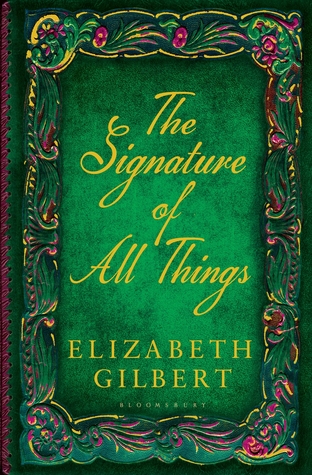
The Signature of All Things by Elizabeth Gilbert


Alma Whittaker is born in the very first year of the nineteenth century, a time of great change as the world opens up and scientific discoveries abound.  Growing up in a family that encourages her to have an open mind and better herself through intellectual development, Alma devotes herself to botany and the study of mosses.  However, she is unprepared for society in general and her personal life suffers through comparison with her beautiful adopted sister, Prudence.  A panoramic of Alma's life and the nineteenth century in general, A Signature of All Things examines the difference between intellectual and personal fulfilment, and the contrasting roles of science and spirituality.

The Signature of All Things is a very difficult book to summarise as it's an ambitious, epic book.  Alma may be the centrepiece and the main story-teller, but the book is about big topics such as science, spirituality, marriage, missionaries, the abolition of slavery, the discovery of evolution and the role of women. Gilbert has certainly aimed high, and for the most part the novel is very successful.  None of the themes felt rammed down my throat at any point, and the panoramic view of Alma's times reminded me a bit of Dickens.  Gilbert does a great job at conjuring up the ethos and atmosphere of the times, when botany was truly an exciting career and it felt as though scientists were uncovering the mysteries of God.

Although Alma is an interesting and easy to relate to main character, I found myself most drawn to the story of her adopted sister, Prudence.  Despite being very intelligent herself, she isn't quite in Alma's league and so suffers in a different way to Alma.  I enjoyed reading about her becoming drawn to the abolitionist movement, and the waves in society she was prepared to make for her beliefs.  In a similar vein, I enjoyed the latter sections of the novel, when Alma journeyed to Tahiti and came into contact with a different way of life to her own.  I love that whole nineteenth century explorer theme in historical fiction, and the meeting of different cultures.

On the whole, I really enjoyed The Signature of All Things. It was one of the titles I was most excited to read from the Baileys long-list, as the theme of women scientists was always going to draw to me.  However, it's a hard book to review as I could pretty much sum up my views by simply typing "I liked this book."  There was nothing I disliked about it, but neither did it grab me and worm it's way into my heart as a favourite.  It's simply a very well written story about a topic that engages me, and I'm glad I spent several nights with it over the last week.

Source: Library
First Published: 2013
Score: 4 out of 5

Read Alongside:

Sunday, 23 March 2014

The Luminaries by Eleanor Catton


In 1866, Walter Moody arrives in New Zealand, hoping to find his fortune in the gold rush gripping the country.  Taking lodging at a hotel in Hokitika, he enters the bar only to have all conversations around him stop.  He has stumbled onto a meeting of twelve local men, who are discussing the strange events that have been happening recently.  A hermit has been found dead in his house, a prostitute has apparently tried to kill herself, a great fortune has been discovered and a prospector has gone missing.  As Walter listens to the stories, he finds himself drawn into the mystery.  What really happened, and how are the lives and fortunes of all the men intertwined?

I finished The Luminaries late last night and my honest first reaction was to be in complete awe of Catton's skill.  I don't think I've ever read a book as intricately plotted, with so many relationships between different characters.  There are at least sixteen main characters and much of the plot and mystery depends on how they relate to each other, and the things they tell each other, that the other characters aren't necessarily aware of. Not only does Catton manage to keep all of this straight in the mind of the reader, but she also manages to slowly reveal clues and subtly alter our perception of these relationships, to move the mystery on throughout the novel.  I can't even begin to imagine how you would go about planning a book as complex as this one, but I am suitably impressed.

I was also very impressed with the writing.  The Luminaries is a long book and it's not got the fastest of paces.  The writing is Victorian in style, and I found reading it to be a similar experience to reading a good Dickens novel, or like picking up Jonathan Strange and Mr Norrell.  The writing lets you really sink into the book and the world of nineteenth century New Zealand.  Which is a great place to be; I loved the frontier-like town of Hokitika with all of it's prostitutes, prospectors, illegitimate sons, plotting and gunfights.

So on an intellectual level, I was blown away by The Luminaries and can see why it was awarded the Booker Prize last year.  But books are about more than the skill involved in creating them, and thankfully The Luminaries had a good plot as well, with a story that kept me engaged.  Although I guessed some of the elements of the mystery, I enjoyed watching the whole thing unravel and just sped through the last two hundred pages, in order to find out what really happened.

If The Luminaries has a flaw, it is in characterisation.  I loved the more sinister characters in the novel, Lydia and Frank Carver, as well as the ambiguous character of Anna Wetherell, but some of the thirteen men felt a little flat.  I could relate to the Chinese characters because of the way their lives were written about in the book, but with some of the other men, Catton didn't give me any reason to feel attached to them or root for them, meaning that I sometimes felt a bit detached when reading the novel.  This stops me from giving The Luminaries 5 out of 5, but it's still one of the best, most impressive novels I've read in a long time.  I'll be extremely surprised if this one doesn't make the short-list for the Baileys Prize.

Source: Library
First Published: 2013
Baileys Longlist: Book 3/20
Score: 4.5 out of 5

Sunday, 10 November 2013

The Ocean at the End of the Lane by Neil Gaiman


I write this review as someone who is not a Neil Gaiman fan.  I loved Stardust (although that is probably more to do with the brilliant film version) and The Graveyard Book, thought that Coraline and Neverwhere were just OK and to be honest, didn't like Anansi Boys at all.  I think Neil Gaiman has wonderful ideas but his writing has always been hit and miss for me.  I wasn't going to try Ocean at the End of the Lane, but it's been getting so much hype that I decided to give Gaiman one more chance.  This was going to be a make or break book; if I didn't like it, I was prepared to give up and admit that Gaiman just isn't for me.

But I did like in; it fact I more than liked it, I loved it. The Ocean at the End of the Lane is the first Neil Gaiman book I have sped through, completely enchanted and desperate to find out what would happen next.  It's the story of a man who has returned to his home town for a funeral, and who ends up visiting the farm where he met Lettie Hempstead, her mother and her grandmother.  As soon as he reaches the property, the memories start flooding back, starting with the suicide of a lodger staying at his house.  This suicide allows dark creatures to enter the world, who want to destroy him and his family.  The only people who can help are the Hempsteads, who claim that the pond in their garden is really an ocean, and that they are as old as the Big Bang itself.

What I loved most about The Ocean at the End of the Lane was the atmosphere and nostalgia of the book.  I am just about old enough to look back on my childhood fondly and miss some of the simple pleasures and imaginations of being young.  Gaiman captures this feeling perfectly; even when something bad is happening in the book, there's this sense of childhood and time, and having the freedom to check out stacks of books from the library and devour them in your bedroom.  It's a bittersweet portrayal of childhood memories and it's one that certainly worked for me.

I also enjoyed the magical elements of the story.  They are kept mysterious and the line between what actually happened and what was distorted by memory or imagined is deliberately kept blurred.  The ending fit in with this theme and was perfectly bittersweet.  As with all Gaiman books, the rather ordinary main character is allowed his moment to shine and there's the theme of doing the right thing, even if it isn't the easy thing, and of ordinary people finding courage within themselves.

To be honest, it's hard to put into words exactly what I loved so much about this book, as it was more of a feeling than anything logical.  The book just enchanted me, swept me away and left me with a big smile on my face and a contented feeling inside.  It's short and bittersweet and I would highly recommend it, even if you think Gaiman isn't for you.

Source: Library (although I will be buying my own copy).
First Published: 2013
Score: 5 out of 5

Thursday, 26 September 2013

Blankets by Craig Thompson


I've been getting into graphic novels recently, and Blankets is one that has come highly recommended to me from a variety of different sources.  I was actually very keen to read Thompson's other graphic novel, Habibi, but Blankets was the one my library stocked, so I decided to try it first.  It's an autobiography of two different parts of Thompson's life; falling in love for the first time and his relationship with his brother.  Told in non-chronological order and jumping between the two narratives, Blankets is a coming of age tale about what it is to be human and the relationships we have with each other.

I reserved Blankets at the library without ever seeing it so was shocked at how chunky it was when my hold finally came in!  At 580+ pages, it's definitely the longest graphic novel I have ever read.  This chunkiness, the sheer length of it, meant that as a reader you get to fully know the characters in a way that I would normally associate with a straight-forward novel.  It was an immersive experience and this made it emotionally engaging.  I really felt for Craig, and the confessional style of the narrative made it easy to connect with him.  Having been bought up by strictly religious parents, Craig magnifies all of his flaws/ 'sins' and this makes him relatable.  It felt like reading a diary, as Thompson wasn't interested in covering anything up in order to appear better than he was.

The parts of the book that dealt with Craig falling in love with Raina were just beautiful.  It's been a while since I fell in love for the first time (it's our ten year anniversary today!), but reading Blankets bought it all back, the intensity and how important everything feels.  Thompson manages to make these scenes sweet  without being sappy and I loved them.  Similarly, the relationship between Craig and his younger brother felt very real, too.

In fact, there wasn't much I didn't love about this novel.  I thought the latter parts were a bit rushed, almost as if Thompson was worried that the book was already long enough, but apart from that I have no complaints at all.  It's a fantastic coming of age story, I loved the style of the illustrations and the story is full of emotion.  I can't wait to pick up Habibi.


Source: Library
First Published: 2003
Edition Read: Top Shelf Productions, 2006
Score: 4 out of 5

Read Alongside:
Eleanor and Park by Rainbow Rowell - Another beautiful examination of first love that feels extremely real.

Saturday, 7 September 2013

Z: A Novel of Zelda Fitzgerald by Therese Anne Fowler


I've been meaning to read Z for ages.  I just loved F.Scott Fitzgerald's Tender is the Night (my review) for it's complicated portrayal of a marriage in decline, so I was keen to find out more about the real marriage behind the story.  Z is a fictionalised account of the life of Zelda Fitzgerald from her days as Zelda Sayre from Alabama through the whirlwind days of her early marriage to the time she spent in various institutions suffering from poor mental health.  It's a portrait of both a woman struggling to be known for something other than being F.Scott Fitzgerald's wife and of a turbulent marriage.

I loved this book!  I was expecting to like it but I wasn't expecting to love it in the just-one-more-chapter, unputdownable, kind of way.  The whole issue of Scott and Zelda's marriage is a thorny one, with Zelda accused in some quarters of destroying Scott's potential and driving him to drink, and Scott accused of driving her into a mental asylum.  Fowler manages to tread a more sensitive line and present a more balanced portrayal of a marriage in which two people love each other greatly, but simply can't be happy together.

Zelda's voice is just perfect.  She declares in an initial chapter that all she wants from life is "joy and drama and passion and romance" and boy does she get it.  Zelda is reckless, high-spirited, ambitious and utterly charming and she just jumps off the page at you.  The way Fowler writes her is just full of life and energy and you can't help but fall in love with her a little bit.  I'm not the reckless sort myself so I loved reading about her bathing in a flesh-coloured swimsuit to encourage rumours that she swam nude or jumping into the fountain at Union Square.

The relationship between Zelda and Scott is portrayed very realistically.  It's clear that they love each other and Zelda, who had never been out of Alabama before, is swept away by the bright lights and lifestyle of New York.  Zelda and Scott are both reckless and they encourage this in each other, delighted in being seen as symbols of their age, acting more like characters out of a novel than real people.  Of course, all of their partying and spending comes back to bite them later in the form of Scott's dependence on alcohol and their constant money problems.  Both love drama and both lack the skills to communicate effectively, making endless promises to start over and make everything fresh.

Because Zelda and Scott really do love each other, the book is quite sad at times.  We get to see moments of them genuinely caring for each other, like Zelda picking up Scott's ego after a failure in his career, or Scott not leaving Zelda's bedside when she is ill, but ultimately they just can't work out how to be happy together.  Anyone who is married themselves or who has been in a long-term relationship will know that it takes more than love to make a relationship work and Z is about what happens when you have a lot of love, but not much else.  I love books that show complicated relationships like this, that show how love can hurt as much as it can make you happy.  Fowler did this fantastically, and this is what had me glued to the pages.

As you can tell, I loved Z and would whole-heartedly recommend it.  I've finished this book with an urge to read Zelda's own novel, Save Me the Waltz, as well as Scott's The Beautiful and the Damned.  I might even try some Hemingway again.

I'm going to conclude the review with my favourite passage from the novel;
"It just seemed like we were embarking on a great adventure, but that adventure turned into a party we couldn't resist, a five-year-long party, everybody in sparkling gowns and tuxedos with satin lapels, bottomless glasses of champagne...But that's not a marriage, that's not a way to live.  Real life has to happen sometime."

Source: Library, though I also have a review copy from Netgalley.
First Published: 2013
Score: 5 out of 5.

Friday, 30 August 2013

Dare Me by Megan Abbott


Beth Cassidy is the best friend of Addy Hanlon, undisputed Queen of the cheer-leading team.  When a new coach arrives, one who is determined to push the team to their limits, tough, power-hungry Addy feels like her superiority is being challenged.  But Coach isn't one to back down and Beth soon finds herself caught in the middle of a power-play between Addy and Coach, in which Addy will stop at nothing to be the victor.  As the girls on the team push themselves to be faster, harder and thinner, Beth has to decide what the right thing to do is, and whether she herself wants to play Addy's games.

I picked up Dare Me because I remember seeing positive reviews of it on other blogs, and knew that it would be much darker than a book about a group of teenage cheerleaders might appear to be.  And indeed it was.  Everything about it, from the writing style to the plot and characters was the very opposite of a cheesy teenage novel.  The girls in Dare Me are tough and determined, uncaring about who they hurt and unthinking of the consequences of their actions.  Addy was once their Queen Bee but then Coach takes that role and the girls starve themselves, binge drink, force themselves to be sick and even make out with boys based on the Coach's wishes.  Dare Me is all about the power dynamics in groups of teenage girls and it is truly unflinching in the way that it portrays them.  

Dare Me is full of twists and turns and most of them were genuinely surprising.  I had guessed the ending of the novel, the reason Addy had such power over Beth, but I was in the dark about the central mystery of the novel involving a police investigation (I won't say any more as I don't want to spoil anyone).  Beth's characterisation was very subtle, she came across as a victim of Addy and then the Coach's manipulations initially, but as the novel progressed we got to see another side of her.

Megan Abbott's writing in Dare Me is very distinctive.  Like her characters, it pulls no punches with it's long sentences full of vivid description;

"I'd forgotten what throwing up could be like, the kind where you're not, Emily-style, nuzzling your finger down your fish-tailing throat, begging for release from the dreaded sluice of cupcakes or from the acidic sludge of too many Stoli Citronas - cheer beer, they call it, we call it.No, this is throwing up like coming off the tilt-a-whirl at age seven, like discovering that dead rat under the porch, like finding out someone you loved never loved you at all."

You see what I mean?  I was very impressed with the writing, which seemed to sum up the mindset of the characters so perfectly.  It's a while since I've read a book with such blunt writing and I'm definitely going to be looking out for more books by Abbott.  The only criticisms I would make of this book is that the final resolution seemed a bit contrived (to me), but apart from that I loved it and read it in pretty much one sitting.  Recommended for anyone who likes darker novels full of twists and turns.

Source: Library
First Published: 2012
Edition Read: Pan Macmillan, 2012
Score: 4 out of 5

Read Alongside:
  1. The Virgin Suicides by Jeffrey Eugenides - I read this pre-blogging and it's one of my favourites.  Eugenides also examines the darker side of adolescence and although his writing is more dreamy, Abbott's descriptions reminded me of Eugenides in some places.
  2. The People of Forever are not Afraid by Shani Boianjiu - This book was long-listed for the Women's Prize for Fiction 2013 and follows three female conscripts to the Israeli army.  The blunt writing style and unflinching look at relationships make this a good companion read to Dare Me.

Tuesday, 5 February 2013

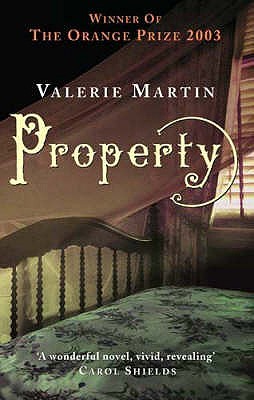
Property by Valerie Martin

It's the early nineteenth century in Louisiana and Manon Gaudet is unhappily married to the owner of a sugar plantation.  Cut off from her friends and family, Manon increasingly begins to realise that she doesn't know or like the man she married.   The slave girl she received as a wedding gift is a constant source of tension between husband and wife and the atmosphere Manon lives in is oppressive.  There are rumours of a slave rebellion and as violence in the area increases, Manon's way of life is challenged.

I picked up Property mainly because it had won the Orange Prize in 2003 and I've yet to be disappointed by the winners. The good news is that Property isn't destined to be the first disappointment; I loved it.  It's told in a bare, simplistic style but there's so much emotion and feeling in the story that each word is powerful.  Martin doesn't take the easy route of demonising slave owners, rather she attempts to paint a realistic picture of what slave owners at that time would have thought.  At times Manon can be almost kind to the slaves, but at others she dismisses them completely, as objects not worthy of human consideration.  I appreciated the ambiguity in the writing as a mark of a good writer.

The 'property' in the book doesn't just refer to the ownership of slaves, it also alludes to the ownership of Manon by her husband.  On their wedding day, Manon knows next to nothing about him, but her life is in his hands from that moment on.  Even when she inherits a property of her own from a relative, Manon isn't free to live in it to escape her domestic situation as legally the property belongs to her husband.  In some ways, she is property as much as the slaves are.  This extra angle made the book more interesting.

Property isn't a book to pick up if you are after happiness.  There's misery in the story from the very first scene and marital abuse and the misuse of slaves are constant parts of the narrative.  Even when it seems like things might be looking up for Manon, something else happens to add more misery.  But what the story lacks in happy endings, it makes up for in authenticity.  The whole thing felt very believable for nineteenth century Louisiana and the characters are so ambiguously written that as a reader, you aren't sure whether you even want them to be happy.

I'm glad I picked up Property. It's a powerfully written and subtle book that I carried on thinking about long after putting it down.  Recommended.

Source: Library
First Published: 2003
Score: 4 out of 5

Sunday, 16 September 2012

When She Woke by Hillary Jordan

Hannah Payne lives in a dystopian version of America where conservative Christians are in control and criminals serve their sentences out in public, melachromed for easy identification.  Hannah has commited the crime of having an abortion (classified as murder) and for that, every inch of her skin has been dyed bright red.  Having spend some time on the Chrome Ward as part of a sinister reality TV programme, Hannah must now try to adapt to life as an outcast, subject to prejudice and abuse.  Her every movement can be tracked and she soon becomes a target for the Fist, a radical group that hunts out and punishes chromes.  With her family turning away from her, can Hannah adjust to her new life?

When She Woke is a modern retelling of the classic The Scarlett Letter.  Unfortunately, I've not read the latter so I can't judge how faithful to the original it was.  Hannah does refuse to name the father of her unborn child but this isn't as integral to the plot as I had imagined it to be.  When She Woke is more about the dystopia of Jordan's imagined American society than anything else.

It's hard to make a judgement of this book as the first and second halves are remarkably different.  The first half is about the society Hannah lives in and the reactions of her friends and family to her having the abortion, whilst the second is more action packed as Hannah struggles to escape the Fist.  I liked the first half but found the second implausible and a bit silly.  I was most interested in the psychological impact on Hannah - what would it be like to be branded forever as a criminal?  The passages where Hannah is free and trying to interact with members of the public were fascinating.

I think some of the impact of this book was dulled by me not being American.  I'm British and whilst some people here may feel strongly about abortion, it's not a large issue and definitely not a political one.  No one finds out whether our politicians are 'pro-choice' or 'pro-life' and it's rare to see a discussion or debate around abortion.  Had I been in America, where I know abortion is more highly charged, abortion equaling murder would have been more powerful.  Consequently I wanted to know more about Chromes that were different to Hannah - the blues, yellows and greens.  Were they treated differently than she was?

As I mentioned above, the second half of the book was a bit of a let down.  Hannah is targeted by a radical group and starts on an action packed journey to escape. I think Jordan is trying to portray Hannah's character growth as she starts to care less what others think of her but this comes across as rushed and unbelievable.  There's even the inclusion of a lesbian scene that seems completely out of character for Hannah,given that only a few months earlier she was regurgitating all her evangelical parents' beliefs as facts.  I truly hope the author wasn't associating feminism with lesbianism i.e because Hannah becomes a feminist, she must find other women sexually attractive.  Hannah would have changed, but not as fast as Jordan made her.

On the whole, the premise of When She Woke was stronger than the execution.  I'm still thinking about Chromes almost a week after finishing the book but the plot didn't measure up.  A thought provoking read.

Source: Library (reserved)
First Published: 2011
My Edition: Harper Collins UK, 2012
Score: 3 out of 5

Saturday, 1 September 2012

No God But God by Reza Aslan

No God But God is a non-fiction book about Islam.  It covers the life of the prophet Muhammad, the birth and development of the religion and also contemporary issues like the wearing of the veil, jihad and the evolution of what we in the West call fundamentalist Islam.  Aslan explains the roots of different Muslim groups and how the split between Sunni and Shi'a Muslims first occured.

Despite not being a believer, I've always been fascinated with religion.  I grew up in inner London so have been surrounded by people of different faiths from an early age and this has made me curious about them all.  No God But God is simply the best book on Islam that I've ever read.  It covers the development of the religion well and includes lots of discussion but more importantly, it's beautifully written in an almost narrative style that makes it easy to keep turning the pages.  Aslan shows a lot of respect for his faith but at the same time is keen to separate historical fact from myth.

I think most readers could learn a lot from this book.  Although I was already familiar with the history of Islam and the Sunni-Shi'a split (went to an amazing Karen Armstrong lecture at the British Museum once), there was much in this book I didn't know.  I found the chapter on Sufi Islam fascinating, they are an almost mystical group that believe in destroying your ego in order to achieve 'oneness' with Allah.  They practise many rituals to distract them from the sense of self, from breathing patterns through to dance, fasting and intense spiritual training.  Interestingly, they believe that there are many paths to God and the path you choose is irrelevant as long as you are making the journey.

Aslan's main argument in this book is about what some call the 'clash of civilisations' following 9/11. It's certainly true that Muslims have been tarred with a fundamentalist/terrorist brush and that some in the West think we are the prime target of groups such as Al-Qaeda.  However, Aslan argues that the West is simply caught up in what is an internal conflict between Muslims, a sort of Islamic Reformation where different groups are vying for the heart and soul of Muslims.  He traces the development of Al-Qaeda through Saudi Wahhabism (and it's funding from the West) and contrasts it with nations and schools of thought that want Islamic democracy - to live in a state where Islam is important but to still have civil rights.  If nothing else, Aslan's reminder that not all Muslims are the same is timely and one that certain groups in the West should learn.

I thoroughly enjoyed reading this book and was struck by how religion as an institution is certainly different from faith. After Muhammad's death his followers couldn't agree on how best to interpret his message and how to pronounce on matters that were not covered in the Quran.  Although the arguments of the different theological schools were hard to follow at times it was fascinating to see how things changed over time (much like Christianity) and how different issues became relevant at different times through history.

My only complaints about the book are that I would have liked to read more about the Ottomans (but then I love anything to do with the Ottomans) and that I think Aslan missed a trick by not mentioning the scientific developments in Islamic countries whilst European countries were still in the Middle Ages.  If you're interested in religion, this is definitely a book to read and it's also one to recommend to anyone who needs their perceptions about Muslims challenged.

Source: Library
First Published: 2005
Score: 4.5 out of 5

 Read Alongside:
A History of God by Karen Armstrong - I read this one pre-blogging.  It's an excellent non-fiction account of the birth and development of the three major monotheistic faiths; Judaism, Christianity and Islam.

Monday, 27 August 2012

The Vampire Lestat by Anne Rice

Last summer, I read and reviewed Interview with the Vampire.  I was a big fan of the film but unfortunately found the book disappointing.  Whilst I enjoyed the actual story, I thought the writing was long winded and Louie irritating.  Nevertheless, I decided to try the second volume of the series because Lestat is more appealing as a character to read about and several people mentioned that The Vampire Lestat is more action packed than Interview with the Vampire.

 The Vampire Lestat opens in San Francisco in 1984 with Lestat realising that the journalist from the first book has published Interview with the Vampire. It's riding high in the fiction charts and humans have no idea that the 'story' inside the pages is actually true.  Despite it being taboo, Lestat decides to respond by writing his own account of his life and this is what he bulk of The Vampire Lestat covers.  We follow him from his aristocratic beginnings in Revolution-era France through his travels around the world as he attempts to find out why vampires exist before finally settling in New Orleans.  Along the way we meet many more vampires and hear their stories as Lestat traces the source of vampirism back to Ancient Egypt.  But will the vampire population allow Lestat to publish his book?

The Vampire Lestat is a chunky book at 500+ pages but it reads quickly and fluently.  I enjoyed it much more than I enjoyed Interview with the Vampire.  One of the reasons for that is simply that Lestat is an easier character to read than Louie, he doesn't indulge in self-pity and is very impulsive, which leads to a lot more 'action'.  Lestat is also curious about the world around him and other vampires, which opens the door for Rice to bring in some more stories alongside his.  Although Lestat is the centerpiece of the novel he finds older vampires and they tell their story to him, meaning the book covers a wide time period and many perspectives.  I appreciated this variety.

There's also a lot more information about vampires in this book.  We find out why vampires exist, more about the rules that govern their existence and how vampires can differ from each other.  I don't know if world-building is the right world for a novel such as this, but the 'vampire theory' feels more thought-out than it did in Interview with the Vampire and it makes sense as a whole.  I especially appreciated that the vampires themselves couldn't agree about how best to be a vampire and what they should/shouldn't do.  This made for some interesting conflicts as the book progressed.

The Vampire Lestat is pure escapism.  I breezed through it and thoroughly enjoyed it.  However, some parts crossed the line into silly/tacky, especially the Lestat as a twentieth century rock-star sub-plot at the very beginning and end.  Having said that, I enjoyed it much more than Interview with the Vampire and would definitely read the third in the series, Queen of the Damned.

Source: Library
First Published: 1985
My Edition: Source Books, 2008
Score: 4 out of 5

Saturday, 25 August 2012

Colour: Travels Through the Paintbox by Victoria Finlay

When I saw this book reviewed at A Striped Armchair, I knew it was one I would have to hunt down and read immediately.  You see, I have a thing for colour.  I am not an artist but colour lights up something in my brain; when I lived with my parents and felt sad, I would go and lie in the bright yellow hallway and feel instantly better.  Colours can change my emotions and make me feel different things, calm me down, cheer me up or soothe me.  A whole book about the history of colours and how they are made sounded perfect.

Colour is part travel, part history.  Finlay has divided the book according to the rainbow and investigates how each colour was made in the time before synthetic colours.  Where possible, she visits countries of traditional production and learns how to make these colours herself and also about how colour production changed societies and cultures.  Finlay writes about why certain colours are given a high status (e.g. purple as the colour of royalty), compares how the same colours were made in different countries and why some became prized over others.

I really enjoyed Colour.  Finlay is an engaging writer who is fascinated by her subject matter and this comes across on the page.  Finding out how colours were made was truly compelling as I had no idea that humans were so inventive.  From sea snails to animal bones to bug blood to precious stones, there seems to be nothing colourful in nature that was not exploited for paint or dye at some time in history.  I was fascinated with the complicated process of making colour, of how you go from a rock of lapis lazuli to a blue oil paint and how artists used to make their own colours and tones according to what they wanted to paint.  Colour had power in history and there are plenty of accounts of countries and places become rich by making a fade-resistant paint that could be exported.  Finlay does a good job of explaining how these colours then became exulted and held up by society, part of the fabric of life.

Although I enjoyed the travel sections, where Finlay meets people living where colours were made in the past and discusses the legacy of colour with them, these sections took a backseat for me to the sections about actually making the paint or dye itself.  I would also have liked to learn more about modern paint making, about how many of the traditional colour sources are still used, and how the transition was made from natural to artificial colours.  Finlay clearly feels like something has been lost as we're forgetting the secrets of natural colours and I couldn't help but agree with her.  I'd be interested to see a modern paint-making factory to investigate how different things really are (I know you can still buy some traditional colours).

All in all, an absorbing and well written non-fiction book that I'm happy I picked up.  I'd recommend it to anyone who enjoys travel or history, or anyone who has ever mixed their own colours using a watercolour set. 

Source: Library
First Published: 2002
Score: 4 out of 5

Saturday, 11 August 2012

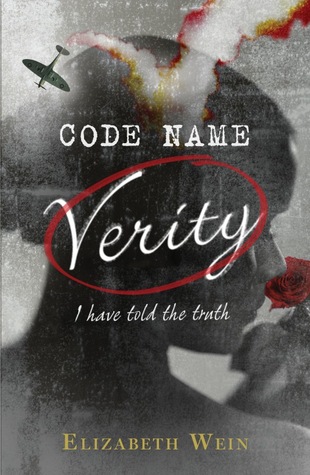
Code Name Verity by Elizabeth Wein

Code Name Verity opens with a young girl in a Nazi holding camp in Occupied France.  She's a captured British spy who has been tortured mercilessly for information and become a collaborator. She agrees to write down everything she knows about the British war effort in exchange for not being tortured any more.  And so begins the story of Verity/Julie and her friend Maddie, a pilot, narrated by both before the end of the book.  It's hard to write about the plot of Code Name Verity without spoiling it, but the narrator is unreliable and there are many twists and turns.  Is Julie really a collaborator?  Is she telling them everything she knows?

I liked Code Name Verity.  It's a solidly written book with many well-plotted twists.  I spent the first part of the book perplexed as there seemed to be a big difference between what Verity was saying (I'm petrified and will do anything to stop the torture) and her character, which was still lively and unbroken.  As the book went on, the reasons for this became clearer and I understood Verity/Julie a lot better.  Wein just about manages to pull off the deceit in the characters that makes the twists believable. 

There is a lot of suffering and torture in Code Name Verity, but it wasn't hard hitting.  Bad things happen to the characters and Wein tried to show the impact of that, but I never really felt it.  I wanted to feel Verity's fear and pain but the way she wrote about it prevented that.  Had I felt more connected to Verity, more "in her shoes", I would have enjoyed the book more than I did. I liked the plotting and trying to figure out who was telling the truth but there was always a distance in my reading experience.  Essentially, the characters didn't feel 'real' for their situation; at times Verity felt like a modern teenager, not a teenager of war forced to grow up too quickly.

I did enjoy the character of Maddie though.  She is more straightforward and written in a relatable way.  When Maddie writes of her love of flying, I wanted to be right there in the plane with her, soaring over the white cliffs of Dover.  As a whole, the book was a page turner and it was one I ripped through very quickly.  It was just lacking that 'oomph' and depth to turn it from a book I liked to a book I loved.

Source: Library
First Published: 2012
Score: 3.5 out of 5

Read Alongside:
1. Jasmine Nights by Julia Gregson - Another story about a female spy during World War Two, this one about a singer in Egypt.  The spy plot is written alongside a romance.
2. How I Live Now by Meg Rosoff - Excellent rendering of teenagers during an unnamed war.  This book contains the emotion I felt was lacking in Code Name Verity.

Sunday, 29 July 2012

Bring Up The Bodies by Hilary Mantel


In the sequel to the Booker prize winning Wolf Hall, Thomas Cromwell has enabled King Henry to marry Anne Boleyn but not everything has worked out as he had hoped.  Although Anne has given birth to the Princess Elizabeth, she's had many miscarriages and seems unable to bring a child to term.  Worse, the English people haven't accepted Anne as rightful Queen and relations with Rome are at an all time low.  When Henry spends time at Wolf Hall and notices Jane Seymour, Cromwell seizes his chance to both help the King and take revenge on those who have acted against him in the past.  As he works to bring about the final days of Anne Boleyn and her courtiers, Cromwell makes new allies and seeks even greater power.

I should start this review by mentioning that I was ambivalent towards Wolf Hall.  I know it was loved by many bloggers but I found it a stuffy and tedious read that was hard to get through. I'm pleased to report that many things that I found difficult about Wolf Hall were not present in Bring Up The Bodies; the pacing was tighter, the pronoun use was clearer and there was more action in the story.  Like Wolf Hall, one thing I admired was how Mantel has taken a well known and much written about period of history and made it fresh and relevant. There is no screen of sentimentality, it feels as though Mantel is writing about how it must have been like to actually live then, rather than just look back on it.

Thomas Cromwell is a fascinating character.  I admired his slyness and intelligence in Wolf Hall, but he takes it to new levels in Bring Up The Bodies.  It becomes clear that this is a man who never forgets a thing, who watches all of those around him and is always poised, waiting for the right moment to strike at his enemies. This can come across as downright chilling;

"Would Norris understand if he spelled it out?  He needs guilty men.  So he has found men who are guilty.  Though perhaps not guilty as charged."

Overall, there was much I admired about Bring Up The Bodies.  In my opinion, it was a tighter, more successful novel than Wolf Hall.  But despite admiring the characterisation and the writing, reading this book just wasn't a pleasurable experience for me.  I've been thinking about it over the last few days and I can't quite put my finger on why, but reading Bring Up The Bodies was an effort.  I never wanted to pick the book up and it seemed to take forever to get through it.  Enjoyment is such a big part of the reading experience for me, so even though I admired the book, it fell short at this vital hurdle.  I know I'm in a minority on this one, but I didn't enjoy reading it, it just didn't 'click' with me.  I doubt I'll pick up the third volume in the series when it is released.

Source: Library
First Published: 2012
Score: 3.5 out of 5

Thursday, 26 July 2012

Library Haul

Regular readers will know that despite having a TBR pile numbering into the hundreds and review commitments, I can't stay away from the library.  I have managed to cut my book spending dramatically, but my library habit means my TBR pile still isn't getting read.  I especially can't resist the library when I'm on summer holiday, and can spend a leisurely morning in there browsing my way along the shelves.  Here's my loot, all impulse picks rather than reservations:


1. The Vampire Lestat by Anne Rice - I read Interview with the Vampire whilst on honeymoon in New Orleans and had a mixed reaction to it, mainly because of Louie and his whining.  But Lestat is a much cooler character, so I'm excited to read this volume in the series.  Gorgeous cover.
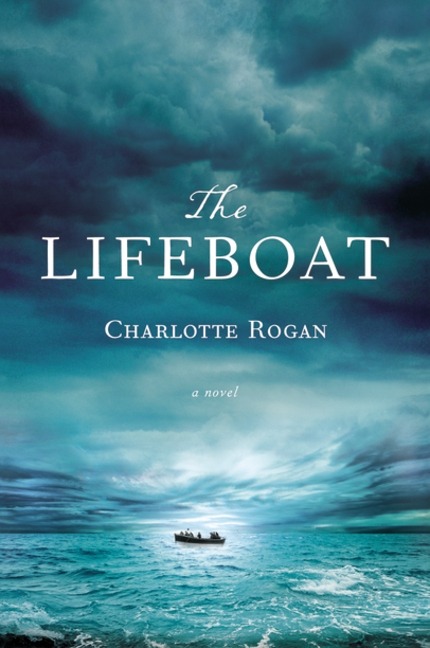
2. The Lifeboat by Charlotte Rogan - I've been seeing this everywhere on blogs and was very surprised to see my library had a copy I could pick up, rather than go on a long reservation list for.  Love the blue colour on the edge of the pages too, this is a lovely edition.
3. The Constant Gardener by John Le Carre - Loved this film of this and wanted to try something outside of my reading comfort zone.  Looking forward to starting this.


4. Baking Made Easy by Lorraine Pascale - I actually got a few cookbooks but I thought I would share this one as it contains a recipe I am very excited to make - Mojito Genoise Cake.  It's our first wedding anniversary tomorrow and I'm making it for my husband as a treat.
5. Ghost Train to the Eastern Star by Paul Theroux - I'm a sucker for a good travel book and couldn't resist this one about a train journey east to Asia from London.
6. Empires of the Indus by Alice Albinia - This is part travel, part history as the author travels along the Indus river and explains it's role throughout history.

So, plenty to be going along with in the next few weeks!
Have you read any of these books?  If so, what did you think of them?

Monday, 16 July 2012

The Caliph's House by Tahir Shah


Tahir Shah is one of my favourite writers.  His love letter to Morocco, In Arabian Nights, is up there amongst the books I treasure because it perfectly invokes the magic, mysticism and wonder that I picture when I think of bazaars, spice markets, coffee houses, winding alleyways, snake charmers and Eastern story-telling.  So it was with high expectations that I picked up a copy of The Caliph's House, his earlier book, in the library.  It's an account of the first year Shah and his family spent in Casablanca, renovating a dilapidated traditional house and attempting to fit in with the locals.

Unfortunately, not all of my expectations were met.  In many ways, The Caliph's House is a wonderful book full of simple but absorbing writing and Shah certainly does a good job at describing Casablanca and Morocco itself.  Although there are sketches included, they aren't really necessary as, reading the book, I felt as if I was actually there with Shah and his family.  The culture of the Moroccans (for example their belief in Jinns) is described with respect but a gentle humour that shows the high regard Shah has for his adopted country.


As someone who has often daydreamed about packing everything in and moving to an exotic location, I enjoyed reading about the renovation of the house and how the traditional Moroccan artisans worked.  But this was also where I felt the book fell down a bit; Shah's writing is much more suited to stories and atmospheres, not practicalities like finding a carpenter or fixing a sewerage pipe.  The passages about the Moroccans and his visits around the country were enchanting, but the renovation sections seemed to drag.  There's only so many times I needed to read about workers not turning up on time or the guardians of the house panicking about something the resident Jinn might or might not have done.

All that is not to say The Caliph's House isn't a wonderful book - it is.  It's just that In Arabian Nights is better (more about Morocco, less about house renovation) and I happened to read that first.  The Caliph's House was worth reading for the descriptions and for the friendships Shah struck up with some of the Moroccans in the slum bordering his house; I had a soft spot for the refined stamp collector, Hicham.  I look forward to reading some of Shah's other books in the future, particularly In Search of King Solomon's Mines and Trail of Feathers, about Peru.

I'm going to end this review with my favourite passage from the book:
"I was tired of our meagre existence and the paltry size of our flat, where the warring couple next door plagued us through paper-thin walls.  I wanted to escape to a house of serious dimensions, a fantasy inspired by the pages of the Arabian Nights, with arches and colonnades, towering door fashioned from aromatic cedar, courtyards with gardens hidden inside stables and fountains, orchards of fruit trees, and dozens and dozens of rooms."

Source: Library
First Published: 2006
Score: 3.5 out of 5

Sunday, 8 July 2012

Prep by Curtis Sittenfeld

Lee Fiora is a smart fourteen year old who dreams of the life of privilege and happiness promised by the glossy magazines for East Coast boarding schools.  When she is accepted to Ault on a scholarship, she has high expectations for her fantastic new life but is soon overwhelmed by those around her.  Lee retreats into a shell, becoming hyper-sensitive to others and unwilling to draw any attention to herself.  She is both fascinated by and contemptuous of the wealth and intelligence of her new class mates and gets into a serious of intensely one-sided relationships with her peers.  At heart a coming of age story, Prep also has a lot to say about closed and exclusive environments.

I'm going to come right out and say that I liked Prep a lot and the main reason for this was that I could identify with Lee completely. At primary school, I was picked out as a 'bright' pupil and encouraged to apply for a selective secondary school where I had to take a series of exams and attend a few interviews to get in.  It wasn't a fee-paying school like Lee's, but it was by far and away the best school in the area in terms of results and wealthy parents got tutors for their children to help them get in.  I was the only person in my new class who hadn't been tutored and I was the poorest person there by quite a way.  Don't get me wrong, my family never struggled, but I was surrounded by people who jetted to the Alps for skiing during half term holidays and spent the summer on Carribean islands; I dreaded the 'what did you do on your holidays?' conversation every September.  Like Lee, I might have developed a bit of a chip on my shoulder and become defensive in the face of so much privilege.

I was also socially awkward as a teen and any shy person will find it easy to relate to Lee.  I understand why other readers find her frustrating as a main character but shyness is not a logical thing - I too used to desperately wish not to be noticed by others and then feel lonely when no one did.  I too was hyper aware of others and thought they they would be hyper aware of me when confident people just don't feel that way.  So whilst at times I wanted to shake Lee, I found her completely believable and reading the book was a bit like revisiting my own teenage years.

That's not to say the book was without fault; the characterisation was excellent but the plot could have done with tightening up a bit.  In the middle sections it dragged and didn't seem to be heading in any clear direction.  Prep was a long book at 400+ pages and could have comfortably lost a hundred of them without the reading experience suffering.

Prep is a book that's not going to work for everyone.  It will work best for fans of The Bell Jar, or for keen observers of human nature, or for anyone who has ever felt shy or underwhelming around others.

Source: Library
First Published: 2005
Score: 4 out of 5

Thursday, 5 July 2012

Speak by Laurie Halse Anderson

For me, Speak was a victim of it's own hype.  Ever since starting blogging almost two years ago, I kept seeing reviews of it on other blogs and everyone seemed to agree how important it was as a book.  It's still popular more than ten years after initial publication - I was on a hold list for quite a while before finally getting a copy.

Melinda Sordino seems like an ordinary teenager until she attends a party one night the summer before starting high school.  She becomes known as "the kid that called the cops" and isolated by her peers.  As we follow Melinda, she becomes more and more insular and full of complex emotions as the year goes on and she stops communicating with those around her.  But what really happened at the party to have such a big impact on her?

I really wanted to love this book.  I enjoyed reading it and think it is an important book in some regards, but unfortunately I just don't see it as the modern classic that others do.  I'm going to set out my 'problems' with the book below, some are subjective to my reading experience and some are more objective.  If you love this book, I'm sorry!

1. I already knew what was wrong with Melinda before reading.  This meant that there was no emotional kick in the teeth for me when the reader finally finds out what happened to her.  I applaud Laurie Halse Anderson to drawing attention to the issue and hope that teenagers reading the book learn more about how horrific an experience it could be.  Having said that, I felt like the perpetrator was a stereotypical example and it would have been more realistic if he was Melinda's boyfriend rather than a random? (Trying to not spoil the book for anyone else).

2. I couldn't relate to Melinda's high school experience.  I'm not American and the school environment Melinda describes was worlds away from my own experiences.  I know it's subjective but it meant I wasn't transported back to my high school days, like I would have needed to be to really feel for Melinda and connect with her.

3. Some of the writing was too obvious.  I liked that Anderson wrote about how the enormity of what had happened to Melinda literally stopped her from talking but at times it felt like this device was over-used.  Particularly when Melinda gets sores on her lips and requires medical attention; it just felt like too much.

4. I didn't think the writing was especially great in general.  The simplistic style was a good choice but it felt clunky and awkward.  I much preferred the writing in her later book, Chains.

5.  Melinda's parents - I understand they were busy and frustrated with her and each other, but I found it hard to believe they would do nothing for so long.  As an adult this especially bothered me as absent parenting is something I've noticed a lot in YA.  There are plenty of absent parents out there but sometimes it feels that writing them this way is just a convenience for the author.
 
I don't want to be too negative about the book as I enjoyed reading it and, as I said, it spotlights an important issue to a vulnerable group.  It simply wasn't all that I had been hoping for.

Source: Library
First Published: 2001
Score: 3 out of 5