Showing posts with label series. Show all posts

Sunday, 7 September 2014

The Sisterhood of the Travelling Pants by Ann Brashares

Carmen, Tibby, Lena and Bridget have been friends for years and are used to spending their summers together.  But when circumstances force them to all go separate ways one summer, they decide to keep in touch through letters and by exchanging a pair of blue jeans, that miraculously suit each and every one of them.  As the jeans travel with the girls across the world, they all have some defining experiences.  Carmen thinks she is spending a quiet summer with just her Dad, only to be confronted with a big surprise.  Lena is off to Greece to visit her grandparents, Bridget is at a soccer summer camp and Tibby is stuck at home, working in a shop.  Through the stories of the four girls, Brashares addresses common teenage experiences such as falling in love for the first time and coming to terms with new step-parents.

I really enjoyed The Sisterhood of the Travelling Pants (although not it's awful cover!).  I'm currently reading Moby Dick, so I picked up this book as I needed something light, quick and engaging to go alongside it.  And Sisterhood certainly filled that brief.  Within a few pages, I was hooked into the story and the switching of perspectives between the four girls made the pacing really snappy. It's sometimes very satisfying to be reading a book that you can immerse yourself in completely and get through in only a few days.

What's clever about Sisterhood is that Brashares manages to create four main characters that are diverse enough for every reader to relate to one of them, or at least one of their experiences.  Tibby feels left behind and like she doesn't quite fit in anywhere.  Bridget is loud and confident, but rushes into sexual experiences too quickly.  Lena struggles with shyness and finds it hard to express how she feels, and Carmen has to deal with a new step-family.  I personally related most to Lena, as I know that I am too much of a closed book sometimes, so I enjoyed her character development and how she started to learn to open herself up and share what she was feeling.

I finished Sisterhood excited to read the next volume in the series.  I won't be picking it up straight away, but I'm sure I will be reading this who series sooner rather than later.

Source: Personal copy
First Published: 2002
Score: 3.5 out of 5

Friday, 4 July 2014

Catching Up: Mini Reviews

Thank you to everyone who took the time to congratulate me and comment on last week's post about the birth of my son, Giles.  One of the best things about blogging is the friends that I have made, and I was reminded of that when I read through all of the comments :)  I'm continuing to recover very well, and am feeling almost normal again.  Of course, life itself is a bit of a blur of feeding, nappy changing and trying to get a very wide awake baby to go to sleep at 3am in the morning.  I have been able to read a bit (kindles are great for one handed reading!) but most of the following reviews are for books I finished up whilst waiting for Giles to arrive.

1. A Game of Thrones by George R. R. Martin
This was a reread that I started as soon as I became overdue and needed distraction!  I loved this book the first time around and loved it even more the second.  I picked up on more of the clues for what was to happen in the future, I was able to see how much the characters had developed and I liked the simplicity of the plot-line.  This is the only book in the series where most of the main characters are together for most of the time, which makes it more coherent than the other volumes.  Escaping to Westeros was just what I needed, even if I can't see myself re-reading the rest of the series any time soon. 5 out of 5 stars.


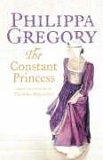
2. The Constant Princess by Philippa Gregory
When I first started reading historical fiction, I quite liked Philippa Gregory.  I soon grew out of her, but her books are kind of a guilty pleasure for me.  The Constant Princess is about the life of Catherine of Aragon, and focuses particularly on her marriage to Arthur, and the beginning of her subsequent marriage to Henry VIII after his brother's death.  As always, Gregory takes a bit of a liberty with the facts but this book was a quick, fun read.  3 out of 5 stars.


3.  Guns by Stephen King
As a Brit, the debate about gun ownership in the USA really fascinates me.  Here, guns are a non issue - people aren't allowed to own them, and I can't think of anyone I know who would want to.  Only small sections of the police are armed, and most people would be scared rather than reassured to have a gun in the house.  So I'm not going to comment on King's arguments, which seemed logical and practical to me, as I'm not the intended audience.  I will say that the whole thing felt a bit rushed, as if it were hurried for publication, and this ruined my enjoyment of his writing a bit.  3 out of 5 stars.


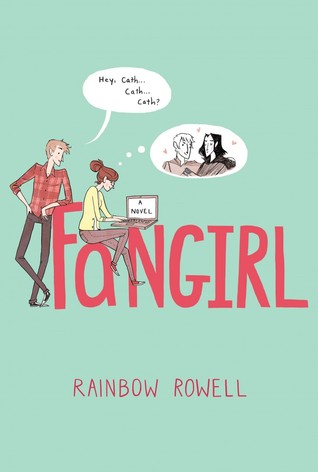
4. Fangirl by Rainbow Rowell
This one I read after Giles arrived, in the night time moments when he wasn't quite ready to be put into his Moses basket yet and just wanted to be held.  It's about twin sisters Cath and Wren, who begin to grow apart when they start university.  I really liked the main character, Cath, and could relate to her shyness and awkwardness around people.  The love story was very sweet, and the whole thing was extremely hard to put down.  I've come to the conclusion that I just enjoy Rowell's young adult fiction more than her adult books.  4.5 out of 5 stars.


Saturday, 19 April 2014

The Great Hunt by Robert Jordan (Wheel of Time #2)

My reread of the Wheel of Time series continues.  Last time, I got up to book seven, but this time I am determined to finish the whole thing!  This review contains spoilers for the previous volume in the series, The Eye of the World.

The Great Hunt picks up straight where The Eye of the World left off. The original group of characters separates, with Rand, Perrin and Mat joining the quest to retrieve the Horn of Valere, crucial in the attempts to stop or hinder the Dark Lord. Meanwhile, Nynaeve and Egwene journey to Tar Valon to start their training to become Aes Sedai, where they meet up with Elayne, the daughter-heir of Andor.  Whilst all of this is going on, a mysterious army invades from the West and one of the Forsaken is loose.

The Great Hunt is epic in all senses of the word.  It's very long at 700+ pages and it's epic in scope and world-building.  After re-reading the first volume in the series, all of the characters felt familiar to me, so it was relaxing to slip back into Jordan's world and let the story-telling continue.  In this volume, we get to see a bit more of his world, and I loved the glimpses of Tar Valon and the Aes Sedai training in particular.  In fact, the sub-plots involving the female characters were far more interesting than the 'main' plot involving Rand.  I like the political intrigue around the different factions of Aes Sedai, and I enjoyed the section of the book dealing with Nynaeve's rise to the status of Accepted.  Later on, when Egwene is captured by the Seanchan army, I liked reading about how the different societies in Jordan's world deal with women who can perform magic.  This was all more interesting than Rand, who is still stuck in the 'I can't believe this is happening to me' phase of denial.

For me, the Wheel of Time series is great comfort reading.  I thoroughly enjoyed this volume and am looking forward to the next, but I'm well aware that the series as a whole has it's flaws.  The contrast between good and evil is too well drawn, with not enough characters showing any shades of grey.  Much of the plot relies on Rand being a bit simple and not picking up on obvious clues that the woman who is 'helping' him isn't all she proclaims to be.  And there's a lot of journeying and conversation relative to action.  Despite all of this, I found reading The Great Hunt to be a relaxing experience; sometimes there's nothing like settling into a familiar world and re-visiting old characters again.

Source: Personal copy
First Published: 1990
Edition Read: Orbit, 2006
Score: 3.5 out of 5

Monday, 17 March 2014

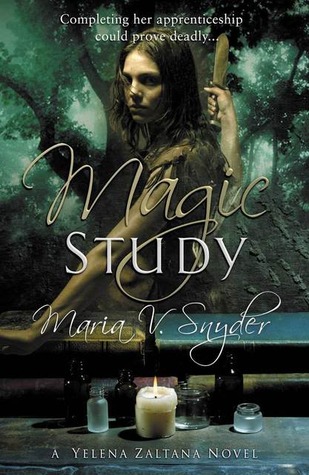
Magic Study by Maria V. Snyder


Last year I read Snyder's Poison Study, the story of a young woman given a reprieve from a death sentence in order to become a food taster.  I thought it was a well written lighter fantasy novel with good world building, an interesting plot and a romance that didn't dominate the whole book.  Therefore I was keen to pick up the second book in the trilogy, Magic Study, but unfortunately it was a bit of a let down.

At the start of Magic Study, Yelena is taken to meet her family in Sitia, where magic is still valued, and she can be guided to develop her potential.  But meeting her family isn't all she imagined it to be; Yelena struggles to feel a connection with the unfamiliar lifestyle of her parents and her brother is outwardly resentful and hostile.  Even though her life in Ixia was fraught with danger, she starts to miss the comfort of a structured and ordered society, in which all of the rules are clear. When she journeys to the citadel to be taught magic, her feelings of disconnection grow.  To make matters worse, a rogue magician starts capturing and torturing young women with magic skill, and Yelena is drawn into the attempt to stop him.

Ultimately, I didn't enjoy Magic Study, especially compared to Poison Study.  The main character, Yelena, had seemed to become a completely different person.  In Poison Study she was somewhat headstrong and reckless, but her actions were always thought through.  In Magic Study, she seems to delight in blundering from one horrible situation to another, sometimes on purpose, never thinking about what she is doing.  Most of the book is taken up with her either moping around missing Ixia (where they want to kill her!) or recklessly plunging head-first into a dangerous situation despite her being warned against doing so by every single responsible person in the novel, including a talking horse!  There's a lot of her being kidnapped and then miraculously using her magic to escape, which felt convenient and like lazy plotting.  I was also uncomfortable with the way that rape and rape threats were used in the novel.

Unforutunately, Yelena wasn't the only character who had become a completely different person.  Valek, her love interest from the first novel, and the master of spies in Ixia, is now basically reduced to being a love-sick puppy.  In the first novel, he is morally ambiguous, cold and calculating, but in Magic Study, all this has gone and it seems like the only thing he cares about is Yelena, which is completely out of character.  I found this frustrating and annoying, as why go to all the trouble of developing a more complicated relationship if you are only going to simplify it in this way in the sequel?

As you can tell, I wasn't a fan of Magic Study. I will say that it was easy to read and contained some interesting action sequences, but this wasn't enough to redeem it for me.  I definitely won't be continuing on with the trilogy.

Source: Personal copy
First Published: 2006
Score: 2 out of 5

Wednesday, 26 February 2014

The Return of the King by J.R.R. Tolkein


I have completed my Lord of the Rings re-read, and it didn't take me a year between volumes this time!  In The Return of the King, the battle for Middle Earth is finally played out.  As Frodo and Sam journey into Mordor with the aim of destroying the ring, Aragorn attempts to distract Sauron with a series of battles, each more desperate than the last.    Dark forces are massing outside the city of Gondor, ruled by the steward Denethor, who is becoming increasingly pessimistic and unwilling to take the steps needed to muster a response, especially after the death of his son Boromir.  Can Aragorn step up and prove himself to be a leader as the war reaches its final days?

Although Fellowship of the Ring remains my favourite of the trilogy, I enjoyed Return of the King more than The Two Towers.  As we are at the end of the story, the pace becomes much brisker and there is a sense that now all of the pieces are in place, the main events can begin.  There's less of Frodo and Sam wandering aimlessly around Middle Earth, and more battles and strategy.  I enjoyed visiting Gondor and I especially enjoyed the character of Faramir, who has to choose whether to do the right thing, regardless of the instructions from his father.  It can be hard to do the right thing, but even more so when you receive nothing but scorn for doing it.

In this volume, the main characters continue to develop. Gandalf increasingly takes a back-seat, so that Aragorn and the hobbits can solve things for themselves.   On this read, I really related to this theme of growing up.  At the beginning of the trilogy, Gandalf was the person with all the answers, and we saw how lost the Fellowship was without him.  But by the time we reach the very end, everyone has been through so much and the issues are so complex that Gandalf no longer has the metaphorical magic wand that can fix everything.  And this perfectly captures the bitter-sweet feeling of growing up.  I loved that a high fantasy novel can still make you reflect on your own life, and how you have grown;

"Do you not yet understand?  My time is over: it is no longer my task to set things to rights, nor to help folk do so.  And as for you, my dear friends, you will need no help.  You are grown up now.  Grown indeed very high; among the great you are, and I no longer have any fear for any of you."

On the whole, reading The Return of the King was definitely a positive reading experience, mainly due to the wide cast of characters and the fact that too much page time wasn't devoted to Frodo and Sam.  I must admit that I did get a bit frustrated with the end of the novel, as there were still many pages after the destruction of Sauron.  There were too many goodbyes, too many visits to old friends, and the final events in the Shire seemed a bit unnecessary, as Tolkein had already shown that the hobbits had matured.  It felt as though Tolkein had grown so attached to his characters that he couldn't bear to leave them without explaining what happened to everyone in great detail, and it did get a bit tedious.

On this second read of The Lord of the Rings, I think I can finally appreciate why the books are classics in the fantasy genre.  The world building is just so good, and the story itself so engaging.  I'm not sure if I'll read them again, but I'm glad I took the time too revisit them.

Source: Personal copy
First Published: 1955
Edition Read: Harper Collins, 1999
Score:  4 out of 5


The Classics Club: Book 22/72
My full list of titles is here.

Saturday, 4 January 2014

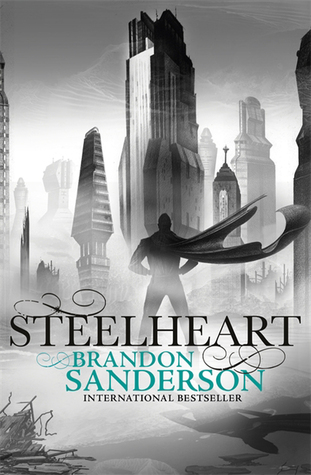
Steelheart by Brandon Sanderson


David lives in Newcago, a city of darkness controlled by a powerful Epic named Steelheart.  Ten years ago, Calamity came and normal humans were randomly endowed with superhuman powers.  It didn't take long for the absolute power of this to corrupt the super-humans/Epics and for normal society to break down, as it became clear that humans couldn't fight or control the Epics.  Newcago is the fiefdom of Steelheart, who has created eternal darkness, and who carries out vicious public murders to terrify the population, but it is still safer than the anarchy that exists elsewhere.  The only humans who are trying to fight back against the powerful Epics are the mysterious Reckoners, ordinary humans who target and assassinate Epics.  Teenager  David wants nothing more than to join the Reckoners in order to gain revenge on Steelheart, who brutally murdered his father in front of him when he was just a child.  But are there any good sides in this conflict?

Steelheart is the first book by Brandon Sanderson that I have read, and I was impressed. Steelheart is fast paced, action packed and tightly plotted, which means it is easy and enjoyable to read; I breezed through it in just a couple of days.  I loved the core idea of the novel, of super-powers corrupting individuals, and I appreciated that Sanderson put in just enough moral ambiguity to make the story work.  Is it ethical to murder Steelheart, even though he has done terrible things, if what will follow his death will only be chaos, civil war and a power struggle between remaining Epics for control of Newcago?  Is it the right thing to do if it will only make the situation for ordinary people worse?  Is it acceptable to commit terrorist acts in order to fight evil?  I liked that Sanderson had David ponder all these issues whilst he was working with the Reckoners, and I liked it even more than he presented no answers to the moral questions raised throughout the novel.

The strength of Steelheart is definitely the plotting.  In comparison, some of the characterisations felt a bit weak.  David was a bit too good to be true sometimes, always able to think up the right thing to do in some very tricky spots.  I liked the way Sanderson wrote the characters of most of the Reckoners themselves, but the love story between David and Megan was very cheesy at times.  It was a low-key element that didn't dominate the plot, but it felt like an unnecessary bolt-on and I would have been happier without it being included at all.

Even though Steelheart is the first book in a proposed trilogy, it had a satisfying ending and worked well as a stand-alone novel.  Although I can guess where Sanderson is going to go in the next volume, enough loose ends were tied up for me to feel like there was resolution.  I was really impressed with the plotting and world-building in the book, and now I'm quite keen to pick up another Sanderson novel, maybe the first volume in the Mistborn series.  Fantasy fans will definitely appreciate this novel.

Source: Library
First Published: 2013
Score: 4 out of 5

Tuesday, 3 December 2013

Mockingjay by Suzanne Collins (Hunger Games #3)

After watching the Catching Fire film, I was extremely keen to pick up Mockingjay and find out what happens to all of the characters in the final volume of the trilogy.  My expectations were high, as I enjoyed The Hunger Games and simply loved Catching Fire, which I thought was the better book of the two.  Be warned: there are spoilers in this review.

Mockingjay starts almost right where Catching Fire left off, with Katniss settling into District 13 and coming to terms with the destruction of her home district, 12.  Peeta has been captured by the Capitol, although Gale has managed to rescue Katniss' mother and Prim and bring them to 13.  Katniss is supposed to be playing the role of the figurehead of the revolution, but she is uneasy with the implications of this and struggles with what she should do.  Meanwhile, the war rages on and it becomes apparent that Peeta is being tortured under the authority of President Snow, maybe even beyond recognition.


I had mixed feelings about Mockingjay.  I so wanted to like it, and it did have many positive elements, but ultimately I closed the book feeling a bit let down.  To start with the positives;  I enjoyed seeing what District 13 was like and the military fashion in which the people there had prepared themselves for war with Snow.  I like that Collins didn't shy away from the brutality of war, and that there were quite a few darker scenes included, especially later in the book.  War is merciless, and Collins most certainly gets that message across.  Katniss' confusion at what role she should play came across as genuine, and it felt realistic for someone who may have had a big role to play symbolically, but who hadn't been involved in any strategic planning etc.  I'm glad Collins didn't go down the route of having a super-Katniss save the world.  And the twist where Katniss shoots someone different at the end was clever indeed, I did not see that coming!

Unfortunately, there were negatives to go alongside these positives.  Plot-wise, I liked that Peeta had been tortured in such a way to corrupt his memories and turn him against the rebels.  However, after all these detailed passages about how new and permanent this hijacking torture method was, he seemed to recover at crucial points pretty conveniently and quickly.  Also, Katniss had a tendency to get herself injured at key moments, which means that too often Collins told us what happened rather than showed us.  Katniss is acquitted at the end and all that gets is a paragraph from Haymitch - I wanted to actually see it happen and I was frustrated with the action scenes being cut off so abruptly.  The pods in the city were just silly and felt like an unnecessary nod to the earlier Hunger Games plots.  But most of all, although I liked that war was shown as being brutal, Collins did too much without enough impact.  I wanted to feel the deaths and I just didn't, and I never felt the emotion of being in a war properly.

On the whole, Mockingjay is still a good book.  It was certainly a page-turner and I did enjoy it, it was just a bit of a let down after how strong the previous two volumes in the trilogy were.  It's worth picking up to find out what happens in the end, but be prepared that it may not be as amazing as you are hoping.

Source: Personal copy
First Published: 2011
Score: 3.5 out of 5

Thursday, 31 October 2013

Catching Fire by Suzanne Collins (Hunger Games #2)


I am terrible at reading and completing series of books.  I read The Hunger Games back in March 2011 and only now have I got around to reading the next book in the series.  Hopefully I won't wait another two and a half years to pick up Mockingjay!

Warning: this review contains spoilers for The Hunger Games and Catching Fire.  If you haven't read them yet, proceed with caution!

Catching Fire picks up a few months after the end of The Hunger Games.  Katniss and Peeta are living with their families in Victor's Village and trying to get life somewhat back to normal.  But life in most of the districts is far from normal; Katniss' trick at the end of the Hunger Games has been viewed as an act of rebellion against the Capitol and violent uprisings are spreading.  With their victory tour coming up, President Snow himself pays Katniss a visit and threatens her - she must find a way to calm the districts, or there will be severe consequences.  But things have already gone too far for that; Katniss is a symbol of a growing revolution and she's considered too dangerous to live a normal life.

I kept putting off reading Catching Fire because I thought that Hunger Games had a strong ending and actually worked well as a stand-alone book.  But my husband has read and enjoyed the whole series, and I want to see the new film when it comes out, so I decided to finally take the plunge.  And I'm genuinely glad I did.  It was great to go back to District 12 and find out a bit more about what life is actually like in Panem for ordinary people.  I enjoyed the Victory Tour as we got to visit several other districts with Katniss and Peeta and the hints of rebellion were well done.  When there's a crackdown in District 12, it doesn't come as a surprise.

What I was most worried about in this book was the fact that I already knew that Katniss would have to go into the arena and play the Hunger Games again.  I thought this would come across as overly repetitive from the first novel and that it was a bit of a lazy plot device.  But actually, it worked.  The Capitol need to eliminate Katniss but she is far too popular for them to murder her, as that would incite a genuine revolution.  So it makes sense to hold a special Victor's edition of the Games and hope that it solves the problem for them.  I liked meeting the previous victors and the Games themselves had a very different feel to them, there was far more co-operation are more desire for survival.

The only thing that annoyed me in this novel was Katniss herself.  I think she's a great character but she's not too good on picking up on clues.  I felt like it was obvious that there was some kind of underground conspiracy going on with regard to the Games themselves and District 13, but she was truly oblivious despite numerous clues.  Whilst the ending didn't come as a total surprise to me, as I had figured out something was going on, there was enough of a cliffhanger to make me keen to pick up Mockingjay over the next couple of months.

All in all, a fast-paced and enjoyable read that stands up well next to it's predecessor.

Source: Personal copy
First Published: 2009
My Edition: Scholastic, 2011
Score: 4 out of 5

Monday, 7 October 2013

The Bone Season by Samantha Shannon


Paige is a clairvoyant, with the ability to leave her body and break into the minds of others.  This skill makes her hunted by Scion, who rule a dystopian version of London in 2059.  Clairvoyance is seen as unnatural and is punishable by death, forcing Paige and others like her to hide their abilities or join the mob-ruled criminal underworld.  Paige is working for underground leader Jaxon Hall when she is captured and detained.  She is sure she will be punished by the Scion authorities, but instead she is transferred to Oxford, a city that has been kept secret for over two hundred years.   There she learns that Scion has kept it's own secrets from it's citizens and that a whole other race exists.  Kept in the control of Warden, Paige yearns to escape but the only person who can help her may be the person who is imprisoning her in the first place.

The Bone Season certainly has had a lot of hype surrounding it.  Shannon has famously signed a seven book deal with Bloomsbury and this title has been everywhere, with the inevitable comparisons to J.K. Rowling.  I was keen to try it for myself and see if it lived up to expectations.

One thing that certainly impressed me was the world building.  Reading The Bone Season is an immersive experience, as Shannon throws you straight in there with the characters, leaving you to work out how the society works for yourself.   This is how I like my fantasy/sci-fi and I was impressed at the amount of detail and thought that had gone into the set up of Scion London and Oxford, as well as the creation of an entirely new race/type of creature, the Rephaim.   The world hung together well and it's clear that the author knows it inside out.  For example, there are over fifty different types of clairvoyant listed in beginning of the book.

Although Paige was an interesting main character, The Bone Season is all about the plot.  It's an action packed novel and one that will have you turning the pages quickly.  This is the kind of book I would happily have stayed up all night to read, as it's utterly engrossing.  I was pleased that the romance in the novel was of the slow-burning kind and it never overwhelmed the main plots at all.  As Shannon allowed the romance to develop slowly, it felt plausible for Paige's character.

On the whole, reading The Bone Season was certainly a lot of fun and I'm glad I picked it up.  I simply rushed through it but having finished it, I've realised that it hasn't had much of an impact on me.  The ideas are clever and the story well written, but it's not a book I will remember or want to reread.  For this reason, it's not going to be a favourite.

Source: From the publisher, in exchange for an honest review.
First Published: 2013
Score: 3.5 out of 5

Read Alongside:
Poison Study by Maria Snyder - This story is also about a young woman who is kept prisoner, but who eventually forms an unlikely alliance with her captor.  The fantasy elements in this novel centre around magic rather than clairvoyance.

Wednesday, 11 September 2013

The Eye of the World (Wheel of Time #1) by Robert Jordan


I am no stranger to the epic fantasy series The Wheel of Time.  Back when I was in university, I was pretty engrossed by it and read up to book seven or eight before the untimely death of the author in 2007.  As the series was unfinished and it seemed pretty up in the air what would happen to it, it didn't seem worth continuing to read the books and I abandoned them.  Now, six years later, the series has been finished by Brandon Sanderson, which means I can read them and finally finish it!  I'm starting again at the beginning as it's a truly epic series and no way can I remember everything from my first read!

Book one in the series, The Eye of the World, focuses on three main characters, Rand, Mat and Perrin, all of whom live in a small village in the Two Rivers.  One day two mysterious visitors arrive just before the village is attacked by Trollocs, creatures in the service of the Dark Lord.  Moiraine, one of the visitors, turns out to be an Aes Sedai, a woman who can essentially use magic, which makes her the target of suspicion and hostility.  It turns out that only three homes were attacked, those belonging to Rand, Mat and Perrin, which convinces them to join Moiraine and travel to her city of Tar Valon, to find out why they were targeted.  On the way, the journey becomes perilous as the Dark One seems determined to either kill the boys or bring them under his thrall, and they face many challenges.

The plot of The Eye of the World sounds kind of cheesy when I type it out like that, and certainly it's a traditional fantasy type book, in which a simple village boy is destined to fight evil.  But it's much more than that too.  Jordan's world building is truly amazing and reading the book is like being transported entirely to his world, which has a complete mythology of its own.  I like the idea of good and bad being caught in an eternal battle, in which there is never a victor (because isn't that like real life?) and I liked that Jordan was able to immerse the reader in his world, rather than constantly explaining things.  There's a good ratio of showing to telling.

I also appreciated the ambiguity in the characters.  Moiraine is an Aes Sedai, which means she can touch saidar, the female half of a power that can be channelled and used.  Although Aes Sedai have done many good deeds in the world, they are completely mistrusted and throughout this novel, you're never really sure of her motivations.  The lines between good and evil are more blurred than you might expect from this type of fantasy novel, seen again with something that happens to Perrin in the later stages of the book.

The Eye of the World is a long book at 782 pages, and it's only the first volume in a series that contains fourteen books.  Therefore, choosing to read this series is a big under-taking.  Although a lot happens in The Eye of the World, Jordan does include too much description of the places the characters visit and this does slow the pace at times.  I very much enjoyed it and am excited to pick up the next volume, but if you are new to fantasy, I would recommend George R.R. Martin's A Song of Ice and Fire series before you try this one.  It's pacier and darker and has more political intrigue and less magic/mythological creatures.  But if you like fantasy, I don't think you can go wrong with The Wheel of Time series.  I can't wait to read the next one.

Source: Personal copy
First Published: 1990
My Edition: Orbit, 2013
Score: 4 out of 5

Thursday, 5 September 2013

The Titan's Curse by Rick Riordan (Percy Jackson and the Olympians #3)


The Titan's Curse is book three in the Percy Jackson and the Olympians series, which follows the adventures of a demi-gods living in a world in which Greek mythology is real.  I've been loving the series so far, although the second volume, The Sea of Monsters, wasn't quite as good as the first, The Lightning Thief.  In The Titan's Curse, Percy and his friends are helping Grover bring two new half-bloods to camp when Annabeth is kidnapped. The quest to rescue her and the goddess Artemis is riddled with many dangers, as the Titan lord Kronos is steadily gaining in power.

There are spoilers ahead!

The Titan's Curse is by far the most mature entry in the series so far.  It is of course still action-packed and full of Percy (or Riordan's) humour, but this is the point in the series where things start to get more real and serious.  Percy and his friends are growing up and the story reflects that.  Just like in book two, Percy again has to come to terms with the fact that being the son of Poseidon doesn't mean that everything is going to go his own way.  As well as having Thalia and the two new half bloods to contend with, he isn't selected for Annabeth's rescue quest despite being desperate to go.   Of course he ends up sneaking along anyway, but I liked that Riordan wrote him not being chosen, no matter how much he pleaded.  In life, we don't always get the things we desperately want, no matter how much we want them, and part of growing up is learning that.

We also get the first real deaths of the series in The Titan's Curse.  Up until now the adventures have all be fun, but there's been no sense of danger.  When Bianca is killed, that all changes and it's a sign that the build up to the end of the series has started.  Alongside that, we also get little hints at why so many half bloods, minor Gods and monsters are tempted to join Kronos; we get to see that the Olympian Gods aren't perfect and that there are shades of grey in the story.  A major plus point, as far as I'm concerned!  

As all of the main characters are growing up, the issue of relationships becomes much bigger in this volume.  Annabeth's kidnap forces Percy to think about what she really means to him and there is some pretty heavy hinting of a future relationship going on.  There's also the Hunters, a group of immortal teenage girls in the service of Artemis who basically choose immortality in exchange for turning away from boys forever.  It's interesting that we see the stories of two girls who choose this and of Annabeth, who is offered this but ultimately turns it down.  

I thought the ending of this novel was probably the strongest part.  Having returned triumphant from his quest, Percy is shocked to find the Gods voting on whether or not he should be allowed to live, given the prophecy that Olympus might be destroyed when he turns sixteen.    It's interesting that he chooses to keep Nico's parentage a secret, knowing that a child of Hades would be labelled/judged and not welcomed.  This shows Percy is definitely growing up and realising that things are not as simple as he once thought, even on the 'good' side.

All in all, The Titan's Curse is one of the best books in the Percy Jackson series.  I'm glad to see that things improved again after The Sea of Monsters.  if you enjoyed the action and adventure of the first two books, you won't be disappointed by this one.

Source: Personal copy
First Published: 2007
My Edition: Disney Hyperion, 2008
Score: 4.5 out of 5

My reviews of the rest of the series:

Tuesday, 3 September 2013

Fables Volume 3: Storybook Love by Bill Willingham


I'm slowly working my way through the Fables graphic novel series, which focuses on the lives of a group of fairy-tale creatures living undercover in New York.  Forced from their homelands by a mysterious foe caused the Adversary, they are doing their best to blend into our world and not alert the 'Mundies' to their presence.  Volume three, Storybook Love, contains four distinct stories, two of which are proper 'episodes' in the series and two shorter, unrelated tales to start and finish the collection.  All the stories are loosely tied together around the theme of love.

This review may contain spoilers from the series so far.

I'm having mixed feelings about the Fables series.  I love the premise of it and certainly like it enough to keep on reading through the volumes, but I'm not loving it in the way I hoped I would.  It's just a bit hit and miss.  In this volume, the two shorter stories, Bag O' Bones and Barleycorn Brides, were a miss for me.  They were short, poorly illustrated compared to the rest of the book and felt like filler.  To be fair, Bag O' Bones, in which Jack uses the American civil war as an opportunity to cheat death and have his way with a Southern belle, at least had an interesting plot and would have been good if the drawings were a bit better.  Barleycorn Brides though just had no plot and the worst drawings I've seen in the series yet. It should not have been included at all.

Thankfully, I enjoyed the two longer stories.  In the first, an intrepid reporter notices something suspicious about the citizens of Fabletown and comes up with the conclusion that they are vampires.  Bigby and Bluebeard try to deal with this in very different ways.  And in the second, Bluebeard and Goldilocks plot revenge on Bigby and Snow, hunting them through the forest.  We also get to see a different side of Prince Charming, as he plots to become influential in the community.

What I liked most about these two stories is that now, at volume three in the series, I'm starting to get a glimpse of the 'larger picture' and the plot-lines that might influence the series as a whole. We're no longer in world building or introducing the main characters territory so there's more room for character development and action.    At the moment, I'm particularly enjoying Prince Charming's scheming and the introduction of Briar Rose/Sleeping Beauty.  As ever, there are lots of clever little touches, like certain characters being harder to kill than others, as the mundies (regular people) like them more than other characters.

On the whole, Storybook Love is a solid addition to the Fables series.  It's just a shame that not all the stories in the collection are of the same standard.

Source: Library
First Published: 2004
Score: 3.5 out of 5

My reviews of other volumes in the series:

Friday, 23 August 2013

The Sea of Monsters by Rick Riordan (Percy Jackson #2)


As soon as I finished reading The Lightning Thief (my review), I went straight on and read The Sea of Monsters.  This review will contain spoilers for both volumes in the series.

At the end of The Lightning Thief, Percy had rescued Zeus' lightning bolt with the help of his friends Annabeth and Grover.  He has learned that it was Luke who betrayed him and attempted to warn the Gods about the threat of Kronos, with no luck.  At the beginning of The Sea of Monsters, Percy begins to get strange dreams about Grover and eventually discovers that Grover is being held captive by a cyclops in the Sea of Monsters.  Also, the tree that protects camp half-blood has been posioned and the suspicion has fallen on Chiron. The only thing that could save it is the Golden Fleece, hidden deep in the Sea of Monsters.  Annabeth and Percy rush to save their friend and their camp, without realising that they might be playing into Luke's hands after all.

The Sea of Monsters is a good sequel to The Lightning Thief, but I didn't enjoy it as much as the first volume.  Having since read all five books in the series, it remains my least favourite.  It is still very good and still full of Riordan's neat little touches, like locating the Sea of Monsters in the Bermuda Triangle, but it's just not as magical.  Although there is a complete adventure in the book, a lot of the plot points are setting up for later events, for example when we find out more about Annabeth, Thalia and Luke, and when we get to see on board Luke's ship.  Percy's world is being expanded by Riordan, but we don't get to see the pay-off of this until later in the series.

Having said that, I loved the characters and character development in this novel.  Having spent the whole of The Lightning Thief thinking that he was the most important demi-god around and that being a child of the Big Three is extremely rare and special, Percy has to deal with the double whammy of both having a half-brother and the return of Thalia, the daughter of Zeus.  His half-brother is a cyclops, which I found interesting, especially as Percy is initially repulsed by this himself.  We get to see him mature a bit as he comes to realise that life is much more complicated than a prophecy.

My favourite scene in the novel was when Annabeth and Percy are sailing past the Sirens, and Annabeth wants to hear the Siren song.  It's just perfect as it reveals so much about her character, her excessive pride and the way she thinks she can do things better even than the Gods. It's good to see that Riordan is creating flawed characters, even though they are demi-gods. The interaction between Percy and Annabeth in the scene makes their friendship stronger and sets up what will happen later on. 

On the whole, The Sea of Monsters is a fun, action packed novel that is still wonderful escapism.  I finished the book eager to move on to the next volume in the series.

Source: Personal copy
First Published: 2006
My Edition: Disney Hyperion, 2008
Score: 4.5 out of 5

Sunday, 18 August 2013

The Lightning Thief by Rick Riordan (Percy Jackson #1)


Percy Jackson is a twelve year old boy with a bit of a troubled past. Wherever he goes, strange things keep on happening to him, resulting in him being kicked out of every school he has ever attended. When the story starts, Percy is attending Yancy Academy, a private school for troubled children.  When the class go on a field trip with their Latin teacher, he is attacked by a strange mythological creature in a museum and things begin to turn very strange indeed.  Percy's best friend reveals he is a satyr, his Latin teacher is actually a centaur and Percy has to seek protection at Camp Half-Blood as he is a demi-god, the son of a Greek god.  And things aren't going well with the gods....someone has stolen Zeus' lightning bolt and Percy becomes involved with the attempt to rescue it before the summer solstice.

I really enjoyed The Lightning Thief.  It's a fun, action-packed book that doesn't take itself too seriously.  The action starts within a few pages and there's never a dull moment as the story progresses. I like the idea of using Greek mythology to inspire the story and this is cleverly done by Riordan with a few neat touches, such as having Mount Olympus move to whichever country is currently the heart of Western civilisation (thus explaining why it is in America at the moment).  The book is at it's best when the mythology is at the forefront, like when the heroes visit the Underworld.  I liked how Riordan stays true to the original mythology whilst updating it for a modern audience, for example Hades' palace in the Underworld is guarded by Greek and Marine skeleton soldiers.

The Percy Jackson and the Olympians series is billed as the 'American Harry Potter' and there certainly are similarities between the two stories.  There's a mysterious prophecy about Percy he isn't allowed to hear yet, one of his best friends is an extremely smart girl, he has black hair and green eyes, strange things happened to him as a child etc etc.  Even though the similarities are there, it really didn't read like a Harry Potter rip off to me and the world created by Riordan based on Greek mythology is sufficiently different from the magical world of J.K. Rowling for it not to matter.  

In fact, I just loved The Lightning Thief.  If you don't take it too seriously and just strap yourself in for the ride, it's a fun, engrossing book that will leave you wanting to reach for the next one in the series immediately. Yes, the book is a bit heavy handed with the clues (especially about which of the Gods is Percy's father) and the monsters are a bit easy to defeat, but it's total comfort reading and perfect escapism.  I loved losing myself for a few days in this book.

Source: Personal copy
First Published: 2005
My Edition: Disney Hyperion, 2006
Score: 5 out of 5 (for pure fun)

Friday, 9 August 2013

Fables Volume 2: Animal Farm by Bill Willingham


Fables is a graphic novel series in which a host of fairy-tale characters and mythological creatures have been forced to flee their home lands because of the mysterious Adversary.  They have settled in New York, where they live parallel lives to our own, hiding their powers and gifts.  In the first volume, we met Snow White and followed her journey to find out what had happened to her sister, Rose Red.  In this second volume, Snow and Rose have journeyed to the Farm, home to all of the creatures that can not be hidden in every-day life (think giants and talking animals).  Snow is there on routine business but it soon becomes apparent that not everything is as it should be on the Farm and a violent revolution is brewing, led by the pigs.

I liked Volume One of the Fables series, it didn't set my world alight but I liked it enough to pick up this second volume whilst I was in the library.  I'm a big fan of Orwell's Animal Farm, so I was interested to see how Willingham would pay homage to the novel in his story.   Of course, there's no Russian Revolution in the Fables version, but there are striking parallel's to Orwell's original, including the leadership/ double dealing of the pigs.  I actually felt a bit sorry for the creatures forced to live on the Farm; their every wish was catered for by the human fairytale characters but they could never leave, even though their lives are practically immortal.

On the whole, I felt that Animal Farm was stronger than the previous installment, Legends in Exile.  There wasn't as much need for world-building, leaving more room for plot and adventure.  I like how we're starting to see some moral ambiguity in the series, and how there are splits in the Fabletown community.  I'm looking forward to picking up the next volume soon.

Source: Library
First Published: 2003
Score: 3.5 out of 5

Wednesday, 31 July 2013

The Two Towers by J.R.R. Tolkien


I'm rereading The Lord of the Rings as part of my Classics Club project and last summer I was pleasantly surprised by how much I enjoyed The Fellowship of the Ring (my review).  I've only read the books once before, and that was after seeing the films. I definitely expected the books to be similar, when in reality they are very different, slower paced and more about immersing the reader in Middle Earth than anything else.  With my expectations suitably adjusted, I really liked The Fellowship of the Ring on the second attempt.  I was hoping the same would be true for The Two Towers.

Warning: this review contains spoilers.

The Two Towers picks up where The Fellowship of the Ring left off, with the breaking of the fellowship after the death of Boromir.  The first half of the book deals with Aragorn, Legolas and Gimli's quest to find Merry and Pippin after they have been captured by Orcs.  Their path takes them through Rohan, home of the horse-lords where the King is under the influence of Saruman.  In the dreaded Fangorn forest they meet an old friend.  The latter half of the novel follows Frodo and Sam as they attempt to take the ring to Mordor to be destroyed.  They are being tracked by Gollum and Frodo must decide how to deal with him.

The Two Towers is a book of two halves and my enjoyment of the two sections of the book was radically different.  I loved the first half and just sped through it.  Aragorn, Legolas and Gimli are definitely the more interesting members of the trilogy and I love Rohan as a setting.  With Gandalf gone, we get to see some character development as Aragorn steps up as leader of the fellowship and starts to grow into his future role as King.  We also get to meet Eowyn, who is the best female character in the novel (not that there are many to choose from).  I liked reading about the destruction of Eisengard and felt like the book was well paced in general throughout the first half.

However, part two was another matter.  I'm not the biggest Frodo and Sam fan anyway (they do too much aimless wandering for that) and there were endless scenes of them getting lost near Mordor and not knowing what to do.  Once Gollum turns up, there are more endless scenes of Sam worrying that he is a threat and Gollum showing his split-personality.  It's not that I think this part of the story is bad (I don't), but Tolkein simply spends too much time with them in this novel when not a lot really happens.  I found this part of the book difficult to get through and breathed a sigh of relief when Faramir turned up to break the monotony of the same three characters.

It's fair to say I had mixed feelings about this book overall.  I think I would have enjoyed it more if the Frodo chapters were interspersed with the Aragorn chapters, rather than being split into two separate 'books'.  I'm looking forward to getting to the third volume of the story, but hoping for more consistent pacing throughout it.

Source: Personal copy
First Published: 1954
My Edition: Harper Collins, 1994
Score: 3 out of 5


The Classics Club: Book 13/72
My list of classics is here.

Monday, 29 July 2013

The Girl with the Dragon Tattoo by Steig Larsson


Journalist Mikael Blomqvist is licking his wounds after being found guilty in a libel cause bought by business owner Wennerstrom when he is approached by Henrik Vanger, head of the Vanger Corporation.  Vanger's niece Harriet disappeared in the sixties and was never found, leaving Henrik to suspect she has been murdered.  In need of a new job, Blomqvist agrees to investigate the case and the complex Vanger family, who hide many secrets.  Along the way he is helped by Lisbeth Salander, a private investigator and hacker with a troubled past.

I'm not a big reader of crime or thriller books, but my husband bought me the Millennium trilogy when they became massive a few years ago and finally I decided to pick the first one up off the shelf and give it a try.  I wasn't expecting to like it, but I really did and I'm now looking forward to the second in the trilogy.

The original Swedish title of the novel was Men who Hate Women, and this is by far a more accurate description of the book.  It's really a furiously angry assault on society and in particular, the amount of rape and sexual assault that occurs in Sweden, but also across the world.  Each part of the novel starts with a statistic that makes for grim reading.  I am fortunate enough to have never experienced sexual assault myself but it's scarily common; statistics vary but between one in five and one in three women in the UK will experience sexual violence in their life.  It's something I feel strongly about and it's a crime that I think isn't taken nearly seriously enough.  To see a book like this, that became as popular as it did, tackle an issue like that can only be a good thing;

"'Because it's so easy' he said.  'Women disappear all the time.  Nobody misses them.  Immigrants.  Whores from Russia.  Thousands of people pass through Sweden every year."

Whilst the writing in The Girl with the Dragon Tattoo isn't the best I've experienced, the story is well plotted with enough twists and turns to keep you guessing.  The pacing at the beginning was quite slow, whilst Larsson got across the necessary background information, but the pace soon picked up and I couldn't put the book down by the end.  Once Mikael and Lisbeth met, the book became a whole lot better.  There is a graphic rape scene in the book but it's not gratuitous as it fits the themes of the novel.

Most readers who have read this book loved Lisbeth and I was expecting to as well, but in the end I just liked her.  I felt like Larsson was trying too hard to tell the reader how alternative she was, how outside of the mainstream of society.  I liked her and thought she was a great main character, but I didn't love her.

I would recommend A Girl with a Dragon Tattoo, as the plot is good enough to overcome any issues with the writing.  I'm looking forward to getting to the remaining two books in the trilogy.

Source: Personal copy
First Published: 2005 (Sweden)
My Edition: Quercus, 2008
Score: 3.5 out of 5

Friday, 26 July 2013

Fables Volume 1: Legends in Exile by Bill Willingham


I've been trying out graphic novels lately and one series that I keep seeing everywhere is Fables, about fairy tale legends living undercover in New York after being forced to leave their home lands by the mysterious Adversary.  It's a mammoth series with nineteen books and several spin-offs.  I love the sound of fairy tale characters living in disguise in a modern city, so when I saw volume one at the library, I decided to give it a try.  Legends in Exile is a mystery story about the supposed murder of Rose Red, the sister of Snow White.  She goes missing and the discovery of her blood soaked apartments leads Snow White, the deputy of Fabletown and Sheriff Bigby Wolf, to investigate what has happened to her.

I enjoyed Legends in Exile more than I thought I would, which must mean I am turning into a graphic novel fan!  Although the plot of the story was OK, what I really enjoyed was the world-building and the back story of how the fairytale creatures were managing to stay hidden in New York.  I wasn't really that fussed about how killed Rose Red, but I was fascinated by Fabletown, how it is run and especially the amnesty, in which all of the fairytale characters had their past crimes wiped out upon arriving in our world.  This amnesty causes tension throughout the story as of course the violent characters, such as Blackbeard the pirate, come under more suspicion from Snow and Bigby.  I thought the concept of Fabletown was clever and the Fables world definitely interesting enough to warrant a whole series.  The story itself I could take or leave.

The drawing style is very much that of a traditional comic, which isn't my favourite style but it's done well and fits with the story.  I liked the artwork that was included before each chapter, it was quite surreal and made a good break from the comic format.  On the whole, I enjoyed Legends in Exile enough to read the next volume of the series, Animal Farm.  I doubt I will complete the series but I'm enjoying it so far.


Source: Library
First Published: 2002
Score: 3 out of 5

Friday, 12 April 2013

A Dance with Dragons by George R.R. Martin


So that's it - I've now read every single one of the A Song of Fire and Ice books published to date. And it looks like a long wait for the sixth volume!  I tried to slow down my reading of this one by reading it alongside other titles but as soon as I hit the half-way point, I had to give up on all other reading and concentrate just on this.  As with all my other reviews of this series, there will be spoilers, so proceed with caution if you haven't already read it.  A Dance with Dragons starts at the same time as A Feast for Crows, but follows different characters.  We already know what happened to Cersei, Jamie and Arya so now we get to visit Jon Snow at the Wall, Daenerys across the sea in Meereen and Tyrion in exile.  In the latter stages of the book all the narratives start to entwine again and the main characters from A Feast for Crows are reintroduced with their own chapters.

A Dance with Dragons is a long book at 1000+ pages and at times, I felt it's length more than I did with the other books in the series.  There were some fascinating characters and interesting plot developments but the pace of the storytelling appeared to have slowed to the point where some chapters felt repetitive, especially for someone reading the series straight through.  I've never been the biggest Daenerys fan and found the chapters dealing with her rule in Meereen a bit tedious.  I understand why it's important for her to have actual experience of being a ruler before trying to take Westeros, but there was just too much information about too many new characters that the reader isn't invested in at all.  I enjoyed her final chapters and the moral quandry the full grown dragons presented, I just didn't want to read about competing political factions in Meereen.

In A Dance with Dragons, rather than waiting for Daenerys to arrive in Westeros, half of Westeros seem to be seeking her out, including Tyrion, on the run for killing Tywin Lannister.  Tyrion has always been one of my favourites as his chapters give the book some much needed humour.  I enjoyed the meeting between him and Jorah Mormont and the trials he faced on his journey.  Also seeking Daenerys is Quentyn, Prince of Martell and Vicatarion of the Iron Islands.   I love both the Martells and the Greyjoys so again, these plots were welcome.  I was shocked at the arrival of Aegon Targaryen and have my suspicions that all isn't as it appears to be, especially as he didn't have any chapters of his own.  

Back in Westeros, Cersei's humiliation was the most memorable event.  Although Cersei was unquestionably a bad leader and person, her punishment was harsh indeed and I was rooting for her to keep her head held high throughout it out.  Theon Greyjoy emerges in the torture chambers of Ramsay Bolton and we get to see Jon Snow's choices as Commander of the Night's Watch.  Jon's chapters were especially interesting as they were all about doing the right thing, whether or not it makes you popular.  I could see his betrayal coming before it happened and don't think he is actually dead (although it's not nice of George R.R. Martin to leave us hanging).  There were enough anvil sized hints about Jon's real parentage to make him too important to the plot to kill off, I think.

On the whole, I loved A Dance with Dragons despite it's long-windedness.  I could feel the story building up to a pressure point and anticipate that the next volume will be more action packed, as all the main characters are now in key places for some game-changing events to occur.

And now the wait begins for book six!

Source: Personal copy (kindle)
First Published: 2011
Score: 4 out of 5

Monday, 28 January 2013

A Storm of Swords by George R.R. Martin


It took me quite a while to read the third volume of A Song of Ice and Fire because I chose to read the version split into two paperbacks, making it easier to carry around and also enabling me to take a little break half way through.  And I honestly needed the break because this is one of the most epic books I've ever read.  It's by far the best of the series and there's no way I can gush about how fantastic it is without mentioning spoilers, so consider yourself warned!

So many dramatic events take place - it's like Martin spent books one and two building up to this epic, clearing the decks type of story.  By the end of the second paperback there was a game-changing event in practically every chapter and I was completely and utterly hooked.  I read the last 250 pages in one night, staying up much later than I should have done but I honestly could not put it down.  Reading the book made me feel happy, angry, frustrated, shocked and amazed all at once. 

The most shocking event was of course Robb's death during the Red Wedding.  It was at this point that I realised that George R.R. Martin's world really isn't a safe one for any character, even one that the author seemed to have been grooming to be the eventual winner all along.  It's been a while since I've felt actual anger at the direction a story was taking (I put the book down and complained to my husband, who has already read it) and it's a sign of how involved I was in the story.  Up until that point, I had thought Martin was working towards the Starks being the eventual victors, but now I'm not so sure.  The realisation that any of my favourite characters could be next in line for the axe made the story seem much more real and immediate.

After Robb's death, there were many other deaths but I was a bit desensitised.  I wasn't expecting Joffrey to actually die and will miss him in an I-loved-to-hate-him way, he was such a great villain.    Likewise I wasn't expecting Jaime to lose a hand or Tywin Lannister to be murdered.  I knew Littlefinger was not to be trusted,  but the last chapters at Eyrie revealed just how sinister and calculating he is.  And the ending with Catelyn was unexpected to say the least!

One thing I admire about George R.R. Martin is how he can make me completely revise my opinion on a character by offering their point of view.  In books one and two I thought there was nothing likeable about Jaime but through his story-line with Brienne he actually became one of my favourites.  Likewise the Hound. I'm still not keen on the Wall story-lines (although I do like Jon) and was secretly hoping Mance Ryder and the wildlings would win as that would have been more interesting.  Daenerys is an interesting character but I'm getting impatient for her to actually arrive in Westeros so her plot can link with the others.

It'll be interesting to see where Martin goes in the next book as the wars of the five Kings are well and truly over, with all but Stannis dead.  I have a feeling the pace will slow and the story will start to build up again before reaching a crescendo like this one in a few books time.  

Verdict: I haven't loved a book like I loved this one for a long time.
Source: Personal copy
Score: 5 out of 5