Showing posts with label crime. Show all posts

Thursday, 10 April 2014

Burial Rites by Hannah Kent


Agnes Magnusdottir was the last person to be executed in Iceland, for her role in the murder of two men in March 1828.  In Burial Rites, Hannah Kent tells the story of Agnes from her conviction to her death.  As Iceland had no prisons at the time, Agnes is sent to live and work with a rural family in the North of Iceland, to await her sentence.  A very much unwanted guest, particularly in the eyes of youngest daughter Lauga, Agnes examines her past and tries to come to terms with what has happened to her.  The priest she chooses to absolve her, Assistant Reverand Thorvardur Jonsson (Toti), is keen to be on her side, but Agnes is reluctant to share her story with anyone.  As the time of her execution draws closer, will anyone apart from Agnes learn the truth?

Burial Rites is a book that has generated a lot of buzz, something that is sure to increase now that it has secured a place on the short-list for the Baileys Prize for Women's Fiction.  I was keen to read it from the moment I heard about it, but also a bit hesitant as I'm not a big crime reader and I wondered whether it would have enough cross-over appeal to work for me.  Thankfully, Burial Rites lives up to the hype and I certainly enjoyed the reading experience.  Kent's novel is an engaging story of a woman who was largely the result of her circumstances.  Agnes is a fascinating and complex character, who reveals only part of herself to the other characters, and who tells her story in snippets as the chapters progress.  I found myself drawn in by Agnes, and keen to find out what really happened the night of the two murders.

However, the biggest draw of the book for me was the way Kent wrote about Iceland.  The rural North of Iceland is a main character in the novel, and Kent completely immerses the reader in the Icelandic culture of the time, from the role of the sagas in everyday life, to the badstofas the families would huddle in during the colder months.  Life in the North was hard and unforgiving in those times, and the bleakness of the environment adds a lot of atmosphere to the novel - the harshness of the setting mirroring the harshness of Agnes' life.  I loved reading these parts, and was impressed at how Kent, an Australian woman, was able to transport me completely to Iceland.

Having read Burial Rites, I can see why it was short-listed for the Baileys Prize.  It's not a perfect novel, and I found the pace in the middle a little slow, but there's something engaging and haunting about it that will stay with you after you have turned the last page.  I'm still rooting for Americanah to take the prize, but this would be a worthy winner.

Source: Personal copy
First Published: 2013
Edition Read: Picador, 2014
Score: 4 out of 5

Monday, 29 July 2013

The Girl with the Dragon Tattoo by Steig Larsson


Journalist Mikael Blomqvist is licking his wounds after being found guilty in a libel cause bought by business owner Wennerstrom when he is approached by Henrik Vanger, head of the Vanger Corporation.  Vanger's niece Harriet disappeared in the sixties and was never found, leaving Henrik to suspect she has been murdered.  In need of a new job, Blomqvist agrees to investigate the case and the complex Vanger family, who hide many secrets.  Along the way he is helped by Lisbeth Salander, a private investigator and hacker with a troubled past.

I'm not a big reader of crime or thriller books, but my husband bought me the Millennium trilogy when they became massive a few years ago and finally I decided to pick the first one up off the shelf and give it a try.  I wasn't expecting to like it, but I really did and I'm now looking forward to the second in the trilogy.

The original Swedish title of the novel was Men who Hate Women, and this is by far a more accurate description of the book.  It's really a furiously angry assault on society and in particular, the amount of rape and sexual assault that occurs in Sweden, but also across the world.  Each part of the novel starts with a statistic that makes for grim reading.  I am fortunate enough to have never experienced sexual assault myself but it's scarily common; statistics vary but between one in five and one in three women in the UK will experience sexual violence in their life.  It's something I feel strongly about and it's a crime that I think isn't taken nearly seriously enough.  To see a book like this, that became as popular as it did, tackle an issue like that can only be a good thing;

"'Because it's so easy' he said.  'Women disappear all the time.  Nobody misses them.  Immigrants.  Whores from Russia.  Thousands of people pass through Sweden every year."

Whilst the writing in The Girl with the Dragon Tattoo isn't the best I've experienced, the story is well plotted with enough twists and turns to keep you guessing.  The pacing at the beginning was quite slow, whilst Larsson got across the necessary background information, but the pace soon picked up and I couldn't put the book down by the end.  Once Mikael and Lisbeth met, the book became a whole lot better.  There is a graphic rape scene in the book but it's not gratuitous as it fits the themes of the novel.

Most readers who have read this book loved Lisbeth and I was expecting to as well, but in the end I just liked her.  I felt like Larsson was trying too hard to tell the reader how alternative she was, how outside of the mainstream of society.  I liked her and thought she was a great main character, but I didn't love her.

I would recommend A Girl with a Dragon Tattoo, as the plot is good enough to overcome any issues with the writing.  I'm looking forward to getting to the remaining two books in the trilogy.

Source: Personal copy
First Published: 2005 (Sweden)
My Edition: Quercus, 2008
Score: 3.5 out of 5

Thursday, 10 January 2013

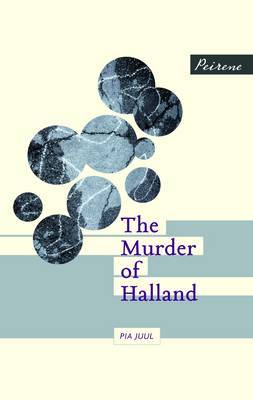
The Murder of Halland by Pia Juul


The Murder of Halland is novella eight out of the nine that Lyndsay from Tolstoy is my Cat and I are reading as part of our Peirene Press readathon, and part of the Small Epics series.  Bess is a writer living in a small, tight-knit community with her partner Halland.  One morning she is woken by the sound of a gunshot and soon receives the news that Halland has been murdered.  The police start to investigate whilst Bess starts to grieve.  Throughout the process, Bess starts to see her neighbours, friends and family in a different light, and faces up the consequences of the decisions she has made throughout her life.

I should start this review by confessing that I'm not a fan of crime/detective fiction.  I've read a few popular crime books and some Sherlock Holmes, but I just can't get into it.  I know I'm supposed to solve the puzzle of who committed the crime but that's not how I like to read.  Sure enough, whilst reading The Murder of Halland, I didn't spend any time trying to work out who murdered Halland and consequently later events were a surprise to me.  The crime aspect of the book was well written but didn't appeal to this particular reader.  I also can't judge how much it 'dismantles the rules of an entire genre' (quote from the back cover), as I'm not familiar enough with the genre to tell.

Luckily, The Murder of Halland is much more than crime-by-numbers, it's also about grief and coming to terms with the loss of a loved one.  Many of the sections dealing with this rang very true to my own experiences.  There's one chapter in the book where Bess is supposed to go to a library to give a talk (she's a writer) and checking her emails, she finds a confirmation.  In the space of a few short sentences she goes from almost flippancy ("should I create an auto-reply saying my husband had been murdered?") to despair;

"What had I written?  I didn't want to think about work.  Perhaps I would never want to think about writing again.  That belonged to the past and it didn't matter any longer."

Grief has been like that for me too; a roller-coaster of emotions and the constant worry of whether you are grieving properly or not, whether people will judge you for smiling or for leaving the house.  I think Juul's writing will relate to the experience of most people ("If normal everyday life had resumed, the washing needed attention.") and I connected well with Bess.

So a bit of a mixed bag.  The crime sections didn't appeal but the writing was simple and heart-felt, honest about the grieving process.  If you are a crime fan, you'll enjoy this book.

Source: From the publisher, in exchange for an honest review.
Published: 2012
Score: 3.5 out of 5

Tuesday, 6 November 2012

The Cutting Season by Attica Locke

Caren is the manager at Belle Vie, a sprawling plantation house deep in Louisiana   One morning whilst making her inspection of the grounds, she comes across a young Mexican woman, brutally murdered and discarded.  With the police investigation inadequate, Caren investigates and the more she finds out, the more she starts to suspect a cover up.  The white owner of the property is desperate to sell, the woman's employer has a history of violence and  she might have uncovered something she shouldn't have just before her death.  The investigation even leads back to Caren's ancestor Joseph, a slave on the plantation that disappeared soon after gaining freedom.  An ambitious book, The Cutting Season covers race relations, history and politics as well as a criminal investigation.

Crime is not a genre I read very often but I had heard good things about Attica Locke.  In fact, I own her previous novel, Black Water Rising, although typically I haven't got around to reading it yet.  I'd seen some positive reviews of Cutting Season on other blogs and the setting of the book really appealed.  On our American honeymoon last summer, my husband and I spent a few weeks in Louisiana and we visited lots of those old plantation homes and there is something about the history and atmosphere of such places that I thought would make for a great crime story.  And that atmosphere was conveyed excellently in the book by Locke, it had an almost gothic, sinister feel which helped build suspense throughout.

On the whole, I enjoyed Cutting Season.  It's expertly written and ambitious in coverage.  The topics of race and slavery are handled sensitively and the book is thought provoking - who should really own the plantation houses?  Should they be preserved for history or should we wipe the slate clean and start again?  Does history belong to all of us or just a select few?  Should history affect modern day decisions?  Although I'm not a big fan of crime fiction, I could see that the mystery of who had killed Ines was well structured with enough red herrings to keep me guessing.  I didn't work out who it was before the big reveal.

Despite everything I enjoyed about the book, it just seemed to be missing that special something.  I don't know if it was purely because I don't love crime, but the middle section lagged and I never felt fully engaged with the story.  In some ways, I think Locke was too ambitious and couldn't do everything she wanted to do within the confines of a crime/mystery novel; the genre was too restrictive for all the themes she wanted to cover.  Locke was experimental by adding so much more to the genre but too confined by the conventions of the genre.  I would have liked to see more of a gothic literary style novel rather than a traditional whodunit.  

I'm sure crime fans will love this book as it's a good mystery and the writing is excellent.  I wasn't the biggest fan of this one but I don't think I was the right reader for it.

Source: Library (reserved)
First Published: 2012
My Edition: Serpent's Tail UK, 2012
Score: 3.5 out of 5