Showing posts with label biography. Show all posts

Friday, 28 November 2014

Chinese Cinderella by Adeline Yen Mah

Chinese Cinderella is a memoir of growing up as an unwanted child.  After her mother died giving birth to her, Adeline is regarded as bad luck and a nuisance to her new stepmother.  Although she shows great academic promise and would do anything for love and acceptance, Adeline is ignored at best or treated with cruelty at worst.  Her coming of age story is told alongside the history of the Chinese civil war and the emergence of the Communists as the ruling party of China.

I had no idea that this memoir was aimed at children until I started reading it, so I had to adjust my expectations accordingly.  I really enjoyed the tone of the memoir, how Adeline's experiences are relayed without sentimentality, as this gives the book more power.  Had I picked this up as a child, I would have loved it and would have inspired me to learn as much as possible about China.  As I am an adult and I've already studied Chinese history a bit, I found some of the explanations of what was going on around Adeline too simple.

The real power of the book is in Adeline's grit.  At one point, she writes about how she read Frances Hodgson Burnett's A Little Princess, and resolved to be as strong as Sara.  And she is.  Although we see Adeline being damaged by a total lack of affection and abandonment, she manages to overcome her experiences.  There's no fairy godmother in this Cinderella story, instead we get Adeline working hard and finally earning her right to travel abroad to study.  This message, of inner strength and persistence is a great one for all of us, regardless of our age.

This book is definitely one I will be recommending to the children I teach, and to Giles when he is old enough.  It's a good example of a well written memoir aimed at children.

Source: Personal copy
First Published: 1999
Score: 3.5 out of 5

Tuesday, 15 April 2014

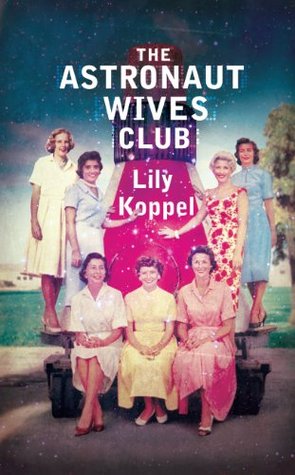
The Astronaut Wives Club by Lily Koppel

When NASA's original seven astronauts were announced in 1959, it wasn't just their lives that changed - their wives were catapulted into the spotlight and became minor celebrities, trailed by paparazzi.   As the competition over who would be selected to go into space intensified, the wives had an important part to play; much like politicians, only astronauts that had a perfect family life could hope to be chosen.  As more and more astronauts joined NASA and missions started leaving Earth, the wives leaned on each other to cope with the stresses of launches and the problems that being married to an astronaut could bring.  Covering the announcement of the first astronauts through to the final Apollo mission, The Astronaut Wives Club aims to show what it was really like to be married to an astronaut.

I was looking forward to The Astronaut Wives Club, it's always interesting to see how the lives of people around those with important jobs are impacted.  I can't imagine what it must be like to know that your husband is going to be blasted into space on a mission that has a high likelihood of something going wrong - how do you cope with that kind of uncertainty?  Unfortunately, whilst The Astronaut Wives Club was thoroughly researched and gave lots of information about the wives, it never really gave me that sense of what it was like to be them, what it was like to watch the launch of a rocket carrying your husband, or what it was like to not know if he would live or die.  There was a lot of distance from the wives in the book, so I never really got to be in their shoes.  And that's what I wanted out of this book most of all.

Similarly, a lot of the topics introduced were never fully explored.  Koppel writes on several occasions about the rise of feminism in America at this time, and how this contrasted with the need of the wives to have a cookie cutter perfect family and always look their best.  Some of the wives were talented in their own right, but Koppel never really examined these tensions, and whether this caused resentment in their marriages.  Lots was made of the infidelity of the astronauts and the resulting divorces, but again this was just reported - I didn't get a sense of what it was actually like.  The book would have been better if both of these themes were investigated more thoroughly.

Because of these issues, The Astronaut Wives Club missed the mark for me.  It was still an interesting read, and I admire the research Koppel has undertaken, but it wasn't engaging or as thorough as it could have been.

Source: From the publisher, in exchange for an honest review.
First Published: 2013
Edition Read: Headline, 2014
Score: 3 out of 5

Sunday, 9 February 2014

Cut Me Loose: Sin and Salvation After My Ultra-Orthodox Girlhood by Leah Vincent


Cut Me Loose is a memoir of a girl who grew up in a strictly Orthodox Jewish household, who was forbidden to speak to boys, learned to suspect anything modern, had to cover up completely, wasn't allowed to be friends with non-Jewish girls, and who had focused her whole life on the ideal of getting married and having children in her late teens.  Although Vincent sometimes struggled against these restraints, she believed in her community and desperately wanted the approval of her father.  So, when she is cast out of the community for exchanging innocent letters with an Orthodox Jewish boy whilst staying with family in England, and later for wearing a sweater that was too tight, she is devastated.  As her family continue to ignore her, Leah engages in riskier and riskier behaviour as a way to gain their attention and love, before finally coming to terms with her sexuality and the choices she can make for her own life.

I'm absolutely fascinated by what life must be like in strictly religious communities.  I grew up in a completely non-religious household, and have never thought about religion as a factor when making decisions about my life, so I'm interested in those that do, as it seems so alien to me.  As such, I found the beginning sections of Cut Me Loose, detailing Leah's childhood and expectations for the future, to be the most interesting.  She had built her life around a very strict set of rules and marriage market (in which even being seen standing next to a boy would downgrade your prospects) and I was amazed at the extent to which she accepted them, even now when writing her memoir.  Cut Me Loose reminded me just how much impact our childhood experiences have on us, and how hard it can be to break away from them.

Once Leah is unwelcome in her community, she finds herself alone in a big city, living on the poverty line.  As she wasn't allowed to make friends with non-Jewish people, she is completely without a support network and feels desperately lonely.  Eventually she decides that she might as well 'live up' to being exiled from her family, and starts to have a lot of sex with men who do  not respect her.  Having been bought up in a society where women defer to men and expect lower status, she has no clue how to negotiate modern relationships and lacks the confidence to say no; going along with what the men want in order to feel needed in some way. As you can imagine, this doesn't lead to happiness, and the rest of the book deals with Leah building a life for herself on her own terms, and learning to negotiate the world.

I breezed through Cut Me Loose in a few days, as it's well written and fast paced.  Vincent's story is interesting and she captures all of the emotions she felt vividly.  I felt as though the ending of the book was a bit rushed, as Leah goes from desperately despressed to a functioning adult in a happy relationship within what seems like a few pages.  I'm sure that part of her journey would have been interesting to read about too.  Still it's an interesting memoir to pick up if you're interested in religious communities or coming of age stories.

Source: From the publisher, in exchange for an honest review.
Published: January 2014
Score: 3.5 out of 5

Tuesday, 17 December 2013

My Promised Land: The Triumph and Tragedy of Israel by Ari Shavit


I love a bit of non-fiction, and I've always found books about other cultures and religions particularly fascinating.  When you combine that with history, politics and biography, you're pretty much on to a winner, and that's what Shavit does here.  Through the sharing of his family history and that of important Israeli figures, Ari Shavit tells the story of Israel from the initial campaign to set up a Jewish state to the present day.  It's all there, from Zionism to the communal camps or kibbutzim, to the twentieth century wars, the building of the settlements and the Palestinian intifadas.  Shavit also considers the future of Israel and the issues it faces as it moves forward into the twenty-first century.

My Promised Land is truly an excellent piece of non-fiction.  It contains a lot of history and politics, but it's all blended together with reflections and interviews and thoughts, and this makes it wonderfully easy to read and absorb.  Picking up this book never felt like a chore, and the easy going writing style made it perfect for someone like me, who has a little bit of knowledge of Israel but who would like to know more.  Although it contains a lot of information, it never feels overly stuffy or academic, and it remains completely engaging throughout.

Israel is a topic that tends to elicit strong opinions and this means it can be quite hard for someone who is completely uninvolved to find something factual and balanced.  I'm not Jewish or Muslim, and I'm not invested strongly in either side of the Israeli-Palestinian conflict.  Although Shavit's book is inherently biased from his point of view of a proud left-leaning Israeli, this bias is acknowledged and addressed through his interviews with others.  We hear directly from a displaced Palestinian, a nuclear scientist, a founder of the settlements and a Jewish terrorist.  Shavit reflects on the views of all the participants, but he isn't overly judgemental and the commentary is thoughtful.

In fact, that's what I liked most about this book; it made me think.  It doesn't attempt to reduce a complex political situation to a black and white interpretation, rather it exposes how complicated it is and highlights all of the shades of grey.  I knew the basics of Israeli history before reading My Promised Land, but I have a much better understanding of the nuances and the motivations of different groups now.  It's a thoughtful book for readers who like to be challenged to think and decide for themselves, and I highly recommend it.

Source: From the publisher in exchange for an honest review.
Published: November 2013
Score: 5 out of 5

Saturday, 28 September 2013

Out of Africa by Karen Blixen / Isak Dinesen


Out of Africa was the book chosen for me by the Classics Club spin.  It came from my 'books I can't wait to read' list, so I was thrilled to see it chosen and couldn't wait to start it.  It's actually the only non-fiction title on my list, a memoir by Karen Blixen of the time she spent living on a coffee farm in Kenya in the early twentieth century.  Out of Africa reads like a collection of essays, in which Blixen records her impressions of the county and the people who live there, important events in their lives and finally the loss of her farm in 1931, when she was forced to return to Denmark.

I read Out of Africa slowly over the course of a month or so, which I think is the best way to tackle it.  As I mentioned above, it's really a collection of essays/impressions and for a lot of the book it lacks an over-arching tie to hold everything together.  This means that it isn't the most fast-paced of reads and I think I would honestly have struggled to read it straight through over a few days.

However, my slower pace meant that I had time to fully lose myself in Blixen's writing and the Kenya she portrays.  The writing itself is absolutely stunning and reading it is an immersive experience, that makes you as a reader almost able to experience Blixen's impressions alongside her. Although the book is littered with the prejudices of the time and a healthy dose of European colonial attitude, the love Blixen has for Kenya and her respect for the settlers and tribes-people that live near her farm really comes through.  She describes the stillness of Africa, the stars in the sky, the noises of the night and the quality and scent of the air.  Knowing that Blixen wrote her memoir after losing her farm only makes the writing more poignant;

"The cicadias sing an endless song in the long grass, smells run along the earth and falling stars run over the sky, like tears over a cheek.  You are the privileged person to whom everything is taken."

Out of Africa is an unusual memoir in some ways as it tells us next to nothing about Karen Blixen herself.  Her divorce isn't mentioned and her love for Denys is implied, rather than dealt with properly.  We find out more about the lives of the houseboys, Masai wanderers and Kikuyu people, but that's absolutely fine as it's really a love letter to Africa.  Out of Africa also works as a fascinating historical portrait of Kenya before independence.  I particularly enjoyed the sections detailing how tribal elders meted out local justice.

Even so, I do think the book suffered from it's lack of organisation and overarching narrative.  Although the writing is beautiful and the experience of reading the book completely immersive, there were definitely sections that didn't interest me as much as I wanted them to and times when I was sick of Blixen jumping between topics.  The section entitled 'From an Immigrant's Notebook' was especially guilty of this.  I am glad I picked this book up, but at times getting through it felt like a bit of an effort, and for this reason it isn't destined to be a favourite.  But if you don't mind the slow pace and the rambling nature of the writing, Out of Africa rewards you with some stunning descriptions of a country that has since changed in almost every way.

Source: Personal copy
First Published: 1937
My Edition: Penguin 1986 (the year I was born!)
Score: 4 out of 5


Classics Club: Book 16/72

Sunday, 25 August 2013

French Milk by Lucy Knisley


French Milk is a non-fiction graphic novel that focuses on six weeks the author, Lucy Knisley, spent in Paris with her mother one summer.  Lucy is in her early twenties and her Mum is about to turn fifty.  The book itself is a diary of all their experiences in Paris, from visiting the sights to eating lots of delicious French food.  But as it is a diary, it also contains Lucy's own reflections about her life and the future.

I was expecting to enjoy French Milk as I love graphic novels, travel and food, but I wasn't expecting to relate to Lucy as much as I did and enjoy it on a deeper level, too.  In between the entries about visiting Oscar Wilde's grave, admiring the artwork at the Lourve and shopping at vintage markets, Lucy writes with honesty about the experience of travelling and how she feels about her life.  On one early page, she sends a homesick email to her boyfriend, only to get a "you're having the experience of a life-time, you should be enjoying it!" sort of reply.  This so corresponds with my own experience of travel; every-time I have gone abroad for a longer period of time I have had travellers guilt about missing home and finding some things hard, even though I knew that I was having the most wonderful experience that I would look back on for years to come.  I liked that Lucy was honest about this part of travel and also about the little things, like thinking of Walt Disney when visiting Notre Dame.

But what I related to most was Lucy's relationship with her mother and how she felt about her future.  She's at that stage you get to in your early-twenties if you have been to university, where you are starting to really grow up and be more independent, but you're still attached to your parents and you still regress to being a teenager whenever you see them.  Lucy writes about being childish when she visits her parents home at the beginning of the book and sometimes needs her Mum to comfort her when she's feeling overwhelmed by the future.  When I was 23, I was living with my boyfriend and was deemed responsible enough to be in charge of 30 children on my own all day, but I would still phone my Mum for washing machine instructions and after cooking disasters.  Knisley perfectly captures that phase of your life, when your relationship with your parents starts to change.

The parts about Paris itself were lovely, too.  I've only been to Paris once and definitely need to go back one day.  This book had me thinking about all of the things I would want to do once I got there.  The drawing style was more Persepolis than super-hero, which fits my personal preferences:


On the whole, French Milk was enjoyable and successful both as a travelogue and as a memoir about a stage in the authors life.  I just whizzed through it and am excited to pick up Knisley's other graphic novel, Relish.

Source:  Personal copy
First Published: 2007
My Edition: Touchstone, 2008
Score: 4.5 out of 5

Monday, 3 June 2013

Sipping from the Nile by Jean Naggar


Sipping from the Nile was my first pick from my book jar, which is basically a jar that contains folded up bits of paper with books from your TBR pile written on.  When you feel overwhelmed with choice, you select randomly from the book jar, to take the decision out of your hands (you can see the original idea at Alex in Leeds' blog). All over my half term break, I was extremely indecisive when it came to reading; I kept picking things up, reading a few pages then putting them down again and it was getting annoying! So I decided to take charge of the situation by reading one book from my book jar then moving on to my Classics Club spin pick.

Jean Naggar comes from a wealthy Jewish family who had lived in Cairo for centuries.  The early parts of Sipping from the Nile deal with an extravagant, sheltered childhood, as Jean and her family live comfortably in a large house overlooking the Nile.  Servants take care of her every material need, she is sent to a prestigious English boarding school and the family summer in Europe, away from the stifling Egyptian heat.  The initial chapters are full of Sephardic Jewish rituals and there's an overwhelming sense of a large and close-knit family.  But after the Suez crisis in 1956, when Britain, France and Israel tried to stop the nationalisation of the vital Suez Canal, the atmosphere in Egypt changes for Jean's family.  After surviving the horrors of World War Two, the Jewish Egyptian population comes under threat due to anti-Israeli and anti-Jewish sentiment.  Eventually, Jean's family is forced to leave Egypt after some danger and the world of her childhood vanishes forever.

Sipping from the Nile is a very well written memoir.  Naggar conjures up the atmosphere of upper class childhood perfectly and the love she clearly has for Egypt comes off of every page.  Although the chapters dealing with boarding school and time abroad are also well written, the memoir truly comes to life when Naggar is writing about Egypt and the traditions of her family.  I learned a lot about Sephardic Jews and felt like I was completely immersed in Naggar's world, a feeling that was helped by the photographs scattered through each chapter.  

I must admit that whilst I was reading, I spent a lot of time waiting for the Suez crisis to turn up.  For a book whose by-line is 'my exodus from Egypt', this event doesn't actually occur until quite late in the game, at least two thirds of the way through.  Whilst the initial section dealing with her childhood felt leisurely and a bit over-long, the sections dealing with how it felt to leave Egypt behind could have been explored further.  I appreciated the final chapters where Jean and her own family return to Egypt, but I wanted to know more about the intervening years, more about what it felt like to be unwelcome in your home land.

Sipping from the Nile is a decent, well written memoir about an interesting community.  I enjoyed it, but it didn't set my world on fire.

Source: Personal copy (kindle)
First Published: 2012
Score: 3.5 out of 5

Wednesday, 6 March 2013

Vow by Wendy Plump

Vow is a memoir of adultery and the destruction of a marriage.  Wendy met Bill in college and they married in their late twenties, only to see their marriage eventually destroyed by a string of affairs on both sides.  Vow is an honest account of these affairs, focusing mainly on Bill's final affair, the one that led to their relationship breaking up for good.  Wendy is the first to commit adultery, conducting three affairs before the birth of their first child.  They manage to move on from these and from two affairs on Bill's side, but the revelation that Bill's final affair is not in fact over and that there is now a child involved is the final straw for their relationship and Wendy must try to move forward with her life.

I was very interested to read this book as I'm still early on in my own marriage.  My husband and I have been together for almost ten years (this September!) but have only been married for just under two.  We're lucky to have a strong, trusting and supportive relationship but I know from those around me how quickly that can be destroyed when trust is gone.  Adultery is very common, but it's one of those taboo subjects that no one seems to talk about. So I was attracted to a book about it, to read an honest portrayal of what it is like from both sides of the fence.

And Vow certainly was honest.  Plump writes with honesty even when she is in the wrong, even when it might turn the reader against her.  Her first affair comes to light by her confession to her husband and Plump writes in detail about this scene.  After describing his total shock and rage, she complains about his anger as that made her feel bad.  It's hard to feel sympathy with her at this point but that's one of the strengths of this memoir; it's not sugar coated. In fact, my feelings towards Plump remained ambiguous throughout.  It was clear to me that their relationship was lacking even before the affairs started and I did feel very sorry for her in the sections dealing with her response to her husband fathering another child and installing the 'other woman' in a house of her own, but at the same time I was frustrated by her inability to think of the consequences, to chase adrenaline but then not want to face up to the aftermath.  But I guess marital breakdown is like that - there are no easy answers.

Another strength of Vow was the surprisingly good writing.  I was expecting honesty from the book, but I wasn't expecting writing this good.  The whole text flows and Plump manages to tell her story non-chronologically in a way that isn't confusing at all.  At times the writing veers on the poetic with some poignant descriptions of emotions.  I particularly liked her husband nailed to the spot by "the blade of truth" and the following;

"driving home from that meeting, I felt as if someone had switched on a set of beaters in my stomach and blended my organs all to hell."

Vow isn't a book to read if you want answers to the question of extra-marital affairs.  The only advice Plump offers is to appreciate the beauty in the everyday comfort rather than allowing your relationship to become stuck and boring.  It's a highly personal case study, but it did make me think about my own marriage and reflect on the way we choose to live our lives.  I'd definitely recommend it, but don't expect any easy answers.

Source: From the publisher, via Netgalley
Published: 2013
Score: 4 out of 5

Sunday, 25 November 2012

Heads in Beds by Jacob Tomsky

As a certified nosy person, I'm a sucker for employment memoirs;  I will happily sit and read about life as a doctor, nurse, vet, explorer, retail assistant - in fact I will read about anything that is different from what I do myself.  So I was excited to request Heads in Beds: A Reckless Memoir of Hotels, Hustles, and So-Called Hospitality from Netgalley.  In it, Tomsky details his rise through the hotel industry from valet parking through to front desk manager.  Having worked many jobs within the industry, Tomsky is in the perfect position to detail what life as a hotel worker is really like and to give insider information for potential guests keen on upgrades and other perks.

Heads in Beds was very good light relief and I enjoyed reading it.  I'm not a frequent hotel user, but I've checked into enough hotels to recognise lots of the situations detailed in the book.  As always, I was shocked by how inconsiderate and rude members of the public can be towards service staff.  Tomsky does come across as a bit angry in places, but having worked in retail myself (thankfully, many years ago now!), I'm sure that this anger was justified.  There's only so long you can take being treated like the dirt on someone's shoe before you want to snap!  There are mentions of polite customers and good experiences but these become less frequent as the book goes on and Tomsky becomes more disillusioned with his job.  It's safe to say I won't be applying to be a front desk operator any time soon!

One thing I found very interesting was the comparison between the two main hotels Tomsky worked in, luxury hotels in New Orleans and New York.  In New Orleans, the staff were valued and trusted and consequently often went above and beyond in order to provide good service to their guests.  In New York, they were constantly monitored for any slip up, treated as if they were slackers and initiative was punished rather than rewarded.  This led to resentment and poor service, with no one willing to go the extra mile.  Even though Tomsky is writing specifically about the hotel industry in Heads in Beds, I've seen this kind of thing in every single working environment I have been in.  When will managers learn that staff work better if you trust them, value them and simply leave them to it?

Heads in Beds was on the whole clearly written with lots of humour.  It didn't set my world alight, but I found it interesting and enjoyable.  I think it could have benefited from being edited down slightly as it dragged in the later sections, with too much page time being devoted to Tomsky's time as a front desk operator.  I'm sure that fellow nosy readers will enjoy this book as much as I did!

Source: From the publisher via Netgalley
Publication Date: 20th November 2012
Score: 3 out of 5

Monday, 23 July 2012

I Know Why The Caged Bird Sings by Maya Angelou


I Know Why The Caged Bird Sings is the first volume of Maya Angelou's autobiography and deals mainly with her childhood in the rural town of Stamps, Arkansas.  Sent to her grandmother after her parents separate, Maya and her brother come of age in a Southern small town in the 1930s where segregation is total and racism everywhere.  At eight, Maya moves to St Louis to live with her mother and is raped by her mother's new boyfriend before later experiencing new freedoms as a teenager in California.

I've been meaning to read this book for the longest time and it certainly lived up to my expectations.  Angelou writes in a very simple way but her writing is extraordinarily evocative of place.  Whether it was the general store in Stamps, the gambling clubs in St Louis or the slums of California, I felt as though I was right there with Angelou.  She even manages to capture the atmosphere of each setting and infuse them with a sense of time and history.

There were some fantastic character portraits too.  I enjoyed the sketch of the cotton pickers lining up at dawn outside the store full of optimism but back later in the evening with half empty sacks and wounded hands, full of worry about how they would feed their family through winter.  Maya writes without judgement, which means she can provide a balanced portrayal of her mother, who wants to be a good mum but who is caught up in the excitement and glamour of life.  Of course the character of Maya's grandmother comes through very strongly as she was the person who had the most impact on the young Maya.  Her pride, strength and values are clear to see.

Even though this book deals with a lot of 'issues', I was pleased to see that it was also a coming of age story.  Whilst racism, crime and rape are dealt with powerfully by Angelou, at it's heart I Know Why The Caged Bird Sings is about the universal experience of growing up and contains hope as well as hardships.  I thoroughly enjoyed reading it but did find the ending a bit abrupt.  I know there are several other volumes in the autobiography but it would have been nice if this volume had a more complete ending, rather than just suddenly stopping at a new life event.

Recommended to everyone that's not had a chance to read it yet, this is an important book.

Source: Personal copy
First Published: 1983
Score: 4 out of 5

Monday, 16 July 2012

The Caliph's House by Tahir Shah


Tahir Shah is one of my favourite writers.  His love letter to Morocco, In Arabian Nights, is up there amongst the books I treasure because it perfectly invokes the magic, mysticism and wonder that I picture when I think of bazaars, spice markets, coffee houses, winding alleyways, snake charmers and Eastern story-telling.  So it was with high expectations that I picked up a copy of The Caliph's House, his earlier book, in the library.  It's an account of the first year Shah and his family spent in Casablanca, renovating a dilapidated traditional house and attempting to fit in with the locals.

Unfortunately, not all of my expectations were met.  In many ways, The Caliph's House is a wonderful book full of simple but absorbing writing and Shah certainly does a good job at describing Casablanca and Morocco itself.  Although there are sketches included, they aren't really necessary as, reading the book, I felt as if I was actually there with Shah and his family.  The culture of the Moroccans (for example their belief in Jinns) is described with respect but a gentle humour that shows the high regard Shah has for his adopted country.


As someone who has often daydreamed about packing everything in and moving to an exotic location, I enjoyed reading about the renovation of the house and how the traditional Moroccan artisans worked.  But this was also where I felt the book fell down a bit; Shah's writing is much more suited to stories and atmospheres, not practicalities like finding a carpenter or fixing a sewerage pipe.  The passages about the Moroccans and his visits around the country were enchanting, but the renovation sections seemed to drag.  There's only so many times I needed to read about workers not turning up on time or the guardians of the house panicking about something the resident Jinn might or might not have done.

All that is not to say The Caliph's House isn't a wonderful book - it is.  It's just that In Arabian Nights is better (more about Morocco, less about house renovation) and I happened to read that first.  The Caliph's House was worth reading for the descriptions and for the friendships Shah struck up with some of the Moroccans in the slum bordering his house; I had a soft spot for the refined stamp collector, Hicham.  I look forward to reading some of Shah's other books in the future, particularly In Search of King Solomon's Mines and Trail of Feathers, about Peru.

I'm going to end this review with my favourite passage from the book:
"I was tired of our meagre existence and the paltry size of our flat, where the warring couple next door plagued us through paper-thin walls.  I wanted to escape to a house of serious dimensions, a fantasy inspired by the pages of the Arabian Nights, with arches and colonnades, towering door fashioned from aromatic cedar, courtyards with gardens hidden inside stables and fountains, orchards of fruit trees, and dozens and dozens of rooms."

Source: Library
First Published: 2006
Score: 3.5 out of 5

Wednesday, 6 June 2012

The Diamond Queen by Andrew Marr

Andrew Marr is one of my favourite journalists/ political reporters.  Pre-blogging, I have enjoyed both My Trade, a history of British journalism and The Making Of Modern Britain.  So when, amongst the flurry of diamond jubilee books and biographies of various members of the Royal Family published recently, I saw that he had written a history of Queen Elizabeth's monarchy, I knew I would want to read it.

Although The Diamond Queen is marketed as a very personal account of the life of Queen Elizabeth II, it isn't really.  It's a history of her dynasty (the Windsors) and her reign.  It covers major world events, her relationships with various Prime Ministers and above all seeks to answer the question of whether monarchy is still relevant in twenty-first century Britain and what the Queen's role actually is.  Of course there are mentions of various scandals and her private life is covered, but anyone expecting a gossipy account of relationships should look elsewhere.

On the whole, I enjoyed The Diamond Queen.  Marr's writing was simple and easy to follow and his arguments were always explained clearly.  He has an interesting spin on events and the writing comes across as if he is in the room talking to you, which makes the book lively to read.  I liked the structure of the book; where long chapters on the history of various decades were broken up with 'interludes' about a theme that doesn't depend on time, such as money or travel.  This prevented the book from being too dense and it never felt like a struggle to pick it up.

I was particularly interested to learn that lots of things I take for granted about the monarchy were only decided by the Queen's Grandfather, and that the role of the monarch has constantly evolved, even in Elizabeth's reign.  For example, Elizabeth's mother was the first 'common' (i.e. non Royal) woman permitted to marry into the Royal Family, before that it was all princes and princesses.  There was a section at the end of the book where Marr speculates how the role of monarchy will change again when and if Charles becomes King; will he still be the head of state for Canada and Australia?

As in most non-fiction books, some parts were more interesting than others.  I was more engaged in the later sections as I have actually lived through these times and was therefore more familiar with the material.  Marr admits in the introduction of the book that he is a pro-monarchy so there is no criticism of the Queen to be found here, although he does sometimes criticise the behaviour of other members of the family, providing some balance.  On the whole, it's interesting as a history of the times and as an examination of how the role of the monarch has changed in recent years.

Source: Kindle
First Published: October 2011
Score: 3.5 out of 5

Tuesday, 7 February 2012

Howards End Is On The Landing by Susan Hill


One thing most bibliophiles love is books about books and Howards End Is On The Landing is one of the best I've read.  British author Susan Hill decides to spend a year rediscovering and rereading the books she already owns, and Howards End documents her thoughts during this period.  Loosely organised into short chapters, it is a manifesto for reading for total pleasure and for reading without any guilt or pressure.  Susan Hill believes you should read what you want to, when you want to.

This book will only appeal to certain kinds of readers.  If you are a very organised reader who always has a list of what is going to be read when and perfectly alphabetised shelves, this probably isn't the book for you.  In fact, the rambling style will almost certainly put you off.  But if you are more of a spur of the moment reader, you'll find yourself nodding your head to many of the points Susan raises.

A lot of themes of the book seemed to coincide with things that we as book bloggers think and worry about.  Hill cautions against getting caught up by new releases, against not taking the time to reread favourites and worries about the rise of e-readers.  My favourite part was when she writes about people who want to read as many books as they can in the shortest possible amount of time;

"A strange competitiveness has emerged among some readers in the last few years.  I have known book-bloggers boast of getting through twenty books plus a week, as if they were trying for a place in the Guinness Book of World Records.  Why has reading turned into a form of speed dating?"

I think most of us (myself included) are guilty of that a little bit, the urge and pressure to read as much as you can so as to always have new content up on our blogs.  Howards End is a gentle reminder of why we like reading in the first place and to not change our reading habits too much.  It was a timely reminder for me, as I can get so caught up in review deadlines and new releases that I forget to both read the books I want to read, and reread the ones I loved.  I used to do that all the time before I started blogging.

Much like the arguments it is making, the book is written in an unorganised, quite rambling style.  It comes across as Hill writing down her thoughts about reading as and when they strike her.  This took me quite a while to get used to, but I definitely appreciated the laid back approach by the end.  But this may not work for anyone - if you like clear structure, this isn't the book for you.  The only other thing that was hard for me was that many of the books Hill refers to are not popular now, meaning I couldn't always relate to the stories of her reading.  But this didn't bother me too much, as the arguments of the book were so clear.

Verdict: A well written, persuasive manifesto for reading without restriction.
Source: Library
First published: 2009
Score: 4 out of 5

Wednesday, 1 February 2012

Paris, My Sweet by Amy Thomas


Paris My Sweet is a memoir of a year in the life of thirty-six year old sweet-addict Amy, who gets the chance to work for Louis Vuitton in the city she has always dreamed about.  Part guide book to the best bakeries in town, part love letter to Paris, part almost mid-life crisis, Amy must learn to live as an American ex-pat in an utterly foreign city.  For readers with a sweet-tooth, there are many mouth-watering descriptions of the various pastries and cakes she tries, along with recommendations and information about famous chefs and pastry trends.

Paris My Sweet is a light, cosy read.  Although it is a well-written memoir, it's written with a light tone that makes it easy to breeze through and escape into.  I must admit to not being a massive dessert fan myself (I'm more into savoury snacks), but I did enjoy the descriptions of all the food and imagine that someone who enjoys cakes would love them even more.  My favourite part was the passion and joy with which Amy wrote about Paris, I've visited Paris only once and her descriptions made me want to visit again.  After reading this book, you too will want to cycle along the Champs D'Elysses, stopping at cute patissiers whenever the mood strikes you.

The parts that I felt didn't work as well were the parts when things became tough for Amy and she starts to feel very isolated living alone in a foreign city.  Her feelings are definitely understandable, but the tone of the book is so light (it's like a chick-lit memoir) that it's hard to connect with Amy and really understand what she is going through.  The writing jumps from loneliness to cupcakes too quickly to have any real impact.  There's also a lot about the ticking of biological clocks that again feels a bit shallow.  Paris My Sweet was more about the cakes and the wonderful setting than it was about any real identification with the author.

Still, this is a fun read that's perfect for any armchair traveller or pastry enthusiast.  It's quick, breezy and will make you want to travel to Paris and gorge on cake immediately.

Source: From the publisher via NetGalley
Score: 3.5 out of 5

Paris My Sweet is published on the 1st February 2012.

Tuesday, 24 January 2012

The Keys Of Egypt: The Race To Read The Hieroglyphs by Lesley & Roy Adkins


I was always going to love this book about deciphering hieroglyphics.  During my time at university I took a few modules on linguistics, I love Ancient Egypt and I have visited the Rosetta Stone many times at the British Museum - I could hardly wait to open the cover of this one!  Mainly a biography of the person to finally crack the code, Jean-Francoise Champollion, The Keys Of Egypt places Champollion's extraordinary discovery in context, explaining exactly why it took the world so long to be able to read hieroglyphics and the reaction of the academic community at the time.  

The Keys of Egypt is engagingly written, but it's not the best example of entertaining non-fiction out there.  The pace of events is quite brisk at the beginning of the book but definitely tapers throughout the middle onwards, finally ending with a long description of Champollion's time in Egypt including many page-length quotes from his personal letters.  This meant that the last fifty or so pages did feel like a bit of a slog; I was happy that Champollion had finally achieved his dream of seeing Egypt, I just didn't want to read all of his letters!  Therefore, this non-fiction book probably falls in a category with the vast majority of non-fiction titles; fascinating if you are interested in the subject, a bit tedious if you aren't.

One thing I really appreciated about The Keys Of Egypt was how the authors put Champollion's achievements in their proper historical context.  There was a section on Napoleon's troops discovering the Rosetta stone, several on the political aftermath of the French Revolution and a comparison with the work of Champollion's main rival, Young.  Reading about all the events going on in Champollion's life and his personal hardships (he was born into poverty and never really left it), the Adkins' managed to create a real sense of how big his achievement was and how much he was able to accomplish through hard work and sheer determination.

There were also some strong themes throughout the book.  Champollion was very close to his older brother and the theme of sibling love/respect was a thread throughout all of the sections.  Despite being an academic himself and therefore at high risk of becoming jealous of his younger brother, Jacques-Joseph Champollion often sacrificed his own goals and dreams in order to help Jean-Francoise.  The snobbery and resistance to change of the academic community was another theme - Champollion really had to fight to have his achievements acknowledged, and there were also some sore losers who resorted to plagiarism claims.  It's only really since his death that his accomplishments are freely recognised.

Whilst I loved this book (and will be giving it a high rating), I can see that it wouldn't be a book for everyone, only for big fans of Ancient Egypt and/or linguistics.  If you are after only a brief introduction to the life of Champollion and the decoding of the Rosetta stone (as well as the discovery of many of Egypt's monuments), I would recommend Joyce Tyldesley's Egypt: How A Lost Civilisation Was Rediscovered and the excellent BBC series that went with it.  

Source: Library (reserved)
First Published: September 2000
Score: 4 out of 5

Sunday, 15 January 2012

Sweet Mandarin by Helen Tse


Sweet Mandarin is a memoir about the lives of three generations of the same Chinese family; Helen herself, her mother Mabel and grandmother Lily.  Although all three women are mentioned throughout the course of the book, the focus is on Lily, the one who left a hard life in Hong Kong behind to start afresh in the UK.  After working non-stop only to find that her husband has drained all of her money for gambling, Lily grabs the chance when her British employers invite her to join them in the UK as a carer.  Her love of cooking leads her to eventually start a restaurant, and this love of Chinese cuisine and catering is the link between the three generations.  Helen Tse and her two sisters own a restaurant in Manchester called Sweet Mandarin.

Sweet Mandarin was very successful as a memoir.  It gave just enough historical detail to enable the reader to put the family in context, but the real story was the story of the three women.  Lily's life had many twists and turns and she had to rebuild things from scratch numerous times both in Hong Kong and the UK.  The admiration that Helen feels for her grandmother clearly came through in the text and as a reader it was easy to empathise with Lily and want her to succeed as no matter what happened to her, she never gave up.

Tse also portrays Chinese culture very well.  She doesn't ever explain that Chinese culture is x, y or z but instead it permeates the whole book.  Some parts about the value of men over women and the role of wives were difficult for me to relate to but fascinating to read about.  The Chinese village that Lily comes from and Helen eventually visits almost jumps off the page and the description of food in particular was very vivid.

This is quite a brief memoir and not one to read if you want in-depth historical observations (try Jung Chang's Wild Swans for that) but the lives of the women are interesting and well told.  Recommended to anyone who wants to learn more about another culture.

Source: Library (reserved)
First Published: 2007
Score: 4 out of 5

Thursday, 5 January 2012

The Girl With Three Legs by Soraya Mire


The Girl With Three Legs is a brutally honest memoir about the horror that is female genital mutilation (FGM).  At age thirteen, Soraya starts being teased by her friends for having 'three legs'.  When she goes to ask her mother what the nickname means, her mother tells her that she is going to receive a 'gift'.  Soraya's flesh is cut off (she describes hearing the sound of the scissors cutting her) and sewn up, leaving her with an opening just the size of a cotton bud/Q-tip.  The memoir describes frankly the medical problems that this caused and the long recovery period Soraya faced when she moved away from Somalia to Europe.  It also covers Mire's later career as an activist, campaigning for the end of FGM.

The Girl With Three Legs is a very successful memoir in that it shines a light on an issue that is important and could do with more attention.  The scenes where Soraya is mutilated and when she faces pain and complications afterwards are graphic and I found myself wincing in horror.  Mire also successfully shows how ingrained the attitudes leading to FGM are in the certain cultures and how it is often women doing this to their daughters for fear of their daughters being seen as unclean. When Soraya becomes an activist in her later life, she faces opposition from her native culture and even ostracism from her own family.  

That being said, The Girl With Three Legs isn't the most well-written memoir I have read.  It seems to jump around a lot and in certain places was hard to follow, especially when Mire describes the Somalian culture at the beginning of the book.  There are also sections when Soraya is going through an incredibly tough time after the surgery that are hard to follow; her descriptions blur into each other and it's hard to always know what she is referring to.  The chapters about Soraya becoming an activist could have been edited down a little.

I am glad I read this book.  FGM does occur in Western countries, where immigrants send their daughters back to Somalia or Egypt for the treatment in their school holidays, or even find a private doctor willing to carry it out for them.  The Girl With Three Legs shows why this is always unacceptable, no matter how tolerant of other cultures we want to be.

Verdict: Memoir about an important issue that is hard to follow in places.
Published: 2011
Source: From the publisher via NetGalley
Score: 3 out of 5

Tuesday, 20 December 2011

Talking About Jane Austen in Baghdad by Bee Rowlatt and May Witwit


Talking About Jane Austen in Baghdad is a true story told in a collection of emails exchanged between two women, Bee and May.  Bee is a Londoner who needs to find an English-speaking Iraqi to interview for her job with the BBC world service.  After she interviews May, a university professor from Baghdad, the two remain in contact and become close friends.  Bee shares details about life in London and her family and May responds with the brutality and horror of the Iraq invasion.  As things become worse for May, Bee does everything she can to try to help her escape the country for good.

I enjoyed this book at first. It was interesting reading the actual emails the two women shared as their friendship developed and progressed.  These initial emails contained lots of information about family history, everyday life and current events - it was a good way to get to know the two women.  But as the book continued I found myself getting irritated with the fact that every single email ever written between them had been included.  This made things very repetitive at times, especially when May is trying several ways to obtain a visa for the UK and in my opinion, a sensitive editor could have avoided this problem completely.  Some emails could have been cut without the overall effect of the book being diminished.

I also found myself getting a bit annoyed with the English woman, Bee.  She often writes cheerful emails full of family news in an attempt to cheer up May, but this does at times come across as insensitive.  Bee obviously comes from a well-off family and her constant chat about weeks away, holidays and complaining about having to train a new au-pair whilst May is being shot at in the street seems a bit tactless.  At times she is also very blunt with May, and I cringed whilst reading the sections where Bee tells May in no uncertain terms that she won't financially support her when she arrives in England.  

May's emails, on the other hand, perfectly convey how hopeless and frustrated she feels with the situation in her country.  During the periods where her and her husband are basically prisoners in their own home due to the danger, I really empathised with their depression and loneliness.  I was rooting for May throughout the whole book and did become emotionally invested in her.   This was the key strength of the book and I felt it would have been improved by focusing less on Bee and more on May, rather than including every single email written between them.

Verdict: Interesting true story told through emails that could have benefited from a sensitive editor.
Source: Owned
Score: 3 out of 5

Saturday, 10 December 2011

A Beginner's Guide to Acting English by Shappi Khorsandi


Shappi Khorsandi is an Iranian born comedian who is quite well known here in the UK due to her performances on Live At The Apollo and as a panellist on shows such as 8 out of 10 Cats.  A Beginners Guide To Acting English is a memoir of her childhood during the Iranian revolution.  The family originally left Iran as her father had a job opportunity in London, but when he later tries to return after the rise of the Ayatollah Khomeini, he only just manages to escape with his life.  Unable to go home, the family must come to terms with becoming refugees and getting used to the English way of life.

A Beginners Guide To Acting English is a well written memoir.  It is written with a light and humorous touch, which make the occasional 'heavy' moments more profound.  Stories of learning English and getting to grips with English food are interspersed with worry about family members left in Iran and the constant fear that Shappi's father will be targeted by radicals, even in London.  The emotional anchor of the book is really the later sections in which the family must enter police protection for a time to keep them safe.  Shappi describes the all-consuming fear she felt realistically and also manages to do so from the point of view of the child she was at the time, who didn't really understand everything that was going on.

That said, there were things about A Beginners Guide To Acting English that didn't work as well.  Whilst I thought  it was interesting to read about family members left in Iran, Shappi's technique of writing them in the first person didn't really work.  All these other family members ended up speaking in the same voice, which dulled any impact they might have had in the memoir. I also think the title is a bit misleading; there wasn't too much about the culture shock of moving to England, and more about events in Iran and lives of other Iranians in exile.  I did find this interesting, but the title does lead you to think this memoir is about things it isn't.

Overall, this was an average memoir.  It passed the time nicely but I probably wouldn't recommend it to others.  For me, Persepolis is a much better memoir of the Iranian revolution and life in exile.

Source: Library
First Published: 2009
Score: 3 out of 5

Monday, 31 October 2011

84 Charing Cross Road by Helene Hanff


I've lost track just how many people and blogs had recommended this cosy volume of letters between an American book lover and a second hand book shop in London's Charing Cross Road to me.  Helene lives in New York but is a devoted Anglophile who makes a connection with England through the Marks & Co bookshop, who begin to send her books in the late 1940s.  Over time she develops a close friendship with the chief buyer of the shop, Frank Doel, and their letters become both more personal and an important part of both of their lives.  The volume I read also contained The Duchess of Bloomsbury, Helene's journal from when she finally got to visit London after 84 Charing Cross Road was published.

This book was just what I thought it would be - a cosy feel-good read.  It was a bit like watching a Richard Curtis film, Love Actually or something like that.   The London in the letters and diary entries felt like that fictionalised London that tourists want to see rather than the real thing.  Everyone was nice and went out of their way to be kind to Helene, a total stranger.  And that was the best part of the book; as it all actually happened it reminded me of the capacity for good and kindness that we all have inside of us.  And who doesn't need reminding of that now and again?

I much preferred 84 Charing Cross Road to The Duchess of Bloomsbury.  I just liked the letter format more than the diary one and the contrast between straight-forward and somewhat brash Helene and the typically-English, typically-reserved Frank.  Compared to the sparky letters the diary entries dragged and were overly detailed.  I was happy to learn that Helene finally got to make her trip, though, and it was nice to learn what had happened to Frank's family.  I just didn't want that much detail.

Verdict: A perfect Sunday afternoon read.
Source: Library
First Published: 1976
Score: For just 84 Charing Cross Road, 4 out of 5.  For both books combined, 3.5 out of 5