Showing posts with label england. Show all posts

Wednesday, 6 June 2012

The Diamond Queen by Andrew Marr

Andrew Marr is one of my favourite journalists/ political reporters.  Pre-blogging, I have enjoyed both My Trade, a history of British journalism and The Making Of Modern Britain.  So when, amongst the flurry of diamond jubilee books and biographies of various members of the Royal Family published recently, I saw that he had written a history of Queen Elizabeth's monarchy, I knew I would want to read it.

Although The Diamond Queen is marketed as a very personal account of the life of Queen Elizabeth II, it isn't really.  It's a history of her dynasty (the Windsors) and her reign.  It covers major world events, her relationships with various Prime Ministers and above all seeks to answer the question of whether monarchy is still relevant in twenty-first century Britain and what the Queen's role actually is.  Of course there are mentions of various scandals and her private life is covered, but anyone expecting a gossipy account of relationships should look elsewhere.

On the whole, I enjoyed The Diamond Queen.  Marr's writing was simple and easy to follow and his arguments were always explained clearly.  He has an interesting spin on events and the writing comes across as if he is in the room talking to you, which makes the book lively to read.  I liked the structure of the book; where long chapters on the history of various decades were broken up with 'interludes' about a theme that doesn't depend on time, such as money or travel.  This prevented the book from being too dense and it never felt like a struggle to pick it up.

I was particularly interested to learn that lots of things I take for granted about the monarchy were only decided by the Queen's Grandfather, and that the role of the monarch has constantly evolved, even in Elizabeth's reign.  For example, Elizabeth's mother was the first 'common' (i.e. non Royal) woman permitted to marry into the Royal Family, before that it was all princes and princesses.  There was a section at the end of the book where Marr speculates how the role of monarchy will change again when and if Charles becomes King; will he still be the head of state for Canada and Australia?

As in most non-fiction books, some parts were more interesting than others.  I was more engaged in the later sections as I have actually lived through these times and was therefore more familiar with the material.  Marr admits in the introduction of the book that he is a pro-monarchy so there is no criticism of the Queen to be found here, although he does sometimes criticise the behaviour of other members of the family, providing some balance.  On the whole, it's interesting as a history of the times and as an examination of how the role of the monarch has changed in recent years.

Source: Kindle
First Published: October 2011
Score: 3.5 out of 5

Sunday, 22 April 2012

The Gunpowder Plot: Terror and Faith in 1605 by Antonia Fraser

Pre-blogging, I was a big non-fiction reader.  I probably read about 60% non-fiction and 40% fiction and didn't think twice about getting lost in a hefty non-fiction tome for a few weeks at a time.  Since I started blogging I've become more aware of all the great fiction books out there and gradually non-fiction has taken a back seat.  But every now and again I still get a craving for a history or science book and the urge struck last week, leading me to pick up Antonia Fraser's The Gunpowder Plot.


Synopsis:
On the 5th November 1605 a group of Catholic plotters attempted to blow up the Houses of Parliament with the aim of killing both King James  and the government in whole, enabling them to mount a Catholic resistance and gain control of the country.  One of the plotters, Guy Fawkes, was caught in possession of gunpowder in the cellar and the plot was foiled.  This much every school child in Britain knows but Fraser goes beyond that, looking at the causes of the plot, how it was discovered and the consequences on the minority Catholic community for years afterwards.

Thoughts:
Antonia Fraser is my favourite historian and reading The Gunpowder Plot, I was reminded why. Even though her books are very scholarly and impressively researched, they are written for the non-expert and have the right balance between academics and lively writing.  Fraser writes history as a narrative, showing why events happened and the motivations of each historical figure. This makes it very easy to get caught up in the 'story' and reading a Fraser book never feels like a chore.

Whilst reading The Gunpowder Plot, I realised that I didn't know as much about it as I thought I did.  For example, Guy Fawkes has got the lion's share of the blame throughout history (we still burn effigies of him on Bonfire Night) but he was really only a minor player. The real mastermind, Robert Catesby, was killed in a musket fight trying to escape the authorities and faded into obscurity.

I was also unaware of the situation facing Catholics in the early 1600s and how that was exacerbated by King James I.  After the vehemently Anglican rule of Elizabeth I and the confusion about who would succeed her, James made all sorts of slippery tongued pronouncements about freedom of worship leading Catholics to feel betrayed when this turned out to be just talk.  To me as a modern Brit it's hard to understand why Anglicans felt the need to suppress Catholicism but at the time they were not allowed to receive Mass, make confession, have the last rites or get married in a Catholic way.  Failure to turn up at your local Anglican church on Sunday would lead to large fines that would be impossible to pay off.  Fraser explains why some turned to violence without condoning it.

I also appreciated the links Fraser made throughout with modern terrorism.  Although the word terrorism didn't yet exist in 1605, the Gunpowder Plot if it had been successful would have been clearly a terrorist act and Fraser puts it in context with other terrorist attacks and shows that throughout history the causes have been similar.  Anyone who thinks terrorism solely comes from Muslim extremists should read this book.

The only criticism I have to make is that parts of this book were too detailed. The plot contained a large number of men by the time of its execution and Fraser tells us about all of them and the links between them and their families.  I was able to follow what was going on but felt like we didn't really need to know everything about some of the more minor players, and that this distracted from the more exciting parts of the book.

Verdict: Impressively researched, well written history of the 1605 Gunpowder Plot
Source: Personal copy
First Published: 1996
Score: 4 out of 5

Read Alongside:
Antonia Fraser has written lots of histories but the following are my favourites.  I read all of them pre-blogging:
1. Mary Queen of Scots - Biography of Mary showing why she acted the way she did and investigating whether she really was plotting against Elizabeth I
2. Marie Antoinette: The Journey - This is the book the Kirsten Dunst film was based upon and does a great job at showing Marie as a young Austrian princess, unfamiliar with the rules of the French court.
3. The Six Wives of Henry VIII - Shows each wife as a person independent of her marriage to Henry, giving details of their lives before becoming Queen.

Tuesday, 4 January 2011

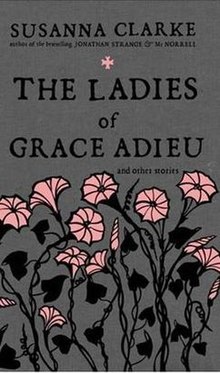
The Ladies of Grace Adieu and Other Stories by Susanna Clarke

Susanna Clarke's Jonathan Strange and Mr Norrell is one of my favourite books of all time, so as soon as I discovered that she had also written this collection of short stories set in the same world, I had to read it.  Better four years late than never!

The stories in The Ladies of Grace Adieu are all set in a green, forested England where the boundary between magic and reality is very blurred.  Before writing Jonathan Strange Clarke spent a lot of time researching English legends and folklore, and this has paid off as the stories read like authentic Grimm-style fairy tales.  Most of the stories centre on the world of Faerie and it's inhabitants, the kind of world where you might wander down a never-ending path, kill someone with embroidery or fall victim to a trickster Faerie prince.  There are eight stories in the collection.

Score: 4.5 out of 5

I had high hopes for this collection and it didn't disappoint.  I just love the world that Clarke has created and the sinister characters in it.  In some ways, the Faeries and the setting reminded me of all the Enid Blyton books I used to read as a child with fairies, goblins and dwarves (and I mean that in a good way).  Like Jonathan Strange, Clarke has made this book quasi-academic with an introduction by a "professor of faerie studies" and footnotes in some of the stories.  She also continues to copy the 19th century writing style.  Personally I enjoy these techniques, but I know they aren't for everyone.

The stories were varied in length and some were more engaging than others.  I particularly enjoyed Mr Simonelli, about a man who discovers his father was a fairy and does battle with a fairy prince.  Antickes and Frets was about Mary Queen of Scots attempting to kill Queen Elizabeth by embroidering a curse into a gift for her.  In The Ladies of Grace Adieu, a Jane Austen meets Brothers Grimm kind of tale, Jonathan Strange discovers that women have ancient magic too and The Duke of Wellington Misplaces His Horse is set in the village of Wall, from Neil Gaiman's Stardust. There wasn't a single story in the collection I didn't enjoy, although I thought Tom Brightwind  was a touch too long.

The theme of most of the stories was humans coming up against and battling wits with fairies and other forms of magic.  The secondary themes that I could see where the role of women in society and friendship between humans and fairies.  The main problem with the collection was that the stories didn't seem particularly organised and there was no over-arching plot or links between them.  Susanna Clarke had put together seven of these stories from previous publications and added the eighth for this collection, and it did have a slightly cobbled together feel.

But that's a minor complaint.  The writing was beautiful, the book itself was beautiful and I very much enjoyed reading it.  Definitely recommended for Jonathan Strange fans, it would also serve as a good introduction to Clarke's world for those put off by how long Jonathan Strange is.

Thursday, 30 December 2010

The Crimson Petal and the White by Michel Faber

I love long, rambling, Victorian style novels, and this one had been high up on my 'to-read' list ever since I first saw it mentioned on a friend's blog.  When my local library finally acquired a copy, I had to read it.

Synopsis: Sugar is a prostitiute in late 19th century London.  Forced into prostituition by her mother at a young age ('here's a gentleman to keep you warm'), she hates men and spends her time writing a revenge novel.  Soon to be afflent business-man William Rackham falls for her and first buys her a place to live, and then installs her as the governess to his daughter Sophie.  As Sugar rises up socially, she meets a large cast of characters from all walks of society.

Score: 4.5 out of 5

This was an unputdownable book.  I was worried about the length before starting (800+ pages, small font) but within the first chapter I was sucked into Victorian London and just wanted to read on and on.  Sugar's world jumps out at you from the page and it feels like a true representation.  There's no happy ever afters,  prostitution is not at all glamorised and bad things happen to good people all of the time.

By far the biggest strength of Faber's novel is the characters.  Even the minor characters were well developed and rounded (Caroline, the doctor) and the major characters started to feel like old friends by the end of the book.  Faber seemed to have an especial talent for female characterisation - the determination and drive of Sugar was contrasted wonderfully with Rackham's wife, Agnes, a woman who had managed to bear a child without knowing anything about how her body functions and thinks that a demon is causing her menstruation.  I also had a soft spot for Mrs Fox, a widow who didn't care about society's rules and was trying to help prostitutes in her own blundering way.  Compared to this, the male characters were equally complex, but weak.

This was also a book that had a lot to say on a number of issues: prostititution, the role of women, class, poverty, depression, religion, insanity, healthcare, attitudes to children, social climbing and marriage. But thankfully all this took a back seat to the story and Faber never came off as preachy.  All of the characters went through a decent amount of development and by the end of the book I didn't want it to be over.  I could happily have read about the next 30 or so year's of Sugar's life.

The only criticism I can make, that stopped it from receiving 5 stars, was the abrupt nature of the ending.  Even though I can appreciate the artistic merit in the ending, I wanted to know what happened next!

Recommended for historical and gothic fiction fans.