Showing posts with label classics club. Show all posts

Saturday, 7 February 2015

Cannery Row by John Steinbeck

Cannery Row is the third John Steinbeck novel that I have read,  but it was completely unlike the other two.  Lacking what anyone could call a real plot, Cannery Row is best described as a series of vignettes that star the inhabitants of the Row, that work together to build up a vivid portrait of a particular place at a particular time.  Steinbeck takes as his subjects the misfits of society - prostitutes, drunks, artists and squatters, and he describes their lives and the everyday occurrences that happen in them.  Homeless Mack and his group of boys move into an abandoned building and set about improving it.  Lee Chong, the grocery owner, is called upon to accept payment in frogs rather than cash.  Doc, a lonely biologist, journeys to the coast to collect specimens.  And the prostitutes at Dora's place face a busy season.

I loved that Steinbeck set this novel among the 'low-life' inhabitants of the Monterey area, and that he infused it with such humanity and hope.  Despite the miserable surroundings the characters find themselves in, their lives are essentially happy.  They aren't caught up in consumerism and the desire for status, and they are able to appreciate some things about life that we can miss, such as how valuable simple acts of kindness can be.  Perhaps because they have found themselves at the bottom rung of society, they live without judgement and simply take people for who they are.  That's a message that we all need to be reminded of every now and again, that beauty and kindness can be found anywhere.

The sense of place in Cannery Row is fantastic.  Steinbeck's writing seemed more poetic in this novel, particularly when he was describing the quality of light over the row, or the sunrise over the sea.  It made the novel extremely visual, and by the end I felt as if I knew Cannery Row myself, as I could imagine it all so clearly.

My only complaint with the novel is that, in common with the other Steinbeck novels I have read, there was too much focus on the male characters.  The character of Doc was fascinating, and so was Mack, but I wanted to read more about Dora and the women who worked for her.  There's a great little section where Dora schedules the girls to deliver soup and company to families during a flu outbreak between clients, but it's never expanded on.  I wanted to know their thoughts and motivations, and experience their lives too.  Similarly, it's hinted that Lee Chong has a wife, daughters and daughters-in-law, but they are entirely absent from the novel.

Still, Cannery Row is a beautiful novel.  The writing and the characters combined to give me such a feeling of hope, that people anywhere can live their lives in a decent and caring way.  I'm looking forward to getting to the sequel, Sweet Thursday.

Source: Personal copy
First Published: 1945
Edition Read: Penguin Modern Classics, 2000
Score: 4.5 out of 5


The Classics Club: Book 33/72
My full list of titles and reviews can be found here.

Thursday, 15 January 2015

The Good Earth by Pearl Buck

The Good Earth opens on Wang Lung's wedding day.  As the son of a farmer, his only option is to marry O-lan, a slave working in the great house of the village.  Although they start off as strangers and with next to nothing, Wang Lung and O-lan make a good pair, making the most of their land and growing family.  When a famine strikes and the family are forced to flee to the city, it is O-lan's determination and luck that keep them alive, and even enables them to return to their farm much richer than before.  As Wang Lung starts to accumulate more land and become more than just a peasant farmer, his expectations start to alter the family dynamics.  He starts to view O-lan as too simple, too plain and not enough for him.  As his sons grow up with more security than Wang Lung thought possible, the family begins to change for ever.

I really enjoyed The Good Earth.  Although Buck isn't Chinese, she lived in China for the majority of her life, and she presents the customs and attitudes of the time without judgement or condescension.  In fact, she doesn't even stop the story to explain things that would have been self-evident to Wang Lung, such as foot binding and the role of women, and this makes the story stronger.  Buck doesn't impose any Western ideas or views on her Chinese characters, even when their attitudes will make Western readers uncomfortable.

For me, The Good Earth was all about O-lan.  Having suffered through her childhood and adolescence, she is ready to live a quiet life with Wang Lung and devote herself to their family.  She suffers constantly throughout the book and yet is always thought of last.  Although Wang Lung does come to respect her in some way, for most of the book he ignores her presence, does not appreciate all that she does, and he is never able to love her.  When she returns to work the fields after literally just giving birth, he accepts this as what she should do.  O-lan made me wonder how many women there are like this in the world, forced by custom and attitudes to do everything for their family, never getting any reward or potential for personal growth, essentially giving up their own lives.  O-lan had so much inside her, but Wang Lung never thought to find out who she really was.

Another thing that struck me whilst reading The Good Earth was the parallels with Dickens' Great Expectations (this may sound strange, but bear with me).  Like Pip, Wang Lung starts to think of himself as grand, and therefore deserving things according to his new station.  A more attractive wife. Sons that are scholars rather than farmers.  Many rooms to their house.  Tenants that defer to him and treat him with respect.  As in Great Expectations, this can only end in misery for Wang Lung, something that is perfectly summed up in the last scene of the novel, which coincidentally was one of the strongest endings I've read in a long time.

I would definitely recommend The Good Earth.  I had my reservations about a book narrated by Chinese characters written by a Westerner, but these were unfounded.  The Good Earth is very well written with memorable characters, and I can't wait to read more of Buck's work.

Source: Personal copy
First Published: 1931
Edition Read: Simon & Schuster, 2005
Score: 5 out of 5


The Classics Club: Book 32/72
My list of titles can be found here.

Friday, 2 January 2015

Pride and Prejudice by Jane Austen


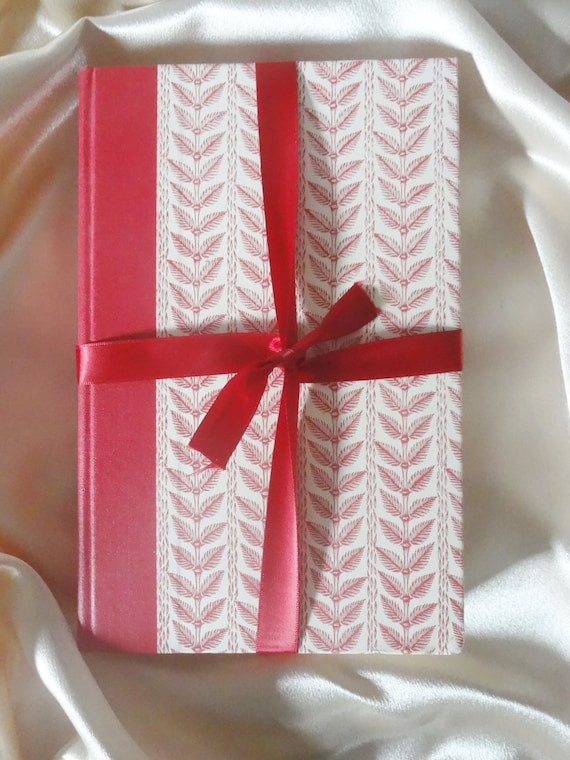
When starting this post, I was so excited to find an image of the edition of Pride and Prejudice that I have just finished.  You see, I was browsing one of my favourite second hand bookshops at the weekend when I came across a complete Folio Society set of Austens, all hardback and stunning and gorgeous, for an amazing price.  It was one of my best bookish finds in years, and I knew that as soon as I finished the book I was currently reading, I'd have to read an Austen. In the end, I chose Pride and Prejudice, it's a reread that's on my classics club list, and it felt fitting as it was my first Austen.

I'm sure that most people are familiar with the story of Elizabeth Bennet and her four sisters, who are unable to inherit their father's property and will therefore have to live in poverty unless they make sensible marriages.  But set against Elizabeth and her older sister Jane's chances are Mrs Bennet's lack of taste or social decorum, Mr Bennet's bluntness, and the silliness of their younger sister Lydia. Of course there are a lot of misunderstandings as Elizabeth navigates the marriage market, but in the end both she and her sister manage to marry for love, conveniently falling in love with men who have the fortune to support them.

Pride and Prejudice will always be a special book to me as it was the first Austen I was ever able to complete on my own.  My older sister was a huge Austen fan from her teens, and even studied her work at university, but I could just never get into any of her books.  I didn't understand the wit, the social commentary or the understatement of Austen's prose.  But finally (and only after watching the BBC mini-series), I was able to fully appreciate Pride and Prejudice and since then, I've not looked back.  The more Austen I read and re-read, the more I understand why she is as respected as she is.

On this read, I found myself thinking a lot about mistakes.  Both Jane and Lizzy make mistakes, Jane in thinking that Miss Bingley is a good friend, and Lizzy about the characters of Mr Darcy and Mr Wickham.  But both are honest about their mistakes and set about fixing them.  Although Lizzy in particular feels ashamed after discovering the truth, she is able to explain herself and move on. This is something I struggle with, as I tend to want to hide any mistakes I make and find it hard to forgive myself, let alone others.  Jane in particular was good at this - her kindness towards others was matched by her kindess towards herself, and this is something I can learn from.

Now that I have read more (but still not all) of Austen's major novels, Pride and Prejudice is no longer my favourite.  I prefer the flawed characters of Emma and particularly Catherine from Northanger Abbey.  But it's still a special book, one that I'm sure I will reread many times in the future, getting something new out of each read.


The Classics Club: Book 31/72
My list of titles and reviews can be found here.

Saturday, 27 December 2014

The Hobbit by J.R.R. Tolkein


I have a bit of a long history with The Hobbit. I tried (and failed) many times to read it as a child, but never got out of the Shire.  It was enough to make to decide that Tolkein was just not for me, but then I saw the Lord of the Rings films, loved the books on a second reading, and now I've come full circle and picked up The Hobbit again.  It's the story of Bilbo Baggins, a hobbit who accidentally gets caught up with a group of dwarves off to kill the dragon who is guarding the stolen treasure of their ancestors.  Along the way, Bilbo will learn a lot about himself.

The Hobbit was a surprising read for me, in that it didn't turn out in the way I expected it to at all. From the initial chapters, I had Thorin, the leader of the dwarves, pegged as the hero of the novel, and was imagining him smiting Smaug and generously sharing his treasure in the final chapters. But it wasn't like that at all, and the characterisations were surprisingly complex for a children's novel. Thorin is shown as brave, determined, and a good leader, but he is also greedy and blinded by his desire for Smaug's treasure.  Similarly, the Master of one of the towns is morally ambiguous too.

Really, The Hobbit is all about Bilbo.  Like most good children's books, it's main themes are centred around growing up and developing as a person.  Bilbo starts the novel as reluctant to leave his home, scared of the world around him, and overly dependent on Gandalf and the other dwarves. When Gandalf leaves the group around half-way through the story, Bilbo gets a chance to come into his own.  He starts making decisions, believing in himself, and in the end he emerges as one of the few characters untainted by greed for Smaug's treasure.  There are a lot of opportunities for him to learn to be resolute, and to never give up, even when the going gets tough.

The other main theme of the novel is money and greed.  We see good characters caught up in their desire to hoard the treasure, even when there is more than enough of it.  Thorin doesn't want to give any of it away, even though there is no way he could use or transport more than a small quantity of it. The Hobbit is very much focused on friendships, personal strength and doing the right thing, as opposed to acquiring money or possessions.  So it was perhaps a good read for the Christmas season!

I was surprised by how much I enjoyed The Hobbit, even more so than I did the  Lord of the Rings trilogy.  Perhaps because it is aimed at children, the adventure moves on at a brisk pace, and there is always something going on.  Highly recommended.

Source: Personal copy
Score: 4.5 out of 5


The Classics Club: Book 30/72
My list of titles and reviews can be found here.
Sunday, 31 August 2014

The Classics Club: Two Years In


I can't believe that it's already been two years since I joined the Classics Club and compiled my list of 72 classics I wanted to read in five years.  Last August, I posted my first annual review, in which I was pleased to have finished 13 titles and knocked two Dickens books off my list.  This year, I'm pleased that I've stuck with it and continued to read classics at a steady pace of at least one a month.  This is a big deal for me, as I'm terrible at sticking to goals in general and reading lists in particular.  This is the only time I have ever stuck to a TBR list, so hopefully I'll continue and manage to read all 72 books by the time the five years are up.

Books read this year: 16
Running total: 29/72

Books I read this year (links to my reviews):


Favourite Reread: This second year was a year of new reads, with only Emma and Return of the King being rereads.  Of these, Emma is definitely my favourite.

Unexpected Delight: Northanger Abbey.  Having already read Pride and Prejudice, Emma and Sense and Sensibility, I had assumed that the best of Austen was already behind me.  But I was utterly enchanted by Catherine, and Northanger Abbey is now my favourite Austen.

Book I Am Glad to Have Finished: Definitely Les Miserables.  I try to read one 'big'/scary book each year, and spinning Les Mis meant that this was the year that Victor Hugo and I became acquainted.  I had high hopes, but was ultimately let down by the meandering story-telling and unnecessary diversions. I'm glad I read it, but it wasn't really for me.

Best Modern Classic: The Painted Veil by W.Somerset Maugham.  I loved this story of a woman forced to accompany her husband into a cholera epidemic because of her infidelity.  It's full of thoroughly unlikable characters but still somehow manages to be beautiful.

Book I Finally Got Around To: East of Eden.  My husband has been nagging me for years to read some more Steinbeck, so I'm relieved that I loved this one.  I'm looking forward to The Grapes of Wrath and Cannery Row, both of which are on my list.

Authors I Am Finished With On My List: Louisa May Alcott, Anne Bronte, Emily Bronte, Isak Dinesen, Daphne Du Maurier, Elizabeth Gaskell, F. Scott Fitzgerald, William Golding, Nathaniel Hawthorne, Victor Hugo, Zora Neale Hurston, Aldous Huxley, Henry James, W. Somerset Maugham, Mark Twain and Jules Verne.  Of all of these, I'm really looking forward to reading more James and Maugham.

I'm still enjoying reading classics, although I'm finding that my tastes are changing.  If I modified my list now, it would be very different from the one I compiled two years ago.  But I've decided to stick to my original goals, and save my new ideas for the classics club list, version two, that I'm sure I'll be compiling in three years time.

If you're in the classics club, how are you getting on with your list?

Monday, 11 August 2014

In Which I Am an Unlucky Spinner...


So the Classics Club Spin Number was posted this morning, and it's number 17.  Which means Moby Dick it is for me, the one book on an otherwise excellent list that I was dreading!  I'm starting to feel like an unlucky spinner - a few months I got the monster of a book that is Les Miserables and now this.  On the positive side, at least I am being forced to knock these sort of books off my list!

What scares me about Moby Dick is that it's not just a story, I'm dreading all of the diversions about whaling and the technicalities of running a ship.  The blurb on my copy also describes it as a 'hymn to democracy', which again makes me think it might be more of an ideas book than a plot book, which is one of my bookish pet peeves.  I'm expecting the pacing to be glacial at best.

But I do want to read it, as it's so loved, and so I can understand a bit more about American classics.  I've had a copy for around ten years, but I've never been able to pick it up and read it, always selecting something 'easier' at the last minute.  I put it on my classics club list to give myself a deadline to try it, and now the spin has just forced that deadline ahead a bit.

As it's such a big book and as I have a newborn son, making me prone to sleep deprivation, my plan of attack is little and often.  My copy has 135 chapters, I'm hoping to work through a few a day until I get to the end.  That way I can continue to read other books alongside it.  Wish me luck!

Did you take part in the spin?  If so, are you happy with your book?

Monday, 4 August 2014

Classics Club Spin #7


I love the Classics Club Spin.  I've participated in most of them, and have had a push to read some fantastic books (Their Eyes Were Watching God, Rebecca), some good ones (Lord of the Flies, Out of Africa), and some I'm just glad to have finished (Les Miserables).  So I was excited to see a new spin announcement this morning; if I can take part while heavily pregnant, I can do it with a newborn!

As always, I've used random.org to randomly select 20 books from my classics club list that I have yet to read.  Some will be planned rereads (in bold) and some will be new reads:

  1. Kim by Rudyard Kipling - I've tried starting this one before and didn't get very far.  Hopefully I will have better luck if this book is selected this time around.
  2. Bonjour Tristesse by Francoise Sagan - I would love it if this one is picked.
  3. Burmese Days by George Orwell
  4. The Bell by Iris Murdoch - One of my favourite books.
  5. Hard Times by Charles Dickens - At least this one is short for Dickens...
  6. King Solomon's Mines by H. Rider Haggard 
  7. Persuasion by Jane Austen
  8. Cannery Row by John Steinbeck 
  9. Oliver Twist by Charles Dickens
  10. Madame Bovary by Gustave Flaubert
  11. Orlando by Virginia Woolf - Woolf scares me, so I'll be a bit apprehensive if this one is picked.
  12. The Bell Jar by Sylvia Plath
  13. One Flew Over the Cuckoo's Nest by Ken Kesey
  14. Grapes of Wrath by John Steinbeck
  15. A Handmaid's Tale by Margaret Atwood
  16. Jane Eyre by Charlotte Bronte
  17. Moby Dick by Herman Melville
  18. The Bluest Eye by Toni Morrison
  19. Dracula by Bram Stoker
  20. Tess of D'Urbervilles by Thomas Hardy
This is quite possibly the nicest classics club spin list I have ever compiled!  With the exception of Moby Dick, I really don't mind which number is selected.  I wouldn't be surprised if the whale comes up though, it's been on every list I have ever made, and each time I've been dreading it...

Are you taking part in the spin?  Link me to your list if you are.

Sunday, 15 June 2014

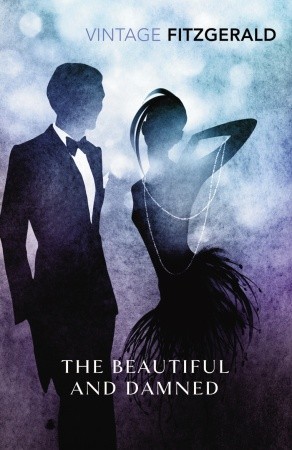
The Beautiful and Damned by F. Scott Fitzgerald

"Things are sweeter when they're lost.  I know - because once I wanted something and got it.  It was the only thing I ever wanted badly.  And when I got it, it turned to dust in my hands."

Anthony Patch is living off his grandfather's allowance in New York when he meets lively society girl, Gloria Gilbert.  Once they marry, they quickly become known for their decadent lifestyle full of alcohol, constant partying and a refusal to settle down to adult life.  At first, they are happy but when Anthony's money starts to run out, the cracks in their lifestyle and marriage begin to show.

Truly, I love Fitzgerald.  No one writes misery and disillusionment better than him, and The Beautiful and Damned fits his themes perfectly.  It's all there - the boredom that comes from not being productive, the reliance on alcohol as a crutch to get through the day, the shallowness of happiness that comes from constant partying, and the steady decline of a marriage.  This is the third Fitzgerald novel I have read (the other two being The Great Gatsby and Tender is the Night), and I know that this semi-autobiographical style of writing can become repetitive, but Fitzgerald is just so good at it that it doesn't matter at all.

It goes without saying that the writing is beautiful.  Fitzgerald particularly excels when he's writing about emotional conflicts, arguments or the consequences of them.  He has a poetic way of putting across feelings, and he's remarkably perceptive about human nature.   There's no attempt to varnish Anthony or Gloria, to make them more appealing than they are, and I loved that.  Gloria is portrayed in all her shallow desire to remain beautiful at all costs, and Anthony's lethargy and passiveness (combined with an undeserved arrogance) are shown as key flaws.

However, The Beautiful and Damned is probably my least favourite of the three Fitzgerald novels I've read so far.  It's still extremely good, but I feel like Gatsby had more polish and Tender is the Night had more emotional engagement.  The trouble with Beautiful and Damned is not that the characters are unlikeable, which they most certainly are, but that I never really bought that they had strong feelings for each other.  Tender is the Night is heart-breaking as the two central characters can't work it out despite loving each other, but Anthony and Gloria seemed to just fall into marriage and even their arguments seemed affected by their lethargy.

The Beautiful and the Damned isn't a book to pick up if you are after happily ever afters and characters you can root for, but it is a remarkably perceptive and beautifully written book.  I've now finished all of the Fitzgeralds on my classics club list, but I'll definitely be adding more when I compile volume two.

Source: Personal copy
First Published: 1921
Edition Read: Vintage UK, 2010
Score: 4 out of 5

The Classics Club

The Classics Club: Book 28/72
My full list of classics to read (and existing reviews) can be found here.

Wednesday, 11 June 2014

Lord of the Flies by William Golding


Lord of the Flies was the book chosen for me by the recent Classics Club spin.  Somehow, I managed to make it through all of secondary school and an English Literature A-Level without having to read this book, and it's always felt like a bit of a gap in my reading history.  The story centres around a group of English schoolboys, mysteriously stranded on a desert island.  In the absence of adults, they set about electing a chief and dividing up the chores necessary for survival in a fair and democratic way.  At first everything goes well, but gradually the society they have attempted to build starts to break down as their more savage natures and desires come to the forefront.

I really liked Lord of the Flies.  It's a short, easy to read classic that explores a particular theme (the darker side of humanity) very well.  Golding does a great job of showing the gradual decline of the boys into violence; at the beginning of the novel none of them can stomach even killing a pig for food, but by the end they think nothing of performing extremely violent acts against each other.  There's a lot of talk of rules, and of rules being what holds societies together, and as soon as someone breaks the rules, things do start to decline.  Lord of the Flies exposes how thin what we call civilisation really is, something that we see all too often in real life in the event of civil wars and genocides.

Something I was interested in as I read the book was the whole issue of belonging to a group, and how it can make you act in a certain way.  When Ralph is chief at the beginning of the novel and clearly in charge, the other children responded the way he wanted them to.  But when Jack forms a rival group, complete with war paint, the same children act completely differently.  Their costumes become a mask that lets them act in ways they would never have acted back in England, and their actions are sanctioned by being part of the group. Again, this is something we definitely see in real life, so Golding's analysis is spot on.

I didn't find Lord of the Flies as shocking as I thought I was going to.  I knew the basic idea of the story before starting, but not the specifics, and I knew that the thought of these nice middle-class English boys being so violent caused a stir at the time.  But it didn't shock me, as their decline into 'savagery' just made perfect sense in the novel.  We do all have a darker side and impulses that we would never normally act on, and history is full of examples of groups of people taking things too far. 

Still, Lord of the Flies was a thought provoking and enjoyable read.  I think it's more of an 'ideas' book than a story, although the plot does move along at a brisk pace and the events are engaging.  The characters fit the ideas first and foremost, which meant that I didn't have an emotional connection with them, and this stopped Lord of the Flies from becoming a favourite of mine.

Source: Personal copy
First Published: 1954
Edition Read: Penguin Modern Classics, 1964
Score: 4 out of 5


The Classics Club: Book 27/72
My full list of classics to read can be found here.

Thursday, 5 June 2014

Cranford by Elizabeth Gaskell


Cranford is the first novel by Elizabeth Gaskell that I have read.  It's a Victorian novel set in the small town of Cranford, that for various reasons has come to be inhabited mainly by women.  These women are genteel, but on the verge of poverty, and much of the story details the routine matters of visits, family history and dinner parties.  In some ways more of a collection of short stories than a coherent narrative, Cranford follows the fortunes of Miss Matty, a spinster living on her own following the death of her elder sister, as told by her friend Mary Smith.

It took me quite some time to get into Cranford.  It's unquestionably well written, but it's a gentle, slow paced sort of novel that submerges you completely into Cranford life.  The first few chapters are only loosely connected, and I have to admit that I was a bit bored with the day to day lives of the Cranford ladies to start with.  There seemed to be no drama, no conflicts and way too much time spent worrying about keeping up appearances.  But Cranford is a sneaky sort of book and as I reached the half-way point, I realised that I was enjoying it very much.  It's true that nothing really happens for most of the novel, but the characters have a way of growing on you, and I gradually realised that there was more happening under of the surface of the ladies than I had given them credit for.  Miss Matty in particular is an endearing character who it is hard not to like.

Cranford is really about the dignity that can come from living a quiet sort of life, in a community where everyone looks out for each other.  The story does build into an overarching plot in the second half of the novel, and it's here that we get to see the characters come into their own as Miss Matty is faced with a problem.  Gaskell shows that there can be strength in quietness, that women are as capable as men when facing life's dilemmas, that living a good and honest life can be rewarded.  It was good for me to be reminded that you don't have to go out and achieve incredible things for your life to be worthwhile, that how you choose to live and interact with people on a day to day basis is just as important.

By the time I finished Cranford, I was a fan.  It's not a book to pick up if you are in the mood for something gripping and fast-paced, more something to enjoy slowly, a reflective sort of read.  I'm not sure if I will ever read it again, but it definitely made me think about the importance of the everyday.


The Classics Club: Book 26/72
My full list of titles can be found here.

Source: Personal copy
First Published: 1853
Edition Read: Rockliff Publishers, 1954 (and a gorgeous edition it is too)
Score: 3.5 out of 5

Tuesday, 13 May 2014

Bout of Books Update #1 and Classics Club Spin Number Announced.


Day: 1/7
Books Started: 1 (We Need New Names)
Books Completed: 0
Time Spent Reading: 1 hour and 30 mins
Pages Read: 130

I'm going to try to post updates throughout Bout of Books as much as possible.  I don't think I'll have time to take part in any chats or challenges, but I should be able to update on my progress a few times throughout the week.

I'm really pleased with my reading from the first day.  Monday is my busiest work-day as I have meetings in the evening as well as a full day's teaching load, so I'm thrilled that I managed to squeeze in an hour and a half of reading, exceeding my goal of one hour.  It helps that We Need New Names is such an engrossing book.  It's about a girl called Darling living in a shanty town and dreaming of escaping to the West and it's simply written but very powerful.  I can't wait to pick it up again tonight, especially as I'm almost half way through already.

Tonight I'm on track to meet my goal of an hour, but I can't see myself exceeding it by much.  I think I'll get close to finishing We Need New Names, so I'm already starting to think of what I should read next.  Maybe A Girl is a Half Formed Thing?


In other bookish news, the Classics Club announced the lucky spin number as #1, which means I'll be picking up Lord of the Flies soon.  I'm quite excited to start it - my husband loves it - so it's good that I've had a push to finally take it off my shelf.  As a teacher, I find group dynamics between groups of children fascinating, especially the way children act completely differently when they are away from their parents.  Hopefully I will enjoy it!

If you're taking part in the readathon, how are you getting on?
And are you pleased with your spin number?

Tuesday, 22 April 2014

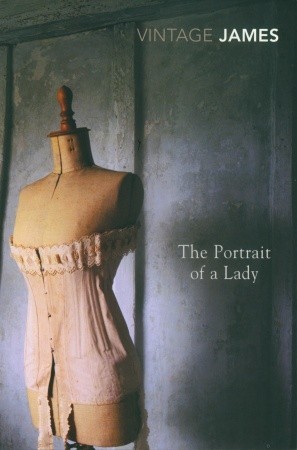
The Portrait of a Lady by Henry James

"The real offence, as she ultimately perceived, was her having a mind of her own at all."

Isabel Archer is a young American girl almost completely without family, who is determined to retain her freedom and independence. When she journeys to Europe with her wealthy aunt, she attracts the attention of several suitors, whom she has no qualms rejecting in order to see more of the world and the people who live in it.  Thinking he is doing her a favour, her cousin arranges for Isabel to come into some money, to support her independent lifestyle.  But when Isabel travels to Rome and meets Gilbert Osmond, she starts to question the decisions she has made, unaware of the true nature of what she is getting herself into.

I have to be honest at the start of this review and admit that I was expecting The Portrait of a Lady to be a conventional marriage plot type of book, albeit with a more feisty leading lady.  So I was unprepared for what The Portrait of a Lady actually is - a convincingly realistic portrayal of life and all its miseries, full of suffering for the main characters.  The first part of the novel is a marriage plot of a kind, but James takes the reader beyond that, and shows us the reality of a desperately unhappy marriage, and the consequences for Isabel once she has to live with the decisions she has made.  This I wasn't expecting!

Isabel is a fascinating main character.  At the start of the novel she is full of life, but also a bit full of herself and somewhat easy to dislike.  She turns down suitors left right and centre, thinking that she is worth more than anyone else.  She has romantic but unrealistic views of the world and is sometimes determined to be difficult.  She's proud and stubborn, and this is partially what makes her choose Gilbert Osmond against the advice of everyone she trusts.  The more they say that he's not right for her, the more that it seems he is only after her money, the more she is determined to marry him.  And this pride works against her once she is married, preventing her from showing the world anything but a happy face, despite her true feelings.

As I was reading The Portrait of a Lady, I thought a lot about Isabel and whether her marriage was what we would now call abusive.  Osmond actively seeks to separate her from her friends and family, expects to be able to tell her what to think, dictates her opinions and decides who she can see and when. As a reader, we see Isabel slowly become demoralised and stop fighting, a dramatic change considering her character at the beginning of the novel.  Although this didn't exactly make for fun reading, I wasn't expecting to see marriage written about like this in the nineteenth century, and I found it to be very powerful.  I admire James for writing such a realistic, gritty story with nuanced characters.  By the end, you even feel sympathy towards one of the main agents of Isabel's misery.

The Portrait of a Lady is one of those books that I think I'll enjoying thinking about and analysing more than I enjoyed the actual experience of reading it.  It's very long at 600+ pages, has a bit of a slow start and is dialogue heavy.  James' writing is remarkably perceptive and the dialogue sharp, but at times it felt like he stayed too long with particular characters or in particular scenes, and I needed to push through in order to make progress with the book.  However, I am very glad I read it and I think it's a book that will stay with me for a long time.

Source: Personal copy
First Published: 1881
Edition Read: Vintage, 2008
Score: 4 out of 5


The Classics Club: Book 25/72
My full list of classics (with linked reviews) can be found here.
Tuesday, 8 April 2014

The Painted Veil by W.Somerset Maugham


At 25 years old, threatened by the news that her younger sister is engaged, Kitty marries the first man she can convince to propose, bacteriologist Walter Fane.  Beautiful, shallow, selfish and not in love with her husband, it doesn't take Kitty long to start having an affair with the Assistant Colonial Secretary in Hong Kong, Charles Townsend.  In fact, she convinces herself that she is in love with Charles and will somehow be allowed to ride off into the sunset with him.  But it's not meant to be; Walter discovers her affair and Charles makes it quite clear that she was just a bit of fun.  When Walter insists that she accompany him on a trip to a cholera stricken region of China as an act of revenge, the terrible circumstances around her force Kitty to examine and challenge herself for the first time in her life.

Oh man, I loved this book.  I picked it up mainly for the interesting premise - a woman having to journey into a cholera epidemic because she had an affair, and I was thrilled to find out that this was backed up by wonderful writing and characterisation.  The Painted Veil is a quiet, in-depth examination of human nature that doesn't shy away from the shallower or less attractive parts of what it means to be human, and I loved it for that.  All of the characters are extremely real and mostly unlikeable, especially Kitty in the beginning of the novel, who is completely self-absorbed and child-like, unwilling to think about others at all.  She knows her husband is desperately in love with her, but still thinks he should show more concern for her feelings when he finds out about her affair!  Charles is almost as selfish as Kitty and even Walter is unappealing.  I know some readers have problems with unlikeable characters, but I always admire an author for writing them, because life is fully of people like Kitty, and I like that Maugham didn't feel the need to varnish her in any way.

The main theme of the novel is Kitty's growth.  As she spends time in the town stricken by cholera, eventually volunteering at a convent, she comes to question herself and her behaviour.  She comes to see the bigger picture, to see that her life is small compared to the world, and that life only has the meaning that we ascribe to it.  Kitty's journey is long and tough, and at no point does Maugham take the easy way out. There's no tearful acts of repentance or forgiveness here, only Kitty trying hard with the reality she finds herself in.  Even at the end of the novel, nothing is straight-forward for her, and there is still a long way to go and some things that can never be fixed.  Life in The Painted Veil is much like real life, complex and full of shades of grey.  I loved that and think that Maugham had a very perceptive eye when it comes to human nature and relationships.

There's absolutely nothing I didn't like about The Painted Veil.  It's in some ways a quiet little book but it's a powerful one too, one that made me think about my own life and choices.  I'll definitely be reading more by Maugham in the future - any recommendations?


Source: Personal copy
First Published: 1925
Score: 5 out of 5
The Classics Club: Book 24/72
My Classics Club list can be found here.

Tuesday, 11 March 2014

Their Eyes Were Watching God by Zora Neale Hurston

Their Eyes Were Watching God opens with the return of Janie Crawford to her home town in Florida.  As gossip mounts over where she has been, and where her husband has got to, Janie confides in her friend, Pheoby.  The granddaughter of a slave and the product of rape, Janie is married off young to a man that she doesn't love, but who can provide financial stability.  Unloved in her first marriage and abused in her second, Janie finally begins to find her voice with the arrival of Tea Cake, a man much younger than her, but who respects and encourages her.

There isn't much to say about Their Eyes Were Watching God that hasn't already been said.  It's a very powerful story of a woman finding herself and gaining some independence from the expectations placed on her, and I just loved it.  Janie's life is full of much hardship, so when she starts to realise the value that she has as a person, it becomes moving to read.  The depiction of Janie's second marriage, in which she is constantly dismissed and made to submit to her husband in every way, was particularly well done, and you could feel the life flowing out of Janie as the marriage continued.  When she eventually stood up to Jody in front of the other members of the town, it was a big moment.  The relationship with Tea Cake was well written, and I loved that Hurston showed them as being so accepting of each other, flaws and all.  Hurston never made their relationship too perfect, instead we got an honest portrayal of how two people can support and encourage each other, through the good times and the bad, and how a partner can help you to be yourself.

As I was reading Their Eyes Were Watching God, I was struck by Janie's strength.  She had been dealt a pretty tough hand in life, but she never gave up, and she always had hope that things would improve.  When something awful happens right at the end of the novel, I still had the sense that Janie would be able to pick herself up and continue her life in a positive way.  This made me think about my own life, and the way that I approach set-backs, and in this way Janie was an inspiring character for me.  I love that classics can do that, can make you reflect on your own experiences.

A lot of Their Eyes Were Watching God is written in dialect, which I thought might be an issue before starting.  But actually it was very easy to get into and I enjoyed rolling the words around in my head, imagining them the way Janie would have said them.  Once I got used to the dialect, I didn't even notice it.

I'm so glad the Classics Club spin selected this book for me.  It's relatively short but it definitely packs a powerful punch, and it's become a new favourite.


The Classics Club: Book 23/72
My list of classics is here.

Source: Personal copy
First Published: 1937
Score: 5 out of 5

Wednesday, 26 February 2014

The Return of the King by J.R.R. Tolkein


I have completed my Lord of the Rings re-read, and it didn't take me a year between volumes this time!  In The Return of the King, the battle for Middle Earth is finally played out.  As Frodo and Sam journey into Mordor with the aim of destroying the ring, Aragorn attempts to distract Sauron with a series of battles, each more desperate than the last.    Dark forces are massing outside the city of Gondor, ruled by the steward Denethor, who is becoming increasingly pessimistic and unwilling to take the steps needed to muster a response, especially after the death of his son Boromir.  Can Aragorn step up and prove himself to be a leader as the war reaches its final days?

Although Fellowship of the Ring remains my favourite of the trilogy, I enjoyed Return of the King more than The Two Towers.  As we are at the end of the story, the pace becomes much brisker and there is a sense that now all of the pieces are in place, the main events can begin.  There's less of Frodo and Sam wandering aimlessly around Middle Earth, and more battles and strategy.  I enjoyed visiting Gondor and I especially enjoyed the character of Faramir, who has to choose whether to do the right thing, regardless of the instructions from his father.  It can be hard to do the right thing, but even more so when you receive nothing but scorn for doing it.

In this volume, the main characters continue to develop. Gandalf increasingly takes a back-seat, so that Aragorn and the hobbits can solve things for themselves.   On this read, I really related to this theme of growing up.  At the beginning of the trilogy, Gandalf was the person with all the answers, and we saw how lost the Fellowship was without him.  But by the time we reach the very end, everyone has been through so much and the issues are so complex that Gandalf no longer has the metaphorical magic wand that can fix everything.  And this perfectly captures the bitter-sweet feeling of growing up.  I loved that a high fantasy novel can still make you reflect on your own life, and how you have grown;

"Do you not yet understand?  My time is over: it is no longer my task to set things to rights, nor to help folk do so.  And as for you, my dear friends, you will need no help.  You are grown up now.  Grown indeed very high; among the great you are, and I no longer have any fear for any of you."

On the whole, reading The Return of the King was definitely a positive reading experience, mainly due to the wide cast of characters and the fact that too much page time wasn't devoted to Frodo and Sam.  I must admit that I did get a bit frustrated with the end of the novel, as there were still many pages after the destruction of Sauron.  There were too many goodbyes, too many visits to old friends, and the final events in the Shire seemed a bit unnecessary, as Tolkein had already shown that the hobbits had matured.  It felt as though Tolkein had grown so attached to his characters that he couldn't bear to leave them without explaining what happened to everyone in great detail, and it did get a bit tedious.

On this second read of The Lord of the Rings, I think I can finally appreciate why the books are classics in the fantasy genre.  The world building is just so good, and the story itself so engaging.  I'm not sure if I'll read them again, but I'm glad I took the time too revisit them.

Source: Personal copy
First Published: 1955
Edition Read: Harper Collins, 1999
Score:  4 out of 5


The Classics Club: Book 22/72
My full list of titles is here.

Monday, 10 February 2014

The Spin is In...


The spin number has been posted over at the Classics Club blog.  The lucky number was 20, which means I am going to be reading Their Eyes Were Watching God by Zora Neale Hurston, and I'm so excited!  I originally added it to my list as I wanted to read more African-American literature, and I still want to read it as much now as I did then.

The only slight disappointment is that I don't actually own a copy yet.  I've ordered one, but I will have to wait a few days before diving in.

If you took part, what book will you be reading for the spin, and are you happy about it?

Tuesday, 4 February 2014

Classics Club Spin #5


Time for another Classics Club Spin!  So far I have participated in two, which has led to me readind Rebecca (awesome) and Les Miserables (at least it is out of the way).  I am crazily indecisive about what to read at the moment (I blame the pregnancy hormones), so I'm looking forward to the decision being taken out of my hands.  Of the twenty books I've listed below, one will be selected for me on Monday by a random number posted on the Classics Club blog.

Like last time, I've used random.org to select twenty books off my list.  This time I'm including rereads, by which I mean books I already planned to reread for the Classics Club, not books I've read since joining.

My list:
  1. 1984 by George Orwell (reread)
  2. Villette by Charlotte Bronte (reread)
  3. Othello by William Shakespeare
  4. Madame Bovary by Gustave Flaubert (reread)
  5. Little Dorrit by Charles Dickens
  6. Anthony and Cleopatra by William Shakespeare
  7. The Portrait of a Lady by Henry James
  8. Peter Pan by J.M. Barrie
  9. Lord of the Flies by William Golding
  10. Mansfield Park by Jane Austen
  11. Titus Groan by Mervyn Peake
  12. Moby Dick by Herman Melville
  13. The Painted Veil by W. Somerset Maugham
  14. Jane Eyre by Charlotte Bronte (reread)
  15. The Tenant of Wildfell Hall by Anne Bronte
  16. The Picture of Dorian Gray by Oscar Wilde (reread)
  17. Hard Times by Charles Dickens
  18. The Lost World by Sir Arthur Conan Doyle (reread)
  19. The Return of the King by J.R.R. Tolkein (reread, and I'm up to this point in the series).
  20. Their Eyes Were Watching God by Zora Neale Hurston
Initial thoughts - anything but Moby Dick!  I'll be genuinely excited to read any of the others, but I don't know if I'm up for the whale after Les Miserables in December.  I'm especially hoping for Tenant of Wildfell Hall or any of the rereads.

Are you taking part in the spin?  If so, link me to your list, as I'd love to see what your options are.

Monday, 3 February 2014

Brave New World by Aldous Huxley

"Murder kills only an individual.  And what is an indiviudal when we can make a new one with the greatest ease?  Unorthodoxy threatens more than the life of a mere individual; it strikes at Society itself."

In this dystopian classic, humans are bred rather than born.  Using eggs harvested from a small proportion of women allowed to be fertile, embryos are created and then conditioned according to which class they will join; from Alpha-Pluses, who are allowed some amount of intelligence, to Epsilon-Minuses, who are cloned and subjected to oxygen deprivation to stunt their development.  Emotions are viewed as suspect and the experience of emotional pain has been completely removed from human experience through conditioning and the availability of soma pills.  When everything you want is freely available and your wants and desires have been carefully controlled to reflect your circumstances, feelings become irrelevant.

But Bernard Marx does feel unhappy.  Slightly different from his Alpha peers (perhaps due to an accident during the embryo development process), he longs for more than mechanically induced pleasure.  He desires solitude, meaningful relationships and for a way to express his soul.  When he takes Lenina Crowe on a trip to a Savage reservation, where humans have been left to their own devices, he begins to question everything he knows even more.  Is a life with pain in it more inherently valuable than a manufactured one without it?

I enjoyed Brave New World. It contains a lot of themes that you see explored in later dystopian novels, but at the time it really was a trail-blazer.  Huxley's rather depressing vision of the future is well thought out, and you can't fault his world building skills.  I enjoyed the philosophical questions about the role of emotions and pain bought up in the later sections of the book, and I appreciated that Huxley didn't present a clear answer.  It's easy to say that human life had lost it's value in Huxley's dystopia, that pain is at the heart of what makes us grow and develop as humans, but at the same time even Bernard began to long for soma when faced with an actual experience of emotional pain.  Reading Brave New World made me think about what it is to be human, and how unpleasant experiences can shape us just as much as pleasant ones.

At times, Brave New World felt a little dated, very much a twentieth century novel.  The whole process of conditioning was based on behaviourist psychology, which was cutting edge in the 1930s, but it no longer seems like a plausible base for world building now.  There is much fretting about big society, and Communism hangs over the text like a 'big bad wolf'.  It's also not a book to pick up if you are after a strong plot; Huxley's strength is very much his ideas and the way he makes you think.

Despite this, Brave New World was always enjoyable to read.  I sped through it in a matter of days and can certainly see why it is a classic of the genre.  It's an important book that is truly thought provoking.

Source: Personal copy
First Published: 1932
Score: 4 out of 5


Classics Club: Book 21/72

Wednesday, 1 January 2014

Les Miserables by Victor Hugo


Les Miserables was the book selected for me during the Classics Club spin, and one that I was genuinely excited to get to.  I had seen the film and the stage show and I love big chunky epics to sink my teeth into, so I picked up this story of a failed Parisian revolution in 1832 with lots of optimism and anticipation.  But unfortunately I was disappointed.  And this was very unexpected because I like really chunky books (Anna Karenina and A Suitable Boy are among my favourites) and I like books about social issues and the lives of the poor.  I tried so hard to like Les Miserables but in the end I had to admit to myself that it will never be a favourite.

The main problem with the book wasn't it's length, but the fact that it felt so long to read.  Every time the main narrative threads starting building up and the pace started increasing, Hugo would interrupt them with some completely unrelated diversionary 50+ pages about the Battle of Waterloo, the history of a convent, or the architectural design of Parisian sewers.  This really interrupted the narrative flow and I found it completely jarring; every time I lost myself in the book, I was abruptly jerked out of the story.

And then there is the detail.  Now I like a good bit of detail and I don't even mind when it slows the pace, but Hugo is the master of unnecessary detail and his writing style is repetitive.  Why write it in a sentence when you could spend an entire chapter repeating the same few things?  I understand that Les Miserables is a panoramic view of society at the time, and a lot of the detail was relevant, but too much time was spent lingering on each piece of information, and it began to feel a little self-indulgent.  In the very first chapter, Hugo writes "There is something we might mention that has no bearing whatsoever on the tale we have to tell - not even on the background." Yet he mentions it anyway, in great detail, for many pages, and the whole book is like this.

To get all my negative points out of the way first, I also found the character of Cosette to be very annoying.  She falls in love with Marius at first sight and completely loses sight of who she is as a person.  Her whole being becomes focused on being in love, to the extent that she has no other identity.  There's one scene where she is explaining to Marius that Cosette isn't her real name, and that she prefers her birth name Euphrasie.  Marius indicates a slight preference for Cosette so she instantly changes her mind.  She allows herself to be pulled away from Valjean, a man who has cared for her for most of her life, and basically has no opinion that Marius has not expressed first.  Hardly a great example of a strong female character.

Now I'm done with the negatives, I can say that of course, there were many things that I did like about Les Miserables. Both Epoinine and Enjolras were fascinating characters, full of depth and very interesting to read about.  I particularly liked Epoinine's mix of toughness from living on the street mixed with a surprising vulnerability and how she just leapt off the page as a character full of life.  Hugo's themes of progress and education for all people in society are of course honourable, and the battle scenes at the blockade were very well written.  In fact, most of the book was well written and I can't fault Julie Rose's translation.

But for me, I just couldn't get over the excessive detail and how the pace of the novel was constantly interrupted with diversions.  By the time I got to just over half-way through the book, reading it had started to feel like a chore that I was looking forward to completing.  I am glad that I read it, but I can't see myself ever picking it up again.


The Classics Club: Book 20/72

Source: Personal copy
First Published: 1862
Edition Read: Modern Library, 2009 
Score: 3 out of 5

Tuesday, 10 December 2013

Reading Journal: Les Miserables


I'm currently just under half-way through the beast that is Les Miserables, so I thought it would be a good time to check-in with my initial impressions.  On the whole, I am enjoying it and it's definitely an immersive experience.  The novel is sprawling and massively detailed, which means it's a panoramic view of French society at the time.  

Sometimes I get bogged down in all the detail and it makes it hard for me to push through and keep on reading.  Every now and again, Hugo inserts these random sections that have nothing whatsoever to do with the main plot - Napoleon at Waterloo, or the history of a convent in Paris.  I've found these have jarred my reading momentum and they make the book feel over-long.  Even in the main story there is such a thing as too much detail, and Hugo is dangerously close to crossing that line at the moment!

What I like so far is that the story is so much grittier than the stage and film versions.  For example, Cosette really is mistreated by the people who are looking after her and Fantine's decline is a lot more grim.  Valjean isn't as perfect as he is in the film.  All this is very good, even if I'm not sure about the many not so subtle religious messages in the book.

Les Miserables has been perfect for the winter so far.  There's something so lovely about snuggling up with a big hefty book under a blanket and revisiting familiar characters night after night.  I'm going to be taking a short break from it to read A Christmas Carol with Riv, and to read Steelheart by Brandon Sanderson for some lighter relief.  I also have a wonderful non-fiction book on the go, My Promised Land, which is a history of Israel written with biographical elements.  It's really very good, and I can't wait to finish it.  At the moment, finishing any book will feel like an achievement!

Will I finish Les Miserables by the December 31st deadline?  I'm going to try, but I'm promising nothing!