Showing posts with label reading journal. Show all posts

Sunday, 1 March 2015

Reading Journal #6: Catching Up


As predicted, I simply didn't have time to post during the week, and unfortunately I didn't get to visit many blogs either. By the time I have taught all day, attended meetings, got Giles home, cooked dinner, eaten dinner, given Giles his bath, put him to bed and sorted out everything for the next day, including planning and marking, I'm not in much shape for anything! Happily, one of the things I am in shape for is reading, so I've still been steadily going through books. Here's what I have read over the past two weeks or so:

Bad Pharma by Ben Goldacre is a non-fiction expose of the pharmaceutical industry and how trials, biased publications and access to doctors' training can lead to drugs being prescribed incorrectly, and patients not always getting what is the best for them. Prior to reading this, I had heard about the pharmaceutical industry in the USA, but had naively thought that we were more protected here in the UK, because we have the NHS and our medical system isn't for-profit. Goldacre quickly disabused me of this notion, pointing out how missing data, where nine unsuccessful trials could be buried and one successful one published, skews prescribing habits in all countries. It turns out that our regulators are no good at enforcing their own rules, that doctors can be paid to add their names to papers they did not write, and that drugs reps are allowed way too much sway over GPs. The single scariest fact in the book was that drugs are rarely if ever compared against the best available treatment, only against a placebo. This means we have no idea which drugs are the most effective for a whole host of common treatments.

Bad Pharma is well researched and it helps that Goldacre is a UK trained doctor, but at times his rhetoric was a bit over the top. I could have done without lots of the repeated anger, especially in a book as long as this one. It did however make me appreciate my own GP, who prescribes generic medications rather than the fancier branded ones that have the exact same ingredients, and who has explained this to me before prescribing. Bad Pharma covers an important topic and is well researched and written, so I would recommend it if you don't mind a bit of repeated anger on the part of the author.  3.5 out of 5

After non-fiction, I always need a bit of palate-cleansing fiction.  I've read White Teeth and On Beauty by Zadie Smith, and liked them both, so I decided it was time to pick up N-W. It tells the story of four Londoners from the same area - Leah, who is trying to avoid growing up and starting a family; Natalie, who has worked hard to leave her working class roots behind; Felix, who is trying to start again, and Nathan, who is angry.

Reviews of N-W seem to be very mixed, with readers tending to rank it lower than her other books. This is mainly due to the experimental writing style; parts of this novel are written in numbered sections, in fragments of sentences and in lists. Personally I loved that Smith had chosen to write like this, as she is definitely talented enough to pull it off.  The chaotic writing style matched the chaotic lives of the characters and I was hooked within a few pages. This book was challenging to read at times and the style didn't always work, but I found it thoroughly engrossing and a realistic portrait of London today.  3.5 out of 5.

And finally, an audio-book.  I was excited to start China Dolls by Lisa See, as See is one of my favourite historical fiction authors. Shanghai Girls in particular is up there with the best historical fiction I've read, and I've never read a bad book by her. Until now. China Dolls is the story of Ruby, Helen and Grace, who meet when they are auditioning to become dancers in a Chinese night-club in 1930s San Francisco. They soon become firm friends, and the narrative follows them through several decades, as they move through disappointments and traumatic times. Each is hiding a powerful secret.

To start with what I liked - I had no idea about the way 'Orientals' were treated in America at this time, and it was fascinating to learn about the 'Chop Suey Circuit' and the interment camps for American citizens of Japanese descendants during WW2. I liked the epic-ness of the story, how it covered many decades and events and gave a real sense of time passing. However, the three main characters were a major let-down. The only one I could ever really like was Grace, which wouldn't have been a problem if their storylines weren't so unbelievable.  Ruby, Helen and Grace kept on and on hurting each other, and their friendship seemed based only on jealousy and a common race. I just couldn't comprehend how they kept forgiving each other some pretty unforgivable things, and why they were so keen to hurt each other. It completely ruined what could have been an interesting novel, if only the portrayal of female friendship was more nuanced.  2 out of 5 stars.

So that's me almost up to date.  I've also finished The Bronte Myth by Lucasta Miller, but as it has led directly on to a reread of Jane Eyre, I'm going to save it for a joint post another time.  What have you been reading lately?

Sunday, 15 February 2015

Reading Journal #5: February So Far...


It all went a bit quiet here last week, mainly because I returned to work after nine months on maternity leave.  That was always going to be a shock to the system, but I also returned to a slightly different role, so I had lots of new things to get used to as well.  Thankfully Giles has taken the change very well, and has still been happy, which has made it a bit easier.  I am still reading in the evenings, but at a much slower pace, as I often have to work instead once Giles has gone to bed.

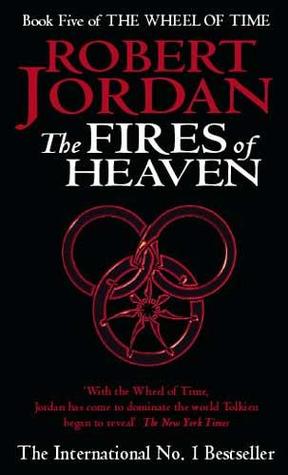
The first book I picked up in February was Robert Jordan's The Fires of Heaven, the fifth book in the epic Wheel of Time series.  This one is a real chunker too, coming in at roughly 1000 pages and I have to say that I felt the length in this installment.  I still loved the fantasy world and particularly the magic system, but I found myself getting a bit bored with the cliches and repetition that weighed the story down.  Jordan appears to equate strong women with argumentative, stubborn women, and this became tiring.  Stock phrases were repeated one too many times, and I have to admit that I was glad to finish this one.  I still want to continue on with the series, but I'll need a good break before I pick up the next one.
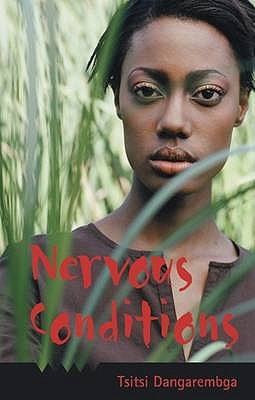
After this, I turned to Cannery Row by John Steinbeck.  It was my third Steinbeck and it was a grower.  At first, I didn't think I liked it, but by half way through I was enjoying it.  However, I only really appreciated and loved it after finishing and reflecting on it, which can happen sometimes. I've written a full review of this one, which you can read here.  Cannery Row left me in the mood for something else equally literary, so I picked up Nervous Conditions by Tsitsi Dangarembga, from my Project 1001 list.  Dangarembga is a Zimbabwean author, and Nervous Conditions is a wonderful coming of age story that focuses on feminism and the effects of colonisation.  It was so good it deserves a full review, which I will hopefully get a chance to write soon.  Please ignore the dreadful cover - a book as good as this deserves a much less misleading one.

And that leads up to my current reading situation, in the middle of three books.  On audio, I've almost finished China Dolls by Lisa See, a book I was looking forward to, but which has turned out to be very disappointing.  My non-fiction pick is Bad Pharma by Ben Goldacre, a scary account of the power of the pharmaceutical industry, and fiction-wise I'm about a third of the way through Zadie Smith's NW, which is fantastic.  It's half term next week, so I'm hoping to finish all of these and maybe start something new as well.  
What have you been reading recently?

Friday, 30 January 2015

Reading Journal #4: Two More for the End of January


I'm still reading books more quickly than I can review them, which is a shame as both of these titles deserve full reviews.  First up is Ann Patchett's State of Wonder, which I've been meaning to read since it was short-listed for the Orange Prize in 2012.  The story opens with Marina, a pharmacologist for a large drugs company, learning about the death of her colleague Anders in the Amazon rainforest.   Anders was checking up on the progress of the mysterious Dr Swenson, who had claimed to find a tribe where the women bear children right up until their death, and who was developing a drug to enable Western women to do the same.  Marina is given the task of finding out what happened to Anders, and of completing his assignment, and Patchett follows her into the rainforest, where she doesn't find what she is expecting to.

Patchett touches on a lot of big themes in State of Wonder, including race, colonisation, research ethics, the agendas of pharmaceutical companies and the decision of when to have children. However, she also combines this with a fast paced and interesting plot, which is surely the best of both worlds.  I enjoyed the character of Dr Swenson, who was full of contradictions, and Marina's personal growth was well done. Patchett's writing was lovely too, especially in the section where Marina has to inform Anders' wife of his death. My only complaint is that the final section moved way too quickly, with too many plot points resolving themselves in a way that seemed a bit too coincidental to be true. Reading State of Wonder was an enjoyable experience and I'm looking forward to picking up Bel Canto now.  4 out of 5.


Next I picked up an essay collection from the library.  Where I'm Reading From was a random pick from the shelves; I'd never heard of Parks before but I'm always susceptible to books about books (and pretty covers), so I was keen to give this one a go.  Where I'm Reading From contains 37 essays divided into four sections, covering world literature, bookish issues, being a writer and translated fiction. Inevitably, I enjoyed some essays more than others.  For example, I enjoyed Parks' thoughts on e-books, that in a sense they are a truer reading experience as you get the text of the book without the distractions of covers or publisher decisions, and there isn't the impulse to acquire them as they look good on your shelves, or because they make you look 'well read'.  It's not an opinion I agree with, as I think there is more to physical books than Parks gives them credit for, but it was still interesting to read.

One of Parks' main arguments throughout the collection is that 'world literature' is leading to everything becoming too similar, with the variety of local experiences being lost.  He quotes authors who make decisions based on the fact that their work will be translated into English, if they aren't writing in English themselves.  Characters with complicated names are avoided, and local customs are either left out completely or over-explained.  Authors paint a picture of their country that they think will satisfy the West, as so much emphasis is now placed on global sales and translation rights as a mark of author status.  Parks argues that this means that lots of the variety and richness of fiction rooted in a particular culture is being lost.  Again, I'm not sure that I agree, but it's something I had never thought about before.

Whilst Where I'm Reading From was definitely thought provoking, I found it too repetitive.  Lots of the essays basically say the same thing, just from a slightly different angle, and this made the collection feel over-long.  I enjoyed mentally debating with Parks, but think Where I'm Reading From would have been a lot stronger if it was shorter.  3 out of 5.

Tuesday, 30 December 2014

Reading Journal #2: Race, Fairies and Epic Fantasy


With Tom on Christmas holidays for the past week and a bit, I've had more time to sink into some fantastic books.  Christmas makes me crave something magical from the fantasy genre, something full of wonder and delight and escapism.  One year I devoured the whole Inkheart series by Cornelia Funke, and it was just perfect for the season.

Aside from The Hobbit, which I have a full review of here, I also decided to pick up Jo Walton's Among Others this Christmas, which I've heard great things about.  It features one of the strongest protagonists I've come across in a long time, Morwenna Phelps, a fifteen year old girl in 1979 who has just run away from her mother, a dark witch, after the death of her twin.  She ends up at an English boarding school and the book is told in the form of a diary.  The real magic in Among Others is the way that Mori's love of reading is expressed.  Any book lover will relate to her descriptions of her feelings as she reads various books, and how books have become her solace in difficult times. When she has to be thankful for something as she prays, she is thankful for the interlibrary loan system.

I think Among Others would be even more special for someone who grew up reading science fiction.  I've read my fair share, but nowhere near as much as Mori, and I didn't catch all of the references.  But as a book lover, her enthusiasm got to me and I ended up writing a list of all the books she mentioned that I must get my hands on, Ursula Le Guin prominent among them (should I start with Earthsea?).  The main plot of the book follows Mori's attempts to use magic to stop her mother and her attempts to come to terms with the death of her sister, but the fantasy elements are written with a light touch.  In fact, I'm not even sure whether I believed Mori at all, or whether she just had an over-active imagination.  I treasured the book mostly as a coming of age story, in line with Dodie Smith's I Capture the Castle. Highly recommended.

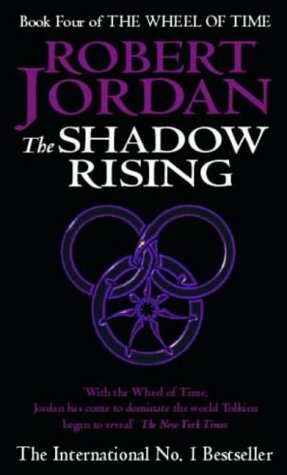
A lot of my December reading has been taken up with the fourth installment in Robert Jordan's epic Wheel of Time series, The Shadow Rising.  These are really immersive books and by now I know enough about the world and characters that reading them is just pure escapism.  As always, the writing was a bit meandering, and the way that the female characters are written leaves a lot to be desired, but I have so much fun reading them.  This volume was roughly 1000 pages, but it just flew by.  I loved visiting the Aiel Waste and finding out more about women who can channel (do magic) in the different societies of the world, and the varying ways they are treated.  I found the sections where Perrin returns to the Two Rivers, his homeland, to defend it rather boring, and I'm optimistic that he will feature less in the next volume, which I'm sure I will pick up before too long.

And now for something completely different - race relations in the Deep South.  Earlier in the month, I wrote a blog post about all the fantastic books on my kindle I have yet to get to, and Scottsboro got a lot of love in the comments.  And well deserved all of that love was.  It's based on the true case of a group of nine black boys arrested in Alabama in 1931, accused of raping two white girls, which they didn't.  One of the girls stubbornly sticks to her story, but the other keeps changing her statements, and it's soon clear to anyone with a brain that the boys are innocent.  But this is the Deep South in the 1930s, and the political powers in Alabama have no interest in freeing the boys - indeed, they think they have been remarkably fair by giving them a sham trial, rather than just lynching them on the spot.

The story is told mainly from the perspective of a female journalist from New York, who becomes part of the campaign to free the boys.  She is a great voice as she's remarkably perceptive on the subtle nuances of the different prejudices of those supporting and condemning the boys.  She points out that a lot of the support is for personal or political gain, observing that if the boys were to suddenly turn up in the middle of a New York party full of their 'friends', no one would know quite what to do with them.  We are also introduced to Ruby, one of the two girls who originally cried rape. Feldman deftly uses Ruby's poverty and life history to show why she lied, and why she would tell the truth.

In places, Scottsboro was a depressing read.  There's one point late in the novel where I had to set it aside for a minute, disgusted by the selfishness of humans in general, and how willing we as a society are to knowingly allow others to suffer for our gain.  Somehow, no one in this book is doing the right thing for the right motives, and it made for grim reading.  I take my hat off to Feldman's wonderful writing and perceptiveness, and this is surely an important book. I can't see I enjoyed all of it, but it had a powerful impact on me.

And that's my recent reading up to date.  At the moment, I'm in a bit of a classics mood, and I'm thinking of rereading Pride and Prejudice by Jane Austen over the next few days.  After that, I'm intending to look through my classics club list and pick a few more titles to immerse myself in. Happy reading in 2015!

Tuesday, 10 December 2013

Reading Journal: Les Miserables


I'm currently just under half-way through the beast that is Les Miserables, so I thought it would be a good time to check-in with my initial impressions.  On the whole, I am enjoying it and it's definitely an immersive experience.  The novel is sprawling and massively detailed, which means it's a panoramic view of French society at the time.  

Sometimes I get bogged down in all the detail and it makes it hard for me to push through and keep on reading.  Every now and again, Hugo inserts these random sections that have nothing whatsoever to do with the main plot - Napoleon at Waterloo, or the history of a convent in Paris.  I've found these have jarred my reading momentum and they make the book feel over-long.  Even in the main story there is such a thing as too much detail, and Hugo is dangerously close to crossing that line at the moment!

What I like so far is that the story is so much grittier than the stage and film versions.  For example, Cosette really is mistreated by the people who are looking after her and Fantine's decline is a lot more grim.  Valjean isn't as perfect as he is in the film.  All this is very good, even if I'm not sure about the many not so subtle religious messages in the book.

Les Miserables has been perfect for the winter so far.  There's something so lovely about snuggling up with a big hefty book under a blanket and revisiting familiar characters night after night.  I'm going to be taking a short break from it to read A Christmas Carol with Riv, and to read Steelheart by Brandon Sanderson for some lighter relief.  I also have a wonderful non-fiction book on the go, My Promised Land, which is a history of Israel written with biographical elements.  It's really very good, and I can't wait to finish it.  At the moment, finishing any book will feel like an achievement!

Will I finish Les Miserables by the December 31st deadline?  I'm going to try, but I'm promising nothing!