Showing posts with label america. Show all posts

Tuesday, 30 December 2014

Reading Journal #2: Race, Fairies and Epic Fantasy


With Tom on Christmas holidays for the past week and a bit, I've had more time to sink into some fantastic books.  Christmas makes me crave something magical from the fantasy genre, something full of wonder and delight and escapism.  One year I devoured the whole Inkheart series by Cornelia Funke, and it was just perfect for the season.

Aside from The Hobbit, which I have a full review of here, I also decided to pick up Jo Walton's Among Others this Christmas, which I've heard great things about.  It features one of the strongest protagonists I've come across in a long time, Morwenna Phelps, a fifteen year old girl in 1979 who has just run away from her mother, a dark witch, after the death of her twin.  She ends up at an English boarding school and the book is told in the form of a diary.  The real magic in Among Others is the way that Mori's love of reading is expressed.  Any book lover will relate to her descriptions of her feelings as she reads various books, and how books have become her solace in difficult times. When she has to be thankful for something as she prays, she is thankful for the interlibrary loan system.

I think Among Others would be even more special for someone who grew up reading science fiction.  I've read my fair share, but nowhere near as much as Mori, and I didn't catch all of the references.  But as a book lover, her enthusiasm got to me and I ended up writing a list of all the books she mentioned that I must get my hands on, Ursula Le Guin prominent among them (should I start with Earthsea?).  The main plot of the book follows Mori's attempts to use magic to stop her mother and her attempts to come to terms with the death of her sister, but the fantasy elements are written with a light touch.  In fact, I'm not even sure whether I believed Mori at all, or whether she just had an over-active imagination.  I treasured the book mostly as a coming of age story, in line with Dodie Smith's I Capture the Castle. Highly recommended.
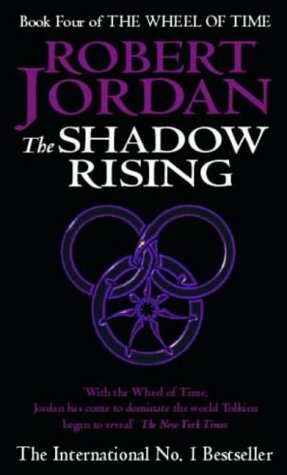
A lot of my December reading has been taken up with the fourth installment in Robert Jordan's epic Wheel of Time series, The Shadow Rising.  These are really immersive books and by now I know enough about the world and characters that reading them is just pure escapism.  As always, the writing was a bit meandering, and the way that the female characters are written leaves a lot to be desired, but I have so much fun reading them.  This volume was roughly 1000 pages, but it just flew by.  I loved visiting the Aiel Waste and finding out more about women who can channel (do magic) in the different societies of the world, and the varying ways they are treated.  I found the sections where Perrin returns to the Two Rivers, his homeland, to defend it rather boring, and I'm optimistic that he will feature less in the next volume, which I'm sure I will pick up before too long.

And now for something completely different - race relations in the Deep South.  Earlier in the month, I wrote a blog post about all the fantastic books on my kindle I have yet to get to, and Scottsboro got a lot of love in the comments.  And well deserved all of that love was.  It's based on the true case of a group of nine black boys arrested in Alabama in 1931, accused of raping two white girls, which they didn't.  One of the girls stubbornly sticks to her story, but the other keeps changing her statements, and it's soon clear to anyone with a brain that the boys are innocent.  But this is the Deep South in the 1930s, and the political powers in Alabama have no interest in freeing the boys - indeed, they think they have been remarkably fair by giving them a sham trial, rather than just lynching them on the spot.

The story is told mainly from the perspective of a female journalist from New York, who becomes part of the campaign to free the boys.  She is a great voice as she's remarkably perceptive on the subtle nuances of the different prejudices of those supporting and condemning the boys.  She points out that a lot of the support is for personal or political gain, observing that if the boys were to suddenly turn up in the middle of a New York party full of their 'friends', no one would know quite what to do with them.  We are also introduced to Ruby, one of the two girls who originally cried rape. Feldman deftly uses Ruby's poverty and life history to show why she lied, and why she would tell the truth.

In places, Scottsboro was a depressing read.  There's one point late in the novel where I had to set it aside for a minute, disgusted by the selfishness of humans in general, and how willing we as a society are to knowingly allow others to suffer for our gain.  Somehow, no one in this book is doing the right thing for the right motives, and it made for grim reading.  I take my hat off to Feldman's wonderful writing and perceptiveness, and this is surely an important book. I can't see I enjoyed all of it, but it had a powerful impact on me.

And that's my recent reading up to date.  At the moment, I'm in a bit of a classics mood, and I'm thinking of rereading Pride and Prejudice by Jane Austen over the next few days.  After that, I'm intending to look through my classics club list and pick a few more titles to immerse myself in. Happy reading in 2015!

Wednesday, 6 November 2013

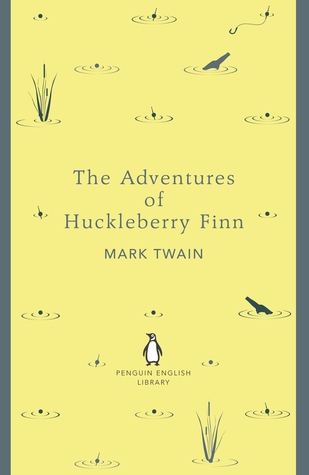
The Adventures of Huckleberry Finn by Mark Twain


In the sequel to The Adventures of Tom Sawyer (my review), Huckleberry Finn is centre stage.  This made me excited to pick up the book as Huck was by far the most interesting character in Tom Sawyer.  Tom is a lot of fun and his imagination is amazing but he comes from a sheltered, loving family, whereas Huck is that child from the wrong part of town.  If Huck existed nowdays, he'd be the child who always turns up late to school without any equipment and in the wrong uniform, who hasn't been washed in a few days and who has been forced to grow up too quickly by being exposed to things he shouldn't have been.  In the story, Huck's main problem is his abusive, alcoholic father, who he eventually decides to escape from.  On the way, he meets runaway slave Jim, and the pair travel down the Mississippi together.

Huck Finn is a better book than Tom Sawyer, and it's all because of Huck himself.  Huck could have been a stereotypical character but Twain writes him in a wonderfully complex way.  Despite all that has happened to him, Huck has retained his essential goodness and also the bravery to go against society if he needs to.  We get to see him really grow up throughout the novel, as he goes from someone who is lacking in self-confidence and looking to those around him to decide what to do, to someone who makes their own decisions, even if society tells him he is wrong.  All through the book, he wrestles with the fact that he should hand Jim in, as this is the way he has been taught to think about slaves.  But Jim is actually one of the only people looking out for Huck, and the development of their friendship and Huck's decision to stick by Jim, even though he thinks that makes him a bad person, are handled masterfully by Twain.

I also liked that Huck Finn is a darker book than Tom Sawyer.  There's no sense that everything has to work out well in the end, and Huck and Jim have some horrible as well as fun adventures.  This was summed up perfectly when Tom himself makes an appearance, when Jim has been recaptured.  Tom agrees to help free Jim but wants to turn it into some prison release fantasy, complete with letters written in blood and tame rats, but Huck knows the seriousness of the situation and just wants to help Jim. Tom's protected from the real world, Huck has to live in it.

A lot has been made about the use of word nigger in this book, especially recently.  For me this was a non-issue as Huckleberry Finn is far from a racist book.  Huck would have thought and used that word all of the time, as he was a product of the society he lived in.  It doesn't make the book racist and I certainly don't think it needs to be taken out, that would be like rewriting history to remove the nasty bits.  There are far more racist books out there that don't have the word nigger in them.

As you can tell, I very much enjoyed The Adventures of Huckleberry Finn.  My only real complaints would be that sometimes the stories felt a bit disjointed, almost as though I was reading a short story collection rather than a novel, and that the ending was way too happy/convenient compared to the rest of the book.  It was as though Twain suddenly remembered that this was supposed to be a children's book and decided to make everyone happy by the last page.  Even so, it's still a wonderful book and I'd definitely recommend it.

Source: Personal copy
First Published: 1884
Edition Read: Penguin English Library, 2012
Score: 4 out of 5

The Classics Club:  Book 19/72
My full list can be found here.


Friday, 18 October 2013

East of Eden by John Steinbeck

Steinbeck is my husband's favourite author, but he's not really an author I've ever had a burning desire to read.  I picked up Of Mice and Men as a teenager and liked it well enough, but I never fancied his longer works, Grapes of Wrath or East of Eden.  But the Classics Club is fabulous for making me actually read books that I think will be worthwhile, so I added three Steinbecks to my list.  East of Eden is the first of these I have tried.

A saga of the Hamilton and Trask families living in the Salinas valley in the early twentieth century, East of Eden follows the same two families over several generations as they seem destined to re-enact the tales from Genesis.  Generations of brothers bicker over who their father loves more, there's much sibling rivalry and the sin of Eve features heavily.  The story features many characters but focuses on three main protagonists; Samuel Hamilton, a patriach of the community, Adam Trask, an idealist and his son, Cal Trask, who seems destined to take Cain's role but struggles against it.

East of Eden is a really hard book to write a plot summary for.  Although a lot happens in the course of the novel, it is basically a 600+ page study of the good and evil in human nature.  And I loved it.  I found it to be quite slow starting and the sparse, straight-forward style that Steinbeck uses took a bit of getting used to, but as soon as Cathy appeared I was hooked.   Had I not been working, I would have flown right through this book in a matter of days as there was something about it that was utterly gripping.  I think it might have been the realism and the unadorned way that Steinbeck writes about life.

What I got out of East of Eden is that life is hard, and that everyone has a bit of good and evil in them.  Steinbeck plays around with creating purely good (Aron) and bad (Cathy) characters and retelling the biblical story straightforwardly but Cal is by far the most complex and interesting character.  He's desperate for his father's love but senses (correctly) that his father prefers the idealistic and sensitive Aron over him.  This twists him up inside and makes him bitter and it seems that Cal is set on the path of evil.  But Steinbeck makes him more complex than that; we see Cal fighting against his more negative impulses and the choices that he makes every day about what kind of person he wants to be.  And I could really relate to that as this is what life is like; we all have the potential to do good or bad things and when it comes down to it, we all get to choose the kind of person that we want to be.

Although the writing style did take a bit of getting used to (particularly for someone who loves Victorian classics), I did end up enjoying it.  Steinbeck writes very simply and the only emotions you get are the ones that you can infer from the way the characters respond to events.  The characterisation is the best part of the novel; the only character that didn't feel completely realistic was Cathy, and she was just so much fun to read about and added so much to the plot that it didn't matter at all that she was all bad.

East of Eden was a book that grew on me as I read it.  It's completely different from the classics I usually choose and I wasn't sure that I liked it at first.  But the more I read it, the more I got caught up in it and I closed the final page very much impressed and absolutely determined to seek out more Steinbeck in the near future.

Source: Borrowed my husband's copy
First Published: 1952
Edition Read: Penguin Classics, 2000
Score: 4.5 out of 5


Classics Club: Book 17/72
My full list is here.

Saturday, 2 June 2012

The Snow Child by Eowyn Ivey

The Snow Child is the story of Jack and Mabel, a childless couple who escape to Alaska in the 1920s.  Sick of being around constant reminders of their inability to have children of their own, they move to Alaska in the hope of starting a new life.  But Alaska is difficult and Mabel soon starts to slide into hopelessness.  During the first snow of winter, they make a snow girl, only to find that she has vanished by morning.  They start to see glimpses of the girl running through the woods, who hunts animals to eat and sleeps outside in all weathers.  They come to love her as the child they never had, but is Faina all that she appears to be?

The beauty of this book was all in the magical setting.  I enjoyed the story and characters, but what I will remember is Ivey's wonderful descriptions of the Alaskan winter; blizzards that shake the houses, crystallised snow flakes and crunchy walks across freshly fallen snow.  I love to be transported to a different place by a story and The Snow Child definitely met this criteria.  It captures the magic of winter perfectly.

I wasn't surprised to learn that The Snow Child was based on an old Russian fairytale, Snegurochka (the snow maiden) and felt that it was strongest when including these fairy tale elements.  The sections describing Faina as a young child in the few winters after Mabel and Jack made the snow girl, were by far and away my favourites.  I liked the suggestions that Faina might dissolve in the heat, that she had befriended a wild fox, that she had unnatural affinity with the woods.  I so wanted this to be a proper, old-fashioned fairytale.

And whilst Ivey does keep parts of Faina's character deliberately obtuse so you can decide for yourself what she was, I felt as though the book really lost steam once Faina started to grow up and interact with more of the people living near Mabel and Jack.  The magic started to wear off and the book became about human relationships and human issues.  Although the ending of the book was interesting, the magic had long since worn off for me.  I think The Snow Child would have worked much better as a novella involving only the first half or so of the book.  I know lots of people have adored this book but it just didn't quite work for me.

Source: Library
First Published: February 2012
Score: 3.5 out of 5

Read Alongside:
1. The Winter Palace by Eva Stachnaik - This is a very different story, being a historical fiction novel of Catherine the Great of Russia, but like The Snow Child it contains wonderful descriptions of a winter setting - perfect for armchair travelling.
2. Arabian Nights by Richard Burton - I've added this purely because The Snow Child was in part a fairy tale and Arabian Nights are my favourite tales.

Friday, 17 February 2012

The Peach Keeper by Sarah Addison Allen


Sarah Addison Allen is a new author to me and The Peach Keeper is a book I chose purely after reading reviews of it on other blogs; I would never have heard of it otherwise.  It tells the story of two very different women, Willa and Paxton, in the fictional town of Walls of Water, North Carolina.  Willa is trying to escape from her small town roots and past without actually moving away and Paxton looks like she has the perfect life but is a mess of anxieties underneath.  When a human skeleton is uncovered under a peach tree on the grounds of a house they are both connected to, the two women are thrown together and discover a lot about themselves and their family histories.

I don't think I am the right reader for this book.  There was technically nothing wrong with it, it's light but well written and the story skips along at a pleasant pace.  There are elements of magical realism but they are on the whole well done and there is decent character development.  Despite this, I came away from this book overwhelmed by the sweetness of the whole thing.

It's the same feeling I got after reading The Secret Life Of Bees, there was just too much that was cliche, too much sisterhood and female bonding and far too many happily ever afters.  Too much sentiment for this particular reader.  The male characters seemed to exist solely for the reason to make the female characters happy (but of course only at the end of the novel).  The plot developments were predictable and  as the tone didn't mesh with me, there wasn't much pleasure in watching them unravel.

I've just reread that last paragraph and it does sound very harsh.  Don't take just my word for it, there are plenty of reviews I've seen praising this book highly.  As I said, it's not poorly written and there are elements I enjoyed; it's just not my kind of book.  If you don't mind a bit of sentimentality with your escapism then it could be the book for you.

Verdict: Well written story of two women in small town America with magical elements, unfortunately too sweet for me.
Source: Library
First Published: March 2011
Score: 2.5 out of 5 

Sunday, 13 November 2011

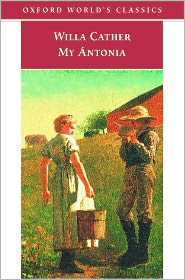
My Antonia by Willa Cather


I have to admit to not knowing much about American Literature. I know lots about English Literature but the only real American Literature I've read is Hemingway's A Farewell To Arms and I didn't like it much.  Fitzgerald and Hawthorne are strangers to me, as are Zane Grey, Henry James and Melville.  I never even read Little House on the Prairie whilst growing up.

My Antonia was a first attempt at rectifying this situation.  Jim Burden, a lawyer, recounts his childhood on the plains of Nebraska and particularly his friendship with a Bohemian immigrant girl called Antonia.  Rich in detail, it is a love letter to a way of living that has since been lost and a poem to American midwest.

I liked My Antonia as a coming of age tale.  I've read other reviews where the major complaint is that not much happens in the novel, but I enjoyed the cosy, lazy Sunday afternoon pace and the descriptions of a childhood spent in the great outdoors.  At certain times it did feel as though Cather was romanticising her own experiences of growing up on a farm, as none of the hardships ever felt particularly real.  In their first winter in America, Antonia's family are caught unprepared and have little in the way of food or warm clothes.  Antonia runs about barefoot in the snow in only a cotton dress, but even this is looked back on in a nostalgic sort of way.

Behind the cosy narrative, a lot of powerful themes were lurking.  I read this as a tale of immigrant experience, of the separate classes that grew up of 'Americans' and 'foreigners'.  In My Antonia this whole system is mocked as the foreigners are the resourceful, enterprising ones who by doing things that the Americans find distasteful, such as sending their daughters to work, are able to become more successful in the long run.  But the boundaries between the two groups remain firm; Antonia and Jim could never have married.

There was also a lot on the theme of gender.  Antonia and Jim were both androgynous characters, with Antonia taking on classically masculine characteristics such as physical strength and Jim having a lot of feminine elements.  Throughout the book, the female characters are the strong ones.  I thought this was interesting in the light of Cather's sexuality and how she herself used to dress as a man whilst she was growing up.  It was nice to read a book in a rural setting where the women do more than keep the house and prepare meals.

Overall, My Antonia was a well written coming of age story that kept my interest.  It had a cast of lively characters and evoked life on the plains very well.  I would recommend it as a good example of American literature.

Source: Library
First Published: 1918
Score: 3.5 out of 5