Showing posts with label literary fiction. Show all posts

Sunday, 1 March 2015

Reading Journal #6: Catching Up


As predicted, I simply didn't have time to post during the week, and unfortunately I didn't get to visit many blogs either. By the time I have taught all day, attended meetings, got Giles home, cooked dinner, eaten dinner, given Giles his bath, put him to bed and sorted out everything for the next day, including planning and marking, I'm not in much shape for anything! Happily, one of the things I am in shape for is reading, so I've still been steadily going through books. Here's what I have read over the past two weeks or so:

Bad Pharma by Ben Goldacre is a non-fiction expose of the pharmaceutical industry and how trials, biased publications and access to doctors' training can lead to drugs being prescribed incorrectly, and patients not always getting what is the best for them. Prior to reading this, I had heard about the pharmaceutical industry in the USA, but had naively thought that we were more protected here in the UK, because we have the NHS and our medical system isn't for-profit. Goldacre quickly disabused me of this notion, pointing out how missing data, where nine unsuccessful trials could be buried and one successful one published, skews prescribing habits in all countries. It turns out that our regulators are no good at enforcing their own rules, that doctors can be paid to add their names to papers they did not write, and that drugs reps are allowed way too much sway over GPs. The single scariest fact in the book was that drugs are rarely if ever compared against the best available treatment, only against a placebo. This means we have no idea which drugs are the most effective for a whole host of common treatments.

Bad Pharma is well researched and it helps that Goldacre is a UK trained doctor, but at times his rhetoric was a bit over the top. I could have done without lots of the repeated anger, especially in a book as long as this one. It did however make me appreciate my own GP, who prescribes generic medications rather than the fancier branded ones that have the exact same ingredients, and who has explained this to me before prescribing. Bad Pharma covers an important topic and is well researched and written, so I would recommend it if you don't mind a bit of repeated anger on the part of the author.  3.5 out of 5

After non-fiction, I always need a bit of palate-cleansing fiction.  I've read White Teeth and On Beauty by Zadie Smith, and liked them both, so I decided it was time to pick up N-W. It tells the story of four Londoners from the same area - Leah, who is trying to avoid growing up and starting a family; Natalie, who has worked hard to leave her working class roots behind; Felix, who is trying to start again, and Nathan, who is angry.

Reviews of N-W seem to be very mixed, with readers tending to rank it lower than her other books. This is mainly due to the experimental writing style; parts of this novel are written in numbered sections, in fragments of sentences and in lists. Personally I loved that Smith had chosen to write like this, as she is definitely talented enough to pull it off.  The chaotic writing style matched the chaotic lives of the characters and I was hooked within a few pages. This book was challenging to read at times and the style didn't always work, but I found it thoroughly engrossing and a realistic portrait of London today.  3.5 out of 5.

And finally, an audio-book.  I was excited to start China Dolls by Lisa See, as See is one of my favourite historical fiction authors. Shanghai Girls in particular is up there with the best historical fiction I've read, and I've never read a bad book by her. Until now. China Dolls is the story of Ruby, Helen and Grace, who meet when they are auditioning to become dancers in a Chinese night-club in 1930s San Francisco. They soon become firm friends, and the narrative follows them through several decades, as they move through disappointments and traumatic times. Each is hiding a powerful secret.

To start with what I liked - I had no idea about the way 'Orientals' were treated in America at this time, and it was fascinating to learn about the 'Chop Suey Circuit' and the interment camps for American citizens of Japanese descendants during WW2. I liked the epic-ness of the story, how it covered many decades and events and gave a real sense of time passing. However, the three main characters were a major let-down. The only one I could ever really like was Grace, which wouldn't have been a problem if their storylines weren't so unbelievable.  Ruby, Helen and Grace kept on and on hurting each other, and their friendship seemed based only on jealousy and a common race. I just couldn't comprehend how they kept forgiving each other some pretty unforgivable things, and why they were so keen to hurt each other. It completely ruined what could have been an interesting novel, if only the portrayal of female friendship was more nuanced.  2 out of 5 stars.

So that's me almost up to date.  I've also finished The Bronte Myth by Lucasta Miller, but as it has led directly on to a reread of Jane Eyre, I'm going to save it for a joint post another time.  What have you been reading lately?

Friday, 20 February 2015

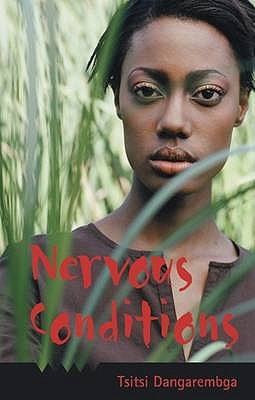
Nervous Conditions by Tsitsi Dangarembga

"The business of womanhood is a heavy burden.  How could it not be? Aren't we are the ones who bear children? When it is like that you can't just decide today I want to do this, tomorrow I want to do that, the next day I want to be educated!  When there are sacrifices to be made, you are the one who has to make them. And these things are not easy: you have to start learning them early, from a very early age."

Nervous Conditions is the coming of age story of fourteen year old Tambudzai, who lives in rural Zimbabwe but is able to attend a missionary school following the death of her older brother, Nhamo. Living with her aunt and uncle in a house on the mission grounds, Tambu is at first overwhelmed by their lifestyle. But the more she becomes accustomed to it, the more she starts to feel herself better than her beginnings. Tambu is determined to be educated and to provide for herself, but she keeps coming up against prejudices and barriers based on her gender, meaning that she has to battle for what she wants. Her story is contrasted with the stories of the complex women in her life; her Westernised cousin Nyasha, starting to examine the effects of colonisation, her uneducated mother, tied to a man she doesn't love by her children, and her mother's sister, forceful, outspoken and determined to do what is right for her and the people she loves.

Nervous Conditions is a wonderful book, and lots of that is to do with Tambu herself. As a narrator she is self-aware, honest, intelligent and full of complicated thoughts about the people around her. It helps that Dangarembga's writing is vivid, peppered with Shona vocabulary; reading Nervous Conditions is like being immersed in the Shona culture of the mid twentieth century.  This isn't a novel written with a Western audience in mind, and I liked that.

What I loved most about Nervous Conditions is that Dangarembga never over-simplifies the complex issues of gender, race and colonisation. Tambu is quick to realise the limitations placed on her by her gender, for example when her father states that it isn't worth educating her, as she will only get married and belong to another family.  Tambu also notes the powerlessness of her mother in the family, and the negative effect of her many pregnancies, but Dangarembga also writes about powerful Shona women, who are uneducated, but still refuse to accept gender boundaries. And the same is true of race and colonisation - Tambu views a Western education and lifestyle as her ticket to happiness, but her cousin Nyasha, who has actually lived in England for a spell, is torn between her conflicting identities and feels isolated from her Shona heritage. The portrait of both of these issues is complicated, many-layered and realistic,

To be honest, the only thing I didn't like about Nervous Conditions was the cover, which I think looks too cheaply made for the quality of the book. Although this book is set in a specific place and time period, it's coming of age theme is universal and it's one I would highly recommend.

Source: Library
First Published: 1988
Edition Read: Ayebia Clark
Score: 5 out of 5


Project 1001 Books: Book 2/80
My list of titles and reviews can be found here.

Friday, 30 January 2015

Reading Journal #4: Two More for the End of January


I'm still reading books more quickly than I can review them, which is a shame as both of these titles deserve full reviews.  First up is Ann Patchett's State of Wonder, which I've been meaning to read since it was short-listed for the Orange Prize in 2012.  The story opens with Marina, a pharmacologist for a large drugs company, learning about the death of her colleague Anders in the Amazon rainforest.   Anders was checking up on the progress of the mysterious Dr Swenson, who had claimed to find a tribe where the women bear children right up until their death, and who was developing a drug to enable Western women to do the same.  Marina is given the task of finding out what happened to Anders, and of completing his assignment, and Patchett follows her into the rainforest, where she doesn't find what she is expecting to.

Patchett touches on a lot of big themes in State of Wonder, including race, colonisation, research ethics, the agendas of pharmaceutical companies and the decision of when to have children. However, she also combines this with a fast paced and interesting plot, which is surely the best of both worlds.  I enjoyed the character of Dr Swenson, who was full of contradictions, and Marina's personal growth was well done. Patchett's writing was lovely too, especially in the section where Marina has to inform Anders' wife of his death. My only complaint is that the final section moved way too quickly, with too many plot points resolving themselves in a way that seemed a bit too coincidental to be true. Reading State of Wonder was an enjoyable experience and I'm looking forward to picking up Bel Canto now.  4 out of 5.


Next I picked up an essay collection from the library.  Where I'm Reading From was a random pick from the shelves; I'd never heard of Parks before but I'm always susceptible to books about books (and pretty covers), so I was keen to give this one a go.  Where I'm Reading From contains 37 essays divided into four sections, covering world literature, bookish issues, being a writer and translated fiction. Inevitably, I enjoyed some essays more than others.  For example, I enjoyed Parks' thoughts on e-books, that in a sense they are a truer reading experience as you get the text of the book without the distractions of covers or publisher decisions, and there isn't the impulse to acquire them as they look good on your shelves, or because they make you look 'well read'.  It's not an opinion I agree with, as I think there is more to physical books than Parks gives them credit for, but it was still interesting to read.

One of Parks' main arguments throughout the collection is that 'world literature' is leading to everything becoming too similar, with the variety of local experiences being lost.  He quotes authors who make decisions based on the fact that their work will be translated into English, if they aren't writing in English themselves.  Characters with complicated names are avoided, and local customs are either left out completely or over-explained.  Authors paint a picture of their country that they think will satisfy the West, as so much emphasis is now placed on global sales and translation rights as a mark of author status.  Parks argues that this means that lots of the variety and richness of fiction rooted in a particular culture is being lost.  Again, I'm not sure that I agree, but it's something I had never thought about before.

Whilst Where I'm Reading From was definitely thought provoking, I found it too repetitive.  Lots of the essays basically say the same thing, just from a slightly different angle, and this made the collection feel over-long.  I enjoyed mentally debating with Parks, but think Where I'm Reading From would have been a lot stronger if it was shorter.  3 out of 5.

Wednesday, 21 January 2015

Reading Journal #3: A Bumper Reading Month


This month, I am in love with reading again.  I always enjoy reading, but sometimes I get into a phase where I want to spend every free minute lost in a book, and happily that's where I am now.  I'm reading during Giles' naps and all evening after he has gone to bed, and I'm simply loving it.  What's more, I'm picking up some fantastic books too.

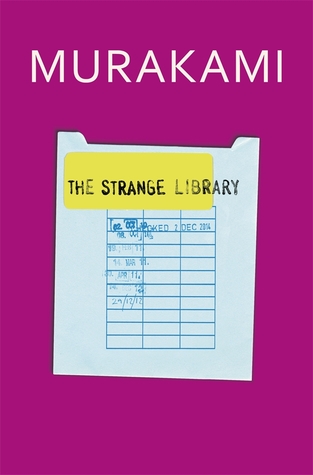
The first book I have to write about is Haruki Murakami's novella, The Strange Library.  I've read one other Murakami book, Norwegian Wood, and whilst I thought it was OK, I was disappointed to find out that it's one of his straightest novels, lacking in the surreal and magical elements that he is more famous for.  The Strange Library seemed like a good way of getting to grips with his more usual style.  Told with words and pictures, it's about a young boy who wanders into a library one day, as he wants to find out how taxes were collected in the Ottoman Empire.  He is directed to a special 'reading room' in an underground maze, and here he is imprisoned with a sheep-man and a girl that only he can see.

The Strange Library isn't really much of a story, and I read it in under an hour, but it had a beautifully haunting quality about it, a bit like a fairy tale.  I'm sure there is some deeper meaning to all of the strangeness, to do with grief and obedience, but I was happy just to revel in it and enjoy the experience.  It helps that this is a truly beautiful book, and the images add a lot to the story.  Now that I've finished this one, I'm looking forward to exploring the more surreal side of Murakami, starting with The Elephant Vanishes, a collection of short stories I already own.   4 out of 5.

After finishing The Strange Library, I was in the mood for some non-fiction so I picked up Chinua Achebe's There Was A Country. Ever since reading Chimamanda Ngozi Adichie's excellent Half of a Yellow Sun a few years ago, I've wanted to learn more about the Biafran war, in which Biafra decided to declare itself independent of Nigeria.  Achebe was deeply involved in this part of history, being Biafran and acting as a Biafran envoy in countries all across the world, as well as living through the conflict.

There was a Country is a powerful book.  Achebe blends history, politics, memoir and poetry together to create a personal account of the time.  Starting from his childhood during the British Empire, Achebe gives a brief overview of Nigeria gaining independence, and the problems that came after, before launching into the Biafran war.  Achebe manages to impart a lot of information without it ever feeling dull, and the poems were haunting.  Whereas the actual text occasionally lacked emotional engagement, the poems more than made up for it.  Sometimes Achebe's straight-forward writing made the book all the more impacting, particularly when he was discussing the deliberate policy of starvation employed against the Biafrans, and the near-misses encountered by his family. My only complaint is that sometimes Achebe became too bogged down in names and individual events rather than showing the whole picture.  But the tone of regret, of Achebe's sadness at the lost opportunity Nigeria's independence represented, permeates the whole book and makes it devastating.  4 out of 5

After the heaviness of war and corruption, I turned the L.M. Montgomery's The Blue Castle, a novel I picked up on impulse from the library.  I have read and enjoyed Anne of Green Gables, so I was keen to read Montgomery's adult novel.  The heroine is Valancy, a twenty-nine year old woman who has been written off  as an old-maid.  Unquestioningly obedient, she has allowed her family to stifle her, and the only joy she has is escaping to a fantasy land, in which she lives in a magnificent blue castle.  But when she is told by a doctor that she only has a year to live, due to a heart condition, Valancy resolves to actually live.  Throwing off her fears, she sets out to experience as much as possible, and to do things that please her, of course scandalising her rather staid community.

The Blue Castle has a lot of comic moments and a perfectly swoon-worthy love story, but at heart it's a coming of age story, about finding yourself and having the courage to make your own choices in life.  I loved watching shy, obedient Valancy stand up for herself, and act according to her own personal values.  In a way, this book was ahead of it's time, what with Valancy moving out, getting a job to support herself, and even making her own marriage proposal.  The Blue Castle is a dream of a book, that made me smile, inspired me, and reminded me of the joys that life can bring.  5 out of 5.

Friday, 21 November 2014

Blogging Break Reads

Whilst I wasn't blogging over the last month or so, I was most definitely still reading.  Here are some quick thoughts on the titles I finished:

Rivers of London by Ben Aaronovitch

Peter Grant thinks he is headed for a dull life of police paperwork when he finds himself interviewing a ghost following a murder in central London.  This leads him to Chief Inspector Nightingale, the last wizard in England, and the person in charge of policing the parallel, magical London.  The number of gruesome murders across the city is increasing, and it's up to Grant and Nightingale to find out and apprehend the supernatural culprit.

I had high hopes going into this book, as it's the first of a very well regarded series, but I was disappointed.  I liked the urban fantasy atmosphere and the originality of the supernatural elements, but ultimately this book was too much crime, too little fantasy for me.  I wasn't interested in solving the crime alongside Peter and as a result the pages dragged.   This one has been donated to the charity shop, and I won't be continuing with the series.
2.5 out of 5


A Little History of Literature by John Sutherland

I love the Little History series, and this literature based volume did not disappoint.  Covering everything from Greek myths to the future of printed books, this book is divided into short, bite-sized chapters that give an overview of authors and trends from the Western canon.  There's also chapters dealing with the development and history of the publishing industry.

I studied science at university, so I was missing a general overview of the history of literature, and this book filled that gap nicely. It's perfect to dive in and out of, as each chapter only takes a few minutes to read. Although I would have liked to have seen more on non-Western literature, I loved this book as it inspired me to pick up more classics.  Highly recommended.
5 out of 5


The Impressionist by Hari Kunzru

Pran Nath is the son of an Indian woman and English man.  Throughout his life he experiences being a privileged son, a cast out, exploited in a backstreet brothel, a political pawn, a student at Oxford university and finally an anthropologist.  Pran is able to flit between these roles effortlessly, assuming new identities, but what are the consequences of lacking a true identity?

This book is truly epic in scale, covering three countries and a dazzling array of side characters.  It's also utterly engrossing, mainly for the minor characters and the settings, which are bought vividly to life.  I really enjoyed this for the story, but have a feeling I missed some of the deeper meanings involving post-colonialist identity.
4 out of 5


The Dragon Reborn by Robert Jordan

The third volume in Jordan's epic fantasy series, The Wheel of Time. This series is a bit of a guilty pleasure for me.  Objectively, I know there is lots to dislike about it - the repetitive descriptions, the fantasy clichés, the gender stereotypes, the unnecessary, pace-slowing detail - but I just can't help but find this series utterly compelling.  It's just wonderful escapism, especially now Jordan has broadened the world somewhat and introduced new places in this volume.

I wouldn't recommend this series to everyone, and I'm not even sure why I like it so much, but like it I do.

4 out of 5

Tuesday, 23 September 2014

The Bellwether Revivals by Benjamin Wood

Oscar is a care assistant working at a nursing home in Cambridge. Despite being very intelligent, his academic career was cut short and he has always dreamed of attending one of the famous colleges near by.  One night, he finds himself drawn into a concert by the haunting sound of the organ, and there he meets Iris Bellwether, a medical student at King's College.  Through his relationship with Iris, Oscar becomes part of a group of students revolving around Iris' brother Eden, a gifted musician.  Eden is charismatic, bizarre, brilliant and perhaps a little insane.  As Eden begins to develop strange and possibly dangerous theories about the power of his music, Iris reaches out to Oscar for help.  Is Eden a great genius, or will his arrogance and instability damage the group?

I should start this review by pointing out that I've never read The Secret History or Brideshead Revisited, although plenty of other reviewers have noted similarities to these titles.  I went into The Bellwether Revivals with fresh eyes and I found it a bit of a mixed bag.  There were parts I loved, and parts where the narrative seemed to drag a bit.  Mostly, I loved the setting and the characterisation of Eden.  I'll read pretty much anything set at Oxbridge or amongst privileged individuals (I know, I really do need to get to The Secret History). so I was guaranteed to love this part of the book, the exams and colleges, textbooks and bicycles, grand houses and wealthy parents.  Wood's Cambridge has a slightly gothic atmosphere as well, which only added to my enjoyment of the setting.

The characterisation of Eden was superb too.  Wood perfectly captures that kind of person who is either manically clever or completely insane.  Eden has a magnetic personality that draws other people to him and his charisma is almost a force.  I enjoyed all the little details about Eden, like his notebooks full of scrawling, his air of superiority towards Iris, and the crazed way he plays the organ.  Wood keeps plenty of ambiguity about Eden, so you're not quite sure whether he is what he says he is throughout the novel.  Although Eden was such a well developed character, some of the others felt flatter.   Oscar was a bit of a bright-boy-held-back-by-working-class-family stereotype, and some of Eden's friends (Jane and Marcus particularly) just seemed to be there to make up numbers.

My main issue with The Bellwether Revivals was one of pace.  The book opens and closes with the same dramatic event, but the middle section felt a bit heavy by comparison.  I was keen to keep reading to find out what was going to happen, and I enjoyed the big reveal at the end, but it felt like I had to wait a long time to get there.  I'm not sure what Oscar's favourite patient Dr Paulsen added to the narrative; I know he had to be there for the plot to work, but his sections could have been cut considerably.

On the whole, The Bellwether Revivals was a worthwhile read.  If you enjoy books with academic settings or mysteries, you're sure to like this one.

Source: Personal copy
First Published: 2012
Score: 3.5 out of 5

Monday, 18 August 2014

A Concise Chinese-English Dictionary for Lovers by Xiaolu Guo


"London, by appearance, so noble, respectable, but when I follow these Alis, I find London a refugee camp."

Z is a recent migrant from China to London, sent to the West in order to learn English and make contacts to help build her parents' manufacturing business.  She's keen to immerse herself in British culture, but finds that things aren't as she was expecting, as her finances force her to live in run-down areas and she struggles to express herself.  It's not until Z meets an older English man and starts a relationship that she starts to get to grips with her new life.  But the man she has fallen in love with is a free spirit, something completely outside Z's sphere of understanding, and she finds their relationship as tricky as the new language.

The absolute best thing about A Concise Chinese-English Dictionary for Lovers is the way it is structured and written.  Each chapter is titled with a new word that Z has learned, and a dictionary definition for each word is included.  Z's narration starts off as very choppy, with her language skills improving as the book goes on.  I just loved that - it really helped me get inside Z's head and appreciate how difficult it must be to move to another country by yourself when you aren't fluent in the language.  Z's mis-communications and observations about British life and culture are remarkably perceptive and one of the strengths of the novel.

There's also a lot of commentary on the nature of language.  Z struggles with the tenses and grammar of English, and the way that English as a language is more 'individualistic' than Chinese, with the subject being the key element of a sentence.  Guo uses observations like this to explore whether your language can affect who you are and your culture - does language mirror culture or shape it?  I studied the development of language a bit at university, so I found it very interesting to reflect on questions like these.

So what I liked about A Concise Chinese-English Dictionary for Lovers was the voice of Z and her experience of moving to London and learning English.  However, I didn't particularly enjoy the way her relationship with the older English man was written, and this was one of the main elements of the novel. There was no explanation of why she became so attached to him, it was something that just seemed to happen without any feelings being involved.  Similarly, it was very convenient how Z seemed to find a man wherever she went on her European trip, and these experiences felt a bit forced.  I would have liked more focus on the migrant experience, and less on her relationships.

On the whole, A Concise Chinese-English Dictionary for Lovers is a good book that's well written.  The immigrant experience is handled perceptively and the structure of the book is interesting.  I enjoyed it, but it didn't exactly set my world on fire.

Source: Personal copy
First Published: 2007
Edition Read: Vintage, 2008
Score: 3.5 out of 5

Read Alongside (links to my reviews):
  1. The Newlyweds by Nell Freudenberger - A Bangladeshi woman moves to America to live with her new husband.  The issue of culture clash is dealt with fantastically here, and I ended up giving this book 5 out of 5.
  2. Girl in Translation by Jean Kwok - The migrant experience told through the eyes of eleven year old Kim, who moves to America from Hong Kong with her mother.  This isn't a happy book, but it is a powerful one.
  3. The Good Children by Roopa Farooki - The story of four siblings who spread out in the world in an attempt to get away from their overbearing mother.  Lots of contrasting experiences here.

Friday, 11 July 2014

The Birth of Love by Joanna Kavenna

The Birth of Love contains three intertwining stories that deal with childbirth in different time periods.  In 1885, Dr Semmelweiss is being ridiculed by the medical profession for his suggestion that doctors washing their hands could dramatically lower the rates of childbed fever.  Cast out and pursued, the story finds him in a lunatic asylum, convinced that he is a murderer.  In 2009, Brigid is preparing for the home birth of her second child, hoping for a natural birth.  And in 2135, in a dystopian society, a group of prisoners are on trial for the crime of concealing a pregnancy.

I've been wanting to read The Birth of Love for ages, but I didn't want the depictions of childbirth to put me off before I had my own son, so I kept on delaying it.  And I'm glad I did - Kavenna doesn't shy away from any part of Birgid's experience and her labour is described in extensive detail, taking up roughly one third of the book.  The way it was described was so powerful - I know my own experience of childbirth is fresher than most people's, but I'm sure any woman reading this who has given birth would find themselves relating to Birgid's pain and fear.  I found it quite cathartic to read about birth in such an honest and unflinching way, to read about Birgid's rapidly changing emotions and her struggle to manage the pain in different ways, from her optimistic determination in the early stages, through to her dark relief at intervention in the end.  It felt like an unadornished portrayal of what labour is really like, and in this way I found it reassuring - I'm not the only one who felt like that!  My own labour was actually very similar to Birgid's (although I ended up with forceps rather than a caesarean), and this made it even more powerful to me.

The other two stories were interesting too.  It seems crazy to us that doctors in the past didn't wash their hands and indeed went straight from an autopsy to an internal examination of a woman in labour, but this is what happened, and boy did they fight against hand washing!  The dystopian story was probably the weakest - there was too much in the way of telling rather than showing, and I wanted to know why pregnancy and parenting had come to be seen as so disgusting.  I did like all of the little links between the three stories, as this reminded me a bit of Cloud Atlas, one of my favourite books.

The main flaw that The Birth of Love had was pacing.  All of the stories were slow paced, particularly the Dr Semmelweiss strand, and this made reading the book tedious at times.  It really would have benefited from a good edit, as quite a bit could have been cut out to leave a more fast paced and coherent novel.  I can imagine some readers will be put off by the slow pace of the novel.

On the whole, I really enjoyed The Birth of Love, mainly for Birgid's story.  Childbirth and pregnancy features in a lot of books, films and popular culture,  but rarely is it dealt with honestly.  My high rating of the novel is largely due to this.

Source: Personal copy
First Published: 2010
Score: 4 out of 5

Monday, 9 June 2014

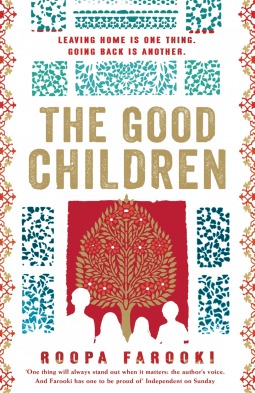
The Good Children by Roopa Farooki


Sulaman, Jakie, Mae and Lana grew up in Pakistan under the shadow of their controlling and somewhat abusive mother.  The two brothers are sent abroad to become doctors, one to England and one to America, but the two sisters are left behind and expected to make good marriages, to bring honour to the family.  But being a 'good child' is harder than it seems and in one way or another, all four children fail to meet their mother's exacting standards.  Sulaman becomes a renounced academic and expert on torture, but marries an unsuitable Hindu girl he meets in America.  Jakie does become a respected doctor, but starts a relationship with a white man in London.   Mae and Lana both marry suitable men, but their marriages suffer as they refuse to compromise their lives for the men they are married to.  When all four grown up children are called back to Lahore for a family emergency, they have to come to terms with their past, and the role their mother has played in their lives.

The Good Children is the first book I've read by Farooki, and I will definitely be reading more as soon as possible.  Prior to starting this, I was in a bit of a reading funk as I just wasn't reading anything amazing, but The Good Children restored my reading mojo almost instantly as it's simply a very good book.  It may be 600+ pages, but I raced through it in under three days.  The stories of all four children were distinct and engaging, and splitting up the narrative with their different points of view maintained the pace of the novel.  Farooki touches on a lot of important themes, such as mixed race relationships, domestic abuse, homosexuality and adoption, but The Good Children never feels like an 'issues' book, it always feels like a good story that happens to involve all of those things.

Although I enjoyed reading about all four children, I was most drawn to the stories of Jakie and Mae.  Jakie starts a relationship with Frank during a time in London when homosexuality was still a crime, and Farooki explores the prejudice he faced, and the reactions of those around him.  Mae was interesting as she was the child most like her mother, and her struggle to succeed for herself without crushing others was well done. Mae also leaves her husband when he takes a mistress, something that is frowned upon at the time, and I liked reading about her determination to ignore what others thought and forge her own path.

I'm really glad I read The Good Children, as it has introduced me to Farooki as an author.  I'm thinking of trying Bitter Sweets next, unless anyone has any other recommendations?

Source: From the publisher, in exchange for an honest review
UK Publication Date: 19th June 2014
Score: 4.5 out of 5

Saturday, 7 June 2014

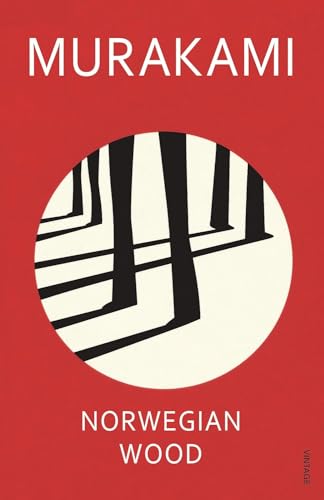
Norweigan Wood by Haruki Murakami


A coming of age story, Norwegian Wood is set in 1960s Tokyo and tells a classic tale of love and heart-break.  After the suicide of his best friend Kizuki, university student Toru finds himself drawn to Kizuki's girlfriend, Naoko.  He falls in love with Naoko, but she is damaged herself and may be incapable of giving Toru everything that he wants.  When quirky Midori marches into his life, Toru finds himself torn between the two girls, as he also struggles with the process of becoming an adult.

I am new to Murakami, and I'm also new to Japanese literature in general.  It's something I've wanted to try for a long time, but this is my first real attempt.  Having done some research since finishing the novel, it's clear that I probably shouldn't have started with Norwegian Wood, as it's not at all typical of Murakami's work in general.  I went into it expecting something kooky and slightly surreal, full of unusual elements, so was somewhat disappointed when it turned out to be a straight story.  The story of Toru's growing up is interesting, and Murakami is no doubt a talented writer, but it just didn't match what I was expecting it to be, and that made the whole experience a bit jarring.

I did enjoy Murakami's characterisation, especially that of Midori.  Midori is outgoing, lively and not afraid to say what she wants, even demanding it at times.  In fact, all of the women in the novel were like this and I found it quite refreshing.  I liked that Murakami captured the complex emotions of being a young adult, and that none of the situations were simplified.  Toru's experiences had the feel of real life experiences, full of contrasting wants and desires. A large portion of the novel deals with mental health and suicide, and again I thought this was handled well by Murakami.  Things do feel big and overwhelming when you're Toru's age, and the sections on mental health captured this perfectly.

As I'm writing this, I'm trying to work out exactly why I didn't love this novel.  It has so many strong elements, but the reading experience was underwhelming for me.  I found it a bit too long and repetitive in places, and it's not a book that I enjoyed picking up and diving into.  I could understand Toru, but it was hard to relate to him.  I'm leaving the book keen to try another Murakami (perhaps The Wind Up Bird Chronicle?), but I can't see myself ever reading this one again.

Source: Personal copy
First Published: 1987
Edition Read: Vintage, 2003
Score: 3 out of 5

Tuesday, 3 June 2014

The Kingdom of Childhood by Rebecca Coleman


Judy McFarland is a kindergarten teacher in a Steiner school, who feels trapped in a loveless marriage and a job that has become routine.  When high school student Zach Patterson is assigned to help her prepare for an upcoming school fundraiser, Judy starts a risky sexual relationship with him.  Initially Zach is thrilled at the attention, as it diverts his mind from his mother's affair and the subsequent effect on his family, but gradually the relationship between Zach and Judy changes and becomes darker, as Judy comes to term with the secrets of her past.

I do like a novel about a controversial subject, so I was keen to pick up The Kingdom of Childhood. Sexual predators in novels tend to be men, so I was interested to see how Coleman would deal with the abuser being female.  And actually I thought this was well done - although Zach is flattered initially with Judy's attention, by the middle of the novel he has had enough and would like to be free of her.  This is where the power dynamic comes into play, as Judy manipulates him into continuing to have sex with her, with both parties acknowledging that the 'relationship' is actually rape. I liked that Coleman portrayed this honestly, rather than taking the easier 'surely it's every male's fantasy to get with a hot teacher' road, that I've seen before when female teachers have been caught abusing their pupils.  

However, I wasn't a fan of the sub-plot about Judy's past.  Every couple of chapters, there is a flashback about Judy's experiences growing up in Bavaria, where she witnessed her father's extra-marital affair and was groomed herself, alongside other secrets.  I liked the atmosphere of these parts of the novel, but there was so much build up that the 'shocking secrets' when they came didn't feel so shocking after all.  It's like Coleman was trying to make this book as controversial as possible by adding this sub-plot when she didn't really need to, as surely the main plot is controversial enough.  The added elements seemed to cheapen it somehow.

Although The Kingdom of Childhood was thought provoking and well written, I think my experience of reading it suffered as I couldn't help but compare it to Alissa Nutting's Tampa, also about a female teacher abusing a student.  Tampa is far from an enjoyable read, but it's confronting, powerful and shocking, and deals with this issue in a much more successful way than The Kingdom of Childhood.  Readers that haven't read Tampa will probably find it more thought-provoking than I did.

Source: Personal copy (kindle)
First Published: 2012
Score: 3 out of 5

Wednesday, 28 May 2014

The Fire Gospel by Michel Faber


I love Michel Faber.  The Crimson Petal and the White, his rambling Victorian-style novel about the rise of a prostitute, is one of my favourite books ever, and I enjoyed his short story collection The Apple.  I'm also a big fan of the Canongate Myths series, so when I saw that Faber had written an interpretation of the Prometheus story, I was excited!

The story opens with Theo Griepenkerl, an academic, visiting a looted museum in Iraq, looking for artefacts he can ship back to Canada.  Quite accidentally, he stumbles across the archaeological find of the century, nine papyrus scrolls that together are a fifth Gospel, an account of the life and death of Jesus written by a first hand witness.  Overcome with visions of grandeur, Theo wastes no time publishing a translation of the gospel and waits for the praise and money to come rolling in.  But he has under-estimated the impact the controversial gospel will have on the world, from Christians uncomfortable with the portrayal of Christ, to Arabs and atheists.

I think The Fire Gospel suffered from my high expectations of it.  I was expecting the combination of Faber plus Canongate Myths to produce something special, but ultimately I thought The Fire Gospel was just an OK sort of book.  I did really enjoy the satirical tone of the writing (especially the fake Amazon reviews, which I could just imaging being written in real life) and the reactions of different groups of people to the gospel were perceptively observed.  The main character Theo is quite unlikeable in his drive for money and recognition, but this is all part of the satire and Faber pulls it off well.

The main problem I had with The Fire Gospel was that it felt like so many opportunities in the story were missed.  I wanted more examination of reactions to the gospel, more discussion of the effect it had on the major religions and more of the controversy, and I know Faber would have been capable of writing that story.  Instead, I got accounts of Theo's new ability to score with the ladies, and even when something major happens near the end, it's not fully explored.

The Fire Gospel is still an interesting an thought-provoking book that I sped through in just two sittings.  It had a lot of potential, but for me it just missed the mark.

Source: Personal copy
First Published: 2008
Score: 3 out of 5

Monday, 26 May 2014

We Need New Names by NoViolet Bulawayo

I've been interested in We Need New Names ever since it first came out, and my interest grew when it was short-listed for the Booker Prize last year.  Told from the point of view of ten year old Darling, it's the story of life in a shanty town called Paradise, in an unnamed African country.  Darling and her friends have a tough life and they dream of escaping to a Western country, away from the poverty and hardship.  But when Darling does get the chance to move to America, she realises that the reality of life as an immigrant can never live up to her expectations.

We Need New Names is one of the best books I've read this year.  It's written in an uncompromising, no-nonsense style that suits the narrator and her experiences.  I'm normally a bit sceptical about adult books written from the perspective of children, but in this case Bulawayo has really pulled it off - Darling is blunt and matter of fact when detailing the realities of her life, and this stops the book becoming too sentimental.

Even though We Need New Names contains lots of hardship, it's not a simple story by any means, and I appreciated the subtleties Bulawayo gets into the novel.  Darling may be forced to steal food that makes her ill to survive in Paradise, and she may have a female friend who is pregnant following a rape, but we get to see the happier side of her life in the shanty too.  Darling has real friends and gets to be a child with them, playing all sorts of games, and this is something that vanishes when she moves to America, causing all of her memories of home to be bitter-sweet.

Being an immigrant in America is shown to be complicated matter as well.  Darling feels the pressure of not fitting in, of being out of step with everyone she knows.  Her relatives are forced to work all hours in physically demanding and sometimes illegal jobs, struggling to make ends meet whilst fielding off demands for money from those back home, who can't believe that America is anything but a land of milk and honey.  Again, I loved that Bulawayo showed the complexity of all of these issues and that life has no simple answers.

We Need New Names is worth reading for the character of Darling alone.  She's vibrant and simply leaps off the page, no matter what situation she is in.  Despite being quite a depressing (yet realistic) read at times, Darling always gives the story life and hope.  I simply loved every page of this book and highly recommend it.

Source: Personal copy
First Published: 2013
Edition Read: Vintage, 2014
Score: 5 out of 5

Read Alongside:

  1. In the Shadow of the Banyan by Vaddy Ratner - Seven year old Raami lives through the Khmer Rouge in Cambodia.  Another excellent child narrator in an adult story.
  2. Pigeon English by Stephen Kelman - Like We Need New Names, this one examines the immigrant experience.  Harri has arrived in London from Ghana, and finds himself mixed up with gangs after the murder of a local teenager.
  3. Tiny Sunbirds Far Away by Christie Watson - Set in Nigeria, Blessing moves to a rural compound with her family in the oil-rich Niger Delta.  Again, another great example of a child narrator.
  4. Purple Hibiscus by Chimamanda Ngozi Adichie - I just love Adichie, and this coming of age story has a lot in common with Darling's coming of age when she arrives in America.

Thursday, 8 May 2014

The Secret Lives of Baba Segi's Wives by Lola Shoneyin

Bolanle is the fourth wife of Baba Segi, and she is childless.  Already an outsider in the family home as the only wife to hold a university degree, her inability to conceive gives the other wives ammunition against her. First wife Iya Segi sees Bolanle as a threat to her dominance, third wife Iya Femi doesn't like being upstaged by a newcomer, and second wife Iya Tope is beaten down and unable to speak up on Bolanle's behalf. Seen as snobbish and different, Bolanle is isolated and unwelcome.  Finally, Baba Segi decides to take Bolanle to the hospital, where the medical investigations into Bolanle's fertility have some unexpected results, exposing the secrets of all the wives.

I've seen The Secret Lives of Baba Segi's Wives described elsewhere as a tragicomedy, and that label is just perfect for it.  Shoneyin deals with some pretty weighty issues like the role of women in Nigerian society, the views of different classes on polygamy and domestic abuse, but it's always done with a light touch and a bit of black humour.  Baba Segi wants to keep his wives hidden away, announces that Bolanle's infertility shames him and doesn't hesitate to assault her, but he's also a comically pathetic figure, bought down by the women in his life.  Shoneyin's talent for finding the humour and pathos in tragic situations means that the book never feels too depressing or preachy.

As I read The Secret Lives of Baba Segi's Wives, I was most interested in the examination of the role of women in Nigeria.  There's references to domestic violence being seen as a waste of police time, a woman discussing her rape is assumed to be a liar and women are frowned upon for wearing trousers.  Through the wives' stories and the power they had seized for themselves over the course of their marriage, Shoneyin's novel is quietly feminist, and we get to see glimpses of a newer Nigeria, in which women are more valued. Of course, whilst I was reading this novel, the news was full of the story about the kidnapping of 200 Nigerian schoolgirls and the intent to sell them into slavery, so it's clear that women still have a long way to go.

I really would recommend The Secret Lives of Baba Segi's Wives.  It examines some interesting issues through a story that is quick, engaging and a lot of fun to read.  If I had the time, I could have read it all in one sitting. It shines a light on a polygamous marriage in Africa in a non-judgemental way and it's a book that hasn't really left my thoughts since I finished reading it.

Source: Personal copy (kindle)
First Published: 2009
Score: 5 out of 5

Sunday, 4 May 2014

Jephte's Daughter by Naomi Ragen

Although Batsheva has been bought up as a Hasidic Jew, she has always been indulged by her wealthy father and allowed to taste more freedom than her school friends.  She reads Western literature, pursues photography and dreams of living her own life before becoming married.  But when Batsheva turns eighteen, her father arranges for her to marry a scholar in Jerusalem, and she is sent half way across the world, away from everything she knows.  Isaac Harshen follows his religion strictly and wastes no time in destroying her books and 'training' her in the ways of being a Hasidic wife.  Gradually Batsheva's freedoms are curtailed, her actions are punished, and her marriage becomes an abusive cage.  When she tries to reach out to her family and others in Hasidic society, they remind her that marriage is forever and that husbands are to be obeyed.  Batsheva has retained some of her spirit, but is it enough to enable her to challenge the society she has always known?

Jephte's Daughter was published in 1989, and was apparently quite controversial in it's portrayal of women and domestic abuse in ultra-Orthodox Jewish communities.  I have to admit that it was the religious aspect of the book that drew me to it; I am non-religious myself so am always fascinated by stories set in societies that are so different from my own.  I can't imagine what it would be like to have religion at the centre of your life, to have so many rules to follow, and to be so withdrawn from other beliefs and lifestyles.  Batsheva's religion in Jephte's Daughter forms part of her cage; divorce is seriously frowned upon, and being married to a respected scholar like Isaac is seen as the pinnacle of a woman's life anyway.  It's hard for her to complain about the loss of intellectual freedom when she isn't expected to think.  But although Ragen shows us this downside of such isolated, strict religious communities, she also shows the love Batsheva has for her religion, and the way she wrote about Jewish beliefs and communities was fascinating.

Jephte's Daughter is really a book of two halves.  The first half deals with Batsheva's marriage and the domestic abuse, and the second is about what comes after, and the issues she has to face as a consequence. I much preferred the first half of the novel; I felt it was a powerful portrayal of an abusive marriage, and strongly written.  I was rooting for Batsheva and had an enormous amount of sympathy for her.  Unfortunately the second half was a bit of a let down.  Batsheva's journey to regain her confidence was delicately handled, but some plot events felt unrealistic, especially something convenient that happened at the end of the novel (mentioning no plot spoilers).  Things fell into place a little too easily, and I felt like this distracted from the power of the first sections.

Still, I've never read anything quite like Jephte's Daughter before.  It reminded me in some ways of Their Eyes Were Watching God by Zora Neale Hurston;  it had similar themes of a woman finding herself and not letting others define her.  I would recommend it, and will look out for more books by Ragen in the future.

Source: Personal copy
First Published: 1989
Edition Read: St Martin's, 2010
Score: 3.5 out of 5

Thursday, 10 April 2014

Burial Rites by Hannah Kent


Agnes Magnusdottir was the last person to be executed in Iceland, for her role in the murder of two men in March 1828.  In Burial Rites, Hannah Kent tells the story of Agnes from her conviction to her death.  As Iceland had no prisons at the time, Agnes is sent to live and work with a rural family in the North of Iceland, to await her sentence.  A very much unwanted guest, particularly in the eyes of youngest daughter Lauga, Agnes examines her past and tries to come to terms with what has happened to her.  The priest she chooses to absolve her, Assistant Reverand Thorvardur Jonsson (Toti), is keen to be on her side, but Agnes is reluctant to share her story with anyone.  As the time of her execution draws closer, will anyone apart from Agnes learn the truth?

Burial Rites is a book that has generated a lot of buzz, something that is sure to increase now that it has secured a place on the short-list for the Baileys Prize for Women's Fiction.  I was keen to read it from the moment I heard about it, but also a bit hesitant as I'm not a big crime reader and I wondered whether it would have enough cross-over appeal to work for me.  Thankfully, Burial Rites lives up to the hype and I certainly enjoyed the reading experience.  Kent's novel is an engaging story of a woman who was largely the result of her circumstances.  Agnes is a fascinating and complex character, who reveals only part of herself to the other characters, and who tells her story in snippets as the chapters progress.  I found myself drawn in by Agnes, and keen to find out what really happened the night of the two murders.

However, the biggest draw of the book for me was the way Kent wrote about Iceland.  The rural North of Iceland is a main character in the novel, and Kent completely immerses the reader in the Icelandic culture of the time, from the role of the sagas in everyday life, to the badstofas the families would huddle in during the colder months.  Life in the North was hard and unforgiving in those times, and the bleakness of the environment adds a lot of atmosphere to the novel - the harshness of the setting mirroring the harshness of Agnes' life.  I loved reading these parts, and was impressed at how Kent, an Australian woman, was able to transport me completely to Iceland.

Having read Burial Rites, I can see why it was short-listed for the Baileys Prize.  It's not a perfect novel, and I found the pace in the middle a little slow, but there's something engaging and haunting about it that will stay with you after you have turned the last page.  I'm still rooting for Americanah to take the prize, but this would be a worthy winner.

Source: Personal copy
First Published: 2013
Edition Read: Picador, 2014
Score: 4 out of 5

Tuesday, 1 April 2014

The Signature of All Things by Elizabeth Gilbert


Alma Whittaker is born in the very first year of the nineteenth century, a time of great change as the world opens up and scientific discoveries abound.  Growing up in a family that encourages her to have an open mind and better herself through intellectual development, Alma devotes herself to botany and the study of mosses.  However, she is unprepared for society in general and her personal life suffers through comparison with her beautiful adopted sister, Prudence.  A panoramic of Alma's life and the nineteenth century in general, A Signature of All Things examines the difference between intellectual and personal fulfilment, and the contrasting roles of science and spirituality.

The Signature of All Things is a very difficult book to summarise as it's an ambitious, epic book.  Alma may be the centrepiece and the main story-teller, but the book is about big topics such as science, spirituality, marriage, missionaries, the abolition of slavery, the discovery of evolution and the role of women. Gilbert has certainly aimed high, and for the most part the novel is very successful.  None of the themes felt rammed down my throat at any point, and the panoramic view of Alma's times reminded me a bit of Dickens.  Gilbert does a great job at conjuring up the ethos and atmosphere of the times, when botany was truly an exciting career and it felt as though scientists were uncovering the mysteries of God.

Although Alma is an interesting and easy to relate to main character, I found myself most drawn to the story of her adopted sister, Prudence.  Despite being very intelligent herself, she isn't quite in Alma's league and so suffers in a different way to Alma.  I enjoyed reading about her becoming drawn to the abolitionist movement, and the waves in society she was prepared to make for her beliefs.  In a similar vein, I enjoyed the latter sections of the novel, when Alma journeyed to Tahiti and came into contact with a different way of life to her own.  I love that whole nineteenth century explorer theme in historical fiction, and the meeting of different cultures.

On the whole, I really enjoyed The Signature of All Things. It was one of the titles I was most excited to read from the Baileys long-list, as the theme of women scientists was always going to draw to me.  However, it's a hard book to review as I could pretty much sum up my views by simply typing "I liked this book."  There was nothing I disliked about it, but neither did it grab me and worm it's way into my heart as a favourite.  It's simply a very well written story about a topic that engages me, and I'm glad I spent several nights with it over the last week.

Source: Library
First Published: 2013
Score: 4 out of 5

Read Alongside:

Sunday, 23 March 2014

The Luminaries by Eleanor Catton


In 1866, Walter Moody arrives in New Zealand, hoping to find his fortune in the gold rush gripping the country.  Taking lodging at a hotel in Hokitika, he enters the bar only to have all conversations around him stop.  He has stumbled onto a meeting of twelve local men, who are discussing the strange events that have been happening recently.  A hermit has been found dead in his house, a prostitute has apparently tried to kill herself, a great fortune has been discovered and a prospector has gone missing.  As Walter listens to the stories, he finds himself drawn into the mystery.  What really happened, and how are the lives and fortunes of all the men intertwined?

I finished The Luminaries late last night and my honest first reaction was to be in complete awe of Catton's skill.  I don't think I've ever read a book as intricately plotted, with so many relationships between different characters.  There are at least sixteen main characters and much of the plot and mystery depends on how they relate to each other, and the things they tell each other, that the other characters aren't necessarily aware of. Not only does Catton manage to keep all of this straight in the mind of the reader, but she also manages to slowly reveal clues and subtly alter our perception of these relationships, to move the mystery on throughout the novel.  I can't even begin to imagine how you would go about planning a book as complex as this one, but I am suitably impressed.

I was also very impressed with the writing.  The Luminaries is a long book and it's not got the fastest of paces.  The writing is Victorian in style, and I found reading it to be a similar experience to reading a good Dickens novel, or like picking up Jonathan Strange and Mr Norrell.  The writing lets you really sink into the book and the world of nineteenth century New Zealand.  Which is a great place to be; I loved the frontier-like town of Hokitika with all of it's prostitutes, prospectors, illegitimate sons, plotting and gunfights.

So on an intellectual level, I was blown away by The Luminaries and can see why it was awarded the Booker Prize last year.  But books are about more than the skill involved in creating them, and thankfully The Luminaries had a good plot as well, with a story that kept me engaged.  Although I guessed some of the elements of the mystery, I enjoyed watching the whole thing unravel and just sped through the last two hundred pages, in order to find out what really happened.

If The Luminaries has a flaw, it is in characterisation.  I loved the more sinister characters in the novel, Lydia and Frank Carver, as well as the ambiguous character of Anna Wetherell, but some of the thirteen men felt a little flat.  I could relate to the Chinese characters because of the way their lives were written about in the book, but with some of the other men, Catton didn't give me any reason to feel attached to them or root for them, meaning that I sometimes felt a bit detached when reading the novel.  This stops me from giving The Luminaries 5 out of 5, but it's still one of the best, most impressive novels I've read in a long time.  I'll be extremely surprised if this one doesn't make the short-list for the Baileys Prize.

Source: Library
First Published: 2013
Baileys Longlist: Book 3/20
Score: 4.5 out of 5

Wednesday, 19 March 2014

Almost English by Charlotte Mendelson


From now on, you are going to be seeing a lot of reviews of books long-listed for the Baileys Women's Prize for Fiction.  Almost English, the story of a part Hungarian school-girl trying to find her place, is the second off the list I have read.  It's the story of Marina and her mother Laura, living in London with Marina's Hungarian relatives.  Her Dad, Peter, has vanished without a trace, leaving English Laura struggling to fit in with Hungarian family life and Marina just wanting to be normal.  Having decided that the best way to be properly English is to attend a prestigious boarding school, Marina moves to Combe Abbey, only to find that her romantic fantasies of the new person she would become there have little to do with reality.

I was really looking forward to Almost English.  Despite not being an immigrant myself, I am really attracted to stories about the immigrant experience as they appeal to something deep inside all of us, that need to fit in, to belong to something.  The blurb really plays up Marina's heritage and I was interested in the juxtaposition of Marina with her very British boarding school environment.  But Almost English isn't really about that.  It's really a story of emotional insecurity and distance, of a mother and daughter that torture themselves with anxiety but who are unable to reach out to each other.  And it was still a good story, but it wasn't the one I was expecting it to be.

The thing I most enjoyed about Almost English was the character of Marina herself.  I was a painfully awkward, anxious teenager (some days not much has improved!), and I really related to her constant indecision and worry.  Mendelson perfectly captures that teenage experience of feeling like everyone is watching you, that your every move will be criticised and judged by the silent hoards around you.  Combine that with an active imagination and you end up with Marina; someone who thinks herself in love with a boy that she has never even spoken to, who lies awake agonising over a throwaway comment and who attaches great importance to small events.  I could relate to her so well that reading the book wasn't always a comfortable experience!

Almost English was one of those books that had a lot of potential but ultimately didn't really go anywhere. The characterisation was excellent but the plot was a bit weak, with too many threads that either didn't tie together, or which felt contrived.  Marina's 'seduction' by her boyfriend's very-British father felt a bit plot-by-numbers, and Laura's anxiety was never fully resolved.  

Ultimately, Almost English failed to live up to my expectations. I needed a stronger plot and more overall direction.  I'll be surprised if it makes it on to the short-list.

Source: Library
First Published: 2013
Score: 3 out of 5

Sunday, 9 March 2014

The Marriage Plot by Jeffrey Eugenides

Madeline is in the final year of a literature degree.  She's reading classic authors and writing her thesis on the use of the marriage plot in the novel, a topic seen as seriously outdated in the university culture of the 1980s.  As she finishes her final year at university and attempts to find her way in life after it, her path entwines with that of two men, Mitchell and Leonard.  Mitchell, a religious studies graduate, is keen to travel the world in search of mystic experiences.  He is also certain that he is destined to end up married to Madeline.  Leonard is a talented scientist promised a research fellowship at one of the most prestigious centres in the country, but his charisma covers a difficult battle with bipolar disease.  As Madeline navigates the stormy path of life after college, will she find herself starring in her own marriage plot, or is the marriage plot truly dead?

I'll be honest - I picked this book up purely because it is by Jeffrey Eugenides.  The Virgin Suicides is one of my favourite books and I really enjoyed Middlesex, so at this point I will buy and read anything Eudenides puts out without a second thought for whether or not the plot is appealing.  With that in mind, my overall impression of The Marriage Plot is that it was very well written (I'd expect nothing less), but much more self-consciously literary than either of Eugenides previous works, and therefore not quite as enjoyable.

I agree with a lot of what Eugenides is trying to say in the novel, mainly that there is still room in literature for a book that tells a simple story, that our stories may have changed with the complications of modern life, but that readers still want a story that tells them something about the dilemma of the characters.  There's a lot of gentle fun being poked at undergraduates and literary criticism in general, which was enjoyable too.  But the whole time I was reading, I felt as though Madeline, Leonard and Mitchell were just vehicles for Eugenides themes, rather than the central drivers of his story, if that makes sense.  They didn't jump off the page and I didn't fully connect with them emotionally.  In marriage plots, you're supposed to really care who the main character ends up with, and although I thought Eugenides' twist on the classic plot device was clever, I didn't feel that connection.

I don't want to come off as too harsh, as The Marriage Plot is still a very good book.  I thought Eugenides' portrayal of mental illness in the form of Leonard, and the effect that it can have on the people around you, was very strong and I found these parts of the story gripping.  I loved reading about Mitchell's adventures in India and his struggle to decide what kind of person he was.  As I mentioned earlier, it goes without saying that the whole thing was well written and for quite a chunky book, I just sped through it.

I think that if I hadn't already read The Virgin Suicides and Middlesex, I would have adored The Marriage Plot and would at this point be rushing out to find everything else Eugenides had ever written.  But because I have read his previous work, I couldn't help but compare them, and The Marriage Plot just didn't quite live up to expectations.

Source: Personal copy
Published: 2011
Score: 4 out of 5