Showing posts with label contemporary fiction. Show all posts

Tuesday, 14 October 2014

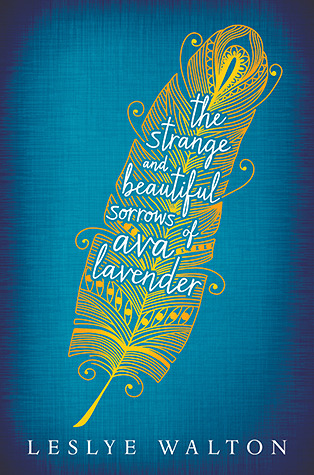
The Strange and Beautiful Sorrows of Ava Lavender by Leslye Walton

Ava Lavender is the daughter of a woman scorned in love and the granddaughter of a woman haunted by the ghosts of her past.  She also happens to have wings, which she was born with.  In The Strange and Beautiful Sorrows of Ava Lavender, Ava traces the history of the women in her family, and the ways in which love in all its forms has caused them pain.  Their stories lead naturally on to her own, as her wings make her the focal point of a dangerous obsession.

The Strange and Beautiful Sorrows of Ava Lavender is an unusual book that is hard to describe.  The thing I enjoyed most about it was the quirky tone and narrative voice.  Walton's world just hints at the magical, and at the fairy tale, a world in which wings, ghosts, children with different coloured eyes, and cakes infused with the feelings of the baker, are possible.  I love books with atmospheres like this - our normal world painted in vivid technicolour.  Ava Lavender is as a result a very visual book, and one that would be great turned into a film.

I mentioned above that this story is a bit like a fairy tale, and therefore there is a darker side lurking underneath the surface.  Emilienne and Viviane (Ava's mother and grandmother) are troubled by love in rather ordinary ways, but Ava really experiences the darker side of obsessive love.  The later sections of the novel deal with brutal events, which seem even harsher set against the imaginative setting. I found what happened to Ava to be problematic, not because I don't think violence against women shouldn't be written about, but because there was a glamour to the scene.  Ava's sorrows are beautiful, it's all in the title, and her attack and it's consequences are written about in the same, fairytale, beautiful-tragic way.  When really it's just tragic and there are fewer things in life that would feel less beautiful.  I'm sure this was completely unintentional, but it still bothered me.

I found that I connected with Emilienne and Viviane better than Ava herself, as Ava remained a bit of a mystery throughout the novel.  I particularly connected with Viviane's story, her years spent pining after a lost love that didn't really turn out to be a love after all.  Including all three women in the narrative was definitely a good decision.

On the whole, I did enjoy The Strange and Beautiful Sorrows of Ava Lavender.  The writing style and the magical elements worked fantastically together, and it was a pleasure to pick up.  Fans of Sarah Addison Allen will enjoy this one.

Source: From the publisher, in exchange for an honest review.
Published: 2014
Score: 3.5 out of 5

Tuesday, 23 September 2014

The Bellwether Revivals by Benjamin Wood

Oscar is a care assistant working at a nursing home in Cambridge. Despite being very intelligent, his academic career was cut short and he has always dreamed of attending one of the famous colleges near by.  One night, he finds himself drawn into a concert by the haunting sound of the organ, and there he meets Iris Bellwether, a medical student at King's College.  Through his relationship with Iris, Oscar becomes part of a group of students revolving around Iris' brother Eden, a gifted musician.  Eden is charismatic, bizarre, brilliant and perhaps a little insane.  As Eden begins to develop strange and possibly dangerous theories about the power of his music, Iris reaches out to Oscar for help.  Is Eden a great genius, or will his arrogance and instability damage the group?

I should start this review by pointing out that I've never read The Secret History or Brideshead Revisited, although plenty of other reviewers have noted similarities to these titles.  I went into The Bellwether Revivals with fresh eyes and I found it a bit of a mixed bag.  There were parts I loved, and parts where the narrative seemed to drag a bit.  Mostly, I loved the setting and the characterisation of Eden.  I'll read pretty much anything set at Oxbridge or amongst privileged individuals (I know, I really do need to get to The Secret History). so I was guaranteed to love this part of the book, the exams and colleges, textbooks and bicycles, grand houses and wealthy parents.  Wood's Cambridge has a slightly gothic atmosphere as well, which only added to my enjoyment of the setting.

The characterisation of Eden was superb too.  Wood perfectly captures that kind of person who is either manically clever or completely insane.  Eden has a magnetic personality that draws other people to him and his charisma is almost a force.  I enjoyed all the little details about Eden, like his notebooks full of scrawling, his air of superiority towards Iris, and the crazed way he plays the organ.  Wood keeps plenty of ambiguity about Eden, so you're not quite sure whether he is what he says he is throughout the novel.  Although Eden was such a well developed character, some of the others felt flatter.   Oscar was a bit of a bright-boy-held-back-by-working-class-family stereotype, and some of Eden's friends (Jane and Marcus particularly) just seemed to be there to make up numbers.

My main issue with The Bellwether Revivals was one of pace.  The book opens and closes with the same dramatic event, but the middle section felt a bit heavy by comparison.  I was keen to keep reading to find out what was going to happen, and I enjoyed the big reveal at the end, but it felt like I had to wait a long time to get there.  I'm not sure what Oscar's favourite patient Dr Paulsen added to the narrative; I know he had to be there for the plot to work, but his sections could have been cut considerably.

On the whole, The Bellwether Revivals was a worthwhile read.  If you enjoy books with academic settings or mysteries, you're sure to like this one.

Source: Personal copy
First Published: 2012
Score: 3.5 out of 5

Friday, 12 September 2014

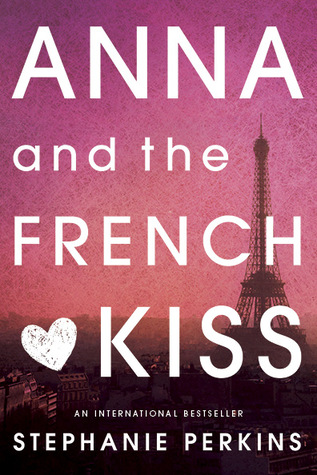
Anna and the French Kiss by Stephanie Perkins

I don't read much YA, but I would have to be living under a rock to not notice the massive success of this series.  With the third instalment, Isla and the Happily Ever After, recently published, I decided it was time to give Anna a go.  The basic story-line goes as follows - Anna is looking forward to starting her senior year and getting closer to her almost-boyfriend Toph when her father decides to send her to boarding school in Paris.  At first Anna is determined to hate being uprooted from her life in America, but she soon makes new friends.  One of these is Etienne St. Clair, who she finds herself developing feelings for despite him already being in a relationship.  As the year goes on, Anna and St. Clair have to deal with their conflicting feelings.

I can see why Anna and the French Kiss is so popular.  It's super fun to read and the romance between the two main characters is well written.  There's no insta-love here - Anna may be attracted to St. Clair initially, but we only see her fall in love as their friendship develops and they spend more time together.  At first they have an easy-going friendship, but as time goes on, they become closer and support each other through some major life events, and it was good to read a relationship grow in such a realistic way.  It also helps that Anna is a likeable main character.  She's aware that she shouldn't have feelings for St. Clair and so does her best to suppress them and just be his friend.    She isn't perfect and comes across as a normal, relatable teenage girl, and I'm sure this has contributed to this book being so loved by so many.

So I liked Anna, but I wasn't so keen on St. Clair.  Yes, he is described as being dreamy, and he is a great friend to Anna, but I thought he was terrible in the romance department.  He knows his friend Meredith has feelings for him, and chooses to let her hope rather than address it.  He's in a relationship with Ellie, despite having deep feelings for someone else.  He's not technically cheating, but he is on an emotional level, and he continues to stay with Ellie despite knowing that Anna likes him back.  I know that some of this is necessary for the plot, but St Clair just comes across as a bit spineless.  I was also sick of Perkins constantly reminding me that St. Clair is short - who cares?!

Anyway, Anna and the French Kiss was a really fun read.  It's not perfect but it's quick and engaging and I enjoyed reading it.  I'll definitely be picking up the next two books.

Source: Personal copy (kindle)
First Published: 2010
Score: 3.5 out of 5

Sunday, 7 September 2014

The Sisterhood of the Travelling Pants by Ann Brashares

Carmen, Tibby, Lena and Bridget have been friends for years and are used to spending their summers together.  But when circumstances force them to all go separate ways one summer, they decide to keep in touch through letters and by exchanging a pair of blue jeans, that miraculously suit each and every one of them.  As the jeans travel with the girls across the world, they all have some defining experiences.  Carmen thinks she is spending a quiet summer with just her Dad, only to be confronted with a big surprise.  Lena is off to Greece to visit her grandparents, Bridget is at a soccer summer camp and Tibby is stuck at home, working in a shop.  Through the stories of the four girls, Brashares addresses common teenage experiences such as falling in love for the first time and coming to terms with new step-parents.

I really enjoyed The Sisterhood of the Travelling Pants (although not it's awful cover!).  I'm currently reading Moby Dick, so I picked up this book as I needed something light, quick and engaging to go alongside it.  And Sisterhood certainly filled that brief.  Within a few pages, I was hooked into the story and the switching of perspectives between the four girls made the pacing really snappy. It's sometimes very satisfying to be reading a book that you can immerse yourself in completely and get through in only a few days.

What's clever about Sisterhood is that Brashares manages to create four main characters that are diverse enough for every reader to relate to one of them, or at least one of their experiences.  Tibby feels left behind and like she doesn't quite fit in anywhere.  Bridget is loud and confident, but rushes into sexual experiences too quickly.  Lena struggles with shyness and finds it hard to express how she feels, and Carmen has to deal with a new step-family.  I personally related most to Lena, as I know that I am too much of a closed book sometimes, so I enjoyed her character development and how she started to learn to open herself up and share what she was feeling.

I finished Sisterhood excited to read the next volume in the series.  I won't be picking it up straight away, but I'm sure I will be reading this who series sooner rather than later.

Source: Personal copy
First Published: 2002
Score: 3.5 out of 5

Tuesday, 20 May 2014

The Vintage Girl by Hester Browne

Sometimes you need a bit of brain candy, and I picked up The Vintage Girl in the library as I was in the mood for a light, escapist, happily-ever-after type read.  Evie Nicholson loves antiques and is working for a dealer when she gets the opportunity to value family heirlooms at Kettlesheer Castle in Scotland.  A daydreamer and a romantic, Evie's imagination goes into hyper-drive when she learns that she will be at the castle at the same time as traditional ball hosted by the family (including the handsome heir). Caught up with visions of sweeping down staircases Gone With the Wind style and dressing for dinner, Evie pays little attention to the reality of life for the Nicholson family.  Can she learn to take a step back from her fantasy life?

The Vintage Girl was a lot of fun to read.  Hester Browne is a good writer and the story just flows from chapter to chapter, never feeling too short or too long.  The pacing is perfect and the romance, whilst being rather predictable, builds up slowly and avoids the pitfall of insta-love.  Evie herself is easy to relate to as a main character, particularly for someone like me, who also likes to live with her head in the clouds sometimes!  Equally her love interest, Robert, isn't too perfect, and is shown to have a few flaws of his own.

The main tension in the narrative comes from the fact that Robert is expected to marry someone else, someone rich who can use their money to save Kettlesheer Castle from bankruptcy, and is already in a relationship with this person.  But their relationship never felt believable enough to cause any real problems, and Browne made it too easy on Evie and Robert by making Catriona rather unlikeable, to the extent that it was hard to see why Robert was with her in the first place.   Similarly, this problem was solved too easily later in the novel.  I'm not expecting deep depression or anything like that in a novel like The Vintage Girl, but I would have liked the emotions of the situation explained a bit more.

I would recommend The Vintage Girl if you are after a fun, easy read with a bit of romance thrown in for good measure.  It's not the best chick-lit novel I have ever read, but I certainly enjoyed it.

Source: Library
First Published: 2013
Score: 3.5 out of 5

Friday, 25 April 2014

Attachments by Rainbow Rowell


Lincoln is a single twenty-something working in the IT department of a newspaper office just before Y2K. The problem is, he still lives with his Mum and his job is to read the emails of his fellow workers, reporting any inappropriate contact.  The personal emails of two women in particular keep getting flagged up, day after day.  The more Lincoln reads the conversations between Jennifer and Beth, the more he learns about Beth's relationship dilemma and Jennifer's decision about whether being a parent is for her, the more he can't bring himself to report them.  In fact, he finds himself falling for Beth.   But with no way to introduce himself without coming clean about his 'snooping', is there any hope for Lincoln and Beth?

I downloaded Attachments on to my kindle as I really enjoyed Rowell's Eleanor and Park, and was interested to read her adult fiction.  And for the most part, Attachments met my expectations - it was a fun, quick read with well written characters that I ended up rooting for.  I liked Lincoln because he wasn't perfect, and because I think his struggle to know what to do with himself after university is something that most people of my generation can relate to.  Beth and Jennifer's email conversations really bought the book to life, and allowed Rowell to deal with some difficult issues with a light touch.  In fact, the emails were my favourite part of the book, I thought both women were very well written and the dialogue between them felt true to life.

However, I didn't enjoy Attachments as much as I did Eleanor and Park.  One reason was that it was annoying how often Lincoln was described as being perfect in the looks department.  There's one too many sentences about how big and dreamy he was, and it became irritating.  Beth too was apparently stunning and this was a bit of a shame since Rowell had gone to so much trouble to make their personalities flawed and real.  Also, I found the end of the book overly sweet.  I'm as big a fan of romance as the next person, but it was just too saccharine and this killed my enjoyment of the book a little.   So Attachments was a fun, light read but it would have benefited from just a little more depth.

Source: Personal copy (kindle)
First Published: 2011
Score: 3 out of 5

Friday, 30 August 2013

Dare Me by Megan Abbott


Beth Cassidy is the best friend of Addy Hanlon, undisputed Queen of the cheer-leading team.  When a new coach arrives, one who is determined to push the team to their limits, tough, power-hungry Addy feels like her superiority is being challenged.  But Coach isn't one to back down and Beth soon finds herself caught in the middle of a power-play between Addy and Coach, in which Addy will stop at nothing to be the victor.  As the girls on the team push themselves to be faster, harder and thinner, Beth has to decide what the right thing to do is, and whether she herself wants to play Addy's games.

I picked up Dare Me because I remember seeing positive reviews of it on other blogs, and knew that it would be much darker than a book about a group of teenage cheerleaders might appear to be.  And indeed it was.  Everything about it, from the writing style to the plot and characters was the very opposite of a cheesy teenage novel.  The girls in Dare Me are tough and determined, uncaring about who they hurt and unthinking of the consequences of their actions.  Addy was once their Queen Bee but then Coach takes that role and the girls starve themselves, binge drink, force themselves to be sick and even make out with boys based on the Coach's wishes.  Dare Me is all about the power dynamics in groups of teenage girls and it is truly unflinching in the way that it portrays them.  

Dare Me is full of twists and turns and most of them were genuinely surprising.  I had guessed the ending of the novel, the reason Addy had such power over Beth, but I was in the dark about the central mystery of the novel involving a police investigation (I won't say any more as I don't want to spoil anyone).  Beth's characterisation was very subtle, she came across as a victim of Addy and then the Coach's manipulations initially, but as the novel progressed we got to see another side of her.

Megan Abbott's writing in Dare Me is very distinctive.  Like her characters, it pulls no punches with it's long sentences full of vivid description;

"I'd forgotten what throwing up could be like, the kind where you're not, Emily-style, nuzzling your finger down your fish-tailing throat, begging for release from the dreaded sluice of cupcakes or from the acidic sludge of too many Stoli Citronas - cheer beer, they call it, we call it.No, this is throwing up like coming off the tilt-a-whirl at age seven, like discovering that dead rat under the porch, like finding out someone you loved never loved you at all."

You see what I mean?  I was very impressed with the writing, which seemed to sum up the mindset of the characters so perfectly.  It's a while since I've read a book with such blunt writing and I'm definitely going to be looking out for more books by Abbott.  The only criticisms I would make of this book is that the final resolution seemed a bit contrived (to me), but apart from that I loved it and read it in pretty much one sitting.  Recommended for anyone who likes darker novels full of twists and turns.

Source: Library
First Published: 2012
Edition Read: Pan Macmillan, 2012
Score: 4 out of 5

Read Alongside:
  1. The Virgin Suicides by Jeffrey Eugenides - I read this pre-blogging and it's one of my favourites.  Eugenides also examines the darker side of adolescence and although his writing is more dreamy, Abbott's descriptions reminded me of Eugenides in some places.
  2. The People of Forever are not Afraid by Shani Boianjiu - This book was long-listed for the Women's Prize for Fiction 2013 and follows three female conscripts to the Israeli army.  The blunt writing style and unflinching look at relationships make this a good companion read to Dare Me.

Saturday, 25 May 2013

The Innocents by Francesca Segal


The Innocents opens with the engagement of Adam to long-term girlfriend Rachel.  They both live in the Hampstead Garden suburb of London, home to an insular Jewish community in which everyone knows each other, family is paramount and life follows a pre-destined route.  Adam is finally ready to settle down until the arrival of Rachel's tearaway cousin, Ellie, prompts him to question how sheltered his life has been.  Although Ellie has had her scrapes (like being kicked out of university for starring in a risque film), her worldliness makes Adam realise how little of life he has seen or experienced.  Is he prepared to settle for someone as insular as him, with no desire to broaden her horizons?

I've seen some mixed reviews of The Innocents, but I simply loved everything about this book.  I loved the dry, slightly sarcastic tone, the way the characters kept you guessing but most of all I loved how it addressed something that we all experience at some point in our lives - when do you decide to be happy with your lot, and when is it right to break away and experience the world?  Adam's struggle between the everyday contentedness he knows he can experience with Rachel and the more exciting but risky life that Ellie offers is surely something that we've all been through, even if not related to our romantic lives.  It goes right down to the small level, for example, when do we decide to leave a job we are comfortable in, in order to take a chance on something potentially better but also potentially worse?

All three of the central characters were interesting, although Ellie was perhaps the least interesting of the bunch.  Her rebellion against her family's lifestyle mixed with her yearning for their acceptance made her motivation easy to understand.  At first I thought Rachel was easy to read too, someone completely sheltered and naive, but she surprised me at certain points in the book.  Her innocence, her lifestyle, is a deliberate choice and it's something that she is prepared to defend.  Even though Adam arguably acted wrongly throughout the novel, I felt sorry for him at the end.  Everyday contentedness comes at a cost, after all.  I liked how the morality of the book was open to interpretation all the way through, and the ambiguity of the actions of the main characters.

I've not read Edith Wharton's Age of Innocence, so I can't comment on how it relates to the original.  All I can say that reading Age of Innocence isn't essential to understanding and appreciating The Innocents. I read a digital review copy of this book, but I'll definitely be purchasing a physical copy to add to my own collection.

You will enjoy The Innocents if:
  • You like satire or books that play on the unwritten rules of society.
  • You've ever questioned the decisions you made in your early twenties.
  • You're interested in Judaism or the social rules of Jewish communites.
  • You don't mind moral ambiguities and complex characters.
Source: From the publisher, in exchange for an honest review.
First Published: 2012
Score: 5 out of 5

Tuesday, 9 April 2013

The People of Forever are Not Afraid by Shani Boianjiu

The People of Forever are Not Afraid was one of the books I was most intrigued by at the announcement of the Women's Prize for Fiction long-list.  It's about three girls, Yael, Avishag and Lea, who are conscripted into the Israeli army at the age of eighteen for their two years of compulsory military service.  Israel is the only country in the world to draft both men and women.  More of a collection of experiences than a coherent narrative, The People of Forever are Not Afraid is about coming of age in a military environment and what happens to life after discharge.  Between them, the girls experience a wide range of Israeli military life, from manning Palestinian checkpoints, to border control, to being in an infantry squad and training new recruits.  Set before and during the 2006 war with Lebanon, none of the girls leave the army psychologically unscathed.

 I had mixed feelings about this book, although the good outweighed the bad.  I just loved the blunt, forward tone of the narration and found it extremely refreshing.  The People of Forever are Not Afraid is not a 'nice' book, it's brutal in places but it's  abrupt and feels raw and honest.  There's no purple prose, just soldiers dying from Russian Roulette, girls shooting ice water into their veins and teenagers playing with guns.  Parts of the narrative were written in a stream of consciousness style, and Boianjiu is very good at portraying how the emotional crises of being a young adult can be amplified by the militaty setting;

"I tried and I tried to pretend that I was an olive tree.  I told myself that I lived, and I lived, and even when there were tumours exploding under my bones and predators eating out my eyes, I thought I'd die but I didn't.  I stood frozen, eyes open, my arms misshapen in the air; I tried forever to be an olive tree, I swear."

The first half of the book was the most compelling as it dealt with the girls being conscripted and their experiences during training and their first posting.  This was all completely fascinating and Boianjiu maintained ambiguity about the morality of what the three main characters were doing.  I read with interest about learning to withstand poison gas, learning how to shoot accurately, and how to check Palestinan border permits.  The book at this point was still a collection of stories, but they all hung together coherently around a common theme.

However, in the second half of the book, the narrative thread became too loose as Boianjiu wrote about what happened to the girls after the war, after the army.  The book meanders between the characters almost aimlessly and a number of new perspectives were introduced.  Yael, Avishag and Lea seemed to blend into each other, until I had trouble telling them apart.  I don't mind a book that's really a collection of stories, but I need more connection than this.

If I was just judging on the first half of the book, I would be giving an extremely high rating for the bluntness and emotional rawness of the narrative tone.  I loved that, and think Boianjiu is a very talented writer.  Unfortunately, the second half was too meandering for me.  I would still recommend this book though, I've read nothing like it before.

Source: From the publisher, in exchange for an honest review.
First Published: 2012
Score: 3.5 out of 5

Monday, 14 January 2013

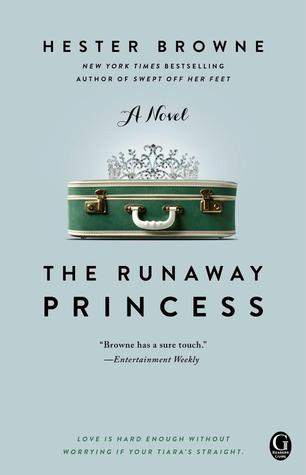
The Runaway Princess by Hester Browne


Amy Wilde is at a party one evening when she meets a man named Leo.  Only after several dates does she realise that he is in fact Prince Leopold, a member of a minor European royal family.  Sounds perfect, right? But Amy is totally unprepared for the change in her life that dating royalty brings - her every move is scrutinised in the papers and she's put on a punishing fitness regime by Leo's family.  When a chance change to the succession laws brings Leo closer to the throne, the pressure on Amy intensifies and her own secrets threaten to become public knowledge.

The Runaway Princess is certainly different from my normal reading but I was craving a bit of brain candy last week and I did dream of marrying a Prince as a young girl (My Mum always wanted me to marry Prince Harry and my older sister to marry Prince William!!).  I liked the premise of the book, how it promised to go beyond the 'happily ever after' and I was in the mood for some light relief.  And on these terms, the book delivered.  It was fluffy and fun and it was always a pleasure to pick it up after being at work all day long.  It's easy to empathise with Amy and Browne had some fun with the minor characters too.

The only problem with this book was that Leo was mind-bogglingly perfect.  I mean, come on!  I could buy that he was sick of the trappings of royalty and just wanted to meet a normal girl, but I couldn't believe that he was that accommodating and non-spoilt, in addition to of course being amazingly handsome.  In fact, a better story-line could have been Amy falling in love with his arrogant brother Rolf, that might have had some more chance for character development.  As in most of the chick-lit I've read, the ending felt very tidy and again, I couldn't believe that Leo was that perfect.

On the whole, I spent a happy few nights with this book in a happy, stress-free place.  It's not high literature, but I did enjoy escaping with it :)

Source: Personal copy (kindle)
First Published: 2012
Score: 3 out of 5

Thursday, 10 January 2013

The Murder of Halland by Pia Juul


The Murder of Halland is novella eight out of the nine that Lyndsay from Tolstoy is my Cat and I are reading as part of our Peirene Press readathon, and part of the Small Epics series.  Bess is a writer living in a small, tight-knit community with her partner Halland.  One morning she is woken by the sound of a gunshot and soon receives the news that Halland has been murdered.  The police start to investigate whilst Bess starts to grieve.  Throughout the process, Bess starts to see her neighbours, friends and family in a different light, and faces up the consequences of the decisions she has made throughout her life.

I should start this review by confessing that I'm not a fan of crime/detective fiction.  I've read a few popular crime books and some Sherlock Holmes, but I just can't get into it.  I know I'm supposed to solve the puzzle of who committed the crime but that's not how I like to read.  Sure enough, whilst reading The Murder of Halland, I didn't spend any time trying to work out who murdered Halland and consequently later events were a surprise to me.  The crime aspect of the book was well written but didn't appeal to this particular reader.  I also can't judge how much it 'dismantles the rules of an entire genre' (quote from the back cover), as I'm not familiar enough with the genre to tell.

Luckily, The Murder of Halland is much more than crime-by-numbers, it's also about grief and coming to terms with the loss of a loved one.  Many of the sections dealing with this rang very true to my own experiences.  There's one chapter in the book where Bess is supposed to go to a library to give a talk (she's a writer) and checking her emails, she finds a confirmation.  In the space of a few short sentences she goes from almost flippancy ("should I create an auto-reply saying my husband had been murdered?") to despair;

"What had I written?  I didn't want to think about work.  Perhaps I would never want to think about writing again.  That belonged to the past and it didn't matter any longer."

Grief has been like that for me too; a roller-coaster of emotions and the constant worry of whether you are grieving properly or not, whether people will judge you for smiling or for leaving the house.  I think Juul's writing will relate to the experience of most people ("If normal everyday life had resumed, the washing needed attention.") and I connected well with Bess.

So a bit of a mixed bag.  The crime sections didn't appeal but the writing was simple and heart-felt, honest about the grieving process.  If you are a crime fan, you'll enjoy this book.

Source: From the publisher, in exchange for an honest review.
Published: 2012
Score: 3.5 out of 5

Thursday, 6 December 2012

Tomorrow Pamplona by Jan Van Mersbergen

Danny is a boxer and he's running hard when he hitches a ride with Robert, a family man on his way to Pamplona to participate in the legendary bull race.  Desperate to get away from his own immediate past, Danny joins Robert and attempts to block certain events from his mind.  But even when you run the past has a habit of catching up with you, as Danny is about to discover.

I think that is quite possibly the shortest summary I have ever written, but Tomorrow Pamplona is like that.  It's a spare book in which not a word is wasted and not everything is explicit.  On the surface it seems like a simple story - Danny running from life - but there's so much going on underneath and it's up to you as the reader to figure it out.  To be completely honest, I don't think I got everything out of this book there was to get; I finished it with more questions than I had answers.  And that was refreshing - too often authors tell you everything, so it was nice to read a book that left it to me to connect the dots for myself.

Tomorrow Pamplona is the second book in the Peirene series 'Male Voices' and it's more overly 'macho' than the previous offering, Next World Novella (my review).  Aside from Danny being a boxer, he's much more 'closed off' than Hinrich was in Next World Novella, much more brief and he keeps his emotions to himself.  There's a lot of stuff about adrenaline and danger and the need to face danger to get the blood pumping.  Rightly or wrongly, these are traits that society generally associates with males.  I felt like Van Mersbergen took me very convincingly inside Danny's head, although I didn't understand everything I found there.  At the end of the book, I was still undecided about whether or not I liked him and I suspect that the his actions and his need to run were all based on false information.

The writing in Tomorrow Pamplona was excellent, as was the depiction of Danny.  But I wanted to know more about Robert, as I couldn't understand why he was so helpful to Danny.  In the beginning he says something about helping hitchhikers in order to hear their stories, but this didn't seem to justify everything he did, including paying Danny's way and putting up with some erratic and snappy/aggressive behaviour.  I felt like Van Mersbergen only scratched the surface of what made Robert tick and it would have been interesting to delve a little deeper.

On the whole, another well written and interesting novella from Peirene.  It's not going to be one of my favourites, but I still enjoyed it.

Source: From the publisher, in exchange for an honest review
First Published in English: 2011
Score: 3.5 out of 5

Thursday, 29 November 2012

Next World Novella by Matthias Politycki

Next World Novella is the first book in the Peirene series on Male Dilemmas: The Quest for Intimacy (I have previously reviewed all of the novellas in the Female Voices series; Beside the SeaStone in a Landslide and Portrait of the Mother as a Young Woman). Hinrich Schepp is an ageing academic in a seemingly happy relationship with wife Doro. He enters their apartment to find her editing one of his manuscripts, a regular occurence.  But things aren't as they always are - Doro has passed away and the manuscript she was editing was Hinrich's long abandoned attempt at a fiction novel.  Using the disguise of story, Hinrich has revealed much about the past and he is shocked by Doro's alterations as they show she knows more than he ever realised.  Sitting down next to her corpse to read, Hinrich has to face up to his past and the disintegration of his superficially happy marriage.

I really enjoyed Next World Novella, more than I expected to.  I loved the wry voice of the author, the black humour and the macabre tone that pervaded the whole book.  There are many details of death included, giving the novella a gothic feel that appealed to me.  Politycki is clever in that he guides you to judge and poke fun at Hinrich but at the same time you can't help but feel sorry for him.  One moment you're judging him for fantasising about attractive waitresses within a few minutes of discovering his wife's corpse and the next you want to stop him from embarrassing himself with his clumsy attempts at an extramarital affair that have you cringing.

Hinrich traces the decline of his marriage to an operation he had to improve his vision; "It was terrible to see the world in such detail, so sharply outlined, all of a sudden!  It dazzled him with a confusingly large number of details". In a sense, this is a metaphor for the whole story.  Hinrich and Doro's marriage looks happy if you only look at it quickly, or not thoroughly.  As soon as you start to dig deeper, the misery becomes apparent.  The majority of the novel is narrated from Hinrich's point of view and it's black comedy at it's best but doesn't elicit too much emotion.  However, the final part is Doro's editorial opinion on the manuscript and this is the heart of the novel.  I had been reading along, poking fun at Hinrich whilst secretly pitying him and I simply wasn't expecting the emotional punch of Doro's words.  It's easy to forget the impact that one person's actions can have on another.  Including Doro's voice at the end made the novella cohesive and more powerful than Hinrich's narration alone could have been.

Putting aside the death and descriptions of the decay of Doro's corpse, Next World Novella will ring true for a lot of readers.  It's easy to ignore slow but serious decline in our personal relationships and it's often only when you look back that you realise how far things have gone.  Hinrich and Doro never found the relationships they were hoping for and both suffered with a lonlieness that must be very common.  The mix of this serious theme and the hints of comedy really worked for me.  It's one of my favourite Peirene novellas so far and will be hard to beat.

Source: From the publisher, in exchange for an honest review.
Edition: Peirene Press, 2011
Score: 4.5 out of 5

Saturday, 27 October 2012

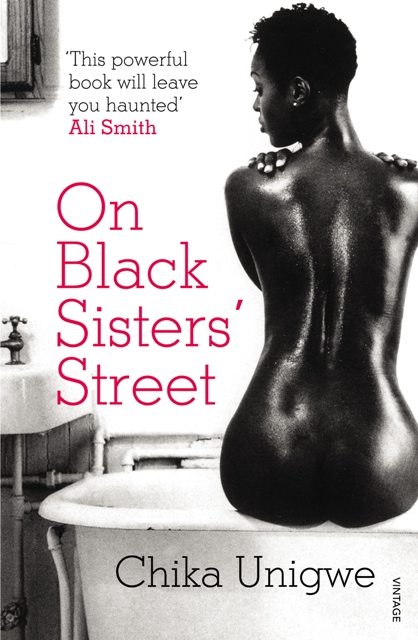
On Black Sisters' Street by Chika Unigwe


Black sisters' street refers to Zwartezusterstraat, a street in the red light district of Brussels famous for its African prostitutes.  Unigwe's story starts with three young women learning the news that the fourth woman they share a house with, Sisi, has been brutally murdered.  Although they have kept their distance from each other in the past, this news brings the three women together and they start to share their stories.   Efe had an affair with a married man as she thought this would lead to money and opportunity.  Abandoned after the birth of her son, she agrees to meet Dele, who offers her a new opportunity in Europe, a chance to provide for her son.  Ama is repeatedly raped by her step-father and seeking escape at any cost.  And Joyce is a Sudanese woman caught up in the war who thinks she has found happiness with a Nigerian man, only to have it snatched away by his prejudiced family.  All three are stateless and at the mercy of the madam and their debt to Dele, the man who arranged their transport to Belgium.   They dream of a life free again, but as Sisi learned, dreaming can come at a high price.

On Black Sisters' Street is a heavy-hitting book.  The stories of all four women contain suffering in lots of different forms and happiness is something only rarely snatched at between periods of hardship.  Although the women come across as smart and resourceful, circumstance has made them desperate enough to make a choice that hopefully most of us will never have to face - the choice to become an illegal sex worker.  And for three of the women it is exactly that - a choice.  Joyce is the only one who arrives in Belgium not knowing what is expected of her.   I really respected Unigwe for showing that prostitution can be something gone into with eyes wide open, rather than telling the 'easier' story of women smuggled to Europe ignorant of what their fate would be.  It made for a far more nuanced and subtle book.

Despite the sections dealing with life in Europe, On Black Sisters' Street is mainly a condemnation of the corruption and problems facing Nigeria.  Money, or the lack of it, is a powerful motivator for all the women, especially Sisi, who has a good degree but can't get a job as she doesn't know anyone who can pull the levers of power for her.  Facing a life of living without, she decides prostitution is a better bet than poverty.  Efe and Ama decide the same.  And in some ways, it does turn out to be a good bet - some of the women manage to repay their debts to Dele and go on to live a life that would have been impossible without prostitution.  Again, the inclusion of this by Unigwe makes for a more complicated book.  I'm glad she showed the shades of grey in the issues covered in the story.

Although there is much suffering in the story, Unigwe's writing keeps On Black Sisters' Street from being too depressing overall.  The characters are realists and there's always an undercurrent of hope that life will get better.  It must have been a hard balance to achieve and I'm impressed with Unigwe for managing it.  Overall, On Black Sisters' Street is a well written and sensitive examination of heavy issues and I would highly recommend it.

Source: Library
First Published: 2009
Edition Read: Vintage UK, 2010
Score: 4.5 out of 5

Sunday, 30 September 2012

Meet Me at the Cupcake Cafe by Jenny Colgan

I'm not the biggest fan of chick-lit but every now and again, when life is stressful, I crave something light and fluffy to read and chick lit is usually what I turn to.  In this offering by Jenny Colgan, Issy is a thirty something working in admin for a real-estate agency who loves to bake the recipes passed on by her baker grandfather.  When she is made redundant from her job, Issy decides to take the plunge and use her redundancy pay-out to open up a cupcake cafe in Stoke Newington.  But running a business isn't easy and Issy has long working hours, a lack of customers and red tape to deal with, alongside working out what to do about her cut-throat property developer boyfriend Graeme.

I'm not an expert on chick lit by any means, but this book was far from the best in the genre.  The basic plot was an interesting one, and I loved how the recipes Issy used were included at the start of each chapter but overall, Meet Me at the Cupcake Cafe was missing a hefty dose of realism. I'm not saying I expect chick-lit to deal with heavy issues all the time, there's nothing wrong with a bit of escapism, but this was ridiculous.  Issy straight away finds a location for her shop, magically has just the right amount of money, is able to open in a matter of weeks despite everything needing a re-fit, gets the first bank loan she applies for, meets the perfect employee by chance and has no issues with health and safety regulations, licencing etc.  If opening a business was really that easy, everyone would do it.  It was also astounding how quickly Issy was able to go from struggling to make ends meet to turning a generous profit.  There was no real sense of the worry involved in starting up a business.

The characterisation was lazy too.  Issy was relatable but almost everyone else was a stereotype from the bad boy boyfriend to the responsible 'other man' looking after his baby brother, to the snobby yummy mummies with designer prams, to the resentful council estate Mum who over-feeds her baby boy with junk, to the builders only wanting bacon sandwiches and commenting on 'posh birds'.  Colgan was clearly trying to say something about class issues but it came across as very clumsy and simplistic.  Colgan does attempt to give these characters some depth by the end of the novel but doesn't quite succeed.  Even the romance part of the novel was lacking as it relied on Issy being completely ignorant about how uncaring Graeme was, which was so obvious in the text that it made Issy look a bit stupid.

My review so far of this book has been very harsh.  It wasn't all bad - Meet Me at the Cupcake Cafe was easy to read and certainly provided some escapism.  But I just don't see why books should be allowed to be so uninspiring just because they are chick lit.  Next time I crave something from this genre, I think I'll stick to Marian Keyes.

Source: Personal copy (kindle)
First Published: 2011
Score: 2 out of 5

Tuesday, 4 September 2012

Into the Darkest Corner by Elizabeth Haynes

Cathy Bailey meets Lee one day at a nightclub and for a while, everything is perfect.  Their relationship is good and all her friends are jealous that Cathy has found someone to settle down with.  But then things start to change.  The signs are small at first - minor jealousy about Cathy going out on her own, a ridiculous suggestion that she give up her job so as to be always there when he has a day off, direct suggestions about what to wear.  But Lee becomes increasingly controlling, taking away Cathy's passport, following her around town and finally becoming violent.  Cathy's caught in a net with no one to turn to as all her friends think Lee is wonderful, that she's lucky to have such a man.  She starts to plan a desperate escape but the violence in the relationship is escalating - will Cathy ever be able to break away?

Psychological thrillers are not something I am generally familiar with, I chose to read this one as I wanted something fast, gripping and escapist to stop me thinking about going back to work!  And Into the Darkest Corner certainly did what I had hoped it would; it sucked me into the story and had me turning the pages as fast as I could to find out what would happen to Cathy.  I am very fortunate to have never experienced domestic violence but for the millions of people across the world who have, Into the Darkest Corner will definitely strike a chord.  Haynes does a good job of portraying how abuse and control slowly creep in, how Lee slowly isolates Cathy from everyone around her so she has no way of leaving him.  He charms her friends to the extent that no one will believe how horrific his behaviour really is.  At first Cathy doesn't even notice the small signs of abuse and the build up is realistic to the extent it's sometimes painful to read.  You want to jump into the book and shout at Cathy to run away without looking back.

Into the Darkest Corner has an unusual structure.  Short sections about Cathy's relationship with Lee are alternated with sections about Cathy's life much later on.  Although this removes some of the tension as we immediately know Cathy survives it also creates tension as the later version of Cathy is clearly physically and emotionally damaged.  She suffers with OCD, particularly relating to checking her flat is secure, is constantly looking over her shoulder for Lee to hunt her down and is unable to properly take care of herself or enjoy life.  She's covered in scars and for the reader the questions from the opening sections are 'what happened to Cathy to leave her like this?  How did the relationship finally end?'  Wanting to find out the answers to these questions kept me reading as quickly as possible, this book was never boring.

The writing in Into the Darkest Corner isn't fantastic or particularly beautiful, but that isn't what this book is about.  It's all about the story and suspense and fear and these parts are executed very well by Haynes.  Anyone who enjoys thrillers would appreciate this book, particularly those who liked S.J. Watson's Before I Go To Sleep as there are lots of similarities in style.

Source: Kindle (personal copy)
First Published: 2011
Score: 4 out of 5

Sunday, 8 July 2012

Prep by Curtis Sittenfeld

Lee Fiora is a smart fourteen year old who dreams of the life of privilege and happiness promised by the glossy magazines for East Coast boarding schools.  When she is accepted to Ault on a scholarship, she has high expectations for her fantastic new life but is soon overwhelmed by those around her.  Lee retreats into a shell, becoming hyper-sensitive to others and unwilling to draw any attention to herself.  She is both fascinated by and contemptuous of the wealth and intelligence of her new class mates and gets into a serious of intensely one-sided relationships with her peers.  At heart a coming of age story, Prep also has a lot to say about closed and exclusive environments.

I'm going to come right out and say that I liked Prep a lot and the main reason for this was that I could identify with Lee completely. At primary school, I was picked out as a 'bright' pupil and encouraged to apply for a selective secondary school where I had to take a series of exams and attend a few interviews to get in.  It wasn't a fee-paying school like Lee's, but it was by far and away the best school in the area in terms of results and wealthy parents got tutors for their children to help them get in.  I was the only person in my new class who hadn't been tutored and I was the poorest person there by quite a way.  Don't get me wrong, my family never struggled, but I was surrounded by people who jetted to the Alps for skiing during half term holidays and spent the summer on Carribean islands; I dreaded the 'what did you do on your holidays?' conversation every September.  Like Lee, I might have developed a bit of a chip on my shoulder and become defensive in the face of so much privilege.

I was also socially awkward as a teen and any shy person will find it easy to relate to Lee.  I understand why other readers find her frustrating as a main character but shyness is not a logical thing - I too used to desperately wish not to be noticed by others and then feel lonely when no one did.  I too was hyper aware of others and thought they they would be hyper aware of me when confident people just don't feel that way.  So whilst at times I wanted to shake Lee, I found her completely believable and reading the book was a bit like revisiting my own teenage years.

That's not to say the book was without fault; the characterisation was excellent but the plot could have done with tightening up a bit.  In the middle sections it dragged and didn't seem to be heading in any clear direction.  Prep was a long book at 400+ pages and could have comfortably lost a hundred of them without the reading experience suffering.

Prep is a book that's not going to work for everyone.  It will work best for fans of The Bell Jar, or for keen observers of human nature, or for anyone who has ever felt shy or underwhelming around others.

Source: Library
First Published: 2005
Score: 4 out of 5

Monday, 18 June 2012

The Language of Flowers by Vanessa Diffenbaugh

Victoria has spent her life in the care system, rejected by many foster parents due to her difficult and violent behaviour.  Now eighteen years old, she is left to fend for herself with nothing but her love of flowers.  Flowers were used in Victorian times to express emotions and Victoria becomes fascinated with this language.  Her talent is spotted by a florist but can Victoria ever learn to function in society?

I liked The Language of Flowers because of the main character, Victoria herself.  I've read many a review of this book where the reviewer bemoans the fact that Victoria isn't likeable and that her actions don't make sense.  And it's true - Victoria is a frustrating, passive individual who makes noises about wanting to improve her life but waits for said life to fall in her lap, that's if she's not busy pushing away people who care about her and rejecting opportunities.  To a functional adult, this makes no sense.  But I didn't mind that Victoria wasn't likeable or function because she was believable.

I don't teach children of Victoria's age but I've taught a few younger versions of her and for me, her character was completely plausible and I felt sorry for her.  As a child she was violent to others and as an adult she's defensive and closed to the point where she can't relate to the people around her, even Renata, who offers her a job, and Grant, who tries to love her.  She has many chances of happiness but at least early in the book, she throws them all away.  I liked that Diffenbaugh chose such a complex individual to write about and think that she had some important points to make about the foster system and how a life lived in it can effect a person.

I found The Language of Flowers to be a gripping read.  Diffenbaugh intersperses chapters about Victoria at eighteen with chapters about the time she spent at ten with the woman who nearly adopted her.  I enjoyed both storylines and found the book hard to put down, even though at times it was like watching a car crash.  The novel was effectively written and pacy, but the writing was secondary to the story and the story took a backseat to character development.

My only criticism is that things improved for Victoria too quickly; I don't think there's many eighteen year olds fresh out of the care system that have the opportunities that she does and I don't think there are many of us that learn to change the habits of a lifetime like Victoria did, even if she took her time to do so.  I thought her character development was well written, but maybe overly optimistic.  There's thousands of Victoria's out there that don't make it.

Source: Library (reserved)
First Published: 2011
Score: 4.5 out of 5

Thursday, 17 May 2012

The Cranes Dance by Meg Howrey


Kate Crane is a soloist for a New York ballet company.  Ambitious and driven, she and her sister Gwen have devoted their whole lives to ballet.  But when Gwen has a mental breakdown, Kate is left alone in New York for the first time.  As she reflects on her relationship with her sister and their sibling rivalry, the threads of her life begin to spin out of control. 

I should start this review by saying that I had a reaction to this book that was very personal to me and led me to experience it in a different way than others would.  Basically, I strongly identified with Kate.  Like Kate I'm a perfectionist, I'm ambitious, I find it hard to share my feelings with others, I suffer with anxiety if I think my 'performance' is not perfect, I turn events over and over in my head and I can be emotionally unstable at times although I'm good at keeping it hidden.  I'm not a ballet dancer but these facets of my personality have been directed towards different things during my life - getting top marks in school, graduating university as the top of my class, becoming a teacher and even to a certain extent building my blog up.  I live in constant fear of being observed teaching as it's something you can never be perfect at no matter what you do and any criticism, no matter how constructive, latches on to my brain and looms larger than any compliments will ever do.

That said, I found reading The Cranes Dance to be an emotional experience.  As Kate descended more into anxiety and extreme emotion, I was right there with her.  Howrey described her emotions and thought processes so beautifully that I was completely swept along with and invested in Kate.  I think even readers that don't identify with the main character in the same way would still be caught up in the emotion.  Towards the latter sections of the book, I literally couldn't put it down because I had to know where Kate's journey would take her.

The sections dealing with Kate and Gwen's sibling relationship were very well done.  I have an older sister I am close to and thought Howrey did a good job at explaining the mix of love, jealousy, competition, pride and admiration that can exist between sisters.  I also enjoyed the ballet parts of the book, they were interesting but not over done, ballet was more the backdrop to the main story than the story itself.

Objectively, The Cranes Dance was too long in parts and risked losing momentum in the middle sections.  Perhaps it wasn't the best idea to start with a long explanation of the story of Swan Lake, even if Kate's voice made it more fun.  But I can't be objective about this book as I had such a subjective response to it and for me it was all about the emotion.  This one packs a punch.

Source: From Vintage Books, via NetGalley.
Published: May 15th 2012
Score: 4.5 out of 5

Saturday, 17 March 2012

The Translation Of The Bones by Francesca Kay


The Translation of the Bones is the first of the books from the Orange Prize long-list for 2012 that I have read, although I plan to read many more.  The story centres around Mary-Margaret O'Reilly, a woman with learning difficulties who claims to see blood on a statue of Jesus whilst she is cleaning her local church in Battersea, London.  Despite Father Diamond's best efforts, this 'miracle' becomes a bit of a sensation and it sets off a spiral of events that will have devastating effects for the residents of the parish, including MP's wife Stella, Mary-Margaret's housebound mother Fidelma, and Alice, whose son is serving a tour of duty in Afghanistan.

The Translation of the Bones is largely a quiet, understated book.  The central themes are the many varieties of religious belief (the mircale is left intentionally ambiguous) and the power and devastation of motherhood.  The main characters are introduced in ways that make it easy to gain insight into their lives without Kay writing too many words about each.  Then about fifty pages from the end the tone completely changes as the book becomes much darker and the reader can see the effect on the characters that have been built up so cleverly throughout the preceding sections.  I couldn't put this book down whilst reading the end.

My favourite character from the cast was the priest, Father Diamond.  When we meet him at the beginning of the novel he is worn down by his inner-city parish and on the verge of a crisis of faith.  When something terrible happens in his church, it seems as if his belief will be gone forever, but instead he finds a way back to his faith.  His story and quiet belief provides an interesting contrast to the fanatical belief and conviction of Mary-Margaret.

The Translation of the Bones is a very British book.  Although the main themes can be easily understood by everyone, there are a lot of cultural references that I think would only make sense to Brits - MP expenses scandals, Tony Blair's "we don't do God" comment, the rise of the Conservative party and boarding school culture.  The explanations of religion too make sense in the British context and wouldn't be as powerful to readers in more religious countries where faith is openly discussed,

All in all I was impressed with The Translation of the Bones, but it didn't blow me away.  It might be short-listed, but I don't think this is going to be the winner.

Verdict: Quiet, understated read about faith and family.
Source: Library (reserved)
First Published: 2011
Score: 4 out of 5