Showing posts with label ya. Show all posts

Sunday, 18 January 2015

Project 1001: Two Book Reviews

My two 1001 Books projects have got off to a flying start.  From my adult list, I picked up Michel Faber's Under the Skin, which I received for Christmas.  I was already a Faber fan before starting this novel, the fourth of his that I have read.  And it's completely unlike the others, being dramatically different in tone and content to his more famous work The Crimson Petal and the White. 

The story opens with Isserley, who spends her time driving along the roads of the Scottish Highlands, looking to pick up male hitch-hikers, but only the large, muscular ones.  Apart from that, there's nothing else I could say about this novel without ruining how unexpected, different, surprising and chilling it is. There's so much I could rave about, particularly concerning Faber's brilliant use of language, but the reveal in this book is so wonderful that I wouldn't want to spoil it for anyone.  Just trust me when I say that it is an amazingly gripping book, one that will lodge into your brain.  There's one scene in particular that I can not get out of my head, and that has made me completely re-evaluate a certain aspect of my life.  Under the Skin is a book that seeks to challenge and confront, and it does so very cleverly.  It's a book I will remember and think about for years to come. If you like thrillers, sci-fi, or books about ethical issues, you really need to pick this one up. 5 out of 5 stars.

From my children's list, my first selection was Lian Hearn's Across the Nightingale Floor, mainly because it was readily available in my library.  The main character, Takeo, is a member of a secretive religious group called the Hidden in a fantasy world based on Japan, when he witnesses the massacre of his friends and family. Escaping with the assistance of the mysterious Lord Otori, Takeo comes to learn more about his past, and the supernatural talents he has inherited from his ancestors.  When he discovers who is responsible for the massacres of the Hidden, and for the autocratic rule large parts of the island are suffering under, he becomes involved in a plot to assassinate the tyrannical Lord Iida.

Across the Nightingale Floor is best described as a crossover novel between YA and adult.  It's shelved in the adult section of my library but the two main protagonists are teenagers, and a lot of the plot deals with Takeo finding out who he is and what is important to him.  What I liked about the novel was that Hearn didn't shy away from darker issues or pretend that everything was always going to be OK.  Death and grief are handled sensitively but straight-forwardly, without talking down to the reader at all.

I enjoyed reading Across the Nightingale Floor, as it's always good to find fantasy set in non-Western contexts.  I liked reading about the belief systems of the people in Hearn's worlds, and the different approaches to marriage and politics.  Although the beginning and end sections of the novel were pacy and engaging, the plot did seem to lag in the middle, and sometimes I had trouble keeping track of who was related to who, and what others thought of them, as there was much in the way of intrigue going on.  Still, I enjoyed it enough to want to continue with the series.  3.5 out of 5 stars.

Tuesday, 14 October 2014

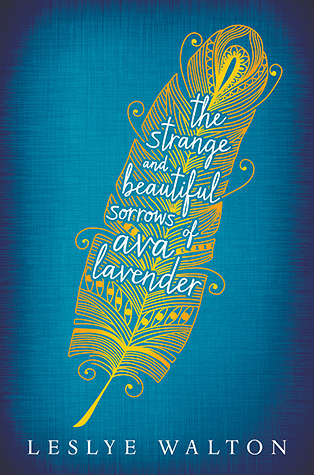
The Strange and Beautiful Sorrows of Ava Lavender by Leslye Walton

Ava Lavender is the daughter of a woman scorned in love and the granddaughter of a woman haunted by the ghosts of her past.  She also happens to have wings, which she was born with.  In The Strange and Beautiful Sorrows of Ava Lavender, Ava traces the history of the women in her family, and the ways in which love in all its forms has caused them pain.  Their stories lead naturally on to her own, as her wings make her the focal point of a dangerous obsession.

The Strange and Beautiful Sorrows of Ava Lavender is an unusual book that is hard to describe.  The thing I enjoyed most about it was the quirky tone and narrative voice.  Walton's world just hints at the magical, and at the fairy tale, a world in which wings, ghosts, children with different coloured eyes, and cakes infused with the feelings of the baker, are possible.  I love books with atmospheres like this - our normal world painted in vivid technicolour.  Ava Lavender is as a result a very visual book, and one that would be great turned into a film.

I mentioned above that this story is a bit like a fairy tale, and therefore there is a darker side lurking underneath the surface.  Emilienne and Viviane (Ava's mother and grandmother) are troubled by love in rather ordinary ways, but Ava really experiences the darker side of obsessive love.  The later sections of the novel deal with brutal events, which seem even harsher set against the imaginative setting. I found what happened to Ava to be problematic, not because I don't think violence against women shouldn't be written about, but because there was a glamour to the scene.  Ava's sorrows are beautiful, it's all in the title, and her attack and it's consequences are written about in the same, fairytale, beautiful-tragic way.  When really it's just tragic and there are fewer things in life that would feel less beautiful.  I'm sure this was completely unintentional, but it still bothered me.

I found that I connected with Emilienne and Viviane better than Ava herself, as Ava remained a bit of a mystery throughout the novel.  I particularly connected with Viviane's story, her years spent pining after a lost love that didn't really turn out to be a love after all.  Including all three women in the narrative was definitely a good decision.

On the whole, I did enjoy The Strange and Beautiful Sorrows of Ava Lavender.  The writing style and the magical elements worked fantastically together, and it was a pleasure to pick up.  Fans of Sarah Addison Allen will enjoy this one.

Source: From the publisher, in exchange for an honest review.
Published: 2014
Score: 3.5 out of 5

Friday, 12 September 2014

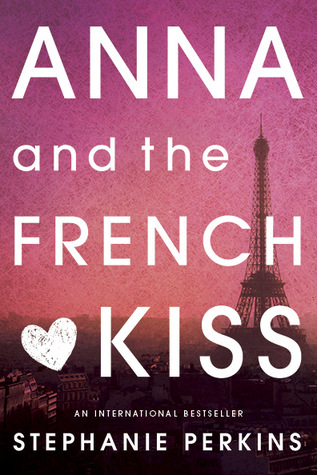
Anna and the French Kiss by Stephanie Perkins

I don't read much YA, but I would have to be living under a rock to not notice the massive success of this series.  With the third instalment, Isla and the Happily Ever After, recently published, I decided it was time to give Anna a go.  The basic story-line goes as follows - Anna is looking forward to starting her senior year and getting closer to her almost-boyfriend Toph when her father decides to send her to boarding school in Paris.  At first Anna is determined to hate being uprooted from her life in America, but she soon makes new friends.  One of these is Etienne St. Clair, who she finds herself developing feelings for despite him already being in a relationship.  As the year goes on, Anna and St. Clair have to deal with their conflicting feelings.

I can see why Anna and the French Kiss is so popular.  It's super fun to read and the romance between the two main characters is well written.  There's no insta-love here - Anna may be attracted to St. Clair initially, but we only see her fall in love as their friendship develops and they spend more time together.  At first they have an easy-going friendship, but as time goes on, they become closer and support each other through some major life events, and it was good to read a relationship grow in such a realistic way.  It also helps that Anna is a likeable main character.  She's aware that she shouldn't have feelings for St. Clair and so does her best to suppress them and just be his friend.    She isn't perfect and comes across as a normal, relatable teenage girl, and I'm sure this has contributed to this book being so loved by so many.

So I liked Anna, but I wasn't so keen on St. Clair.  Yes, he is described as being dreamy, and he is a great friend to Anna, but I thought he was terrible in the romance department.  He knows his friend Meredith has feelings for him, and chooses to let her hope rather than address it.  He's in a relationship with Ellie, despite having deep feelings for someone else.  He's not technically cheating, but he is on an emotional level, and he continues to stay with Ellie despite knowing that Anna likes him back.  I know that some of this is necessary for the plot, but St Clair just comes across as a bit spineless.  I was also sick of Perkins constantly reminding me that St. Clair is short - who cares?!

Anyway, Anna and the French Kiss was a really fun read.  It's not perfect but it's quick and engaging and I enjoyed reading it.  I'll definitely be picking up the next two books.

Source: Personal copy (kindle)
First Published: 2010
Score: 3.5 out of 5

Sunday, 7 September 2014

The Sisterhood of the Travelling Pants by Ann Brashares

Carmen, Tibby, Lena and Bridget have been friends for years and are used to spending their summers together.  But when circumstances force them to all go separate ways one summer, they decide to keep in touch through letters and by exchanging a pair of blue jeans, that miraculously suit each and every one of them.  As the jeans travel with the girls across the world, they all have some defining experiences.  Carmen thinks she is spending a quiet summer with just her Dad, only to be confronted with a big surprise.  Lena is off to Greece to visit her grandparents, Bridget is at a soccer summer camp and Tibby is stuck at home, working in a shop.  Through the stories of the four girls, Brashares addresses common teenage experiences such as falling in love for the first time and coming to terms with new step-parents.

I really enjoyed The Sisterhood of the Travelling Pants (although not it's awful cover!).  I'm currently reading Moby Dick, so I picked up this book as I needed something light, quick and engaging to go alongside it.  And Sisterhood certainly filled that brief.  Within a few pages, I was hooked into the story and the switching of perspectives between the four girls made the pacing really snappy. It's sometimes very satisfying to be reading a book that you can immerse yourself in completely and get through in only a few days.

What's clever about Sisterhood is that Brashares manages to create four main characters that are diverse enough for every reader to relate to one of them, or at least one of their experiences.  Tibby feels left behind and like she doesn't quite fit in anywhere.  Bridget is loud and confident, but rushes into sexual experiences too quickly.  Lena struggles with shyness and finds it hard to express how she feels, and Carmen has to deal with a new step-family.  I personally related most to Lena, as I know that I am too much of a closed book sometimes, so I enjoyed her character development and how she started to learn to open herself up and share what she was feeling.

I finished Sisterhood excited to read the next volume in the series.  I won't be picking it up straight away, but I'm sure I will be reading this who series sooner rather than later.

Source: Personal copy
First Published: 2002
Score: 3.5 out of 5

Friday, 4 July 2014

Catching Up: Mini Reviews

Thank you to everyone who took the time to congratulate me and comment on last week's post about the birth of my son, Giles.  One of the best things about blogging is the friends that I have made, and I was reminded of that when I read through all of the comments :)  I'm continuing to recover very well, and am feeling almost normal again.  Of course, life itself is a bit of a blur of feeding, nappy changing and trying to get a very wide awake baby to go to sleep at 3am in the morning.  I have been able to read a bit (kindles are great for one handed reading!) but most of the following reviews are for books I finished up whilst waiting for Giles to arrive.

1. A Game of Thrones by George R. R. Martin
This was a reread that I started as soon as I became overdue and needed distraction!  I loved this book the first time around and loved it even more the second.  I picked up on more of the clues for what was to happen in the future, I was able to see how much the characters had developed and I liked the simplicity of the plot-line.  This is the only book in the series where most of the main characters are together for most of the time, which makes it more coherent than the other volumes.  Escaping to Westeros was just what I needed, even if I can't see myself re-reading the rest of the series any time soon. 5 out of 5 stars.


2. The Constant Princess by Philippa Gregory
When I first started reading historical fiction, I quite liked Philippa Gregory.  I soon grew out of her, but her books are kind of a guilty pleasure for me.  The Constant Princess is about the life of Catherine of Aragon, and focuses particularly on her marriage to Arthur, and the beginning of her subsequent marriage to Henry VIII after his brother's death.  As always, Gregory takes a bit of a liberty with the facts but this book was a quick, fun read.  3 out of 5 stars.


3.  Guns by Stephen King
As a Brit, the debate about gun ownership in the USA really fascinates me.  Here, guns are a non issue - people aren't allowed to own them, and I can't think of anyone I know who would want to.  Only small sections of the police are armed, and most people would be scared rather than reassured to have a gun in the house.  So I'm not going to comment on King's arguments, which seemed logical and practical to me, as I'm not the intended audience.  I will say that the whole thing felt a bit rushed, as if it were hurried for publication, and this ruined my enjoyment of his writing a bit.  3 out of 5 stars.


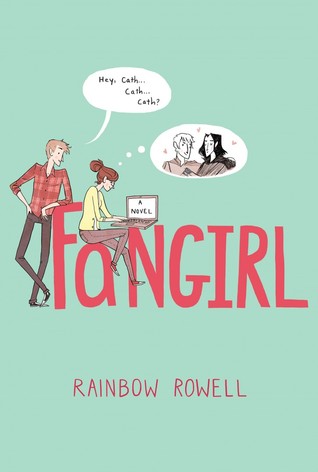
4. Fangirl by Rainbow Rowell
This one I read after Giles arrived, in the night time moments when he wasn't quite ready to be put into his Moses basket yet and just wanted to be held.  It's about twin sisters Cath and Wren, who begin to grow apart when they start university.  I really liked the main character, Cath, and could relate to her shyness and awkwardness around people.  The love story was very sweet, and the whole thing was extremely hard to put down.  I've come to the conclusion that I just enjoy Rowell's young adult fiction more than her adult books.  4.5 out of 5 stars.


Saturday, 17 May 2014

Inkspell by Cornelia Funke

"This book taught me, once and for all, how easily you can escape this world with the help of words!  You can find friends between the pages of a book, wonderful friends!"

The Inkheart books are pure comfort reads for me.  I first read them whilst I was at university and I think I finished up the whole trilogy in a week or so.  I just loved the concept of being able to read yourself in or out of a book, of characters coming to life and changing their stories in front of your eyes. What bookworm hasn't dreamt themselves into the pages of their favourite novel?

Inkspell is the second book in the series (I read and reviewed Inkheart in December), so this review contains spoilers for the first volume.  It's been a year since the events of Inkheart, and Meggie is unable to leave her adventure behind her, remaining utterly obsessed with the Inkworld.  Dustfinger is of course still trying to find his way back into the novel, and he finally seems to have come across a reader capable to reading him and Farid into the Inkworld, Orpheus.  But when Orpheus goes back on his word and Farid is left behind, he seeks out Meggie to try to find another way in.  Despite knowing the dangers of what she is doing, Meggie can't resist reading herself and Farid into the pages of the story.  However, it turns out that the story is a living, breathing thing, that has changed beyond Dustfinger's experiences and the author's intentions.  A dangerous leader, the Adderhead, is rising in the South, and the Inkworld has become a treacherous place for all of the original characters from Inkheart.

It goes without saying that I loved Inkspell; I wouldn't be rereading it if I didn't.  I love that we actually get to go into the Inkworld for the first time in this volume, and that the cast of characters is expanded.  My favourite of the new characters is the Black Prince, the leader of the Motley Folk, a band of travelling performers, and his pet bear.  I love the inventiveness of the Inkworld and also it's straightforwardness - there is a clear line between good and evil.  Normally this is something that would bother me, but it fits really well with the escapism of the novel and the way that the atmosphere captures childhood fantasy classics.

Unfortunately, Inkspell isn't quite as good as Inkheart.  It's longer and more meandering, and probably could have been cut down a bit.  I know that Funke needed to get her characters into the Inkworld for the trilogy to continue, but I find it hard to believe that Meggie would have ever have read herself in, given her experiences in the last novel and Mo's opinions of the world.

Still, Inkspell is perfect comfort reading that allows you to escape into a magical fantasy world.  It's old fashioned in tone and manages to take me back to my childhood without patronising me.  I remember being disappointed with Inkdeath, the final book in the trilogy, when I read it the first time, so I can't wait to get on to rereading it so I can see if my opinion has changed.

Source: Personal copy
First Published: 2005
Edition Read: Chicken House, 2006
Score: 4 out of 5

Tuesday, 3 December 2013

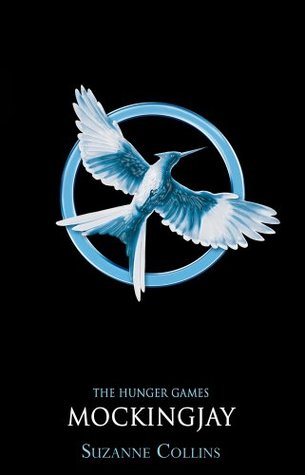
Mockingjay by Suzanne Collins (Hunger Games #3)

After watching the Catching Fire film, I was extremely keen to pick up Mockingjay and find out what happens to all of the characters in the final volume of the trilogy.  My expectations were high, as I enjoyed The Hunger Games and simply loved Catching Fire, which I thought was the better book of the two.  Be warned: there are spoilers in this review.

Mockingjay starts almost right where Catching Fire left off, with Katniss settling into District 13 and coming to terms with the destruction of her home district, 12.  Peeta has been captured by the Capitol, although Gale has managed to rescue Katniss' mother and Prim and bring them to 13.  Katniss is supposed to be playing the role of the figurehead of the revolution, but she is uneasy with the implications of this and struggles with what she should do.  Meanwhile, the war rages on and it becomes apparent that Peeta is being tortured under the authority of President Snow, maybe even beyond recognition.


I had mixed feelings about Mockingjay.  I so wanted to like it, and it did have many positive elements, but ultimately I closed the book feeling a bit let down.  To start with the positives;  I enjoyed seeing what District 13 was like and the military fashion in which the people there had prepared themselves for war with Snow.  I like that Collins didn't shy away from the brutality of war, and that there were quite a few darker scenes included, especially later in the book.  War is merciless, and Collins most certainly gets that message across.  Katniss' confusion at what role she should play came across as genuine, and it felt realistic for someone who may have had a big role to play symbolically, but who hadn't been involved in any strategic planning etc.  I'm glad Collins didn't go down the route of having a super-Katniss save the world.  And the twist where Katniss shoots someone different at the end was clever indeed, I did not see that coming!

Unfortunately, there were negatives to go alongside these positives.  Plot-wise, I liked that Peeta had been tortured in such a way to corrupt his memories and turn him against the rebels.  However, after all these detailed passages about how new and permanent this hijacking torture method was, he seemed to recover at crucial points pretty conveniently and quickly.  Also, Katniss had a tendency to get herself injured at key moments, which means that too often Collins told us what happened rather than showed us.  Katniss is acquitted at the end and all that gets is a paragraph from Haymitch - I wanted to actually see it happen and I was frustrated with the action scenes being cut off so abruptly.  The pods in the city were just silly and felt like an unnecessary nod to the earlier Hunger Games plots.  But most of all, although I liked that war was shown as being brutal, Collins did too much without enough impact.  I wanted to feel the deaths and I just didn't, and I never felt the emotion of being in a war properly.

On the whole, Mockingjay is still a good book.  It was certainly a page-turner and I did enjoy it, it was just a bit of a let down after how strong the previous two volumes in the trilogy were.  It's worth picking up to find out what happens in the end, but be prepared that it may not be as amazing as you are hoping.

Source: Personal copy
First Published: 2011
Score: 3.5 out of 5

Thursday, 31 October 2013

Catching Fire by Suzanne Collins (Hunger Games #2)


I am terrible at reading and completing series of books.  I read The Hunger Games back in March 2011 and only now have I got around to reading the next book in the series.  Hopefully I won't wait another two and a half years to pick up Mockingjay!

Warning: this review contains spoilers for The Hunger Games and Catching Fire.  If you haven't read them yet, proceed with caution!

Catching Fire picks up a few months after the end of The Hunger Games.  Katniss and Peeta are living with their families in Victor's Village and trying to get life somewhat back to normal.  But life in most of the districts is far from normal; Katniss' trick at the end of the Hunger Games has been viewed as an act of rebellion against the Capitol and violent uprisings are spreading.  With their victory tour coming up, President Snow himself pays Katniss a visit and threatens her - she must find a way to calm the districts, or there will be severe consequences.  But things have already gone too far for that; Katniss is a symbol of a growing revolution and she's considered too dangerous to live a normal life.

I kept putting off reading Catching Fire because I thought that Hunger Games had a strong ending and actually worked well as a stand-alone book.  But my husband has read and enjoyed the whole series, and I want to see the new film when it comes out, so I decided to finally take the plunge.  And I'm genuinely glad I did.  It was great to go back to District 12 and find out a bit more about what life is actually like in Panem for ordinary people.  I enjoyed the Victory Tour as we got to visit several other districts with Katniss and Peeta and the hints of rebellion were well done.  When there's a crackdown in District 12, it doesn't come as a surprise.

What I was most worried about in this book was the fact that I already knew that Katniss would have to go into the arena and play the Hunger Games again.  I thought this would come across as overly repetitive from the first novel and that it was a bit of a lazy plot device.  But actually, it worked.  The Capitol need to eliminate Katniss but she is far too popular for them to murder her, as that would incite a genuine revolution.  So it makes sense to hold a special Victor's edition of the Games and hope that it solves the problem for them.  I liked meeting the previous victors and the Games themselves had a very different feel to them, there was far more co-operation are more desire for survival.

The only thing that annoyed me in this novel was Katniss herself.  I think she's a great character but she's not too good on picking up on clues.  I felt like it was obvious that there was some kind of underground conspiracy going on with regard to the Games themselves and District 13, but she was truly oblivious despite numerous clues.  Whilst the ending didn't come as a total surprise to me, as I had figured out something was going on, there was enough of a cliffhanger to make me keen to pick up Mockingjay over the next couple of months.

All in all, a fast-paced and enjoyable read that stands up well next to it's predecessor.

Source: Personal copy
First Published: 2009
My Edition: Scholastic, 2011
Score: 4 out of 5

Thursday, 3 October 2013

Four Mini Reviews

Although I've been reading just as much as ever, my review writing and posting has kind of gone out of the window since the start of the new academic year!   Rather than go back and write individual reviews, I've decided to just write brief thoughts on some of the books I have read recently.

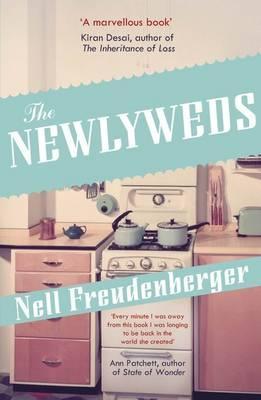
The Newlyweds by Nell Freudenberger
Amina met her new husband, George, on an online dating site in which Western men can meet non-Western women.  After leaving behind her life in Bangladesh for a new one in America, Amina has the complexity of a marriage to deal with, as well as getting used to a brand new culture.

I found The Newlyweds to be a simply stunning book.  It was well written and showed life in full technicolour glory, with all it's trials, complexities and disappointments.  Despite the unconventional way that George and Amina came together, the ups and downs of their marriage and the development of their relationship is one that most people would be able to relate to.  The issue of infertility was dealt with sensitively and realistically, and all of the characters have to face some hard truths.  There was a wonderfully bitter-sweet ending, in which all of the characters got what they thought they had wanted, only to question whether they wanted it at all.  Don't expect a fairy-tale.  5 out of 5 stars.

Fevre Dream by George R.R. Martin
I am a big fan of the Song of Ice and Fire Series, so was keen to pick up Fevre Dream for the RIP VIII challenge.  Abner Marsh is a destitute steamboat captain on the Mississippi river when he is offered a lucrative proposal by Joshua Yorke, a man has odd eating habits and keeps strange hours.  As you might have guessed, Joshua is a vampire and Abner is soon pulled into the murky and blood-thirsty world of vampire politics, when Yorke comes into contact with a vampire that leaves a trail of horror behind him.

If you like Anne Rice, you'll love Fevre Dream.  It's got the same atmosphere and I loved the idea of vampires on steamboats on the historical Mississippi.  It had some genuinely creepy moments, the story moved on at a decent pace and Martin may have come up with the idea of True Blood before the TV show.  All in all, it was good fun and an ideal autumn read.  3.5 out of 5 stars.

Neverwhere by Neil Gaiman
Another RIP read.  There is a parallel London alongside real London, populated by the people that have fallen through the cracks of modern society.  When Richard Mayhew takes pity on an injured girl, Door, he becomes sucked into London Below, full of monsters, angels and knights.  There really is an angel at Islington and friars at Black Friars tube station.  As he helps Door find out what happened to her family, he comes up against danger at every step.

As always with Neil Gaiman, I was in awe of his creativity and the genius of his ideas.  However, something about Gaiman's writing just doesn't click for me and this prevents his books from being truly enjoyable.  I admire them, but I don't love them.  I did enjoy Richard's character growth and the choice he eventually makes about who he wants to be, but I just couldn't connect with the writing and that made the whole experience sadly underwhelming.  3 out of 5 stars.


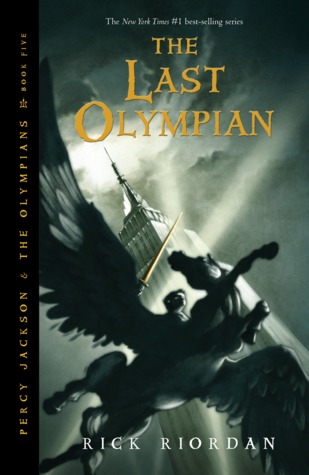
The Last Olympian by Rick Riordan
In the last volume of the Percy Jackson and the Olympians series, Percy, Annabeth and the rest of the half-bloods must battle to save Mount Olympus from the invading Titans, and the Prophecy about Percy's 16th birthday is finally played out.

I don't want to say too much about this one as I don't want to spoil the ending of the series, but I found it to be a most satisfying finale to the whole thing.  As always, the events were fast paced, the plot was action packed and there was a good amount of character development mixed in for good measure.  In fact, the whole thing wrapped up so nicely that I'm not sure why Riordan went on to write the Sons of Olympus series, featuring some of the same characters.  Although I didn't enjoy this one quite as much as The Battle of the Labyrinth, it still gets top marks for being such a great final volume.  The whole series was such fun and I loved racing through them.  5 out of 5 stars.

Have you read any of these books?  If so, I'd love to know what you think of them.

Saturday, 21 September 2013

The Battle of the Labyrinth (Percy Jackson and the Olympians #4) by Rick Riordan


Book 4 in the series!  In real life I binged on these books, reading them one after the after in a matter of days, but I've been trying to spread out my reviews so as not to overwhelm you with all the Percy Jackson!  If book three, The Titan's Curse, was the first one in which more mature themes are included, book four continues that.  Percy and his friends must go into the mythical labyrinth from the Minotaur story in order to prevent it from being used against Camp Half-Blood by Luke and Kronos.  As things gear up towards the epic showdown coming in the final volume, Percy must make a tough decision; whether to stay and fight, or to take the easy way out.

As always with this series, spoilers ahead!

The Battle of the Labyrinth is my favourite volume in the entire series.  Part of the reason why is that I just love the concept of the Labyrinth itself, an ever growing and changing thing that is susceptible to dark influences as well as light.   It's a dangerous place, full of endless twists and turns, mythical creatures and seems to almost have a dark force in itself.  I liked that the clue to solving the labyrinth came from a mortal, something that of course would have been overlooked by Luke and Kronos.

Speaking of Kronos, in Battle of the Labryinth we really get to see why creatures, gods and half-bloods are turning against Mount Olympus.  Greek mythology is stuffed full of minor players, who have been ignored or neglected by the major gods.  Being made to feel important is extremely seductive, and it's good that we get something from Riordan beyond 'they picked the bad side because they were evil'.

But what I love most about this book is the scene where Percy ends up on Calypso's island.  At this point in the story, his life is basically a battle with more to come, as well as the prophecy he is dreading.  Calypso's island and life is idyllic and she offers him the opportunity to stay there and pretty much avoid all of that bad stuff going on in his real life.  It can be very hard to turn away from something that makes you happy in order to do something right, especially if the 'right' path isn't the easy one.  I loved that Percy had to make this choice, and I think that it's a great message for younger readers of the novels.

As with all the books of the series, Battle of the Labyrinth is fast-paced and full of action.  Percy's voice is still witty and a joy to read.  I think I enjoyed this book the most out of the series as it's 'grown up' but not completely taken up by war, as the final one is.  This means there's more time for fun and character development, as well as plot.  The only thing I'm not too keen on is the introduction of Rachel Elizabeth Dare, the regular human who helps Percy through the Labyrinth.  She's also there to add tension to the Percy and Annabeth 'relationship', which I get, but she's just a bit too perfect for my liking.  Annabeth feels a lot more real.

But that's a minor complain, I just love this book!

Source: Personal copy
First Published: 2008
My Edition: Disney Hyperion, 2009
Score: 5 out of 5

My reviews of the other volumes in the series:

Thursday, 5 September 2013

The Titan's Curse by Rick Riordan (Percy Jackson and the Olympians #3)


The Titan's Curse is book three in the Percy Jackson and the Olympians series, which follows the adventures of a demi-gods living in a world in which Greek mythology is real.  I've been loving the series so far, although the second volume, The Sea of Monsters, wasn't quite as good as the first, The Lightning Thief.  In The Titan's Curse, Percy and his friends are helping Grover bring two new half-bloods to camp when Annabeth is kidnapped. The quest to rescue her and the goddess Artemis is riddled with many dangers, as the Titan lord Kronos is steadily gaining in power.

There are spoilers ahead!

The Titan's Curse is by far the most mature entry in the series so far.  It is of course still action-packed and full of Percy (or Riordan's) humour, but this is the point in the series where things start to get more real and serious.  Percy and his friends are growing up and the story reflects that.  Just like in book two, Percy again has to come to terms with the fact that being the son of Poseidon doesn't mean that everything is going to go his own way.  As well as having Thalia and the two new half bloods to contend with, he isn't selected for Annabeth's rescue quest despite being desperate to go.   Of course he ends up sneaking along anyway, but I liked that Riordan wrote him not being chosen, no matter how much he pleaded.  In life, we don't always get the things we desperately want, no matter how much we want them, and part of growing up is learning that.

We also get the first real deaths of the series in The Titan's Curse.  Up until now the adventures have all be fun, but there's been no sense of danger.  When Bianca is killed, that all changes and it's a sign that the build up to the end of the series has started.  Alongside that, we also get little hints at why so many half bloods, minor Gods and monsters are tempted to join Kronos; we get to see that the Olympian Gods aren't perfect and that there are shades of grey in the story.  A major plus point, as far as I'm concerned!  

As all of the main characters are growing up, the issue of relationships becomes much bigger in this volume.  Annabeth's kidnap forces Percy to think about what she really means to him and there is some pretty heavy hinting of a future relationship going on.  There's also the Hunters, a group of immortal teenage girls in the service of Artemis who basically choose immortality in exchange for turning away from boys forever.  It's interesting that we see the stories of two girls who choose this and of Annabeth, who is offered this but ultimately turns it down.  

I thought the ending of this novel was probably the strongest part.  Having returned triumphant from his quest, Percy is shocked to find the Gods voting on whether or not he should be allowed to live, given the prophecy that Olympus might be destroyed when he turns sixteen.    It's interesting that he chooses to keep Nico's parentage a secret, knowing that a child of Hades would be labelled/judged and not welcomed.  This shows Percy is definitely growing up and realising that things are not as simple as he once thought, even on the 'good' side.

All in all, The Titan's Curse is one of the best books in the Percy Jackson series.  I'm glad to see that things improved again after The Sea of Monsters.  if you enjoyed the action and adventure of the first two books, you won't be disappointed by this one.

Source: Personal copy
First Published: 2007
My Edition: Disney Hyperion, 2008
Score: 4.5 out of 5

My reviews of the rest of the series:

Friday, 23 August 2013

The Sea of Monsters by Rick Riordan (Percy Jackson #2)


As soon as I finished reading The Lightning Thief (my review), I went straight on and read The Sea of Monsters.  This review will contain spoilers for both volumes in the series.

At the end of The Lightning Thief, Percy had rescued Zeus' lightning bolt with the help of his friends Annabeth and Grover.  He has learned that it was Luke who betrayed him and attempted to warn the Gods about the threat of Kronos, with no luck.  At the beginning of The Sea of Monsters, Percy begins to get strange dreams about Grover and eventually discovers that Grover is being held captive by a cyclops in the Sea of Monsters.  Also, the tree that protects camp half-blood has been posioned and the suspicion has fallen on Chiron. The only thing that could save it is the Golden Fleece, hidden deep in the Sea of Monsters.  Annabeth and Percy rush to save their friend and their camp, without realising that they might be playing into Luke's hands after all.

The Sea of Monsters is a good sequel to The Lightning Thief, but I didn't enjoy it as much as the first volume.  Having since read all five books in the series, it remains my least favourite.  It is still very good and still full of Riordan's neat little touches, like locating the Sea of Monsters in the Bermuda Triangle, but it's just not as magical.  Although there is a complete adventure in the book, a lot of the plot points are setting up for later events, for example when we find out more about Annabeth, Thalia and Luke, and when we get to see on board Luke's ship.  Percy's world is being expanded by Riordan, but we don't get to see the pay-off of this until later in the series.

Having said that, I loved the characters and character development in this novel.  Having spent the whole of The Lightning Thief thinking that he was the most important demi-god around and that being a child of the Big Three is extremely rare and special, Percy has to deal with the double whammy of both having a half-brother and the return of Thalia, the daughter of Zeus.  His half-brother is a cyclops, which I found interesting, especially as Percy is initially repulsed by this himself.  We get to see him mature a bit as he comes to realise that life is much more complicated than a prophecy.

My favourite scene in the novel was when Annabeth and Percy are sailing past the Sirens, and Annabeth wants to hear the Siren song.  It's just perfect as it reveals so much about her character, her excessive pride and the way she thinks she can do things better even than the Gods. It's good to see that Riordan is creating flawed characters, even though they are demi-gods. The interaction between Percy and Annabeth in the scene makes their friendship stronger and sets up what will happen later on. 

On the whole, The Sea of Monsters is a fun, action packed novel that is still wonderful escapism.  I finished the book eager to move on to the next volume in the series.

Source: Personal copy
First Published: 2006
My Edition: Disney Hyperion, 2008
Score: 4.5 out of 5

Sunday, 18 August 2013

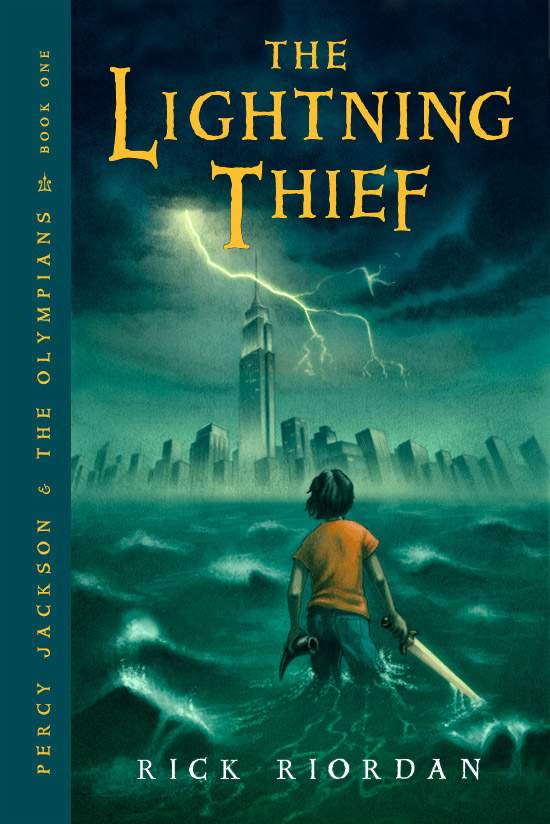
The Lightning Thief by Rick Riordan (Percy Jackson #1)


Percy Jackson is a twelve year old boy with a bit of a troubled past. Wherever he goes, strange things keep on happening to him, resulting in him being kicked out of every school he has ever attended. When the story starts, Percy is attending Yancy Academy, a private school for troubled children.  When the class go on a field trip with their Latin teacher, he is attacked by a strange mythological creature in a museum and things begin to turn very strange indeed.  Percy's best friend reveals he is a satyr, his Latin teacher is actually a centaur and Percy has to seek protection at Camp Half-Blood as he is a demi-god, the son of a Greek god.  And things aren't going well with the gods....someone has stolen Zeus' lightning bolt and Percy becomes involved with the attempt to rescue it before the summer solstice.

I really enjoyed The Lightning Thief.  It's a fun, action-packed book that doesn't take itself too seriously.  The action starts within a few pages and there's never a dull moment as the story progresses. I like the idea of using Greek mythology to inspire the story and this is cleverly done by Riordan with a few neat touches, such as having Mount Olympus move to whichever country is currently the heart of Western civilisation (thus explaining why it is in America at the moment).  The book is at it's best when the mythology is at the forefront, like when the heroes visit the Underworld.  I liked how Riordan stays true to the original mythology whilst updating it for a modern audience, for example Hades' palace in the Underworld is guarded by Greek and Marine skeleton soldiers.

The Percy Jackson and the Olympians series is billed as the 'American Harry Potter' and there certainly are similarities between the two stories.  There's a mysterious prophecy about Percy he isn't allowed to hear yet, one of his best friends is an extremely smart girl, he has black hair and green eyes, strange things happened to him as a child etc etc.  Even though the similarities are there, it really didn't read like a Harry Potter rip off to me and the world created by Riordan based on Greek mythology is sufficiently different from the magical world of J.K. Rowling for it not to matter.  

In fact, I just loved The Lightning Thief.  If you don't take it too seriously and just strap yourself in for the ride, it's a fun, engrossing book that will leave you wanting to reach for the next one in the series immediately. Yes, the book is a bit heavy handed with the clues (especially about which of the Gods is Percy's father) and the monsters are a bit easy to defeat, but it's total comfort reading and perfect escapism.  I loved losing myself for a few days in this book.

Source: Personal copy
First Published: 2005
My Edition: Disney Hyperion, 2006
Score: 5 out of 5 (for pure fun)

Tuesday, 6 August 2013

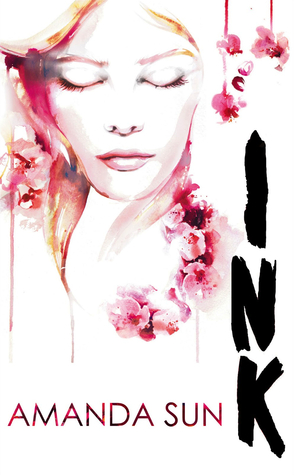
Ink by Amanda Sun


After the death of her mother, Katie moves half way across the world to live with her aunt in Shizuoka, Japan.  With only three weeks' worth of Japanese lessons and reeling from the tragedy, Katie struggles to fit in at school and in the new culture.  One day, she overhears an older student called Tomohiro breaking up with his girlfriend, who responds by ripping pages from his sketchbook.  As the papers fall to the floor, Katie sees something shocking - the ink drawings are moving.  Obsessed by this, Katie becomes determined to find out what secret Tomohiro is hiding, whatever the cost.  Soon she becomes caught up in a power struggle among the Kami, Japanese Gods, that could have deadly consequences.

I was drawn to Ink because I'm always on the look out for fantasy novels that use other cultures and their mythologies to underpin the plot.  Ultimately, I found Ink to be underwhelming, but it wasn't without positive features.  Sun studied Asian History at university and has spent time travelling through Japan, and her love of Japan came across on every page.  Lots of little details were added to the plot, with the result that the reader gets a really good 'feel' for Japanese culture.  Katie changes into school slippers in the morning, watches cherry blossom trees flower and eats authentic Japenese food.  Japan was almost a character in the novel and I loved that.  The mythology of the Kami also made a refreshing change as I have never come across them in a novel before.  

Whilst Ink had positive elements, I felt like it was let down by the romance between Katie and Tomohiro, who was a stereotypical bad-boy with a hidden secret.  Despite only just meeting him, Katie fell in love almost instantly and made a series of bad decisions all because she loved him.  Even when he was horrible to her, when she found out what his friends were mixed up in and even when her being around him could actually hurt her, she couldn't leave him alone.  I found it so frustrating because all the elements of a fantastic novel were here at the beginning of the book, only for the romance to take centre stage.  I don't mind a bit of romance, but it needs to be a better one than this for me to enjoy it.  I wanted more adventure, more mythology, more insight into the Kami, more ink drawings coming alive and less of Katie angst-ing over Tomohiro and how dangerous yet needy he was.

All in all, Ink had promising moments but was a bit of a let down overall.

Source: From the publisher via Netgalley.
Published: June 2013
Score: 2 out of 5

Saturday, 1 December 2012

Inkheart by Cornelia Funke

There's nothing like settling down to revisit an old favourite, is there?  When I pick up Inkheart, I'm taken back to when I was at university, still living at home with my Mum and Dad.  One Christmas, I received all three books that make up the Inkheart trilogy in my stocking and I devoured them all within a week.  I literally did nothing apart from lay on the sofa and eat leftover Christmas treats with my nose stuck in these books until I had finished all three.  Even though I'm now twenty-six, married and definitely not living with my parents anymore, picking up these books brings back all the magic of the first time I read them.

Twelve-year-old Meggie lives with her bookbinder father Mo after the disappearance of her mother in mysterious circumstances when she was only three.  They are visiting a relative, book collector Eleanor when a strange man called Dustfinger arrives, claiming that Mo read him out of a book called Inkheart.  What follows is a good old-fashioned adventure as Meggie and Mo race to stop the villain of Inkheart, Capricon, from destroying all the remaining copies and wreaking a terrible vengeance on his enemies.  Along the way, they are assisted by Eleanor, the author of Inkheart, Fenoglio, and Farid, a young boy read out of the pages of A Thousand and One Nights.

Here's the thing:  I know Inkheart isn't exactly the finest literature and I know that the plot is a little silly at times (the Shadow being a case in point), but none of that stops me from loving the book so much that even thinking about it makes me smile.  Who amongst us hasn't read a book and wanted the characters to come out of the book?  I know I have and I love that the entire story revolves around the love of books and in particular, the love of all the classics I loved so much as a child (Peter Pan, Arabian Nights etc).  In fact, the thing I enjoy most about Inkheart is the tone; it feels like the old-fashioned books I devoured when I was young.  There's a good dose of adventure, a straightforward good vs evil plot and a hint of magic.  Picking it up feels like picking up an Enid Blyton novel,Treasure Island or Peter Pan.  Although Meggie is in for a lot of suffering, it's due to the danger she faces and the world of the book is like a lovely bubble I like to sink into every now and again.

This isn't really a proper review as I'm not going to be critical.  I understand this book isn't for everyone but I absolutely love it and I'm already looking forward to making time for a reread of Inkspell and Inkdeath over the next few weeks.  For me, Inkheart is escapist adventure at its best.

Source: Personal copy
Edition: Chicken House, 2004
Score: 5 out of 5

Saturday, 11 August 2012

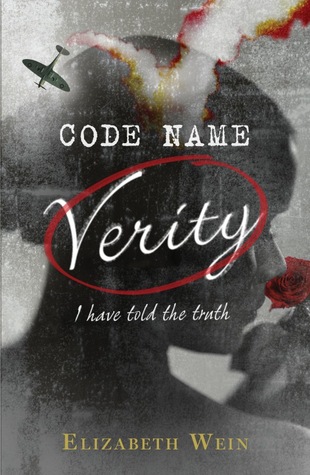
Code Name Verity by Elizabeth Wein

Code Name Verity opens with a young girl in a Nazi holding camp in Occupied France.  She's a captured British spy who has been tortured mercilessly for information and become a collaborator. She agrees to write down everything she knows about the British war effort in exchange for not being tortured any more.  And so begins the story of Verity/Julie and her friend Maddie, a pilot, narrated by both before the end of the book.  It's hard to write about the plot of Code Name Verity without spoiling it, but the narrator is unreliable and there are many twists and turns.  Is Julie really a collaborator?  Is she telling them everything she knows?

I liked Code Name Verity.  It's a solidly written book with many well-plotted twists.  I spent the first part of the book perplexed as there seemed to be a big difference between what Verity was saying (I'm petrified and will do anything to stop the torture) and her character, which was still lively and unbroken.  As the book went on, the reasons for this became clearer and I understood Verity/Julie a lot better.  Wein just about manages to pull off the deceit in the characters that makes the twists believable. 

There is a lot of suffering and torture in Code Name Verity, but it wasn't hard hitting.  Bad things happen to the characters and Wein tried to show the impact of that, but I never really felt it.  I wanted to feel Verity's fear and pain but the way she wrote about it prevented that.  Had I felt more connected to Verity, more "in her shoes", I would have enjoyed the book more than I did. I liked the plotting and trying to figure out who was telling the truth but there was always a distance in my reading experience.  Essentially, the characters didn't feel 'real' for their situation; at times Verity felt like a modern teenager, not a teenager of war forced to grow up too quickly.

I did enjoy the character of Maddie though.  She is more straightforward and written in a relatable way.  When Maddie writes of her love of flying, I wanted to be right there in the plane with her, soaring over the white cliffs of Dover.  As a whole, the book was a page turner and it was one I ripped through very quickly.  It was just lacking that 'oomph' and depth to turn it from a book I liked to a book I loved.

Source: Library
First Published: 2012
Score: 3.5 out of 5

Read Alongside:
1. Jasmine Nights by Julia Gregson - Another story about a female spy during World War Two, this one about a singer in Egypt.  The spy plot is written alongside a romance.
2. How I Live Now by Meg Rosoff - Excellent rendering of teenagers during an unnamed war.  This book contains the emotion I felt was lacking in Code Name Verity.

Friday, 3 August 2012

A Brighter Fear by Kerry Drewery


Don't judge this one by the cover.  It may look bright and cheerful but A Brighter Fear is a hard-hitting account of the Iraq war through the eyes of seventeen year old Lina.  We first meet Lina in Baghdad in 2003, where she is living with her father in the prelude to the American-led invasion.  Lina describes a culture of repression, where people are scared to even think negative thoughts about the regime, let alone express them ("a lifetime of being allowed no opinion but the right one").  Lina has experience of this threat as her lawyer mother was taken away by the secret service years ago and no one has heard anything about her since.  As the bombs start to fall, Lina shelters in the basement with her Papa during the night but attempts to live a normal life throughout the day.

But normal has ceased to exist.  As a Christian, Lina is shunned by her former friends as it would be dangerous for them to be seen with her.  Her father takes on a job interpreting for the US army, making him a target.  When she continues to walk around with her hair uncovered, Lina is the victim of an acid attack.  Through Lina we hear of rape, torture and see dismembered bodies abandoned by the roadside.  Interspersed with all this is the story of what happened to Lina's mother, Sacha, when she was taken by the secret police, starting with horrific torture scenes.

So A Brighter Fear isn't your average young adult novel.  I really appreciated it's boldness at setting down what the Iraqi war must have been like to actually live through.  If I had read this as a teenager, I would have found it even more shocking than I did as an adult.   I also appreciated how Drewery refrained from making this a black and white novel, she showed the shades of grey involved in the conflict.  Lina and her family hate Saddam due to what happened to her mother so initially they welcome the invasion.  But the trigger-happy soldiers and the fact that "we all look the same to them" makes Lina reconsider.  There's never any 'good guys' or 'bad guys' in the sense of the conflict and that struck me as realistic - who can be a good guy in a war situation?  Drewery writes about fear very well and we see Lina's attempts to overcome her fear, something that made her relatable;

"I was living a horror film with no end credits in sight.  But this wasn't a film, or a dream, or a story.  This was life.  And I couldn't just press the off button, or wake up, or slam the pages shut.  I had to live it."

Despite all these positive elements, I think the 'love story' between Lina and an American soldier was a mistake.  It came across as an add-on to the real story, an attempt to make the book more appealing to it's intended audience (it's even the tag-line of the novel despite it playing a minor role in the story).  I get that Lina didn't have any friends, that she would cling to any escape clause from her life, but it could have been written as a friendship rather than an impossible love story.  There are a few times where Lina and Steve manage to meet despite impossible circumstances, and these situations felt contrived.

But overall, I was pleasantly surprised by A Brighter Fear.  It was bold and direct and had a lot to say about the Iraq war without shying away from the unpleasant aspects or simplifying it.  A job well done.

Source: From Harper Collins UK, via Netgalley
First Published: 2012
Score: 3.5 out of 5

Thursday, 5 July 2012

Speak by Laurie Halse Anderson

For me, Speak was a victim of it's own hype.  Ever since starting blogging almost two years ago, I kept seeing reviews of it on other blogs and everyone seemed to agree how important it was as a book.  It's still popular more than ten years after initial publication - I was on a hold list for quite a while before finally getting a copy.

Melinda Sordino seems like an ordinary teenager until she attends a party one night the summer before starting high school.  She becomes known as "the kid that called the cops" and isolated by her peers.  As we follow Melinda, she becomes more and more insular and full of complex emotions as the year goes on and she stops communicating with those around her.  But what really happened at the party to have such a big impact on her?

I really wanted to love this book.  I enjoyed reading it and think it is an important book in some regards, but unfortunately I just don't see it as the modern classic that others do.  I'm going to set out my 'problems' with the book below, some are subjective to my reading experience and some are more objective.  If you love this book, I'm sorry!

1. I already knew what was wrong with Melinda before reading.  This meant that there was no emotional kick in the teeth for me when the reader finally finds out what happened to her.  I applaud Laurie Halse Anderson to drawing attention to the issue and hope that teenagers reading the book learn more about how horrific an experience it could be.  Having said that, I felt like the perpetrator was a stereotypical example and it would have been more realistic if he was Melinda's boyfriend rather than a random? (Trying to not spoil the book for anyone else).

2. I couldn't relate to Melinda's high school experience.  I'm not American and the school environment Melinda describes was worlds away from my own experiences.  I know it's subjective but it meant I wasn't transported back to my high school days, like I would have needed to be to really feel for Melinda and connect with her.

3. Some of the writing was too obvious.  I liked that Anderson wrote about how the enormity of what had happened to Melinda literally stopped her from talking but at times it felt like this device was over-used.  Particularly when Melinda gets sores on her lips and requires medical attention; it just felt like too much.

4. I didn't think the writing was especially great in general.  The simplistic style was a good choice but it felt clunky and awkward.  I much preferred the writing in her later book, Chains.

5.  Melinda's parents - I understand they were busy and frustrated with her and each other, but I found it hard to believe they would do nothing for so long.  As an adult this especially bothered me as absent parenting is something I've noticed a lot in YA.  There are plenty of absent parents out there but sometimes it feels that writing them this way is just a convenience for the author.
 
I don't want to be too negative about the book as I enjoyed reading it and, as I said, it spotlights an important issue to a vulnerable group.  It simply wasn't all that I had been hoping for.

Source: Library
First Published: 2001
Score: 3 out of 5