Showing posts with label score: 5. Show all posts

Friday, 20 February 2015

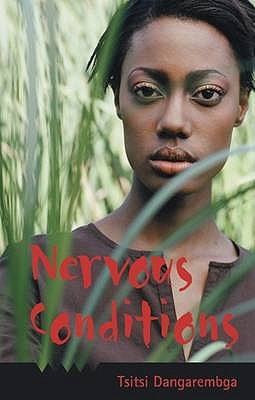
Nervous Conditions by Tsitsi Dangarembga

"The business of womanhood is a heavy burden.  How could it not be? Aren't we are the ones who bear children? When it is like that you can't just decide today I want to do this, tomorrow I want to do that, the next day I want to be educated!  When there are sacrifices to be made, you are the one who has to make them. And these things are not easy: you have to start learning them early, from a very early age."

Nervous Conditions is the coming of age story of fourteen year old Tambudzai, who lives in rural Zimbabwe but is able to attend a missionary school following the death of her older brother, Nhamo. Living with her aunt and uncle in a house on the mission grounds, Tambu is at first overwhelmed by their lifestyle. But the more she becomes accustomed to it, the more she starts to feel herself better than her beginnings. Tambu is determined to be educated and to provide for herself, but she keeps coming up against prejudices and barriers based on her gender, meaning that she has to battle for what she wants. Her story is contrasted with the stories of the complex women in her life; her Westernised cousin Nyasha, starting to examine the effects of colonisation, her uneducated mother, tied to a man she doesn't love by her children, and her mother's sister, forceful, outspoken and determined to do what is right for her and the people she loves.

Nervous Conditions is a wonderful book, and lots of that is to do with Tambu herself. As a narrator she is self-aware, honest, intelligent and full of complicated thoughts about the people around her. It helps that Dangarembga's writing is vivid, peppered with Shona vocabulary; reading Nervous Conditions is like being immersed in the Shona culture of the mid twentieth century.  This isn't a novel written with a Western audience in mind, and I liked that.

What I loved most about Nervous Conditions is that Dangarembga never over-simplifies the complex issues of gender, race and colonisation. Tambu is quick to realise the limitations placed on her by her gender, for example when her father states that it isn't worth educating her, as she will only get married and belong to another family.  Tambu also notes the powerlessness of her mother in the family, and the negative effect of her many pregnancies, but Dangarembga also writes about powerful Shona women, who are uneducated, but still refuse to accept gender boundaries. And the same is true of race and colonisation - Tambu views a Western education and lifestyle as her ticket to happiness, but her cousin Nyasha, who has actually lived in England for a spell, is torn between her conflicting identities and feels isolated from her Shona heritage. The portrait of both of these issues is complicated, many-layered and realistic,

To be honest, the only thing I didn't like about Nervous Conditions was the cover, which I think looks too cheaply made for the quality of the book. Although this book is set in a specific place and time period, it's coming of age theme is universal and it's one I would highly recommend.

Source: Library
First Published: 1988
Edition Read: Ayebia Clark
Score: 5 out of 5


Project 1001 Books: Book 2/80
My list of titles and reviews can be found here.

Wednesday, 21 January 2015

Reading Journal #3: A Bumper Reading Month


This month, I am in love with reading again.  I always enjoy reading, but sometimes I get into a phase where I want to spend every free minute lost in a book, and happily that's where I am now.  I'm reading during Giles' naps and all evening after he has gone to bed, and I'm simply loving it.  What's more, I'm picking up some fantastic books too.

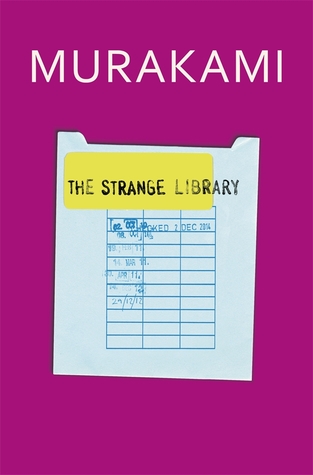
The first book I have to write about is Haruki Murakami's novella, The Strange Library.  I've read one other Murakami book, Norwegian Wood, and whilst I thought it was OK, I was disappointed to find out that it's one of his straightest novels, lacking in the surreal and magical elements that he is more famous for.  The Strange Library seemed like a good way of getting to grips with his more usual style.  Told with words and pictures, it's about a young boy who wanders into a library one day, as he wants to find out how taxes were collected in the Ottoman Empire.  He is directed to a special 'reading room' in an underground maze, and here he is imprisoned with a sheep-man and a girl that only he can see.

The Strange Library isn't really much of a story, and I read it in under an hour, but it had a beautifully haunting quality about it, a bit like a fairy tale.  I'm sure there is some deeper meaning to all of the strangeness, to do with grief and obedience, but I was happy just to revel in it and enjoy the experience.  It helps that this is a truly beautiful book, and the images add a lot to the story.  Now that I've finished this one, I'm looking forward to exploring the more surreal side of Murakami, starting with The Elephant Vanishes, a collection of short stories I already own.   4 out of 5.

After finishing The Strange Library, I was in the mood for some non-fiction so I picked up Chinua Achebe's There Was A Country. Ever since reading Chimamanda Ngozi Adichie's excellent Half of a Yellow Sun a few years ago, I've wanted to learn more about the Biafran war, in which Biafra decided to declare itself independent of Nigeria.  Achebe was deeply involved in this part of history, being Biafran and acting as a Biafran envoy in countries all across the world, as well as living through the conflict.

There was a Country is a powerful book.  Achebe blends history, politics, memoir and poetry together to create a personal account of the time.  Starting from his childhood during the British Empire, Achebe gives a brief overview of Nigeria gaining independence, and the problems that came after, before launching into the Biafran war.  Achebe manages to impart a lot of information without it ever feeling dull, and the poems were haunting.  Whereas the actual text occasionally lacked emotional engagement, the poems more than made up for it.  Sometimes Achebe's straight-forward writing made the book all the more impacting, particularly when he was discussing the deliberate policy of starvation employed against the Biafrans, and the near-misses encountered by his family. My only complaint is that sometimes Achebe became too bogged down in names and individual events rather than showing the whole picture.  But the tone of regret, of Achebe's sadness at the lost opportunity Nigeria's independence represented, permeates the whole book and makes it devastating.  4 out of 5

After the heaviness of war and corruption, I turned the L.M. Montgomery's The Blue Castle, a novel I picked up on impulse from the library.  I have read and enjoyed Anne of Green Gables, so I was keen to read Montgomery's adult novel.  The heroine is Valancy, a twenty-nine year old woman who has been written off  as an old-maid.  Unquestioningly obedient, she has allowed her family to stifle her, and the only joy she has is escaping to a fantasy land, in which she lives in a magnificent blue castle.  But when she is told by a doctor that she only has a year to live, due to a heart condition, Valancy resolves to actually live.  Throwing off her fears, she sets out to experience as much as possible, and to do things that please her, of course scandalising her rather staid community.

The Blue Castle has a lot of comic moments and a perfectly swoon-worthy love story, but at heart it's a coming of age story, about finding yourself and having the courage to make your own choices in life.  I loved watching shy, obedient Valancy stand up for herself, and act according to her own personal values.  In a way, this book was ahead of it's time, what with Valancy moving out, getting a job to support herself, and even making her own marriage proposal.  The Blue Castle is a dream of a book, that made me smile, inspired me, and reminded me of the joys that life can bring.  5 out of 5.

Sunday, 18 January 2015

Project 1001: Two Book Reviews

My two 1001 Books projects have got off to a flying start.  From my adult list, I picked up Michel Faber's Under the Skin, which I received for Christmas.  I was already a Faber fan before starting this novel, the fourth of his that I have read.  And it's completely unlike the others, being dramatically different in tone and content to his more famous work The Crimson Petal and the White. 

The story opens with Isserley, who spends her time driving along the roads of the Scottish Highlands, looking to pick up male hitch-hikers, but only the large, muscular ones.  Apart from that, there's nothing else I could say about this novel without ruining how unexpected, different, surprising and chilling it is. There's so much I could rave about, particularly concerning Faber's brilliant use of language, but the reveal in this book is so wonderful that I wouldn't want to spoil it for anyone.  Just trust me when I say that it is an amazingly gripping book, one that will lodge into your brain.  There's one scene in particular that I can not get out of my head, and that has made me completely re-evaluate a certain aspect of my life.  Under the Skin is a book that seeks to challenge and confront, and it does so very cleverly.  It's a book I will remember and think about for years to come. If you like thrillers, sci-fi, or books about ethical issues, you really need to pick this one up. 5 out of 5 stars.

From my children's list, my first selection was Lian Hearn's Across the Nightingale Floor, mainly because it was readily available in my library.  The main character, Takeo, is a member of a secretive religious group called the Hidden in a fantasy world based on Japan, when he witnesses the massacre of his friends and family. Escaping with the assistance of the mysterious Lord Otori, Takeo comes to learn more about his past, and the supernatural talents he has inherited from his ancestors.  When he discovers who is responsible for the massacres of the Hidden, and for the autocratic rule large parts of the island are suffering under, he becomes involved in a plot to assassinate the tyrannical Lord Iida.

Across the Nightingale Floor is best described as a crossover novel between YA and adult.  It's shelved in the adult section of my library but the two main protagonists are teenagers, and a lot of the plot deals with Takeo finding out who he is and what is important to him.  What I liked about the novel was that Hearn didn't shy away from darker issues or pretend that everything was always going to be OK.  Death and grief are handled sensitively but straight-forwardly, without talking down to the reader at all.

I enjoyed reading Across the Nightingale Floor, as it's always good to find fantasy set in non-Western contexts.  I liked reading about the belief systems of the people in Hearn's worlds, and the different approaches to marriage and politics.  Although the beginning and end sections of the novel were pacy and engaging, the plot did seem to lag in the middle, and sometimes I had trouble keeping track of who was related to who, and what others thought of them, as there was much in the way of intrigue going on.  Still, I enjoyed it enough to want to continue with the series.  3.5 out of 5 stars.

Thursday, 15 January 2015

The Good Earth by Pearl Buck

The Good Earth opens on Wang Lung's wedding day.  As the son of a farmer, his only option is to marry O-lan, a slave working in the great house of the village.  Although they start off as strangers and with next to nothing, Wang Lung and O-lan make a good pair, making the most of their land and growing family.  When a famine strikes and the family are forced to flee to the city, it is O-lan's determination and luck that keep them alive, and even enables them to return to their farm much richer than before.  As Wang Lung starts to accumulate more land and become more than just a peasant farmer, his expectations start to alter the family dynamics.  He starts to view O-lan as too simple, too plain and not enough for him.  As his sons grow up with more security than Wang Lung thought possible, the family begins to change for ever.

I really enjoyed The Good Earth.  Although Buck isn't Chinese, she lived in China for the majority of her life, and she presents the customs and attitudes of the time without judgement or condescension.  In fact, she doesn't even stop the story to explain things that would have been self-evident to Wang Lung, such as foot binding and the role of women, and this makes the story stronger.  Buck doesn't impose any Western ideas or views on her Chinese characters, even when their attitudes will make Western readers uncomfortable.

For me, The Good Earth was all about O-lan.  Having suffered through her childhood and adolescence, she is ready to live a quiet life with Wang Lung and devote herself to their family.  She suffers constantly throughout the book and yet is always thought of last.  Although Wang Lung does come to respect her in some way, for most of the book he ignores her presence, does not appreciate all that she does, and he is never able to love her.  When she returns to work the fields after literally just giving birth, he accepts this as what she should do.  O-lan made me wonder how many women there are like this in the world, forced by custom and attitudes to do everything for their family, never getting any reward or potential for personal growth, essentially giving up their own lives.  O-lan had so much inside her, but Wang Lung never thought to find out who she really was.

Another thing that struck me whilst reading The Good Earth was the parallels with Dickens' Great Expectations (this may sound strange, but bear with me).  Like Pip, Wang Lung starts to think of himself as grand, and therefore deserving things according to his new station.  A more attractive wife. Sons that are scholars rather than farmers.  Many rooms to their house.  Tenants that defer to him and treat him with respect.  As in Great Expectations, this can only end in misery for Wang Lung, something that is perfectly summed up in the last scene of the novel, which coincidentally was one of the strongest endings I've read in a long time.

I would definitely recommend The Good Earth.  I had my reservations about a book narrated by Chinese characters written by a Westerner, but these were unfounded.  The Good Earth is very well written with memorable characters, and I can't wait to read more of Buck's work.

Source: Personal copy
First Published: 1931
Edition Read: Simon & Schuster, 2005
Score: 5 out of 5


The Classics Club: Book 32/72
My list of titles can be found here.

Friday, 2 January 2015

Pride and Prejudice by Jane Austen


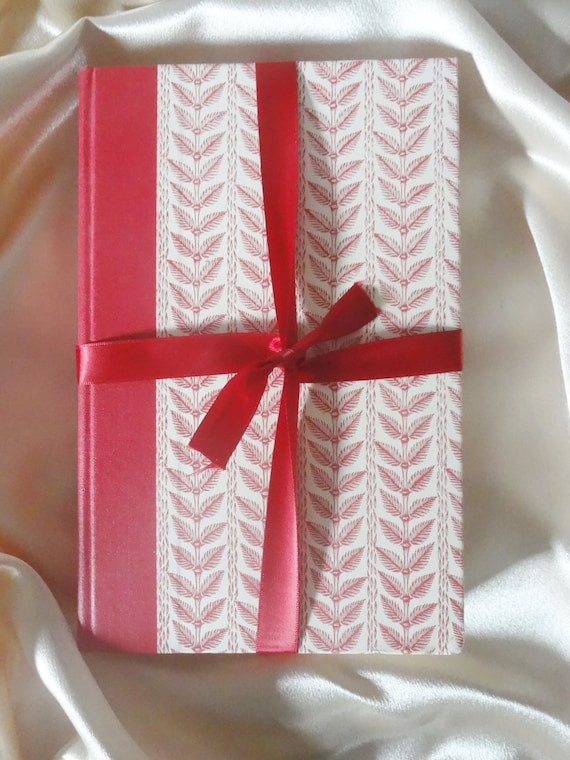
When starting this post, I was so excited to find an image of the edition of Pride and Prejudice that I have just finished.  You see, I was browsing one of my favourite second hand bookshops at the weekend when I came across a complete Folio Society set of Austens, all hardback and stunning and gorgeous, for an amazing price.  It was one of my best bookish finds in years, and I knew that as soon as I finished the book I was currently reading, I'd have to read an Austen. In the end, I chose Pride and Prejudice, it's a reread that's on my classics club list, and it felt fitting as it was my first Austen.

I'm sure that most people are familiar with the story of Elizabeth Bennet and her four sisters, who are unable to inherit their father's property and will therefore have to live in poverty unless they make sensible marriages.  But set against Elizabeth and her older sister Jane's chances are Mrs Bennet's lack of taste or social decorum, Mr Bennet's bluntness, and the silliness of their younger sister Lydia. Of course there are a lot of misunderstandings as Elizabeth navigates the marriage market, but in the end both she and her sister manage to marry for love, conveniently falling in love with men who have the fortune to support them.

Pride and Prejudice will always be a special book to me as it was the first Austen I was ever able to complete on my own.  My older sister was a huge Austen fan from her teens, and even studied her work at university, but I could just never get into any of her books.  I didn't understand the wit, the social commentary or the understatement of Austen's prose.  But finally (and only after watching the BBC mini-series), I was able to fully appreciate Pride and Prejudice and since then, I've not looked back.  The more Austen I read and re-read, the more I understand why she is as respected as she is.

On this read, I found myself thinking a lot about mistakes.  Both Jane and Lizzy make mistakes, Jane in thinking that Miss Bingley is a good friend, and Lizzy about the characters of Mr Darcy and Mr Wickham.  But both are honest about their mistakes and set about fixing them.  Although Lizzy in particular feels ashamed after discovering the truth, she is able to explain herself and move on. This is something I struggle with, as I tend to want to hide any mistakes I make and find it hard to forgive myself, let alone others.  Jane in particular was good at this - her kindness towards others was matched by her kindess towards herself, and this is something I can learn from.

Now that I have read more (but still not all) of Austen's major novels, Pride and Prejudice is no longer my favourite.  I prefer the flawed characters of Emma and particularly Catherine from Northanger Abbey.  But it's still a special book, one that I'm sure I will reread many times in the future, getting something new out of each read.


The Classics Club: Book 31/72
My list of titles and reviews can be found here.

Friday, 21 November 2014

Blogging Break Reads

Whilst I wasn't blogging over the last month or so, I was most definitely still reading.  Here are some quick thoughts on the titles I finished:

Rivers of London by Ben Aaronovitch

Peter Grant thinks he is headed for a dull life of police paperwork when he finds himself interviewing a ghost following a murder in central London.  This leads him to Chief Inspector Nightingale, the last wizard in England, and the person in charge of policing the parallel, magical London.  The number of gruesome murders across the city is increasing, and it's up to Grant and Nightingale to find out and apprehend the supernatural culprit.

I had high hopes going into this book, as it's the first of a very well regarded series, but I was disappointed.  I liked the urban fantasy atmosphere and the originality of the supernatural elements, but ultimately this book was too much crime, too little fantasy for me.  I wasn't interested in solving the crime alongside Peter and as a result the pages dragged.   This one has been donated to the charity shop, and I won't be continuing with the series.
2.5 out of 5


A Little History of Literature by John Sutherland

I love the Little History series, and this literature based volume did not disappoint.  Covering everything from Greek myths to the future of printed books, this book is divided into short, bite-sized chapters that give an overview of authors and trends from the Western canon.  There's also chapters dealing with the development and history of the publishing industry.

I studied science at university, so I was missing a general overview of the history of literature, and this book filled that gap nicely. It's perfect to dive in and out of, as each chapter only takes a few minutes to read. Although I would have liked to have seen more on non-Western literature, I loved this book as it inspired me to pick up more classics.  Highly recommended.
5 out of 5


The Impressionist by Hari Kunzru

Pran Nath is the son of an Indian woman and English man.  Throughout his life he experiences being a privileged son, a cast out, exploited in a backstreet brothel, a political pawn, a student at Oxford university and finally an anthropologist.  Pran is able to flit between these roles effortlessly, assuming new identities, but what are the consequences of lacking a true identity?

This book is truly epic in scale, covering three countries and a dazzling array of side characters.  It's also utterly engrossing, mainly for the minor characters and the settings, which are bought vividly to life.  I really enjoyed this for the story, but have a feeling I missed some of the deeper meanings involving post-colonialist identity.
4 out of 5


The Dragon Reborn by Robert Jordan

The third volume in Jordan's epic fantasy series, The Wheel of Time. This series is a bit of a guilty pleasure for me.  Objectively, I know there is lots to dislike about it - the repetitive descriptions, the fantasy clichés, the gender stereotypes, the unnecessary, pace-slowing detail - but I just can't help but find this series utterly compelling.  It's just wonderful escapism, especially now Jordan has broadened the world somewhat and introduced new places in this volume.

I wouldn't recommend this series to everyone, and I'm not even sure why I like it so much, but like it I do.

4 out of 5

Thursday, 25 September 2014

Everyday Sexism by Laura Bates

In 2012 after being sexually harassed on London public transport Laura Bates, a young journalist, started a project called Everyday Sexism to collect stories for a piece she was writing on the issue. Astounded by the response she received and the wide range of stories that came pouring in from all over the world, she quickly realised that the situation was far worse than she'd initially thought. Enough was enough. From being leered at and wolf-whistled on the street, to aggravation in the work place and serious sexual assault, it was clear that sexism had been normalised. Bates decided it was time for change.  (from Goodreads).

Everday Sexism is a thoroughly depressing and yet important book.  Bates has collated the normal, run-of-the-mill experiences of countless  women, on a range of topics, and together it makes for pretty grim reading.  I was shocked to find out that one in three girls from 16-18 have experienced unwanted sexual touching at school, that women are still missing out on jobs in case they decide to take maternity leave, and that the unemployment rate for men in the recession has increased by only 0.32%, whilst for women it has jumped by almost 20%.  The statistics were shocking enough, but what makes this book more powerful is that Bates includes the individual stories of the women that have tweeted her and posted on the everyday sexism website.   I could identify with so many of the experiences - the newlywed woman being asked when she is going to start having babies, the pregnant woman who only ever gets asked about her pregnancy, and the teenage girls who know they are more than their looks, but can't escape their insecurities.   Bates also shows how these experiences are normalised in the context of 'banter', with women who protest to e.g. sexual comments getting responses like "can't you take a joke?" or "you should be flattered."


I think the chapter that made the most depressing reading was the one concerning teenage girls.  I was lucky enough to be a teenager before the internet was everywhere (the days of dial-up), and I'm sure that it's so much harder now social media means that sexual bullying is common.  I was shocked to read about the amount of rape jokes reported in secondary schools, but when I asked my husband about it (he's a secondary school teacher), his experience matched those in the book.  When I was at school, boys might have joked about how girls looked, and that is cruel, but to be the subject of jokes about raping you, or what they want to do to you, or to have private photos shared - I can't imagine how hard that must be.  Bates reports on the girls that have committed suicide as a result of all these things.


I've always known that if I had a girl, I would raise her to be a feminist, to value herself for more than her looks, and to know that she can do anything that she wants to do.  Reading Everyday Sexism, I've realised that it is just as important for me to raise my son to respect women, to see them as more than objects, but as friends, colleagues, partners and equals.  I don't care if my son wants to cry when he is upset or play with dolls, and I certainly will try my best to ensure that he judges men and women in the same way, as people.  


I'd definitely recommend Everyday Sexism.  It's depressing reading at times, but does end on a note of hope, with stories of how women are starting to protest against the current culture, and how things could change for the better.


Source: Personal copy (kindle)

Published: April 2014
Score: 5 out of 5

Wednesday, 20 August 2014

Sally Heathcote: Suffragette by Mary M Talbot


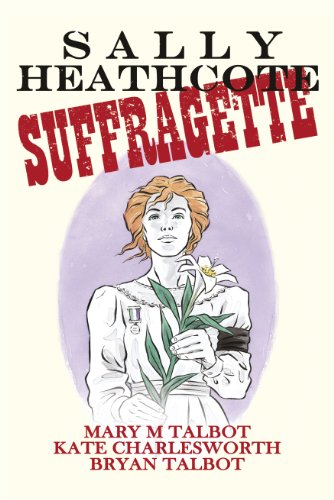
A suffragette in the early 1900s was the name given to a woman in the UK who was campaigning fiercely for the right to vote.  Before reading this graphic novel, I knew a little bit about the suffragette movement, having learned about Emily Davison's death under the hooves of the King's horse in school, but I wasn't familiar with how the campaign started  or the politics behind the different decisions made.  I knew enough to be grateful and to always exercise my right to vote, but until reading Sally Heathcote, I had no idea how hard-won that right actually was.  Talbot uses the fictional character of Sally, who starts out as a maid to one of the leading suffragettes, to explore the different factions in the movement and uphill struggle they faced.

Sally Heathcote: Suffragette is simply a stunning book.  It's impeccably researched and brings this period of British history to life. We have a tendency to take our right to vote for granted, and to see women being franchised as a historical given, but this book gives the suffragette movement some immediacy.  I admit that I tended to think of it as a genteel, middle class movement, so I was surprised at the amount of violence in the novel.  There's lots of protests where the women are beaten (or worse) by the police and public, and Talbot doesn't shy away from the brutality of the force feedings in prison, when the suffragettes went on hunger strike.  We see the violence of the tube being forced down their throats and the injuries that could occur afterwards.  Sally's stay in prison is one of the most powerful sections of the book.  We all talk about rights today, but there's something so inspiring about this group of women, who were willing to get arrested, beaten and starve themselves in order to endure someone forcing a tube down their throat so they could be the equals of men. When did we become so apathetic in comparison?

Talbot also manages to show the complexity of the movement, with the different factions disagreeing on how best to achieve their aims - should they be entirely peaceful, or is targeted violence to be permitted?  At one point, Sally becomes involved with a more radical group who set fire to a politician's house and are considering the use of bombs.  This kind of debate is still relevant today - do the ends always justify the means?  Sally eventually decides to move away from this kind of campaigning, but I'm glad that Talbot included it.


On top of the wonderful content, Sally Heathcote: Suffragette is a simply beautiful graphic novel.  I loved the style of the images, with the flashes of colour set against the grey drawings.  Lots of the original posters and newspaper articles are reproduced, and the time period is evoked very well.  I'm a bit fussy about graphic novels, and this is one of the best in terms of style that I've read yet.

As you can probably tell, I just loved this book.  It combines fantastic historical research with a powerful story, and the medium of the graphic novel just makes the story more impacting.  It's a book to inspire, and a book that should make every woman reading it grateful for their right to vote.  The very ending of the book, which deals with modern apathy, was extremely thought-provoking, and I don't think I'll every be able to take my right for granted again.  Highly recommended.

Source: Library
First Published: 2014
Score: 5 out of 5

Friday, 4 July 2014

Catching Up: Mini Reviews

Thank you to everyone who took the time to congratulate me and comment on last week's post about the birth of my son, Giles.  One of the best things about blogging is the friends that I have made, and I was reminded of that when I read through all of the comments :)  I'm continuing to recover very well, and am feeling almost normal again.  Of course, life itself is a bit of a blur of feeding, nappy changing and trying to get a very wide awake baby to go to sleep at 3am in the morning.  I have been able to read a bit (kindles are great for one handed reading!) but most of the following reviews are for books I finished up whilst waiting for Giles to arrive.

1. A Game of Thrones by George R. R. Martin
This was a reread that I started as soon as I became overdue and needed distraction!  I loved this book the first time around and loved it even more the second.  I picked up on more of the clues for what was to happen in the future, I was able to see how much the characters had developed and I liked the simplicity of the plot-line.  This is the only book in the series where most of the main characters are together for most of the time, which makes it more coherent than the other volumes.  Escaping to Westeros was just what I needed, even if I can't see myself re-reading the rest of the series any time soon. 5 out of 5 stars.


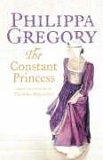
2. The Constant Princess by Philippa Gregory
When I first started reading historical fiction, I quite liked Philippa Gregory.  I soon grew out of her, but her books are kind of a guilty pleasure for me.  The Constant Princess is about the life of Catherine of Aragon, and focuses particularly on her marriage to Arthur, and the beginning of her subsequent marriage to Henry VIII after his brother's death.  As always, Gregory takes a bit of a liberty with the facts but this book was a quick, fun read.  3 out of 5 stars.


3.  Guns by Stephen King
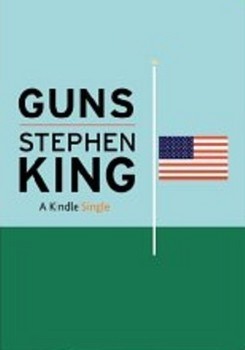
As a Brit, the debate about gun ownership in the USA really fascinates me.  Here, guns are a non issue - people aren't allowed to own them, and I can't think of anyone I know who would want to.  Only small sections of the police are armed, and most people would be scared rather than reassured to have a gun in the house.  So I'm not going to comment on King's arguments, which seemed logical and practical to me, as I'm not the intended audience.  I will say that the whole thing felt a bit rushed, as if it were hurried for publication, and this ruined my enjoyment of his writing a bit.  3 out of 5 stars.


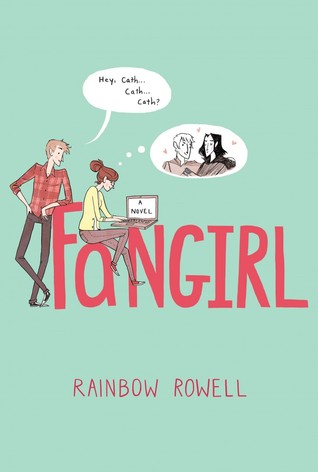
4. Fangirl by Rainbow Rowell
This one I read after Giles arrived, in the night time moments when he wasn't quite ready to be put into his Moses basket yet and just wanted to be held.  It's about twin sisters Cath and Wren, who begin to grow apart when they start university.  I really liked the main character, Cath, and could relate to her shyness and awkwardness around people.  The love story was very sweet, and the whole thing was extremely hard to put down.  I've come to the conclusion that I just enjoy Rowell's young adult fiction more than her adult books.  4.5 out of 5 stars.


Friday, 13 June 2014

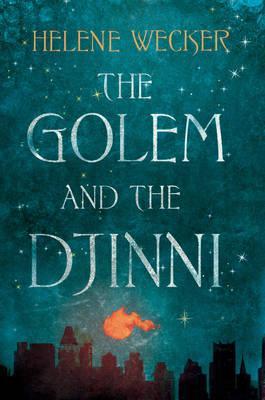
The Golem and the Djinni by Helene Wecker


Chava is a golem, a creature made of clay and bought to life using an ancient Jewish Kabbalistic ritual.  She's created to be the wife of Otto Rotfield, but he dies on their passage from Poland to New York, leaving Chava alone in the nineteenth century city, completely alien to those around her.  As she tries to fit in and suppress her differences, she has a chance encounter with Ahmad, a djinni.  After centuries of freedom in the Syrian desert, Ahmad was enslaved and bound.   Accidentally released by a tinsmith but still trapped in human form, Ahmad is desperate to regain his freedom.  As the two creatures find their way in the city and try to uncover their roots, an unusual bond grows between them.

Advance warning:  this review is going to be glowing!  I've been excited about reading The Golem and the Djinni ever since it first came out, especially as it's been compared to Jonathan Strange & Mr Norrell, one of my favourite novels ever.  The Golem and the Djinni contains so many of the elements that I love to read about; fantasy tied to a convincing mythology, an interesting historical setting, the inclusion of magical elements in a believable way, creatures straight out of Arabian Nights and an exploration of Jewish culture.  In fact, I actually put off reading this book for ages, as I was worried it wouldn't live up to my unreasonably high expectations.

But I shouldn't have worried at all - The Golem and the Djinni is probably my favourite read of the year so far and I can't see anything surpassing it.  The mythology woven into the story by Wecker just felt so plausible and I loved how authentic her nineteenth century New York was.  The mystery of Ahmad's capture and the secrets of Chava's creator was beautifully done, with small clues being dropped all throughout the story.  I loved the sections that took place in Syria amongst the Bedouin people, and also the way Wecker wrote about the Jewish immigrant community in the city.  Chava and Ahmad's friendship felt natural and unhurried, and I like that a lot about this was left ambiguous and unresolved.

It's fair to say that I liked everything about this book.  It's not going to appeal to every reader; it's quite slow paced in places, but in my mind it's a rare example of a great fantasy novel for adults that weaves in historical culture and context in a believable way.   If you liked Jonathan Strange & Mr Norrell or A Discovery of Witches, you'll love this!

Source: Personal copy
First Published: 2013
Edition Read: HarperCollins, 2013
Score: 5 out of 5

Monday, 26 May 2014

We Need New Names by NoViolet Bulawayo

I've been interested in We Need New Names ever since it first came out, and my interest grew when it was short-listed for the Booker Prize last year.  Told from the point of view of ten year old Darling, it's the story of life in a shanty town called Paradise, in an unnamed African country.  Darling and her friends have a tough life and they dream of escaping to a Western country, away from the poverty and hardship.  But when Darling does get the chance to move to America, she realises that the reality of life as an immigrant can never live up to her expectations.

We Need New Names is one of the best books I've read this year.  It's written in an uncompromising, no-nonsense style that suits the narrator and her experiences.  I'm normally a bit sceptical about adult books written from the perspective of children, but in this case Bulawayo has really pulled it off - Darling is blunt and matter of fact when detailing the realities of her life, and this stops the book becoming too sentimental.

Even though We Need New Names contains lots of hardship, it's not a simple story by any means, and I appreciated the subtleties Bulawayo gets into the novel.  Darling may be forced to steal food that makes her ill to survive in Paradise, and she may have a female friend who is pregnant following a rape, but we get to see the happier side of her life in the shanty too.  Darling has real friends and gets to be a child with them, playing all sorts of games, and this is something that vanishes when she moves to America, causing all of her memories of home to be bitter-sweet.

Being an immigrant in America is shown to be complicated matter as well.  Darling feels the pressure of not fitting in, of being out of step with everyone she knows.  Her relatives are forced to work all hours in physically demanding and sometimes illegal jobs, struggling to make ends meet whilst fielding off demands for money from those back home, who can't believe that America is anything but a land of milk and honey.  Again, I loved that Bulawayo showed the complexity of all of these issues and that life has no simple answers.

We Need New Names is worth reading for the character of Darling alone.  She's vibrant and simply leaps off the page, no matter what situation she is in.  Despite being quite a depressing (yet realistic) read at times, Darling always gives the story life and hope.  I simply loved every page of this book and highly recommend it.

Source: Personal copy
First Published: 2013
Edition Read: Vintage, 2014
Score: 5 out of 5

Read Alongside:

  1. In the Shadow of the Banyan by Vaddy Ratner - Seven year old Raami lives through the Khmer Rouge in Cambodia.  Another excellent child narrator in an adult story.
  2. Pigeon English by Stephen Kelman - Like We Need New Names, this one examines the immigrant experience.  Harri has arrived in London from Ghana, and finds himself mixed up with gangs after the murder of a local teenager.
  3. Tiny Sunbirds Far Away by Christie Watson - Set in Nigeria, Blessing moves to a rural compound with her family in the oil-rich Niger Delta.  Again, another great example of a child narrator.
  4. Purple Hibiscus by Chimamanda Ngozi Adichie - I just love Adichie, and this coming of age story has a lot in common with Darling's coming of age when she arrives in America.

Thursday, 8 May 2014

The Secret Lives of Baba Segi's Wives by Lola Shoneyin

Bolanle is the fourth wife of Baba Segi, and she is childless.  Already an outsider in the family home as the only wife to hold a university degree, her inability to conceive gives the other wives ammunition against her. First wife Iya Segi sees Bolanle as a threat to her dominance, third wife Iya Femi doesn't like being upstaged by a newcomer, and second wife Iya Tope is beaten down and unable to speak up on Bolanle's behalf. Seen as snobbish and different, Bolanle is isolated and unwelcome.  Finally, Baba Segi decides to take Bolanle to the hospital, where the medical investigations into Bolanle's fertility have some unexpected results, exposing the secrets of all the wives.

I've seen The Secret Lives of Baba Segi's Wives described elsewhere as a tragicomedy, and that label is just perfect for it.  Shoneyin deals with some pretty weighty issues like the role of women in Nigerian society, the views of different classes on polygamy and domestic abuse, but it's always done with a light touch and a bit of black humour.  Baba Segi wants to keep his wives hidden away, announces that Bolanle's infertility shames him and doesn't hesitate to assault her, but he's also a comically pathetic figure, bought down by the women in his life.  Shoneyin's talent for finding the humour and pathos in tragic situations means that the book never feels too depressing or preachy.

As I read The Secret Lives of Baba Segi's Wives, I was most interested in the examination of the role of women in Nigeria.  There's references to domestic violence being seen as a waste of police time, a woman discussing her rape is assumed to be a liar and women are frowned upon for wearing trousers.  Through the wives' stories and the power they had seized for themselves over the course of their marriage, Shoneyin's novel is quietly feminist, and we get to see glimpses of a newer Nigeria, in which women are more valued. Of course, whilst I was reading this novel, the news was full of the story about the kidnapping of 200 Nigerian schoolgirls and the intent to sell them into slavery, so it's clear that women still have a long way to go.

I really would recommend The Secret Lives of Baba Segi's Wives.  It examines some interesting issues through a story that is quick, engaging and a lot of fun to read.  If I had the time, I could have read it all in one sitting. It shines a light on a polygamous marriage in Africa in a non-judgemental way and it's a book that hasn't really left my thoughts since I finished reading it.

Source: Personal copy (kindle)
First Published: 2009
Score: 5 out of 5

Tuesday, 8 April 2014

The Painted Veil by W.Somerset Maugham


At 25 years old, threatened by the news that her younger sister is engaged, Kitty marries the first man she can convince to propose, bacteriologist Walter Fane.  Beautiful, shallow, selfish and not in love with her husband, it doesn't take Kitty long to start having an affair with the Assistant Colonial Secretary in Hong Kong, Charles Townsend.  In fact, she convinces herself that she is in love with Charles and will somehow be allowed to ride off into the sunset with him.  But it's not meant to be; Walter discovers her affair and Charles makes it quite clear that she was just a bit of fun.  When Walter insists that she accompany him on a trip to a cholera stricken region of China as an act of revenge, the terrible circumstances around her force Kitty to examine and challenge herself for the first time in her life.

Oh man, I loved this book.  I picked it up mainly for the interesting premise - a woman having to journey into a cholera epidemic because she had an affair, and I was thrilled to find out that this was backed up by wonderful writing and characterisation.  The Painted Veil is a quiet, in-depth examination of human nature that doesn't shy away from the shallower or less attractive parts of what it means to be human, and I loved it for that.  All of the characters are extremely real and mostly unlikeable, especially Kitty in the beginning of the novel, who is completely self-absorbed and child-like, unwilling to think about others at all.  She knows her husband is desperately in love with her, but still thinks he should show more concern for her feelings when he finds out about her affair!  Charles is almost as selfish as Kitty and even Walter is unappealing.  I know some readers have problems with unlikeable characters, but I always admire an author for writing them, because life is fully of people like Kitty, and I like that Maugham didn't feel the need to varnish her in any way.

The main theme of the novel is Kitty's growth.  As she spends time in the town stricken by cholera, eventually volunteering at a convent, she comes to question herself and her behaviour.  She comes to see the bigger picture, to see that her life is small compared to the world, and that life only has the meaning that we ascribe to it.  Kitty's journey is long and tough, and at no point does Maugham take the easy way out. There's no tearful acts of repentance or forgiveness here, only Kitty trying hard with the reality she finds herself in.  Even at the end of the novel, nothing is straight-forward for her, and there is still a long way to go and some things that can never be fixed.  Life in The Painted Veil is much like real life, complex and full of shades of grey.  I loved that and think that Maugham had a very perceptive eye when it comes to human nature and relationships.

There's absolutely nothing I didn't like about The Painted Veil.  It's in some ways a quiet little book but it's a powerful one too, one that made me think about my own life and choices.  I'll definitely be reading more by Maugham in the future - any recommendations?


Source: Personal copy
First Published: 1925
Score: 5 out of 5
The Classics Club: Book 24/72
My Classics Club list can be found here.
Wednesday, 26 March 2014

Kindred by Octavia Butler

"I never realised how easily people could be trained to accept slavery."

Dana is moving into a new apartment with her husband when she starts to feel dizzy and nauseous.  The next thing she knows, she is in nineteenth-century Maryland, rescuing a white boy who turns out to be her ancestor, as well as the son of a slave-owner.  Although her visit to the past is brief, Dana finds herself called back more often and for longer, and with each trip the danger intensifies.  For nineteenth century Maryland isn't a safe place for a black woman, especially one used to modern life.  But as Dana spends more time in the past, she feels herself changing as the reality of slavery wears her down, threatening the life she has built in the present.

I was expecting Kindred to be very good, as I've seen many positive reviews of it and know it to be highly regarded, but it went well beyond my expectations.  Kindred isn't just a good book, it's a truly excellent and thought provoking one.  Butler takes the simple premise of a black woman going back to the slavery era and fleshes her out by adding all of these extra dimensions and complications.  Dana has a white husband, and her ancestor is white.  Her relationship with Rufus, her ancestor, is complex, as she deplores the way slaves are treated on his property, but can't help but have a bond with him.  She finds her views changing with the reality of life for slaves, at one point advising others to keep their heads down, to not fight, despite this going against everything she believes in.  The fact that Kevin, her husband, also goes back in time at one point was also an interesting plot device, and one allowed their relationship to be explored fully.

What I loved most of all about Kindred is that Butler doesn't shy away from any of these complications. Of course slavery was wrong, but Butler really explores what it might have been like at the time, how reality and the choices of life were never simple for slaves.  We see why slaves might choose to be raped rather than run away, we witness their horrific punishments, and to a certain extent we get to see a modern woman conditioned to accept slavery through her experience in the society.  Rufus remains morally ambiguous, treating different slaves in different ways and being a realistic product of his time.  It would have been easy for Butler to demonise him, but she didn't.  Reading Kindred really made me think and reminded me that no issue is simple.  Slavery is rightly shown to be horrific, but gritty and complicated too.

As well as being thought provoking, Kindred is also a gripping read, with a fast paced plot that escalates quickly and builds up tension throughout.  I read it in just two days, which is unheard of at the moment!  It's a book I'd recommend to anyone, whether you are interested in sci-fi/time travel or not.  And I can't wait to pick up more of Butler's books in the future.

Source: From the publisher, in exchange for an honest review.
Publication Date: In this edition, March 2014
Score: 5 out of 5

Tuesday, 11 March 2014

Their Eyes Were Watching God by Zora Neale Hurston

Their Eyes Were Watching God opens with the return of Janie Crawford to her home town in Florida.  As gossip mounts over where she has been, and where her husband has got to, Janie confides in her friend, Pheoby.  The granddaughter of a slave and the product of rape, Janie is married off young to a man that she doesn't love, but who can provide financial stability.  Unloved in her first marriage and abused in her second, Janie finally begins to find her voice with the arrival of Tea Cake, a man much younger than her, but who respects and encourages her.

There isn't much to say about Their Eyes Were Watching God that hasn't already been said.  It's a very powerful story of a woman finding herself and gaining some independence from the expectations placed on her, and I just loved it.  Janie's life is full of much hardship, so when she starts to realise the value that she has as a person, it becomes moving to read.  The depiction of Janie's second marriage, in which she is constantly dismissed and made to submit to her husband in every way, was particularly well done, and you could feel the life flowing out of Janie as the marriage continued.  When she eventually stood up to Jody in front of the other members of the town, it was a big moment.  The relationship with Tea Cake was well written, and I loved that Hurston showed them as being so accepting of each other, flaws and all.  Hurston never made their relationship too perfect, instead we got an honest portrayal of how two people can support and encourage each other, through the good times and the bad, and how a partner can help you to be yourself.

As I was reading Their Eyes Were Watching God, I was struck by Janie's strength.  She had been dealt a pretty tough hand in life, but she never gave up, and she always had hope that things would improve.  When something awful happens right at the end of the novel, I still had the sense that Janie would be able to pick herself up and continue her life in a positive way.  This made me think about my own life, and the way that I approach set-backs, and in this way Janie was an inspiring character for me.  I love that classics can do that, can make you reflect on your own experiences.

A lot of Their Eyes Were Watching God is written in dialect, which I thought might be an issue before starting.  But actually it was very easy to get into and I enjoyed rolling the words around in my head, imagining them the way Janie would have said them.  Once I got used to the dialect, I didn't even notice it.

I'm so glad the Classics Club spin selected this book for me.  It's relatively short but it definitely packs a powerful punch, and it's become a new favourite.


The Classics Club: Book 23/72
My list of classics is here.

Source: Personal copy
First Published: 1937
Score: 5 out of 5

Tuesday, 7 January 2014

Night Film by Marisha Pessl


One night, twenty-four year old Ashley Cordova, the daughter of cult film director Stanislas Cordova, is found dead in an apparent suicide.  Disgraced journalist Scott McGrath begins to investigate her death in an attempt to solve the mystery surrounding Cordova and his later works, which can only be bought on the black market.  The films are legendary, shown in underground screenings all over the world, and have even been reported to make viewers insane.  But as McGrath begins to follow Ashley's trail, he comes across a web of sinister rumours and connections that prove difficult to get to the bottom of. Just what is real and what is made up for the films?

Night Film is going to be a very difficult book to review, because it's one of those books where the less you know about it, the better.  It's full of twists and turns as the line between reality and myth is blurred throughout the book, and you never quite know what the truth is.  I'd love to say more about the plot, but I can't without ruining the reading experience.  You'll have to take it from me - Night Film is a clever page turner and will certainly keep you guessing.

One thing I loved about the book was the inclusion of different types of media.  Alongside the written story, Pessl has included screenshots of websites, personal records, police files, magazine clippings and transcriptions of messages.  There's even an app you can download as you read, which I chose not to use, but which has more elements of the same sort.  I really enjoyed these parts of the book as it gave you the feeling of solving the mystery along with McGrath and allowed you to make up your own mind as you went.

Night Film is a chunky book but I raced through it in under three days as I simply could not put it down.  It's certainly an active reading experience, as the book and the characters got into my head and have stayed there ever since.  I found parts of it genuinely creepy and haunting as Pessl plays with horror and how reality can be manipulated to create certain experiences.  I don't think I'm doing a good job of articulating just why I loved this book so much, but it's so different from everything else I read and it's just one of those books that worm their way into your very being and stay there.  It's not a book I'm likely to forget any time soon.

So the take-home message from this review is: read Night Film, and read it as soon as possible.  You wont be disappointed!

Source: Personal copy
First Published: 2013
Score: 5 out of 5

Saturday, 21 December 2013

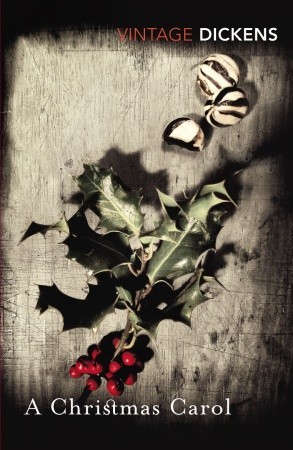
A Christmas Carol by Charles Dickens


A Christmas Carol is a book I've read many times, and until I tried A Tale of Two Cities earlier this year, it remained the only book by Dickens I have actually enjoyed.  As I haven't picked it up for a few years, I was excited to read it again this year with Riv, in the run up to Christmas.

I'm sure most people are familiar with the story through the many adaptations (Muppet Christmas Carol being my favourite, and surprisingly faithful to the original).  Grumpy, miserly Ebenezer Scrooge is visited by the ghost of his former business partner, Jacob Marley, and warned that he is in for a grim fate unless he changes his ways.  Through a series of visits by the Spirits of Christmas Past, Present and Future, Scrooge learns that there is more to life than money and the pursuit of making more money.

Like most classics, A Christmas Carol stands up well to repeated re-readings.  Even though I have read it many times before, each time I try it, I get something new from it.  On past readings, I have been focused on Scrooge's journey to change and how the visions the Spirits show him have such an effect on him.  The Spirit of Christmas Past is the one that I find the most powerful, as we see Scrooge before he became so bitter and emotionally closed off, and we see the missed opportunities in his life.  I'm sure we all have experiences and missed opportunities in our own lives that it would be painful to revisit.

But on this read, I was more struck by what happens after Scrooge wakes up on Christmas morning and decides to make amends.  He realises that he must change, but the thought of apologising and actually facing the people he has made miserable is daunting to say the least;

"It sent a pang across his heart to think how this old gentleman would look upon him when they met; but he knew what path lay straight before him, and he took it."

"He passed the door a dozen times, before he had the courage to go up and knock.  But he made a dash, and did it."

All through the night, Scrooge has been exposed to what these people really think of him and he wakes up with a lot of shame about his own actions, and also embarrassment at the thought of facing people who think so badly of him.  But he does it anyway, and on this read I found this particularly striking.  I am a person who can't stand to think that other people might not like me, so I know how hard it must have been for Scrooge to put things right, and how it shows a lot of courage in it's own way.  Shame and pride are powerful emotions to overcome.  It's not always easy to do the right thing, and I was encouraged by the way that Scrooge set about making things right.

As you can tell, I really enjoyed this reread.  I do think A Christmas Carol is very sentimental, and Dickens wouldn't get away with it at any time other than Christmas, and I also think it's implausible how long Scrooge takes to realise whose death it is when the Spirit of Christmas Future visits, but it's still the perfect book for Christmas.  Reading it makes it revisit all the previous times I have read it, which is guaranteed to put a smile on my face.  Highly recommended, even if you think you know the story to death already.

Source: Personal copy
First Published: 1843
My Edition: Vintage UK, 2009
Score: 5 out of 5