Showing posts with label fantasy. Show all posts

Sunday, 18 January 2015

Project 1001: Two Book Reviews

My two 1001 Books projects have got off to a flying start.  From my adult list, I picked up Michel Faber's Under the Skin, which I received for Christmas.  I was already a Faber fan before starting this novel, the fourth of his that I have read.  And it's completely unlike the others, being dramatically different in tone and content to his more famous work The Crimson Petal and the White. 

The story opens with Isserley, who spends her time driving along the roads of the Scottish Highlands, looking to pick up male hitch-hikers, but only the large, muscular ones.  Apart from that, there's nothing else I could say about this novel without ruining how unexpected, different, surprising and chilling it is. There's so much I could rave about, particularly concerning Faber's brilliant use of language, but the reveal in this book is so wonderful that I wouldn't want to spoil it for anyone.  Just trust me when I say that it is an amazingly gripping book, one that will lodge into your brain.  There's one scene in particular that I can not get out of my head, and that has made me completely re-evaluate a certain aspect of my life.  Under the Skin is a book that seeks to challenge and confront, and it does so very cleverly.  It's a book I will remember and think about for years to come. If you like thrillers, sci-fi, or books about ethical issues, you really need to pick this one up. 5 out of 5 stars.

From my children's list, my first selection was Lian Hearn's Across the Nightingale Floor, mainly because it was readily available in my library.  The main character, Takeo, is a member of a secretive religious group called the Hidden in a fantasy world based on Japan, when he witnesses the massacre of his friends and family. Escaping with the assistance of the mysterious Lord Otori, Takeo comes to learn more about his past, and the supernatural talents he has inherited from his ancestors.  When he discovers who is responsible for the massacres of the Hidden, and for the autocratic rule large parts of the island are suffering under, he becomes involved in a plot to assassinate the tyrannical Lord Iida.

Across the Nightingale Floor is best described as a crossover novel between YA and adult.  It's shelved in the adult section of my library but the two main protagonists are teenagers, and a lot of the plot deals with Takeo finding out who he is and what is important to him.  What I liked about the novel was that Hearn didn't shy away from darker issues or pretend that everything was always going to be OK.  Death and grief are handled sensitively but straight-forwardly, without talking down to the reader at all.

I enjoyed reading Across the Nightingale Floor, as it's always good to find fantasy set in non-Western contexts.  I liked reading about the belief systems of the people in Hearn's worlds, and the different approaches to marriage and politics.  Although the beginning and end sections of the novel were pacy and engaging, the plot did seem to lag in the middle, and sometimes I had trouble keeping track of who was related to who, and what others thought of them, as there was much in the way of intrigue going on.  Still, I enjoyed it enough to want to continue with the series.  3.5 out of 5 stars.

Tuesday, 30 December 2014

Reading Journal #2: Race, Fairies and Epic Fantasy


With Tom on Christmas holidays for the past week and a bit, I've had more time to sink into some fantastic books.  Christmas makes me crave something magical from the fantasy genre, something full of wonder and delight and escapism.  One year I devoured the whole Inkheart series by Cornelia Funke, and it was just perfect for the season.

Aside from The Hobbit, which I have a full review of here, I also decided to pick up Jo Walton's Among Others this Christmas, which I've heard great things about.  It features one of the strongest protagonists I've come across in a long time, Morwenna Phelps, a fifteen year old girl in 1979 who has just run away from her mother, a dark witch, after the death of her twin.  She ends up at an English boarding school and the book is told in the form of a diary.  The real magic in Among Others is the way that Mori's love of reading is expressed.  Any book lover will relate to her descriptions of her feelings as she reads various books, and how books have become her solace in difficult times. When she has to be thankful for something as she prays, she is thankful for the interlibrary loan system.

I think Among Others would be even more special for someone who grew up reading science fiction.  I've read my fair share, but nowhere near as much as Mori, and I didn't catch all of the references.  But as a book lover, her enthusiasm got to me and I ended up writing a list of all the books she mentioned that I must get my hands on, Ursula Le Guin prominent among them (should I start with Earthsea?).  The main plot of the book follows Mori's attempts to use magic to stop her mother and her attempts to come to terms with the death of her sister, but the fantasy elements are written with a light touch.  In fact, I'm not even sure whether I believed Mori at all, or whether she just had an over-active imagination.  I treasured the book mostly as a coming of age story, in line with Dodie Smith's I Capture the Castle. Highly recommended.

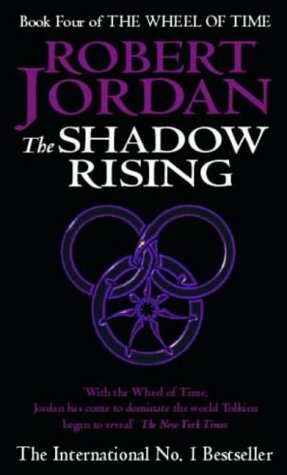
A lot of my December reading has been taken up with the fourth installment in Robert Jordan's epic Wheel of Time series, The Shadow Rising.  These are really immersive books and by now I know enough about the world and characters that reading them is just pure escapism.  As always, the writing was a bit meandering, and the way that the female characters are written leaves a lot to be desired, but I have so much fun reading them.  This volume was roughly 1000 pages, but it just flew by.  I loved visiting the Aiel Waste and finding out more about women who can channel (do magic) in the different societies of the world, and the varying ways they are treated.  I found the sections where Perrin returns to the Two Rivers, his homeland, to defend it rather boring, and I'm optimistic that he will feature less in the next volume, which I'm sure I will pick up before too long.

And now for something completely different - race relations in the Deep South.  Earlier in the month, I wrote a blog post about all the fantastic books on my kindle I have yet to get to, and Scottsboro got a lot of love in the comments.  And well deserved all of that love was.  It's based on the true case of a group of nine black boys arrested in Alabama in 1931, accused of raping two white girls, which they didn't.  One of the girls stubbornly sticks to her story, but the other keeps changing her statements, and it's soon clear to anyone with a brain that the boys are innocent.  But this is the Deep South in the 1930s, and the political powers in Alabama have no interest in freeing the boys - indeed, they think they have been remarkably fair by giving them a sham trial, rather than just lynching them on the spot.

The story is told mainly from the perspective of a female journalist from New York, who becomes part of the campaign to free the boys.  She is a great voice as she's remarkably perceptive on the subtle nuances of the different prejudices of those supporting and condemning the boys.  She points out that a lot of the support is for personal or political gain, observing that if the boys were to suddenly turn up in the middle of a New York party full of their 'friends', no one would know quite what to do with them.  We are also introduced to Ruby, one of the two girls who originally cried rape. Feldman deftly uses Ruby's poverty and life history to show why she lied, and why she would tell the truth.

In places, Scottsboro was a depressing read.  There's one point late in the novel where I had to set it aside for a minute, disgusted by the selfishness of humans in general, and how willing we as a society are to knowingly allow others to suffer for our gain.  Somehow, no one in this book is doing the right thing for the right motives, and it made for grim reading.  I take my hat off to Feldman's wonderful writing and perceptiveness, and this is surely an important book. I can't see I enjoyed all of it, but it had a powerful impact on me.

And that's my recent reading up to date.  At the moment, I'm in a bit of a classics mood, and I'm thinking of rereading Pride and Prejudice by Jane Austen over the next few days.  After that, I'm intending to look through my classics club list and pick a few more titles to immerse myself in. Happy reading in 2015!

Saturday, 27 December 2014

The Hobbit by J.R.R. Tolkein


I have a bit of a long history with The Hobbit. I tried (and failed) many times to read it as a child, but never got out of the Shire.  It was enough to make to decide that Tolkein was just not for me, but then I saw the Lord of the Rings films, loved the books on a second reading, and now I've come full circle and picked up The Hobbit again.  It's the story of Bilbo Baggins, a hobbit who accidentally gets caught up with a group of dwarves off to kill the dragon who is guarding the stolen treasure of their ancestors.  Along the way, Bilbo will learn a lot about himself.

The Hobbit was a surprising read for me, in that it didn't turn out in the way I expected it to at all. From the initial chapters, I had Thorin, the leader of the dwarves, pegged as the hero of the novel, and was imagining him smiting Smaug and generously sharing his treasure in the final chapters. But it wasn't like that at all, and the characterisations were surprisingly complex for a children's novel. Thorin is shown as brave, determined, and a good leader, but he is also greedy and blinded by his desire for Smaug's treasure.  Similarly, the Master of one of the towns is morally ambiguous too.

Really, The Hobbit is all about Bilbo.  Like most good children's books, it's main themes are centred around growing up and developing as a person.  Bilbo starts the novel as reluctant to leave his home, scared of the world around him, and overly dependent on Gandalf and the other dwarves. When Gandalf leaves the group around half-way through the story, Bilbo gets a chance to come into his own.  He starts making decisions, believing in himself, and in the end he emerges as one of the few characters untainted by greed for Smaug's treasure.  There are a lot of opportunities for him to learn to be resolute, and to never give up, even when the going gets tough.

The other main theme of the novel is money and greed.  We see good characters caught up in their desire to hoard the treasure, even when there is more than enough of it.  Thorin doesn't want to give any of it away, even though there is no way he could use or transport more than a small quantity of it. The Hobbit is very much focused on friendships, personal strength and doing the right thing, as opposed to acquiring money or possessions.  So it was perhaps a good read for the Christmas season!

I was surprised by how much I enjoyed The Hobbit, even more so than I did the  Lord of the Rings trilogy.  Perhaps because it is aimed at children, the adventure moves on at a brisk pace, and there is always something going on.  Highly recommended.

Source: Personal copy
Score: 4.5 out of 5


The Classics Club: Book 30/72
My list of titles and reviews can be found here.

Friday, 21 November 2014

Blogging Break Reads

Whilst I wasn't blogging over the last month or so, I was most definitely still reading.  Here are some quick thoughts on the titles I finished:

Rivers of London by Ben Aaronovitch

Peter Grant thinks he is headed for a dull life of police paperwork when he finds himself interviewing a ghost following a murder in central London.  This leads him to Chief Inspector Nightingale, the last wizard in England, and the person in charge of policing the parallel, magical London.  The number of gruesome murders across the city is increasing, and it's up to Grant and Nightingale to find out and apprehend the supernatural culprit.

I had high hopes going into this book, as it's the first of a very well regarded series, but I was disappointed.  I liked the urban fantasy atmosphere and the originality of the supernatural elements, but ultimately this book was too much crime, too little fantasy for me.  I wasn't interested in solving the crime alongside Peter and as a result the pages dragged.   This one has been donated to the charity shop, and I won't be continuing with the series.
2.5 out of 5


A Little History of Literature by John Sutherland

I love the Little History series, and this literature based volume did not disappoint.  Covering everything from Greek myths to the future of printed books, this book is divided into short, bite-sized chapters that give an overview of authors and trends from the Western canon.  There's also chapters dealing with the development and history of the publishing industry.

I studied science at university, so I was missing a general overview of the history of literature, and this book filled that gap nicely. It's perfect to dive in and out of, as each chapter only takes a few minutes to read. Although I would have liked to have seen more on non-Western literature, I loved this book as it inspired me to pick up more classics.  Highly recommended.
5 out of 5


The Impressionist by Hari Kunzru

Pran Nath is the son of an Indian woman and English man.  Throughout his life he experiences being a privileged son, a cast out, exploited in a backstreet brothel, a political pawn, a student at Oxford university and finally an anthropologist.  Pran is able to flit between these roles effortlessly, assuming new identities, but what are the consequences of lacking a true identity?

This book is truly epic in scale, covering three countries and a dazzling array of side characters.  It's also utterly engrossing, mainly for the minor characters and the settings, which are bought vividly to life.  I really enjoyed this for the story, but have a feeling I missed some of the deeper meanings involving post-colonialist identity.
4 out of 5


The Dragon Reborn by Robert Jordan

The third volume in Jordan's epic fantasy series, The Wheel of Time. This series is a bit of a guilty pleasure for me.  Objectively, I know there is lots to dislike about it - the repetitive descriptions, the fantasy clichés, the gender stereotypes, the unnecessary, pace-slowing detail - but I just can't help but find this series utterly compelling.  It's just wonderful escapism, especially now Jordan has broadened the world somewhat and introduced new places in this volume.

I wouldn't recommend this series to everyone, and I'm not even sure why I like it so much, but like it I do.

4 out of 5

Friday, 29 August 2014

A Natural History of Dragons by Marie Brennan


A Natural History of Dragons is the story of a young woman trying to overcome the prejudices of her age in order to become a scientist. It's set in a fantasy world similar to Victorian England (but with the inclusion of dragons) and follows a fictional memoir format, with Lady Trent looking back on her early life and first scientific expedition.  Isabella (Lady Trent) recounts her childhood and how her fascination with her father's library led to her passion for science and dragons.  After a chance encounter with a dragon as a young child, she is keen to devote her life to studying them.  But in this world, the role of a young lady is to act politely ignorant and find a husband, something Isabella finds herself chafing against.  It's only when she meets a man who is a scientist himself, and supportive of her radical-for-the-times ambitions, that she is able to make contacts and secure a place on an expedition to the dangerous mountains of Vystrana, where she hopes to catalogue and understand dragons of all species.

I really enjoyed A Natural History of Dragons.  It's set in a Victorian-type world, and the writing style harks back to that era too.  It reminded me a lot of Jonathan Strange & Mr Norrell in this regard, and it's something I definitely appreciated.  Isabella's voice felt authentically Victorian, and I loved the slower pace, although this is something that might not be for everyone.  I've read quite a bit on the history of science and I loved the little echoes of this process in Brennan's book, it felt as though this all could have happened, if only dragons were real.  We get to read about the 'scientific' reason why dragons can fly, despite being so heavy, and what their wings are made of.  Little details like this can really make a book for me.

Of course, I loved the theme of a woman overcoming the prejudices around her, and it was interesting to see the contrast between Isabella at an early age, and Lady Trent writing her memoirs, sometimes reflecting on the naivety of her younger self.  A Natural History of Dragons is the first in a series, and I can't wait to read the next installment.  The only problem with the book, and the reason it wasn't a 5 star read, was that the secondary plot involving smugglers and deception in the village felt a little bit forced to me and didn't engage me.  I wanted to read about dragons and science, not worry about who wanted Isabella out of the Vystrani village.  Still, I'm very much looking forward to getting my hands on the next volume.

Source: Library
First Published: 2013
Score: 4.5 out of 5

Read Alongside:

  1. Jonathan Strange & Mr Norrell by Susanna Clarke - A story of magicians set in Regency England, where everything is the same but magic exists.  This one has a similar writing style and is one of my favourite books, I really need to revisit it soon.
  2. Remarkable Creatures by Tracy Chevalier - Historical fiction centred around Mary Anning, who discovered dinosaur fossils along the Dorset coast of England.  This has similar themes of a woman trying to break into science, and is an excellent read.

Friday, 4 July 2014

Catching Up: Mini Reviews

Thank you to everyone who took the time to congratulate me and comment on last week's post about the birth of my son, Giles.  One of the best things about blogging is the friends that I have made, and I was reminded of that when I read through all of the comments :)  I'm continuing to recover very well, and am feeling almost normal again.  Of course, life itself is a bit of a blur of feeding, nappy changing and trying to get a very wide awake baby to go to sleep at 3am in the morning.  I have been able to read a bit (kindles are great for one handed reading!) but most of the following reviews are for books I finished up whilst waiting for Giles to arrive.

1. A Game of Thrones by George R. R. Martin
This was a reread that I started as soon as I became overdue and needed distraction!  I loved this book the first time around and loved it even more the second.  I picked up on more of the clues for what was to happen in the future, I was able to see how much the characters had developed and I liked the simplicity of the plot-line.  This is the only book in the series where most of the main characters are together for most of the time, which makes it more coherent than the other volumes.  Escaping to Westeros was just what I needed, even if I can't see myself re-reading the rest of the series any time soon. 5 out of 5 stars.


2. The Constant Princess by Philippa Gregory
When I first started reading historical fiction, I quite liked Philippa Gregory.  I soon grew out of her, but her books are kind of a guilty pleasure for me.  The Constant Princess is about the life of Catherine of Aragon, and focuses particularly on her marriage to Arthur, and the beginning of her subsequent marriage to Henry VIII after his brother's death.  As always, Gregory takes a bit of a liberty with the facts but this book was a quick, fun read.  3 out of 5 stars.


3.  Guns by Stephen King
As a Brit, the debate about gun ownership in the USA really fascinates me.  Here, guns are a non issue - people aren't allowed to own them, and I can't think of anyone I know who would want to.  Only small sections of the police are armed, and most people would be scared rather than reassured to have a gun in the house.  So I'm not going to comment on King's arguments, which seemed logical and practical to me, as I'm not the intended audience.  I will say that the whole thing felt a bit rushed, as if it were hurried for publication, and this ruined my enjoyment of his writing a bit.  3 out of 5 stars.


4. Fangirl by Rainbow Rowell
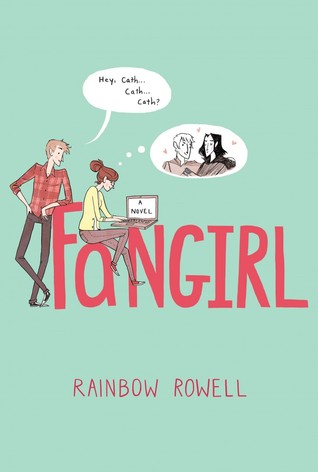
This one I read after Giles arrived, in the night time moments when he wasn't quite ready to be put into his Moses basket yet and just wanted to be held.  It's about twin sisters Cath and Wren, who begin to grow apart when they start university.  I really liked the main character, Cath, and could relate to her shyness and awkwardness around people.  The love story was very sweet, and the whole thing was extremely hard to put down.  I've come to the conclusion that I just enjoy Rowell's young adult fiction more than her adult books.  4.5 out of 5 stars.


Friday, 13 June 2014

The Golem and the Djinni by Helene Wecker


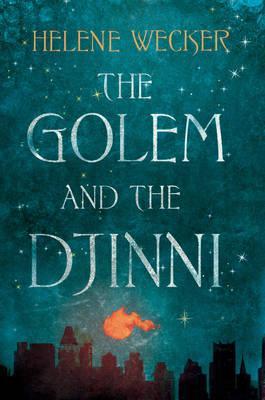
Chava is a golem, a creature made of clay and bought to life using an ancient Jewish Kabbalistic ritual.  She's created to be the wife of Otto Rotfield, but he dies on their passage from Poland to New York, leaving Chava alone in the nineteenth century city, completely alien to those around her.  As she tries to fit in and suppress her differences, she has a chance encounter with Ahmad, a djinni.  After centuries of freedom in the Syrian desert, Ahmad was enslaved and bound.   Accidentally released by a tinsmith but still trapped in human form, Ahmad is desperate to regain his freedom.  As the two creatures find their way in the city and try to uncover their roots, an unusual bond grows between them.

Advance warning:  this review is going to be glowing!  I've been excited about reading The Golem and the Djinni ever since it first came out, especially as it's been compared to Jonathan Strange & Mr Norrell, one of my favourite novels ever.  The Golem and the Djinni contains so many of the elements that I love to read about; fantasy tied to a convincing mythology, an interesting historical setting, the inclusion of magical elements in a believable way, creatures straight out of Arabian Nights and an exploration of Jewish culture.  In fact, I actually put off reading this book for ages, as I was worried it wouldn't live up to my unreasonably high expectations.

But I shouldn't have worried at all - The Golem and the Djinni is probably my favourite read of the year so far and I can't see anything surpassing it.  The mythology woven into the story by Wecker just felt so plausible and I loved how authentic her nineteenth century New York was.  The mystery of Ahmad's capture and the secrets of Chava's creator was beautifully done, with small clues being dropped all throughout the story.  I loved the sections that took place in Syria amongst the Bedouin people, and also the way Wecker wrote about the Jewish immigrant community in the city.  Chava and Ahmad's friendship felt natural and unhurried, and I like that a lot about this was left ambiguous and unresolved.

It's fair to say that I liked everything about this book.  It's not going to appeal to every reader; it's quite slow paced in places, but in my mind it's a rare example of a great fantasy novel for adults that weaves in historical culture and context in a believable way.   If you liked Jonathan Strange & Mr Norrell or A Discovery of Witches, you'll love this!

Source: Personal copy
First Published: 2013
Edition Read: HarperCollins, 2013
Score: 5 out of 5

Saturday, 17 May 2014

Inkspell by Cornelia Funke

"This book taught me, once and for all, how easily you can escape this world with the help of words!  You can find friends between the pages of a book, wonderful friends!"

The Inkheart books are pure comfort reads for me.  I first read them whilst I was at university and I think I finished up the whole trilogy in a week or so.  I just loved the concept of being able to read yourself in or out of a book, of characters coming to life and changing their stories in front of your eyes. What bookworm hasn't dreamt themselves into the pages of their favourite novel?

Inkspell is the second book in the series (I read and reviewed Inkheart in December), so this review contains spoilers for the first volume.  It's been a year since the events of Inkheart, and Meggie is unable to leave her adventure behind her, remaining utterly obsessed with the Inkworld.  Dustfinger is of course still trying to find his way back into the novel, and he finally seems to have come across a reader capable to reading him and Farid into the Inkworld, Orpheus.  But when Orpheus goes back on his word and Farid is left behind, he seeks out Meggie to try to find another way in.  Despite knowing the dangers of what she is doing, Meggie can't resist reading herself and Farid into the pages of the story.  However, it turns out that the story is a living, breathing thing, that has changed beyond Dustfinger's experiences and the author's intentions.  A dangerous leader, the Adderhead, is rising in the South, and the Inkworld has become a treacherous place for all of the original characters from Inkheart.

It goes without saying that I loved Inkspell; I wouldn't be rereading it if I didn't.  I love that we actually get to go into the Inkworld for the first time in this volume, and that the cast of characters is expanded.  My favourite of the new characters is the Black Prince, the leader of the Motley Folk, a band of travelling performers, and his pet bear.  I love the inventiveness of the Inkworld and also it's straightforwardness - there is a clear line between good and evil.  Normally this is something that would bother me, but it fits really well with the escapism of the novel and the way that the atmosphere captures childhood fantasy classics.

Unfortunately, Inkspell isn't quite as good as Inkheart.  It's longer and more meandering, and probably could have been cut down a bit.  I know that Funke needed to get her characters into the Inkworld for the trilogy to continue, but I find it hard to believe that Meggie would have ever have read herself in, given her experiences in the last novel and Mo's opinions of the world.

Still, Inkspell is perfect comfort reading that allows you to escape into a magical fantasy world.  It's old fashioned in tone and manages to take me back to my childhood without patronising me.  I remember being disappointed with Inkdeath, the final book in the trilogy, when I read it the first time, so I can't wait to get on to rereading it so I can see if my opinion has changed.

Source: Personal copy
First Published: 2005
Edition Read: Chicken House, 2006
Score: 4 out of 5

Saturday, 19 April 2014

The Great Hunt by Robert Jordan (Wheel of Time #2)

My reread of the Wheel of Time series continues.  Last time, I got up to book seven, but this time I am determined to finish the whole thing!  This review contains spoilers for the previous volume in the series, The Eye of the World.

The Great Hunt picks up straight where The Eye of the World left off. The original group of characters separates, with Rand, Perrin and Mat joining the quest to retrieve the Horn of Valere, crucial in the attempts to stop or hinder the Dark Lord. Meanwhile, Nynaeve and Egwene journey to Tar Valon to start their training to become Aes Sedai, where they meet up with Elayne, the daughter-heir of Andor.  Whilst all of this is going on, a mysterious army invades from the West and one of the Forsaken is loose.

The Great Hunt is epic in all senses of the word.  It's very long at 700+ pages and it's epic in scope and world-building.  After re-reading the first volume in the series, all of the characters felt familiar to me, so it was relaxing to slip back into Jordan's world and let the story-telling continue.  In this volume, we get to see a bit more of his world, and I loved the glimpses of Tar Valon and the Aes Sedai training in particular.  In fact, the sub-plots involving the female characters were far more interesting than the 'main' plot involving Rand.  I like the political intrigue around the different factions of Aes Sedai, and I enjoyed the section of the book dealing with Nynaeve's rise to the status of Accepted.  Later on, when Egwene is captured by the Seanchan army, I liked reading about how the different societies in Jordan's world deal with women who can perform magic.  This was all more interesting than Rand, who is still stuck in the 'I can't believe this is happening to me' phase of denial.

For me, the Wheel of Time series is great comfort reading.  I thoroughly enjoyed this volume and am looking forward to the next, but I'm well aware that the series as a whole has it's flaws.  The contrast between good and evil is too well drawn, with not enough characters showing any shades of grey.  Much of the plot relies on Rand being a bit simple and not picking up on obvious clues that the woman who is 'helping' him isn't all she proclaims to be.  And there's a lot of journeying and conversation relative to action.  Despite all of this, I found reading The Great Hunt to be a relaxing experience; sometimes there's nothing like settling into a familiar world and re-visiting old characters again.

Source: Personal copy
First Published: 1990
Edition Read: Orbit, 2006
Score: 3.5 out of 5

Monday, 17 March 2014

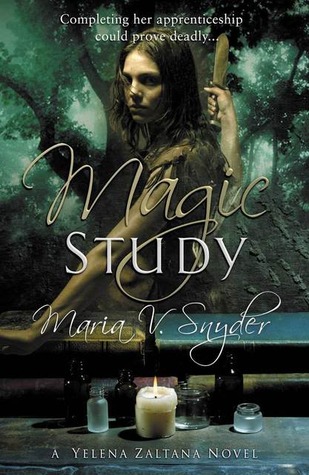
Magic Study by Maria V. Snyder


Last year I read Snyder's Poison Study, the story of a young woman given a reprieve from a death sentence in order to become a food taster.  I thought it was a well written lighter fantasy novel with good world building, an interesting plot and a romance that didn't dominate the whole book.  Therefore I was keen to pick up the second book in the trilogy, Magic Study, but unfortunately it was a bit of a let down.

At the start of Magic Study, Yelena is taken to meet her family in Sitia, where magic is still valued, and she can be guided to develop her potential.  But meeting her family isn't all she imagined it to be; Yelena struggles to feel a connection with the unfamiliar lifestyle of her parents and her brother is outwardly resentful and hostile.  Even though her life in Ixia was fraught with danger, she starts to miss the comfort of a structured and ordered society, in which all of the rules are clear. When she journeys to the citadel to be taught magic, her feelings of disconnection grow.  To make matters worse, a rogue magician starts capturing and torturing young women with magic skill, and Yelena is drawn into the attempt to stop him.

Ultimately, I didn't enjoy Magic Study, especially compared to Poison Study.  The main character, Yelena, had seemed to become a completely different person.  In Poison Study she was somewhat headstrong and reckless, but her actions were always thought through.  In Magic Study, she seems to delight in blundering from one horrible situation to another, sometimes on purpose, never thinking about what she is doing.  Most of the book is taken up with her either moping around missing Ixia (where they want to kill her!) or recklessly plunging head-first into a dangerous situation despite her being warned against doing so by every single responsible person in the novel, including a talking horse!  There's a lot of her being kidnapped and then miraculously using her magic to escape, which felt convenient and like lazy plotting.  I was also uncomfortable with the way that rape and rape threats were used in the novel.

Unforutunately, Yelena wasn't the only character who had become a completely different person.  Valek, her love interest from the first novel, and the master of spies in Ixia, is now basically reduced to being a love-sick puppy.  In the first novel, he is morally ambiguous, cold and calculating, but in Magic Study, all this has gone and it seems like the only thing he cares about is Yelena, which is completely out of character.  I found this frustrating and annoying, as why go to all the trouble of developing a more complicated relationship if you are only going to simplify it in this way in the sequel?

As you can tell, I wasn't a fan of Magic Study. I will say that it was easy to read and contained some interesting action sequences, but this wasn't enough to redeem it for me.  I definitely won't be continuing on with the trilogy.

Source: Personal copy
First Published: 2006
Score: 2 out of 5

Wednesday, 26 February 2014

The Return of the King by J.R.R. Tolkein


I have completed my Lord of the Rings re-read, and it didn't take me a year between volumes this time!  In The Return of the King, the battle for Middle Earth is finally played out.  As Frodo and Sam journey into Mordor with the aim of destroying the ring, Aragorn attempts to distract Sauron with a series of battles, each more desperate than the last.    Dark forces are massing outside the city of Gondor, ruled by the steward Denethor, who is becoming increasingly pessimistic and unwilling to take the steps needed to muster a response, especially after the death of his son Boromir.  Can Aragorn step up and prove himself to be a leader as the war reaches its final days?

Although Fellowship of the Ring remains my favourite of the trilogy, I enjoyed Return of the King more than The Two Towers.  As we are at the end of the story, the pace becomes much brisker and there is a sense that now all of the pieces are in place, the main events can begin.  There's less of Frodo and Sam wandering aimlessly around Middle Earth, and more battles and strategy.  I enjoyed visiting Gondor and I especially enjoyed the character of Faramir, who has to choose whether to do the right thing, regardless of the instructions from his father.  It can be hard to do the right thing, but even more so when you receive nothing but scorn for doing it.

In this volume, the main characters continue to develop. Gandalf increasingly takes a back-seat, so that Aragorn and the hobbits can solve things for themselves.   On this read, I really related to this theme of growing up.  At the beginning of the trilogy, Gandalf was the person with all the answers, and we saw how lost the Fellowship was without him.  But by the time we reach the very end, everyone has been through so much and the issues are so complex that Gandalf no longer has the metaphorical magic wand that can fix everything.  And this perfectly captures the bitter-sweet feeling of growing up.  I loved that a high fantasy novel can still make you reflect on your own life, and how you have grown;

"Do you not yet understand?  My time is over: it is no longer my task to set things to rights, nor to help folk do so.  And as for you, my dear friends, you will need no help.  You are grown up now.  Grown indeed very high; among the great you are, and I no longer have any fear for any of you."

On the whole, reading The Return of the King was definitely a positive reading experience, mainly due to the wide cast of characters and the fact that too much page time wasn't devoted to Frodo and Sam.  I must admit that I did get a bit frustrated with the end of the novel, as there were still many pages after the destruction of Sauron.  There were too many goodbyes, too many visits to old friends, and the final events in the Shire seemed a bit unnecessary, as Tolkein had already shown that the hobbits had matured.  It felt as though Tolkein had grown so attached to his characters that he couldn't bear to leave them without explaining what happened to everyone in great detail, and it did get a bit tedious.

On this second read of The Lord of the Rings, I think I can finally appreciate why the books are classics in the fantasy genre.  The world building is just so good, and the story itself so engaging.  I'm not sure if I'll read them again, but I'm glad I took the time too revisit them.

Source: Personal copy
First Published: 1955
Edition Read: Harper Collins, 1999
Score:  4 out of 5


The Classics Club: Book 22/72
My full list of titles is here.

Saturday, 22 February 2014

The Ghost Bride by Yangsze Choo


The Ghost Bride is a historical fantasy novel set in a Malaya ruled by the British Empire.  Li Lan is a member of the Chinese community there, the daughter of a once prosperous and respected man, who has become bankrupt following the death of his wife.  Life seems to hold few opportunities for Li Lan until she learns of an offer to become a ghost bride, the wife of the dead son of the wealthy Lim family.  At first she is horrified, but the more she learns about the family and the circumstances surrounding the death of Lim Tian Ching, the more she is drawn into the mystery of the household. Soon she finds herself exploring the spirit world of Malaya, guided by the enigmatic Er Lang, in a quest to find out what really happened and why she has been selected as a ghost bride, before she is trapped forever in the shadowy after-life.

I started The Ghost Bride expecting it to be mainly historical fiction, so the amount of fantasy in the novel surprised me.  But in a good way.  Choo has taken Chinese beliefs about the afterlife and used them to create a fascinating, fully formed fantasy world that is the unreserved star of the show.  I just loved the blending of fantasy with traditional beliefs, it lent an authenticity to the whole book.  I'm always on the look out for fantasy that isn't set in medieval Europe, and with this book I stumbled across a great example of it accidentally.

Another thing I enjoyed about The Ghost Bride was the character of Li Lan herself.  She starts off as quite shy and easily led by both her family and the Lim family, but as the book progresses we get to see some strong character development, culminating in an episode towards the end where she's in quite a sticky situation. Rather than hope for someone to come and save her, she's determined to sort things out herself, which I really liked.  It would have been easy for Choo to write a passive female, especially considering that Er Lang is technically supernatural, so I liked that she made Li Lan stick up for herself as the book went on.

This book does contain a love triangle, but thankfully the romance elements are very light and take a back-seat to the adventure and the exploration of the afterlife itself.  I found The Ghost Bride easy to read but yet unlike anything else I've read, a book that I'm sure will stick with me for some time.  Recommended for anyone who likes fantasy but is after something a bit different.

Source: Personal copy (kindle)
First Published: 2013
Score: 4 out of 5

Read Alongside:
If you're after more diverse fantasy, I've enjoyed the following (links to my reviews):
  1. Throne of the Crescent Moon by Saladin Ahmed - Arabian Nights-esque high fantasy featuring ghuls and dervishes.  Lots of fun.
  2. The Killing Moon by N.K. Jemisin - Proper epic fantasy inspired by Ancient Egypt.  A man trained to enter the dreams of others comes up against the corruption of the government and priestly sects.
  3. Alif the Unseen by G. Willow Wilson - The story of a young hacker in an Arabic country who discovers that there's more to reality than just what you can see.

Thursday, 6 February 2014

The Night Circus by Erin Morgenstern

In the late nineteenth century, Celia and Marco are protégés of magicians capable of wonderful feats.  Both have been raised with the knowledge that one day they will face an opponent in a competition testing their skills in every way.  That competition takes the form of a circus that opens only at night, and that contains a dazzling array of tents and performances; from ice gardens to a cloud maze and a wishing tree.  The circus is hugely popular with the public, who attend in droves, not quite understanding that magic is the basis of everything around them.  But as the years pass, the performers and circus workers start to notice something unusual, and the pressure of maintaining such a complex competition arena starts to tell on Celia and Marco.  Matters are further complicated when their feelings for each other start to intrude on their desire to win.

I've owned The Night Circus ever since it came out in hardback, because I am a sucker for hype.  I tend to buy hyped books when they are hyped (and this one is a beautiful hardback) but then wait a few years to read them, when I can approach the book with a clear head.  Despite having read many glowing reviews of The Night Circus in the past, I tried to approach it as I would any other novel.

And The Night Circus is a very good book.  I wouldn't say it's as strong as it has been made out to be, but it's distinctive and unique.  Morgenstern's writing is extremely visual and the circus just came to life in my imagination, with little effort on my part.  I adored the style of the circus, and the way all of the little details, like the clock and the red scarves, were described fully.  I longed to visit the circus and see the tents for myself.  The magical atmosphere matched the historical setting perfectly, and I can not fault Morgenstern's 'vision' for the novel at all.

As well as this, the plot was interesting and the competition element kept things moving along at a brisk pace; the story never dragged.  Celia and Marco were both well developed characters and although their romance was a little intense and overdone at times, it fit with the magical elements of the story.  The secondary characters were perhaps more interesting than the main ones, especially Celia's father and the twins, Poppet and Widget.  All the characters were described in the same visual way as the circus itself, and this made them really come to life.

Actually, there's not much I didn't like about the The Night Circus.  I think the only reason I didn't love it in a 5-out-of-5 star way is that I couldn't help but compare it to Jonathan Strange and Mr Norrell.  Both are stories of magic rooted in nineteenth century England, and The Night Circus just falls a bit flat by comparison.  It doesn't have the depth or mythology of Jonathan Strange, and comes across as more style over substance.  It's still an excellent book and one I would highly recommend, it's just not quite up there with my absolute favourites.

Source: Personal copy
First Published: 2011
Score: 4 out of 5

Saturday, 4 January 2014

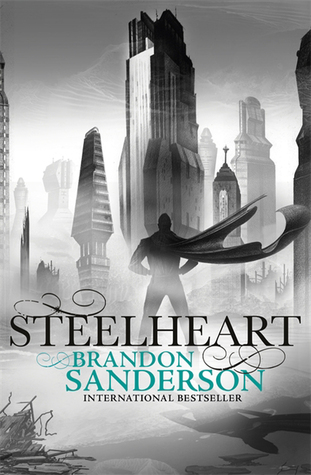
Steelheart by Brandon Sanderson


David lives in Newcago, a city of darkness controlled by a powerful Epic named Steelheart.  Ten years ago, Calamity came and normal humans were randomly endowed with superhuman powers.  It didn't take long for the absolute power of this to corrupt the super-humans/Epics and for normal society to break down, as it became clear that humans couldn't fight or control the Epics.  Newcago is the fiefdom of Steelheart, who has created eternal darkness, and who carries out vicious public murders to terrify the population, but it is still safer than the anarchy that exists elsewhere.  The only humans who are trying to fight back against the powerful Epics are the mysterious Reckoners, ordinary humans who target and assassinate Epics.  Teenager  David wants nothing more than to join the Reckoners in order to gain revenge on Steelheart, who brutally murdered his father in front of him when he was just a child.  But are there any good sides in this conflict?

Steelheart is the first book by Brandon Sanderson that I have read, and I was impressed. Steelheart is fast paced, action packed and tightly plotted, which means it is easy and enjoyable to read; I breezed through it in just a couple of days.  I loved the core idea of the novel, of super-powers corrupting individuals, and I appreciated that Sanderson put in just enough moral ambiguity to make the story work.  Is it ethical to murder Steelheart, even though he has done terrible things, if what will follow his death will only be chaos, civil war and a power struggle between remaining Epics for control of Newcago?  Is it the right thing to do if it will only make the situation for ordinary people worse?  Is it acceptable to commit terrorist acts in order to fight evil?  I liked that Sanderson had David ponder all these issues whilst he was working with the Reckoners, and I liked it even more than he presented no answers to the moral questions raised throughout the novel.

The strength of Steelheart is definitely the plotting.  In comparison, some of the characterisations felt a bit weak.  David was a bit too good to be true sometimes, always able to think up the right thing to do in some very tricky spots.  I liked the way Sanderson wrote the characters of most of the Reckoners themselves, but the love story between David and Megan was very cheesy at times.  It was a low-key element that didn't dominate the plot, but it felt like an unnecessary bolt-on and I would have been happier without it being included at all.

Even though Steelheart is the first book in a proposed trilogy, it had a satisfying ending and worked well as a stand-alone novel.  Although I can guess where Sanderson is going to go in the next volume, enough loose ends were tied up for me to feel like there was resolution.  I was really impressed with the plotting and world-building in the book, and now I'm quite keen to pick up another Sanderson novel, maybe the first volume in the Mistborn series.  Fantasy fans will definitely appreciate this novel.

Source: Library
First Published: 2013
Score: 4 out of 5

Monday, 25 November 2013

The Bloody Chamber by Angela Carter


The Bloody Chamber is a collection of fairy tales.  But not fairy tales as you would remember them from your childhood; grown-up fairytales full of violence, horror and sexuality.  From Bluebeard to Beauty and the Beast to Puss in Boots, Carter reinvents the traditional tales in haunting ways.  

I'm never quite sure how to review short story collections.  Novels are easier as they tend to have one over-arching plot to comment on, where as short story collections have so many.  I think I will mention some of the stories that made the most impact on me, before offering general thoughts on Carter's writing.

Without a doubt, the most powerful story was the titular one, The Bloody Chamber.  In this retelling of the Bluebeard legend, a young woman journeys by train to the castle owned by her wealthy new husband, a Marquis.  The Marquis has been widowed three times and his castle is truly a gothic masterpiece set against a roaring and angry sea.  When he has to leave on a business trip, he hands his new wife the keys to all of the rooms in the castle, including one that he forbids her to enter.  Of course, her curiosity gets the better of her, and what she sees in the forbidden room hints at a terrible fate waiting for her.  I loved this stoy the most as it was so genuinely thrilling; I had guessed what would be in the room, but Carter still weaves this wonderful web of suspense, that made me feel genuinely scared for the woman, yet unable to stop turning the pages.  The writing is so rich and full of sensuality as the sexual awakening of the main character mingles and becomes confused with the danger she is in.

I also loved The Erl-King, which was just so atmospheric.  A young woman is drawn into the dark heart of a sinister forest by the mysterious sprite-like Erl King, who seems to be made from the forest itself.  He has total power over all living creatures and she is completely under his spell.  But as her visits continue, the young woman realises that she is trapped, and that the Erl-King only means her harm.  I enjoyed this story in particular as it was just so haunting, Carter conjures up what it is about deep, dark forests that speaks to us somewhere buried inside, and puts all of the that into the character of the Erl-King.  As with The Bloody Chamber, sex and danger are two elements of the tale, and the main character also takes steps to get herself out of a threatening situation.

To be honest, there wasn't a single tale in The Bloody Chamber that I didn't enjoy and savour.  In fact, I had to force myself to slow down whilst reading it and appreciate each individual story, as my initial impulse was to devour the book in one sitting.  Carter's writing is just so rich and descriptive, so full of atmosphere that it simply sweeps you away.  I fell in love with it within a few days and didn't stop admiring it all the way through.  She completely reinvents familiar tales in ways I would never have thought of and personalises them, so the characters actually feel emotion and respond appropriately (something that you don't get to see in the original stories).  Carter's characters think and feel in this wonderfully lush setting and the result is simply wonderful.  I can't think of enough glowing sentences to describe just how fantastic this book is, you're just going to have to trust me when I say it's simply brilliant.

If you haven't read it, you need to go and get yourself a copy.  It's the best thing I've read all year.

Source: Personal copy
First Published: 1979
Edition Read: Penguin, 1986
Score: 5 out of 5

Saturday, 16 November 2013

Throne of the Crescent Moon by Saladin Ahmed


Adoulla is a ghul-hunter.  For years he has battled ghuls and demons, protecting the citizens of Dhamsawaat and the Crescent Moon Kingdoms.  Just when he is thinking of retiring, he hears news of a strange and gruesome murder in the family of the woman he loves.  As he and his assistant, the dervish Raseed, investigate, it becomes clear that they are up against an opponent stronger than any that came before.  The murder is only the most recent in a series, including the whole tribe of Zamia Badawi, who has the power of the Lion-Shape.  As the three attempt to track and destroy the man controlling the ghuls, Dhamsawaat itself is caught in a battle of wills between the despotic Khalif and the 'Falcon Prince', a man who claims to fight on behalf of the poor.  As the final battle draws closer, the city is immersed in civil war.

I read Throne of the Crescent Moon for Aarti's A More Diverse Universe event, in which readers try speculative fiction written by people of colour.  I love fantasy but the settings can get a bit repetitive after a while, so it was refreshing to pick up a book like this, that takes more from A Thousand and One Nights than it does Medieval Europe.   In fact, the setting was my absolute favourite part of the book; Ahmed has taken all of the mystic elements from stories like Aladdin and created a world that is full of ghuls, burning sand, teashops, white robed holy men, curved swords, overly zealous religious police and silks.  I honestly wanted to dive right into the book and explore Ahmed's world, I've never read a fantasy book quite like this.

The overall plot was a traditional fantasy one of overcoming evil with magic and fighting.  I enjoyed the main characters of Adoulla and Raseed, although Zamia felt a bit like a stereotype of a fierce, strong woman rather than a complex character in her own right.  I would liked to have seen a different side to her, more vulnerability or uncertainty.  On the other hand, the Falcon Prince had a lot of moral ambiguity that was exploited particularly at the end of the novel, and this made it much stronger.

I'm sitting here trying to work out why I didn't love everything about this book and I think it's because the world was so magical and wonderful that the plot was always going to fall slightly short.  At times the pacing of the story seemed a bit off and there wasn't any real urgency until the final battle scenes.  But it's still a book that I thoroughly enjoyed, one that I escaped in and one that completely captured my imagination.

Check out other books reviewed for the event here. 

Source: Library
First Published: 2012
Edition Read: Gollancz, 2013
Score: 4 out of 5

Sunday, 10 November 2013

The Ocean at the End of the Lane by Neil Gaiman


I write this review as someone who is not a Neil Gaiman fan.  I loved Stardust (although that is probably more to do with the brilliant film version) and The Graveyard Book, thought that Coraline and Neverwhere were just OK and to be honest, didn't like Anansi Boys at all.  I think Neil Gaiman has wonderful ideas but his writing has always been hit and miss for me.  I wasn't going to try Ocean at the End of the Lane, but it's been getting so much hype that I decided to give Gaiman one more chance.  This was going to be a make or break book; if I didn't like it, I was prepared to give up and admit that Gaiman just isn't for me.

But I did like in; it fact I more than liked it, I loved it. The Ocean at the End of the Lane is the first Neil Gaiman book I have sped through, completely enchanted and desperate to find out what would happen next.  It's the story of a man who has returned to his home town for a funeral, and who ends up visiting the farm where he met Lettie Hempstead, her mother and her grandmother.  As soon as he reaches the property, the memories start flooding back, starting with the suicide of a lodger staying at his house.  This suicide allows dark creatures to enter the world, who want to destroy him and his family.  The only people who can help are the Hempsteads, who claim that the pond in their garden is really an ocean, and that they are as old as the Big Bang itself.

What I loved most about The Ocean at the End of the Lane was the atmosphere and nostalgia of the book.  I am just about old enough to look back on my childhood fondly and miss some of the simple pleasures and imaginations of being young.  Gaiman captures this feeling perfectly; even when something bad is happening in the book, there's this sense of childhood and time, and having the freedom to check out stacks of books from the library and devour them in your bedroom.  It's a bittersweet portrayal of childhood memories and it's one that certainly worked for me.

I also enjoyed the magical elements of the story.  They are kept mysterious and the line between what actually happened and what was distorted by memory or imagined is deliberately kept blurred.  The ending fit in with this theme and was perfectly bittersweet.  As with all Gaiman books, the rather ordinary main character is allowed his moment to shine and there's the theme of doing the right thing, even if it isn't the easy thing, and of ordinary people finding courage within themselves.

To be honest, it's hard to put into words exactly what I loved so much about this book, as it was more of a feeling than anything logical.  The book just enchanted me, swept me away and left me with a big smile on my face and a contented feeling inside.  It's short and bittersweet and I would highly recommend it, even if you think Gaiman isn't for you.

Source: Library (although I will be buying my own copy).
First Published: 2013
Score: 5 out of 5

Monday, 7 October 2013

The Bone Season by Samantha Shannon


Paige is a clairvoyant, with the ability to leave her body and break into the minds of others.  This skill makes her hunted by Scion, who rule a dystopian version of London in 2059.  Clairvoyance is seen as unnatural and is punishable by death, forcing Paige and others like her to hide their abilities or join the mob-ruled criminal underworld.  Paige is working for underground leader Jaxon Hall when she is captured and detained.  She is sure she will be punished by the Scion authorities, but instead she is transferred to Oxford, a city that has been kept secret for over two hundred years.   There she learns that Scion has kept it's own secrets from it's citizens and that a whole other race exists.  Kept in the control of Warden, Paige yearns to escape but the only person who can help her may be the person who is imprisoning her in the first place.

The Bone Season certainly has had a lot of hype surrounding it.  Shannon has famously signed a seven book deal with Bloomsbury and this title has been everywhere, with the inevitable comparisons to J.K. Rowling.  I was keen to try it for myself and see if it lived up to expectations.

One thing that certainly impressed me was the world building.  Reading The Bone Season is an immersive experience, as Shannon throws you straight in there with the characters, leaving you to work out how the society works for yourself.   This is how I like my fantasy/sci-fi and I was impressed at the amount of detail and thought that had gone into the set up of Scion London and Oxford, as well as the creation of an entirely new race/type of creature, the Rephaim.   The world hung together well and it's clear that the author knows it inside out.  For example, there are over fifty different types of clairvoyant listed in beginning of the book.

Although Paige was an interesting main character, The Bone Season is all about the plot.  It's an action packed novel and one that will have you turning the pages quickly.  This is the kind of book I would happily have stayed up all night to read, as it's utterly engrossing.  I was pleased that the romance in the novel was of the slow-burning kind and it never overwhelmed the main plots at all.  As Shannon allowed the romance to develop slowly, it felt plausible for Paige's character.

On the whole, reading The Bone Season was certainly a lot of fun and I'm glad I picked it up.  I simply rushed through it but having finished it, I've realised that it hasn't had much of an impact on me.  The ideas are clever and the story well written, but it's not a book I will remember or want to reread.  For this reason, it's not going to be a favourite.

Source: From the publisher, in exchange for an honest review.
First Published: 2013
Score: 3.5 out of 5

Read Alongside:
Poison Study by Maria Snyder - This story is also about a young woman who is kept prisoner, but who eventually forms an unlikely alliance with her captor.  The fantasy elements in this novel centre around magic rather than clairvoyance.

Thursday, 3 October 2013

Four Mini Reviews

Although I've been reading just as much as ever, my review writing and posting has kind of gone out of the window since the start of the new academic year!   Rather than go back and write individual reviews, I've decided to just write brief thoughts on some of the books I have read recently.

The Newlyweds by Nell Freudenberger
Amina met her new husband, George, on an online dating site in which Western men can meet non-Western women.  After leaving behind her life in Bangladesh for a new one in America, Amina has the complexity of a marriage to deal with, as well as getting used to a brand new culture.

I found The Newlyweds to be a simply stunning book.  It was well written and showed life in full technicolour glory, with all it's trials, complexities and disappointments.  Despite the unconventional way that George and Amina came together, the ups and downs of their marriage and the development of their relationship is one that most people would be able to relate to.  The issue of infertility was dealt with sensitively and realistically, and all of the characters have to face some hard truths.  There was a wonderfully bitter-sweet ending, in which all of the characters got what they thought they had wanted, only to question whether they wanted it at all.  Don't expect a fairy-tale.  5 out of 5 stars.

Fevre Dream by George R.R. Martin
I am a big fan of the Song of Ice and Fire Series, so was keen to pick up Fevre Dream for the RIP VIII challenge.  Abner Marsh is a destitute steamboat captain on the Mississippi river when he is offered a lucrative proposal by Joshua Yorke, a man has odd eating habits and keeps strange hours.  As you might have guessed, Joshua is a vampire and Abner is soon pulled into the murky and blood-thirsty world of vampire politics, when Yorke comes into contact with a vampire that leaves a trail of horror behind him.

If you like Anne Rice, you'll love Fevre Dream.  It's got the same atmosphere and I loved the idea of vampires on steamboats on the historical Mississippi.  It had some genuinely creepy moments, the story moved on at a decent pace and Martin may have come up with the idea of True Blood before the TV show.  All in all, it was good fun and an ideal autumn read.  3.5 out of 5 stars.


Neverwhere by Neil Gaiman
Another RIP read.  There is a parallel London alongside real London, populated by the people that have fallen through the cracks of modern society.  When Richard Mayhew takes pity on an injured girl, Door, he becomes sucked into London Below, full of monsters, angels and knights.  There really is an angel at Islington and friars at Black Friars tube station.  As he helps Door find out what happened to her family, he comes up against danger at every step.

As always with Neil Gaiman, I was in awe of his creativity and the genius of his ideas.  However, something about Gaiman's writing just doesn't click for me and this prevents his books from being truly enjoyable.  I admire them, but I don't love them.  I did enjoy Richard's character growth and the choice he eventually makes about who he wants to be, but I just couldn't connect with the writing and that made the whole experience sadly underwhelming.  3 out of 5 stars.


The Last Olympian by Rick Riordan
In the last volume of the Percy Jackson and the Olympians series, Percy, Annabeth and the rest of the half-bloods must battle to save Mount Olympus from the invading Titans, and the Prophecy about Percy's 16th birthday is finally played out.

I don't want to say too much about this one as I don't want to spoil the ending of the series, but I found it to be a most satisfying finale to the whole thing.  As always, the events were fast paced, the plot was action packed and there was a good amount of character development mixed in for good measure.  In fact, the whole thing wrapped up so nicely that I'm not sure why Riordan went on to write the Sons of Olympus series, featuring some of the same characters.  Although I didn't enjoy this one quite as much as The Battle of the Labyrinth, it still gets top marks for being such a great final volume.  The whole series was such fun and I loved racing through them.  5 out of 5 stars.
Have you read any of these books?  If so, I'd love to know what you think of them.

Saturday, 21 September 2013

The Battle of the Labyrinth (Percy Jackson and the Olympians #4) by Rick Riordan


Book 4 in the series!  In real life I binged on these books, reading them one after the after in a matter of days, but I've been trying to spread out my reviews so as not to overwhelm you with all the Percy Jackson!  If book three, The Titan's Curse, was the first one in which more mature themes are included, book four continues that.  Percy and his friends must go into the mythical labyrinth from the Minotaur story in order to prevent it from being used against Camp Half-Blood by Luke and Kronos.  As things gear up towards the epic showdown coming in the final volume, Percy must make a tough decision; whether to stay and fight, or to take the easy way out.

As always with this series, spoilers ahead!

The Battle of the Labyrinth is my favourite volume in the entire series.  Part of the reason why is that I just love the concept of the Labyrinth itself, an ever growing and changing thing that is susceptible to dark influences as well as light.   It's a dangerous place, full of endless twists and turns, mythical creatures and seems to almost have a dark force in itself.  I liked that the clue to solving the labyrinth came from a mortal, something that of course would have been overlooked by Luke and Kronos.

Speaking of Kronos, in Battle of the Labryinth we really get to see why creatures, gods and half-bloods are turning against Mount Olympus.  Greek mythology is stuffed full of minor players, who have been ignored or neglected by the major gods.  Being made to feel important is extremely seductive, and it's good that we get something from Riordan beyond 'they picked the bad side because they were evil'.

But what I love most about this book is the scene where Percy ends up on Calypso's island.  At this point in the story, his life is basically a battle with more to come, as well as the prophecy he is dreading.  Calypso's island and life is idyllic and she offers him the opportunity to stay there and pretty much avoid all of that bad stuff going on in his real life.  It can be very hard to turn away from something that makes you happy in order to do something right, especially if the 'right' path isn't the easy one.  I loved that Percy had to make this choice, and I think that it's a great message for younger readers of the novels.

As with all the books of the series, Battle of the Labyrinth is fast-paced and full of action.  Percy's voice is still witty and a joy to read.  I think I enjoyed this book the most out of the series as it's 'grown up' but not completely taken up by war, as the final one is.  This means there's more time for fun and character development, as well as plot.  The only thing I'm not too keen on is the introduction of Rachel Elizabeth Dare, the regular human who helps Percy through the Labyrinth.  She's also there to add tension to the Percy and Annabeth 'relationship', which I get, but she's just a bit too perfect for my liking.  Annabeth feels a lot more real.

But that's a minor complain, I just love this book!

Source: Personal copy
First Published: 2008
My Edition: Disney Hyperion, 2009
Score: 5 out of 5

My reviews of the other volumes in the series: