Saturday, 7 February 2015

Cannery Row by John Steinbeck

Cannery Row is the third John Steinbeck novel that I have read,  but it was completely unlike the other two.  Lacking what anyone could call a real plot, Cannery Row is best described as a series of vignettes that star the inhabitants of the Row, that work together to build up a vivid portrait of a particular place at a particular time.  Steinbeck takes as his subjects the misfits of society - prostitutes, drunks, artists and squatters, and he describes their lives and the everyday occurrences that happen in them.  Homeless Mack and his group of boys move into an abandoned building and set about improving it.  Lee Chong, the grocery owner, is called upon to accept payment in frogs rather than cash.  Doc, a lonely biologist, journeys to the coast to collect specimens.  And the prostitutes at Dora's place face a busy season.

I loved that Steinbeck set this novel among the 'low-life' inhabitants of the Monterey area, and that he infused it with such humanity and hope.  Despite the miserable surroundings the characters find themselves in, their lives are essentially happy.  They aren't caught up in consumerism and the desire for status, and they are able to appreciate some things about life that we can miss, such as how valuable simple acts of kindness can be.  Perhaps because they have found themselves at the bottom rung of society, they live without judgement and simply take people for who they are.  That's a message that we all need to be reminded of every now and again, that beauty and kindness can be found anywhere.

The sense of place in Cannery Row is fantastic.  Steinbeck's writing seemed more poetic in this novel, particularly when he was describing the quality of light over the row, or the sunrise over the sea.  It made the novel extremely visual, and by the end I felt as if I knew Cannery Row myself, as I could imagine it all so clearly.

My only complaint with the novel is that, in common with the other Steinbeck novels I have read, there was too much focus on the male characters.  The character of Doc was fascinating, and so was Mack, but I wanted to read more about Dora and the women who worked for her.  There's a great little section where Dora schedules the girls to deliver soup and company to families during a flu outbreak between clients, but it's never expanded on.  I wanted to know their thoughts and motivations, and experience their lives too.  Similarly, it's hinted that Lee Chong has a wife, daughters and daughters-in-law, but they are entirely absent from the novel.

Still, Cannery Row is a beautiful novel.  The writing and the characters combined to give me such a feeling of hope, that people anywhere can live their lives in a decent and caring way.  I'm looking forward to getting to the sequel, Sweet Thursday.

Source: Personal copy
First Published: 1945
Edition Read: Penguin Modern Classics, 2000
Score: 4.5 out of 5


The Classics Club: Book 33/72
My full list of titles and reviews can be found here.

Sunday, 1 February 2015

January 2015 Wrap-Up


January was an awesome reading month for me, the best since Giles was born in June.  Not only did I finish 11 books and 3259 pages, but I was really into reading and lots of the books ended up being 4 or 5 star reads. I read the following (links to my reviews):
  1. Pride and Prejudice by Jane Austen 
  2. World War Z by Max Brooks
  3. The Viral Storm by Nathan Wolfe
  4. The Good Earth by Pearl Buck
  5. Under the Skin by Michel Faber
  6. Across the Nightingale Floor by Lian Hearn
  7. The Strange Library by Haruki Murakami
  8. There Was a Country by Chinua Achebe
  9. The Blue Castle by L.M. Montgomery
  10. State of Wonder by Ann Patchett
  11. Where I'm Reading From by Tim Parks
My favourite book of the month was unquestionably The Blue Castle.  Even though Under the Skin and The Good Earth were also five star reads, The Blue Castle was just so cosy and comforting, and I loved Valancy's journey to independence and freedom.  The only disappointing book of the bunch was World War Z, which was a good idea but way too heavy on the army and logistics front.

In terms of diversity, 18% of the books were by authors of colour, and 36% by authors that aren't British or American.  I'm OK with that, but I'd still like to read more works in translation, something I'll keep in mind for February.  I read 36% non-fiction, which I am thrilled with, and my reads included classics, fantasy, horror, science, literary fiction, history and essays.  I'm glad that I'm reading a good mix of things and not getting stuck in a particular genre.

Eight of the eleven books that I read were from my TBR shelves, which would be amazing if I hadn't also purchased the following eight, thus cancelling out all of my good work:

  1. The Book of Strange New Things by Michel Faber
  2. The Miniaturist by Jessie Burton
  3. I Am Malala by Malala Yousafzai
  4. The Visitors by Sally Beauman
  5. The Martian by Andy Weir
  6. Station Eleven by Emily St. John Mandel
  7. A Free Life by Ha Jin
  8. Life After Life by Kate Atkinson
Still, at least I haven't added to my overall TBR!

Looking forward to February, the only thing I will definitely be reading is Robert Jordan's The Fires of Heaven, book five in the Wheel of Time series.  I'm currently about half-way through it, but it's a chunky book so should keep me happy for some time.  After that, I'm going to read mainly by whim, but hopefully knock one book off my classics club list, and one off either of my Project 1001 lists.

How was your reading month?

Friday, 30 January 2015

Reading Journal #4: Two More for the End of January


I'm still reading books more quickly than I can review them, which is a shame as both of these titles deserve full reviews.  First up is Ann Patchett's State of Wonder, which I've been meaning to read since it was short-listed for the Orange Prize in 2012.  The story opens with Marina, a pharmacologist for a large drugs company, learning about the death of her colleague Anders in the Amazon rainforest.   Anders was checking up on the progress of the mysterious Dr Swenson, who had claimed to find a tribe where the women bear children right up until their death, and who was developing a drug to enable Western women to do the same.  Marina is given the task of finding out what happened to Anders, and of completing his assignment, and Patchett follows her into the rainforest, where she doesn't find what she is expecting to.

Patchett touches on a lot of big themes in State of Wonder, including race, colonisation, research ethics, the agendas of pharmaceutical companies and the decision of when to have children. However, she also combines this with a fast paced and interesting plot, which is surely the best of both worlds.  I enjoyed the character of Dr Swenson, who was full of contradictions, and Marina's personal growth was well done. Patchett's writing was lovely too, especially in the section where Marina has to inform Anders' wife of his death. My only complaint is that the final section moved way too quickly, with too many plot points resolving themselves in a way that seemed a bit too coincidental to be true. Reading State of Wonder was an enjoyable experience and I'm looking forward to picking up Bel Canto now.  4 out of 5.


Next I picked up an essay collection from the library.  Where I'm Reading From was a random pick from the shelves; I'd never heard of Parks before but I'm always susceptible to books about books (and pretty covers), so I was keen to give this one a go.  Where I'm Reading From contains 37 essays divided into four sections, covering world literature, bookish issues, being a writer and translated fiction. Inevitably, I enjoyed some essays more than others.  For example, I enjoyed Parks' thoughts on e-books, that in a sense they are a truer reading experience as you get the text of the book without the distractions of covers or publisher decisions, and there isn't the impulse to acquire them as they look good on your shelves, or because they make you look 'well read'.  It's not an opinion I agree with, as I think there is more to physical books than Parks gives them credit for, but it was still interesting to read.

One of Parks' main arguments throughout the collection is that 'world literature' is leading to everything becoming too similar, with the variety of local experiences being lost.  He quotes authors who make decisions based on the fact that their work will be translated into English, if they aren't writing in English themselves.  Characters with complicated names are avoided, and local customs are either left out completely or over-explained.  Authors paint a picture of their country that they think will satisfy the West, as so much emphasis is now placed on global sales and translation rights as a mark of author status.  Parks argues that this means that lots of the variety and richness of fiction rooted in a particular culture is being lost.  Again, I'm not sure that I agree, but it's something I had never thought about before.

Whilst Where I'm Reading From was definitely thought provoking, I found it too repetitive.  Lots of the essays basically say the same thing, just from a slightly different angle, and this made the collection feel over-long.  I enjoyed mentally debating with Parks, but think Where I'm Reading From would have been a lot stronger if it was shorter.  3 out of 5.

Sunday, 25 January 2015

Sam Sunday #62: Seven Months Old


It's been a while since I've written a personal post.  Life on maternity leave has continued much as normal, with lots of walks round the park and playing.  Giles turned seven months on Thursday, and it's in this last month that I've really seen some changes.

The first change is how mobile he is.  Giles has always been mobile (even as a newborn he could roll over), and he started to crawl at five months, but now he is so fast and can get pretty much anywhere. He is also pulling himself up to standing against everything, cruising sideways along the sofas, and today I found out that he can actually climb the stairs.  We're spending a lot of time baby-proofing our house at the moment, but it's worth it as being mobile has made him so happy.  Giles was never a contented baby, no matter what we did, but now that he can go wherever he wants, whenever he wants, he is much happier.  I think this is what he has wanted ever since he was born!

His personality is really starting to show now, too.   Looks-wise, he is all Tom, but several people are commenting that his personality is more like mine.  Like me, he is very determined, and doesn't give up when there's something he really wants to do (like climb the stairs).  Some may even go so far as to call it stubborn, but there's nothing wrong with a bit of persistence in life!  He's also getting more into playing with his toys now, and has learned to wave and clap, which is very cute.  He's into his food, especially now he has six teeth to chew it with.

The main issue is what it has always been - sleep.  Naps have always been a disaster, and not much is improving.  When I put him down for a nap in the day, he will sleep for a maximum of 20 minutes and then wake up still tired and crying, wanting me to hold him while he goes back to sleep.  The nights are getting better (apart from the teething nights), but you would never describe him as a good sleeper.  I dream of getting a full night's sleep, just once!  But now that we have had seven months of poor sleeping, Tom and I are taking a more philosophical approach - he has to sleep through eventually, and until then we are just taking it one night at a time.

There's big changes coming up for both of us though - in two weeks time I return to work and I've got such mixed feelings about it.  I do genuinely enjoy my job (teaching) and I'm looking forward to the mental challenge and to do something that I find very rewarding.  But at the same time I know I'll miss Giles like crazy, and it's going to be hard to accept that someone else will be doing all of the little things I am used to doing with him during the day.  At the moment, I'm just planning to make the most of these last two weeks.

How has your week been?

Friday, 23 January 2015

Library Trip #2: I Have A Problem!


I just want to read all of the books, all of the time at the moment.  This has resulted in yet another library trip, in which I have checked out more books than I will ever have the opportunity to read:


  • Somewhere - This is a collection of short stories with the premise 'somewhere else', so it contains a lot of speculative fiction.  I'm in the mood for trying short stories at the moment, and this collection contains a story by Michel Faber, so I can't lose!
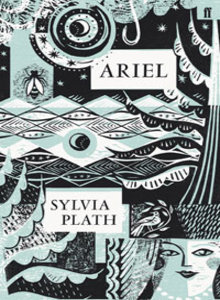
  • Ariel by Sylvia Plath - I never read poetry, although I keep intending too.  I loved Plath's poetry as a student, and am looking forward to reading this collection in it's entirety.
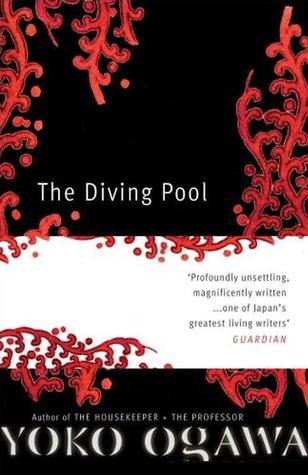
  • The Diving Pool by Yoko Ogawa - More short stories/novellas!  Ogawa's writing intrigues me, as it seems to have an undercurrent of darkness running through it.  I've been meaning to try some Japanese literature that isn't Murakami, and this seems like a good place to start.
  

  • Changing my Mind by Zadie Smith - I love Zadie Smith, so I'm keen to try her collection of essays.  It's split into four sections; reading, being, seeing and feeling, and I can't wait to dip in and out of them.
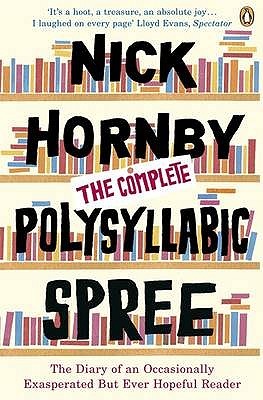
  • The Complete Polysyllabic Spree by Nick Hornby - This is essentially a collection of essays about what Hornby has been reading, and I've seen rave reviews of it on other blogs.  I enjoy the light style of his fiction works, so hopefully that will translate well to these essays.
  • Where I'm Reading From by Tim Barks - As you can see, I was loving the essays section of the library today.  This collection promises to be about books and how the way we appreciate both them and literature is changing, which sounds very interesting.
If you've read any of these titles, I'd love to hear your thoughts on them.  It might help me to prioritise!

Wednesday, 21 January 2015

Reading Journal #3: A Bumper Reading Month


This month, I am in love with reading again.  I always enjoy reading, but sometimes I get into a phase where I want to spend every free minute lost in a book, and happily that's where I am now.  I'm reading during Giles' naps and all evening after he has gone to bed, and I'm simply loving it.  What's more, I'm picking up some fantastic books too.

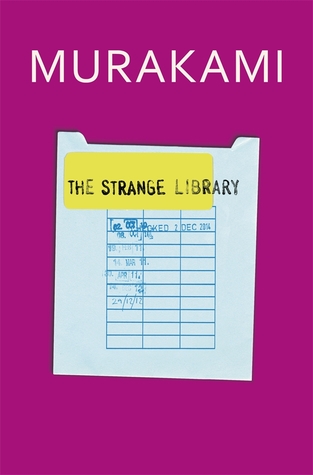
The first book I have to write about is Haruki Murakami's novella, The Strange Library.  I've read one other Murakami book, Norwegian Wood, and whilst I thought it was OK, I was disappointed to find out that it's one of his straightest novels, lacking in the surreal and magical elements that he is more famous for.  The Strange Library seemed like a good way of getting to grips with his more usual style.  Told with words and pictures, it's about a young boy who wanders into a library one day, as he wants to find out how taxes were collected in the Ottoman Empire.  He is directed to a special 'reading room' in an underground maze, and here he is imprisoned with a sheep-man and a girl that only he can see.

The Strange Library isn't really much of a story, and I read it in under an hour, but it had a beautifully haunting quality about it, a bit like a fairy tale.  I'm sure there is some deeper meaning to all of the strangeness, to do with grief and obedience, but I was happy just to revel in it and enjoy the experience.  It helps that this is a truly beautiful book, and the images add a lot to the story.  Now that I've finished this one, I'm looking forward to exploring the more surreal side of Murakami, starting with The Elephant Vanishes, a collection of short stories I already own.   4 out of 5.

After finishing The Strange Library, I was in the mood for some non-fiction so I picked up Chinua Achebe's There Was A Country. Ever since reading Chimamanda Ngozi Adichie's excellent Half of a Yellow Sun a few years ago, I've wanted to learn more about the Biafran war, in which Biafra decided to declare itself independent of Nigeria.  Achebe was deeply involved in this part of history, being Biafran and acting as a Biafran envoy in countries all across the world, as well as living through the conflict.

There was a Country is a powerful book.  Achebe blends history, politics, memoir and poetry together to create a personal account of the time.  Starting from his childhood during the British Empire, Achebe gives a brief overview of Nigeria gaining independence, and the problems that came after, before launching into the Biafran war.  Achebe manages to impart a lot of information without it ever feeling dull, and the poems were haunting.  Whereas the actual text occasionally lacked emotional engagement, the poems more than made up for it.  Sometimes Achebe's straight-forward writing made the book all the more impacting, particularly when he was discussing the deliberate policy of starvation employed against the Biafrans, and the near-misses encountered by his family. My only complaint is that sometimes Achebe became too bogged down in names and individual events rather than showing the whole picture.  But the tone of regret, of Achebe's sadness at the lost opportunity Nigeria's independence represented, permeates the whole book and makes it devastating.  4 out of 5

After the heaviness of war and corruption, I turned the L.M. Montgomery's The Blue Castle, a novel I picked up on impulse from the library.  I have read and enjoyed Anne of Green Gables, so I was keen to read Montgomery's adult novel.  The heroine is Valancy, a twenty-nine year old woman who has been written off  as an old-maid.  Unquestioningly obedient, she has allowed her family to stifle her, and the only joy she has is escaping to a fantasy land, in which she lives in a magnificent blue castle.  But when she is told by a doctor that she only has a year to live, due to a heart condition, Valancy resolves to actually live.  Throwing off her fears, she sets out to experience as much as possible, and to do things that please her, of course scandalising her rather staid community.

The Blue Castle has a lot of comic moments and a perfectly swoon-worthy love story, but at heart it's a coming of age story, about finding yourself and having the courage to make your own choices in life.  I loved watching shy, obedient Valancy stand up for herself, and act according to her own personal values.  In a way, this book was ahead of it's time, what with Valancy moving out, getting a job to support herself, and even making her own marriage proposal.  The Blue Castle is a dream of a book, that made me smile, inspired me, and reminded me of the joys that life can bring.  5 out of 5.

Sunday, 18 January 2015

Project 1001: Two Book Reviews

My two 1001 Books projects have got off to a flying start.  From my adult list, I picked up Michel Faber's Under the Skin, which I received for Christmas.  I was already a Faber fan before starting this novel, the fourth of his that I have read.  And it's completely unlike the others, being dramatically different in tone and content to his more famous work The Crimson Petal and the White. 

The story opens with Isserley, who spends her time driving along the roads of the Scottish Highlands, looking to pick up male hitch-hikers, but only the large, muscular ones.  Apart from that, there's nothing else I could say about this novel without ruining how unexpected, different, surprising and chilling it is. There's so much I could rave about, particularly concerning Faber's brilliant use of language, but the reveal in this book is so wonderful that I wouldn't want to spoil it for anyone.  Just trust me when I say that it is an amazingly gripping book, one that will lodge into your brain.  There's one scene in particular that I can not get out of my head, and that has made me completely re-evaluate a certain aspect of my life.  Under the Skin is a book that seeks to challenge and confront, and it does so very cleverly.  It's a book I will remember and think about for years to come. If you like thrillers, sci-fi, or books about ethical issues, you really need to pick this one up. 5 out of 5 stars.

From my children's list, my first selection was Lian Hearn's Across the Nightingale Floor, mainly because it was readily available in my library.  The main character, Takeo, is a member of a secretive religious group called the Hidden in a fantasy world based on Japan, when he witnesses the massacre of his friends and family. Escaping with the assistance of the mysterious Lord Otori, Takeo comes to learn more about his past, and the supernatural talents he has inherited from his ancestors.  When he discovers who is responsible for the massacres of the Hidden, and for the autocratic rule large parts of the island are suffering under, he becomes involved in a plot to assassinate the tyrannical Lord Iida.

Across the Nightingale Floor is best described as a crossover novel between YA and adult.  It's shelved in the adult section of my library but the two main protagonists are teenagers, and a lot of the plot deals with Takeo finding out who he is and what is important to him.  What I liked about the novel was that Hearn didn't shy away from darker issues or pretend that everything was always going to be OK.  Death and grief are handled sensitively but straight-forwardly, without talking down to the reader at all.

I enjoyed reading Across the Nightingale Floor, as it's always good to find fantasy set in non-Western contexts.  I liked reading about the belief systems of the people in Hearn's worlds, and the different approaches to marriage and politics.  Although the beginning and end sections of the novel were pacy and engaging, the plot did seem to lag in the middle, and sometimes I had trouble keeping track of who was related to who, and what others thought of them, as there was much in the way of intrigue going on.  Still, I enjoyed it enough to want to continue with the series.  3.5 out of 5 stars.