Phileas Fogg is a man who lives his life following a routine with military precision until one day he bets his companions at a gentleman's club that he can travel around the world in just eighty days. Accompanied by his new servant, impulsive Frenchman Passepartout, Fogg heads out by train, boat and elephant to meet his goal. Along the way he will rescue a damsel in distress, commandeer a ship and gain a follower in the shape of Inspector Fix of Scotland Yard, who thinks Fogg is an ingenious bank robber. But will he win the bet and travel round the globe in just eighty days?
Although I've never read Around the World in Eighty Days in it's entirety before, I remember reading some extracts from it during English lessons in secondary school and finding it rather dull. So I decided to add it to my Classics Club list to find out whether I was just too young for it, or whether it's simply not a book for me. And the good news is that I found it anything but dull on this read. As a teenager, I completely missed the wit that Verne sprinkles throughout the novel, but this time I fully appreciated the sarcasm and the gentle way Verne pokes fun at Fogg and English gentlemen of the nineteenth century. Verne doesn't take his novel too seriously, and as a result it's enjoyable to read. Yes, the attitudes expressed by the characters and author are in line with what you would expect from the times (there's a lot of casual colonial prejudice), but Verne also mocks these views too. In fact, I couldn't quite work out whether Verne agreed with Fogg or not. There's a light-heartedness about the whole novel that was refreshing.
I like to think that Verne saw himself as a bit of a Passepartout. Whilst Fogg is cloistered in his train carriage, uninterested in seeing the sights anywhere he goes, Passepartout is the one that seizes the opportunity of travel. Compared to Fogg's almost ludicrous English stiff-upper-lip attitude, Passepartout comes across as impulsive, brave and in many ways, the real hero of the novel. There's a lot of mocking of the English but it comes across as gentle and you get the sense that Verne was an Anglophile after all.
What I love about classics is the way they make me think, and Around the World in Eighty Days was no exception. Although the story was light and action-packed, it made me think about the nature of travel. I couldn't believe that Fogg was visiting all those wonderful places but yet showing no desire to get to know them, remaining focused simply on getting around the world just so he could say that he had. I love to travel, especially by train, and many of the journeys in the book made me think back over my own experiences. Travel should be savoured, not rushed. Passepartout reminded me that we should make the most of every opportunity that comes our way, not remain locked up inside of ourselves, like Fogg.
However, there were elements I didn't enjoy about Around the World in Eighty Days. As Fogg shows no interest in the countries he visits, it's left up to Verne to fill us in on them and it comes across as lecturing at times. The whole mistaken identity thing with Inspector Fix drags on for too long and becomes too much like a comedy of errors; I was tired of it by the end of the novel. The romance was implausible and felt like an add-on rather than central to the story. But none of these things take away from the fact that Around the World in Eighty Days is a good old-fashioned adventure story full of drama and excitement. I'm glad that I read it.
Source: Personal Copy
First Published: 1873
My Edition: Penguin UK, 2008
Score: 3.5 out of 5
Classics Club: Book 4/72.
You can see a list of the classics I intend to read here.
Saturday, 22 December 2012
Thursday, 20 December 2012
Peirene Discussion Post #2: Male Voices
Lyndsey from Tolstoy is my Cat and I are now two-thirds of the way through our epic Peirene Press novella read-along. The last three titles we have read Next World Novella, Tomorrow Pamplona and Maybe This Time (see below for links to our reviews) have been part of a series entitled Male Voices, and focus on the quest for intimacy from a male perspective. Here are some thoughts of ours on the novellas:
1. Have you enjoyed the series? Did you have a particular favourite? Why?
Lyndsay: I have enjoyed the series, although it hasn't left me swooning like the 'Female Voices' series did, most likely because the female ones were much more like the books I normally gravitate towards and enjoy. The 'Male Voice' series has been wildly illuminating for me for that exact reason though and I think, despite my slightly reduced emotional reaction to the series, that these are fabulous books that stand up on a world-class level and deserve a wide, wide readership.
My favourite, as the regular readers of my blog will know, was 'Maybe This Time' by Alois Hotschnig, which is a novella-length collection of nine short stories that is the final book in the three-book series. I love surrealist, slightly bizarre literary fiction that plays with perception, technique and narrative, as well as featuring some truly 'unique' characters, and these short stories fulfilled that wonderfully - I found them funny and disturbing and utterly refreshing! I also love open-ended, ambiguous structures and endings as I think they are one of the ways to best mimic the uncertainties of life in fiction.
Sam: My emotional reaction was less too, although I think that was perhaps the intention in 'Tomorrow Pamplona', as the author wrote in a style that reminded me of Hemingway. As usual, we haven't agreed on our favourites - I have to admit that 'Maybe This Time' didn't do much for me as I'm not a fan of surrealism. I loved 'Next World Novella' as it's about an everyday topic, the death of intimacy in a marriage. I found I was most emotionally engaged with the sadness in this story.
2. We both loved the Female Voices series - do the Male Voices novellas compare?
Lyndsay: In terms of quality, writing and intuition, most certainly - it's reassuring to know, when you don't know the individual authors, that any Peirene book you pick up will be of the same glowing standard. I think it was important that there was a slight change in focus from the 'Female Voices' series, as of course you can have too much of a good thing and too much immersive inner reality could drive you mad after a while, and it's important that we as readers see the other side of the female/male coin. It did impressed me that the men were no more together and at ease with reality than the woman in the previous series though :)
How about you? What did you think?
Sam: I agree that the quality was up to the same high standard. Even though 'Maybe This Time' didn't work for me, the quality of the writing was obvious to see. I liked the diversity of this series, it seemed to me like the three titles were more different from each other than the three titles in the Female Voices series. I am of course very much looking forward to the Small Epics series, as epics are something I love to read.
3. Have you found it harder to connect to the main characters this time around as the focus was on men?
Lyndsay: Yes, in a way, but I think that was due to the nature of the characters and the story rather than because I'm female and these books are about men: the women we read about in the first series were emotionally articulate and reasonably garrulous, so we knew them quickly, whereas part of the point of these male characters is that they don't know themselves in the same way, and cannot communicate their feelings to those around them, the reader included. So a greater emotional distance is a given, I think.
That said, I saw them just as clearly as characters because quiet, struggling men who can't say what they mean are everywhere you look, particularly in our parents' generation, I think. Never did they feel to me like characters I couldn't get a handle on, so the desired connection was there for me throughout in that regard. These are not men to take to your heart, however, as of course many of them are wildly unsympathetic - I'm thinking of Next World Novella's Hinrich, Danny in Tomorrow Pamplona and most of the characters in Maybe This Time, particularly - which is never a problem for me as it seems to be for some, but it is perhaps a given that your fictional relationship with a character will be different when you'd largely go out of your way to avoid them in real life.
Sam: I do think that 'quiet, struggling' is a stereotype for men and the male voices were different to the female. As a society we expect women to be more emotionally articulate, so the women in the first three novellas were. I would have liked to read about a man who shared emotions in the same way and especially wanted to know more about Danny from 'Tomorrow Pamplona'.
4. The series is about the quest for intimacy the male characters face. In which novella did you see this struggle most clearly and why?
Lyndsay: Oo, good question. Of the three books, I see Next World Novella as the exception on this account, as I think Hinrich lost interest in connecting with his wife but could have improved this if his attention hadn't been elsewhere, whereas Danny in Tomorrow Pamplona and the characters in Maybe This Time (apologies for lumping them together) seem completely unable to either build face-to-face adaptive relationships, or to express emotion through words off their tongue than through their body and or with their hands.
Danny's struggle affected me most in this regard I think, as I don't see how the book could have ended in any other way; I really don't think he possessed the necessary social skills to act in any other fashion. Running seems natural to him, and punching, and even staring down a bull, but to conjure an ending where he attains real emotional intimacy with either Ragna or Robert would require character aspects that I just don't see as feasible. So, he is a prisoner within his 'Quest for Intimacy' in my eyes, and most likely can never escape that. And, as I said in my review, that made me really sad for both him and also the millions of men who are their own worst enemies in this regard.
Sam: I felt for Danny too, especially as I'm not convinced his version of events was accurate - I wanted him to stay and 'face the music', so to speak.
Thanks for the interesting discussion, Lyndsay!
After Christmas, we will be reading and reviewing the three Peirene novellas in the 'Small Epics' series, The Brothers by Asko Sahlberg, The Murder of Halland by Pia Juul and Sea of Ink by Richard Weihe.
Links to our reviews:
Sunday, 16 December 2012
A Game of Thrones by George R. R. Martin
My husband has been nagging me to read this, the first volume in George R.R. Martin's epic series A Song of Ice and Fire for over a year now. I kept on resisting because I'm not generally a fan of fantasy and because the existing books are numerous and massive with no sign of the series being finished yet. I tend to only read series once they have all been published (with the obvious exception of Harry Potter) so I had plans to wait a couple of years before trying these books.
But now I've given in and read the first book, I'm annoyed that I waited so long! Yes, the book is long and it does contain a lot of characters, but it completely sucks you in. It's a "just one more chapter book" and I whizzed through it in under a week. The story centers around Eddard Stark, Lord of Winterfell, who has just been appointed as Hand (first advisor) to King Robert Baratheon. The King's power is waning and his wife's family, the Lannisters, are attempting to seize the throne for themselves. The heir to the throne, Prince Joffrey, isn't all that he seems and there are no depths the Lannisters will not plunge to in order to gain power. As a backdrop to this main clash, we also have the story of Ned's bastard son, Jon Snow, who becomes part of a defensive group of men in the North that struggle to contain the wildness that exists beyond the fringe of civilisation. Daenerys Targaryen, the last remaining descendent of former Kings, is in exile in the East and gaining strength of her own.
These are the main storylines but the plot is panoramic; Martin has created a complete, fully functioning world and I get the impression that we only skimmed the surface in this, the first book. His world feels so real that I had no trouble keeping the different Houses and relations between them distinct in my mind, something I normally struggle with in books containing many characters. I could picture the ice of Northern wall, the endless plains of the Dothraki sea and the mountain climb of Eyrie. In short, every time I loaded up this book in my kindle, I left the real world completely behind me for Martin's world and it was a wonderful feeling. In addition to this, the story never felt cluttered with too many fantasy elements, with the main focus being on the intrigue and political drama.
A Game of Thrones is all about the plot. It's not the most fantastically well written book I've ever read, but the plot and world building are so impressive that it's a very engrossing read. I continued to read past my bedtime each night, purely because I really wanted to know what would happen next. Martin doesn't shy away from using cliffhangers and none of his characters are safe. Although I predicted some of the events, I got nowhere near guessing them all and it's always lovely to be surprised by events in a book.
On the whole, I was completely and utterly hooked and will be a) watching the HBO series as soon as possible and b) reading A Clash of Kings soon. Don't let the length of this book or the fact that it is fantasy put you off, this is honestly one of the most engaging plot-driven novels I've read all year.
Source: Personal copy (kindle)
First Published: 1996
Score: 5 out of 5
Thursday, 13 December 2012
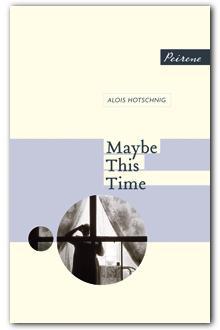
Maybe This Time by Alois Hotschnig
Maybe This Time is the third volume in the Peirene Press series Male Voices (I have also read and reviewed Next World Novella and Tomorrow Pamplona). It's different from the other volumes as it's actually a collection of nine short stories, tied together around the themes of alienation, voyeurism and loss of identity. Characters wake up as completely different people, meet sinister dolls that look identical to them, become obsessed with watching neighbours and waste their lives waiting for a relative to turn up. There's a surreal under-tone to all of the stories and they aim to unsettle.
Although I enjoyed the writing in Maybe This Time and respect the imagination of the author, ultimately this book just wasn't for me. Whilst I like unsettling and creepy, gothic style tales, I struggle with surreal works of fiction. I don't enjoy the surreal elements of Alice in Wonderland, let alone the works of authors like Kafka and Hotschnig. I think what bothered me in this particular collection was not the surrealism itself, but the way the characters responded to it. In one short story, the main character is invited into an old lady's house only to find that she collects dolls, one of which has his name and looks exactly like him, even down to the clothes he is wearing. I think a normal reaction to this would be to leave and never return but Karl just doesn't come across as shocked enough, and this is consistent across the collection.
I think Maybe This Time would be enjoyable for readers who enjoy the surreal. As I said, the writing is good and Hotschnig tackles some important themes (identity, alienation). I'm just not the right reader for it. I suppose in a set of nine books, I'm bound to find one that doesn't work for me.
Source: From the publisher, in exchange for an honest review.
First published in English: 2011
Score: 2.5 out of 5
Sunday, 9 December 2012
The Red Tent by Anita Diamant
Dinah is the daughter of Jacob and sister of Joseph, remembered in the Bible only for being the victim of a rape that leads to mass murder and devastation for her family. In The Red Tent, Diamant imagines what it would have been like to be a woman in biblical times and retells the story from the point of view of Dinah herself. Starting with the lives of her mother Leah and her three sisters and ending with Dinah's old age, Diamant draws on the pagan traditions of the time and the mythology around women and birth. Leah and her sisters all share the same husband, Jacob, and Dinah grows up as the only girl among eleven brothers. Every new moon, the women of the compound retreat to the red tent (this coincides with their menstrual cycles) and here Dinah learns the stories of the woman around her, including some of the skills of midwifery. When she comes of age and decides to choose a husband for herself without consulting her family, the insult is too much for some of her brothers to bear and a cycle of violence is started.
The Red Tent is one of those books I've had sitting of my shelf for years; I kept meaning to read it but never got around to it. I went into it with high hopes as I love historical fiction set in ancient times, especially when the challenges the reader by adopting a female narrator. And on the whole, I was pleased with The Red Tent. It was engagingly written and hard to put down. The female characters were well imagined and distinct from each other. There's a powerful sense of emotion throughout the story; I especially felt for Rachel as she was unable to carry a child to term but had to watch her sisters repeatedly become pregnant and give birth. It's a book that I'm still thinking about days after finishing it, which is always a good sign.
But unfortunately I didn't adore The Red Tent in the way I was hoping to, perhaps my expectations were too high. The biggest problem I had with it was the earth-mother tone and all the worship of periods and fertility. This is perhaps my own personal bias here, but I find it corny to read about women celebrating their periods as linking them to the earth and motherhood as the pinnacle of what it means to be a woman. Before you remind me, I know this is set in Biblical times and motherhood was what it meant to be a woman then, but I still felt as though Diamant was over the top with the female rituals and menstruation worship. It was though Diamant was also trying to make a point to women today (to celebrate our periods?), that she was claiming that the woman in The Red Tent had the right idea (look at all the sisterhood) and to be honest, it made me a bit uncomfortable. I think there is much more to being a woman than this and I didn't like Diamant's agenda. I'm not an earth-mother kind of girl.
However, I did enjoy the sections on midwifery and birth. I'm not a mother myself but I still found it fascinating to read about the different techniques women of those times would have used to get a woman through birth. I think we in the West sometimes forget how inherently dangerous giving birth to a child is as death is always lurking for the women in the story.
Although the female characters were well developed, I found the male characters a little one-dimensional. There is a deliberate distance adopted (men are not allowed in the red tent), but still they seemed either good (Shechem) or evil (Laban) with nothing in between. I didn't believe that any of the relationships between Jacob and his wives were emotionally fulfilling for the women in them. Strict Christians may also object to the liberty Diamant takes with some Biblical events, although this wasn't an issue for me.
When I finished this book, I was intending to give it a low rating but it is a book that has stuck in my mind and the more I look back on it, the more I appreciate the story and female characters. It's just a shame it didn't live up to my expectations.
Source: Personal copy
First Published: 1997
My Edition: Pan Macmillan, 2001
Score: 3.5 out of 5
Read Alongside:
1. The Dovekeepers by Alice Hoffman - another retelling of an event in Jewish history, the mass suicide in Masada in 70AD. This is how I feel retellings from female points of view should be done.
2. The Gilded Chamber by Rebecca Kohn - The story of Purim from the point of view of Esther.
3. Jerusalem Maiden by Talia Carner - A little bit further on in history, but still worth reading. An Orthodox Jew, Esther, strains against the boundaries of her religion during Ottoman times.
Thursday, 6 December 2012
Tomorrow Pamplona by Jan Van Mersbergen
Danny is a boxer and he's running hard when he hitches a ride with Robert, a family man on his way to Pamplona to participate in the legendary bull race. Desperate to get away from his own immediate past, Danny joins Robert and attempts to block certain events from his mind. But even when you run the past has a habit of catching up with you, as Danny is about to discover.
I think that is quite possibly the shortest summary I have ever written, but Tomorrow Pamplona is like that. It's a spare book in which not a word is wasted and not everything is explicit. On the surface it seems like a simple story - Danny running from life - but there's so much going on underneath and it's up to you as the reader to figure it out. To be completely honest, I don't think I got everything out of this book there was to get; I finished it with more questions than I had answers. And that was refreshing - too often authors tell you everything, so it was nice to read a book that left it to me to connect the dots for myself.
Tomorrow Pamplona is the second book in the Peirene series 'Male Voices' and it's more overly 'macho' than the previous offering, Next World Novella (my review). Aside from Danny being a boxer, he's much more 'closed off' than Hinrich was in Next World Novella, much more brief and he keeps his emotions to himself. There's a lot of stuff about adrenaline and danger and the need to face danger to get the blood pumping. Rightly or wrongly, these are traits that society generally associates with males. I felt like Van Mersbergen took me very convincingly inside Danny's head, although I didn't understand everything I found there. At the end of the book, I was still undecided about whether or not I liked him and I suspect that the his actions and his need to run were all based on false information.
The writing in Tomorrow Pamplona was excellent, as was the depiction of Danny. But I wanted to know more about Robert, as I couldn't understand why he was so helpful to Danny. In the beginning he says something about helping hitchhikers in order to hear their stories, but this didn't seem to justify everything he did, including paying Danny's way and putting up with some erratic and snappy/aggressive behaviour. I felt like Van Mersbergen only scratched the surface of what made Robert tick and it would have been interesting to delve a little deeper.
On the whole, another well written and interesting novella from Peirene. It's not going to be one of my favourites, but I still enjoyed it.
Source: From the publisher, in exchange for an honest review
First Published in English: 2011
Score: 3.5 out of 5
Saturday, 1 December 2012
Inkheart by Cornelia Funke
There's nothing like settling down to revisit an old favourite, is there? When I pick up Inkheart, I'm taken back to when I was at university, still living at home with my Mum and Dad. One Christmas, I received all three books that make up the Inkheart trilogy in my stocking and I devoured them all within a week. I literally did nothing apart from lay on the sofa and eat leftover Christmas treats with my nose stuck in these books until I had finished all three. Even though I'm now twenty-six, married and definitely not living with my parents anymore, picking up these books brings back all the magic of the first time I read them.
Twelve-year-old Meggie lives with her bookbinder father Mo after the disappearance of her mother in mysterious circumstances when she was only three. They are visiting a relative, book collector Eleanor when a strange man called Dustfinger arrives, claiming that Mo read him out of a book called Inkheart. What follows is a good old-fashioned adventure as Meggie and Mo race to stop the villain of Inkheart, Capricon, from destroying all the remaining copies and wreaking a terrible vengeance on his enemies. Along the way, they are assisted by Eleanor, the author of Inkheart, Fenoglio, and Farid, a young boy read out of the pages of A Thousand and One Nights.
Here's the thing: I know Inkheart isn't exactly the finest literature and I know that the plot is a little silly at times (the Shadow being a case in point), but none of that stops me from loving the book so much that even thinking about it makes me smile. Who amongst us hasn't read a book and wanted the characters to come out of the book? I know I have and I love that the entire story revolves around the love of books and in particular, the love of all the classics I loved so much as a child (Peter Pan, Arabian Nights etc). In fact, the thing I enjoy most about Inkheart is the tone; it feels like the old-fashioned books I devoured when I was young. There's a good dose of adventure, a straightforward good vs evil plot and a hint of magic. Picking it up feels like picking up an Enid Blyton novel,Treasure Island or Peter Pan. Although Meggie is in for a lot of suffering, it's due to the danger she faces and the world of the book is like a lovely bubble I like to sink into every now and again.
This isn't really a proper review as I'm not going to be critical. I understand this book isn't for everyone but I absolutely love it and I'm already looking forward to making time for a reread of Inkspell and Inkdeath over the next few weeks. For me, Inkheart is escapist adventure at its best.
Source: Personal copy
Edition: Chicken House, 2004
Score: 5 out of 5
Subscribe to:
Posts (Atom)