Sunday, 22 February 2015

Sam Sunday #63: Eight Months and a New Routine


Returning to work hasn't actually been as disruptive as I was fearing (so far!). Granted, I only had to work a week before getting a week off for half term, but that week went as smoothly as it could have done. Giles is being looked after by family members, and every time I picked him up in the evening he was happy and settled, which does make it a lot easier for me. He's still sleeping well at night (in fact, better than he did before I went back to work), so if anything the transition was harder for me than it's been for him. I found myself clock-watching in after school meetings and trying to make the most of every bit of time that I get to spend with him.

I think one of the hardest adjustments will be trying to fit in all the extras that go along with being a teacher. I'm not willing to give up any evening time with Giles whilst he is awake, so I think I will be working later in the evenings, when he has gone to sleep. That's absolutely fine with me, but in turn that means less time for relaxing, blogging, reading and other hobbies. I still want to keep blogging, but I'm leaning towards weekly reading journal type posts, rather than full reviews of each title I finish. I'm planning to write full reviews for classic club books, and anything I finish for my two 1001 books projects, but everything else will probably just get a mention in a reading journal. Hopefully this way, I'll still be able to fit blogging into my life.

Giles turned eight months today and he is well on his way to becoming a terror!  He is pulling himself up on everything and cruising all along the furniture. At the moment, he is keen to press all the buttons on the TV, pull the socks out of our under-bed storage, hide from us while giggling and of course climb his bookcase (which is attached very securely to the wall).  He has well and truly reached the stage where he is into everything and it's a lot of fun to watch his brain working as he explores new things.

I have a feeling this week is going to be a tough one as tooth number seven is threatening to poke through, and as always, Giles is coming down with a teething cold.  But next Sunday is my birthday, so I'm looking forward to some lovely family time at the weekend.

How was your week?

Friday, 20 February 2015

Nervous Conditions by Tsitsi Dangarembga

"The business of womanhood is a heavy burden.  How could it not be? Aren't we are the ones who bear children? When it is like that you can't just decide today I want to do this, tomorrow I want to do that, the next day I want to be educated!  When there are sacrifices to be made, you are the one who has to make them. And these things are not easy: you have to start learning them early, from a very early age."

Nervous Conditions is the coming of age story of fourteen year old Tambudzai, who lives in rural Zimbabwe but is able to attend a missionary school following the death of her older brother, Nhamo. Living with her aunt and uncle in a house on the mission grounds, Tambu is at first overwhelmed by their lifestyle. But the more she becomes accustomed to it, the more she starts to feel herself better than her beginnings. Tambu is determined to be educated and to provide for herself, but she keeps coming up against prejudices and barriers based on her gender, meaning that she has to battle for what she wants. Her story is contrasted with the stories of the complex women in her life; her Westernised cousin Nyasha, starting to examine the effects of colonisation, her uneducated mother, tied to a man she doesn't love by her children, and her mother's sister, forceful, outspoken and determined to do what is right for her and the people she loves.

Nervous Conditions is a wonderful book, and lots of that is to do with Tambu herself. As a narrator she is self-aware, honest, intelligent and full of complicated thoughts about the people around her. It helps that Dangarembga's writing is vivid, peppered with Shona vocabulary; reading Nervous Conditions is like being immersed in the Shona culture of the mid twentieth century.  This isn't a novel written with a Western audience in mind, and I liked that.

What I loved most about Nervous Conditions is that Dangarembga never over-simplifies the complex issues of gender, race and colonisation. Tambu is quick to realise the limitations placed on her by her gender, for example when her father states that it isn't worth educating her, as she will only get married and belong to another family.  Tambu also notes the powerlessness of her mother in the family, and the negative effect of her many pregnancies, but Dangarembga also writes about powerful Shona women, who are uneducated, but still refuse to accept gender boundaries. And the same is true of race and colonisation - Tambu views a Western education and lifestyle as her ticket to happiness, but her cousin Nyasha, who has actually lived in England for a spell, is torn between her conflicting identities and feels isolated from her Shona heritage. The portrait of both of these issues is complicated, many-layered and realistic,

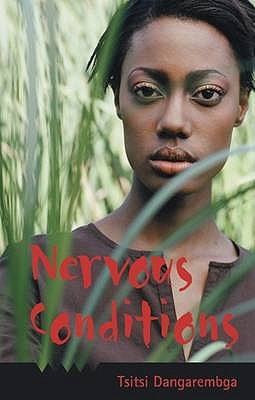
To be honest, the only thing I didn't like about Nervous Conditions was the cover, which I think looks too cheaply made for the quality of the book. Although this book is set in a specific place and time period, it's coming of age theme is universal and it's one I would highly recommend.

Source: Library
First Published: 1988
Edition Read: Ayebia Clark
Score: 5 out of 5


Project 1001 Books: Book 2/80
My list of titles and reviews can be found here.

Wednesday, 18 February 2015

A Little London Book Shopping...


One of my Christmas presents from Tom this year was a trip to and overnight stay in London. He arranged it for this half term, knowing that I might need a bit of a pick me up after returning to work last week.  As it's also my birthday very soon, I persuaded him that what I wanted most for my birthday was to browse all of my favourite bookshops in London and pick out a few things to read.  Giles was with my Mum, and it felt like such a luxury to have the time to properly scan the shelves and choose what struck my fancy the most.  Here's what I picked out (links to goodreads):

  1. The Virago Book of Women Travellers edited by Mary Morris - This is an anthology of travel writing by women throughout the past few centuries, and it looks so interesting.  I'm hoping to be inspired to read lots of full length books after getting through this one.
  2. The Candy Machine: How Cocaine Took Over the World by Tom Feiling - Feiling travelled the cocaine routes of the world and this book is part history and part contemporary review of the status of cocaine.  I love a good micro-history.
  3. Wild Women edited by Sue Thomas - I've been trying to get into short stories lately, so I was excited to find a second hand copy of this anthology of short stories by women, all with a feminist slant.  Some of my favourite authors have contributed, and I'm sure I'll find more authors to try.
  4. Shadows of the Pomengranate Tree by Tariq Ali (Islam Quartet #1) - Another second hand find, and I hadn't heard of this one before.  I've never read a novel set during the fall of Granda and Moorish Spain, so it will be interesting to try.
  5. The Bronte Myth by Lucasta Miller - I love the Brontes, so this non-fiction account of how they have been viewed and mythologised over time will definitely be read soon.
  6. Devil on the Cross by Ngugi wa Thiong'o - I've read about this Kenyan author, and finally I've found a copy of the book of his I want to try.  He wrote it whilst he was imprisoned, and it's apparently a bitter indictement of corruption.
  7. Kafka on the Shore by Haruki Murakami - Purely because I've been getting into Murakami lately.
  8. A Short History of Polar Exploration by Nick Rennison - I would love to be an explorer, but I'm simply not cut out for it.  I will have to content myself with reading about exploration instead.
I'm really excited about all of these books.  I feel like my reading tastes are going through a change at the moment, and my shelves don't reflect that.  I'm still into my classics, but I'm more and more drawn to books about the world, about travelling and history, and books by authors from different countries, full of different experiences.  If you've read any of these titles, I'd love to know what you thought of them.

Sunday, 15 February 2015

Reading Journal #5: February So Far...


It all went a bit quiet here last week, mainly because I returned to work after nine months on maternity leave.  That was always going to be a shock to the system, but I also returned to a slightly different role, so I had lots of new things to get used to as well.  Thankfully Giles has taken the change very well, and has still been happy, which has made it a bit easier.  I am still reading in the evenings, but at a much slower pace, as I often have to work instead once Giles has gone to bed.

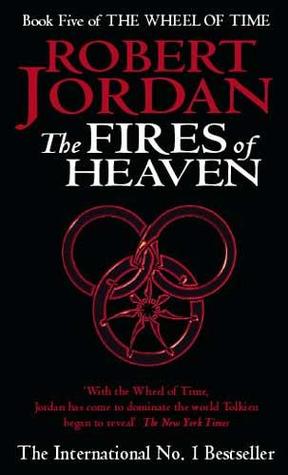
The first book I picked up in February was Robert Jordan's The Fires of Heaven, the fifth book in the epic Wheel of Time series.  This one is a real chunker too, coming in at roughly 1000 pages and I have to say that I felt the length in this installment.  I still loved the fantasy world and particularly the magic system, but I found myself getting a bit bored with the cliches and repetition that weighed the story down.  Jordan appears to equate strong women with argumentative, stubborn women, and this became tiring.  Stock phrases were repeated one too many times, and I have to admit that I was glad to finish this one.  I still want to continue on with the series, but I'll need a good break before I pick up the next one.
After this, I turned to Cannery Row by John Steinbeck.  It was my third Steinbeck and it was a grower.  At first, I didn't think I liked it, but by half way through I was enjoying it.  However, I only really appreciated and loved it after finishing and reflecting on it, which can happen sometimes. I've written a full review of this one, which you can read here.  Cannery Row left me in the mood for something else equally literary, so I picked up Nervous Conditions by Tsitsi Dangarembga, from my Project 1001 list.  Dangarembga is a Zimbabwean author, and Nervous Conditions is a wonderful coming of age story that focuses on feminism and the effects of colonisation.  It was so good it deserves a full review, which I will hopefully get a chance to write soon.  Please ignore the dreadful cover - a book as good as this deserves a much less misleading one.

And that leads up to my current reading situation, in the middle of three books.  On audio, I've almost finished China Dolls by Lisa See, a book I was looking forward to, but which has turned out to be very disappointing.  My non-fiction pick is Bad Pharma by Ben Goldacre, a scary account of the power of the pharmaceutical industry, and fiction-wise I'm about a third of the way through Zadie Smith's NW, which is fantastic.  It's half term next week, so I'm hoping to finish all of these and maybe start something new as well.  
What have you been reading recently?

Saturday, 7 February 2015

Cannery Row by John Steinbeck

Cannery Row is the third John Steinbeck novel that I have read,  but it was completely unlike the other two.  Lacking what anyone could call a real plot, Cannery Row is best described as a series of vignettes that star the inhabitants of the Row, that work together to build up a vivid portrait of a particular place at a particular time.  Steinbeck takes as his subjects the misfits of society - prostitutes, drunks, artists and squatters, and he describes their lives and the everyday occurrences that happen in them.  Homeless Mack and his group of boys move into an abandoned building and set about improving it.  Lee Chong, the grocery owner, is called upon to accept payment in frogs rather than cash.  Doc, a lonely biologist, journeys to the coast to collect specimens.  And the prostitutes at Dora's place face a busy season.

I loved that Steinbeck set this novel among the 'low-life' inhabitants of the Monterey area, and that he infused it with such humanity and hope.  Despite the miserable surroundings the characters find themselves in, their lives are essentially happy.  They aren't caught up in consumerism and the desire for status, and they are able to appreciate some things about life that we can miss, such as how valuable simple acts of kindness can be.  Perhaps because they have found themselves at the bottom rung of society, they live without judgement and simply take people for who they are.  That's a message that we all need to be reminded of every now and again, that beauty and kindness can be found anywhere.

The sense of place in Cannery Row is fantastic.  Steinbeck's writing seemed more poetic in this novel, particularly when he was describing the quality of light over the row, or the sunrise over the sea.  It made the novel extremely visual, and by the end I felt as if I knew Cannery Row myself, as I could imagine it all so clearly.

My only complaint with the novel is that, in common with the other Steinbeck novels I have read, there was too much focus on the male characters.  The character of Doc was fascinating, and so was Mack, but I wanted to read more about Dora and the women who worked for her.  There's a great little section where Dora schedules the girls to deliver soup and company to families during a flu outbreak between clients, but it's never expanded on.  I wanted to know their thoughts and motivations, and experience their lives too.  Similarly, it's hinted that Lee Chong has a wife, daughters and daughters-in-law, but they are entirely absent from the novel.

Still, Cannery Row is a beautiful novel.  The writing and the characters combined to give me such a feeling of hope, that people anywhere can live their lives in a decent and caring way.  I'm looking forward to getting to the sequel, Sweet Thursday.

Source: Personal copy
First Published: 1945
Edition Read: Penguin Modern Classics, 2000
Score: 4.5 out of 5


The Classics Club: Book 33/72
My full list of titles and reviews can be found here.

Sunday, 1 February 2015

January 2015 Wrap-Up


January was an awesome reading month for me, the best since Giles was born in June.  Not only did I finish 11 books and 3259 pages, but I was really into reading and lots of the books ended up being 4 or 5 star reads. I read the following (links to my reviews):
  1. Pride and Prejudice by Jane Austen 
  2. World War Z by Max Brooks
  3. The Viral Storm by Nathan Wolfe
  4. The Good Earth by Pearl Buck
  5. Under the Skin by Michel Faber
  6. Across the Nightingale Floor by Lian Hearn
  7. The Strange Library by Haruki Murakami
  8. There Was a Country by Chinua Achebe
  9. The Blue Castle by L.M. Montgomery
  10. State of Wonder by Ann Patchett
  11. Where I'm Reading From by Tim Parks
My favourite book of the month was unquestionably The Blue Castle.  Even though Under the Skin and The Good Earth were also five star reads, The Blue Castle was just so cosy and comforting, and I loved Valancy's journey to independence and freedom.  The only disappointing book of the bunch was World War Z, which was a good idea but way too heavy on the army and logistics front.

In terms of diversity, 18% of the books were by authors of colour, and 36% by authors that aren't British or American.  I'm OK with that, but I'd still like to read more works in translation, something I'll keep in mind for February.  I read 36% non-fiction, which I am thrilled with, and my reads included classics, fantasy, horror, science, literary fiction, history and essays.  I'm glad that I'm reading a good mix of things and not getting stuck in a particular genre.

Eight of the eleven books that I read were from my TBR shelves, which would be amazing if I hadn't also purchased the following eight, thus cancelling out all of my good work:

  1. The Book of Strange New Things by Michel Faber
  2. The Miniaturist by Jessie Burton
  3. I Am Malala by Malala Yousafzai
  4. The Visitors by Sally Beauman
  5. The Martian by Andy Weir
  6. Station Eleven by Emily St. John Mandel
  7. A Free Life by Ha Jin
  8. Life After Life by Kate Atkinson
Still, at least I haven't added to my overall TBR!

Looking forward to February, the only thing I will definitely be reading is Robert Jordan's The Fires of Heaven, book five in the Wheel of Time series.  I'm currently about half-way through it, but it's a chunky book so should keep me happy for some time.  After that, I'm going to read mainly by whim, but hopefully knock one book off my classics club list, and one off either of my Project 1001 lists.

How was your reading month?

Friday, 30 January 2015

Reading Journal #4: Two More for the End of January


I'm still reading books more quickly than I can review them, which is a shame as both of these titles deserve full reviews.  First up is Ann Patchett's State of Wonder, which I've been meaning to read since it was short-listed for the Orange Prize in 2012.  The story opens with Marina, a pharmacologist for a large drugs company, learning about the death of her colleague Anders in the Amazon rainforest.   Anders was checking up on the progress of the mysterious Dr Swenson, who had claimed to find a tribe where the women bear children right up until their death, and who was developing a drug to enable Western women to do the same.  Marina is given the task of finding out what happened to Anders, and of completing his assignment, and Patchett follows her into the rainforest, where she doesn't find what she is expecting to.

Patchett touches on a lot of big themes in State of Wonder, including race, colonisation, research ethics, the agendas of pharmaceutical companies and the decision of when to have children. However, she also combines this with a fast paced and interesting plot, which is surely the best of both worlds.  I enjoyed the character of Dr Swenson, who was full of contradictions, and Marina's personal growth was well done. Patchett's writing was lovely too, especially in the section where Marina has to inform Anders' wife of his death. My only complaint is that the final section moved way too quickly, with too many plot points resolving themselves in a way that seemed a bit too coincidental to be true. Reading State of Wonder was an enjoyable experience and I'm looking forward to picking up Bel Canto now.  4 out of 5.


Next I picked up an essay collection from the library.  Where I'm Reading From was a random pick from the shelves; I'd never heard of Parks before but I'm always susceptible to books about books (and pretty covers), so I was keen to give this one a go.  Where I'm Reading From contains 37 essays divided into four sections, covering world literature, bookish issues, being a writer and translated fiction. Inevitably, I enjoyed some essays more than others.  For example, I enjoyed Parks' thoughts on e-books, that in a sense they are a truer reading experience as you get the text of the book without the distractions of covers or publisher decisions, and there isn't the impulse to acquire them as they look good on your shelves, or because they make you look 'well read'.  It's not an opinion I agree with, as I think there is more to physical books than Parks gives them credit for, but it was still interesting to read.

One of Parks' main arguments throughout the collection is that 'world literature' is leading to everything becoming too similar, with the variety of local experiences being lost.  He quotes authors who make decisions based on the fact that their work will be translated into English, if they aren't writing in English themselves.  Characters with complicated names are avoided, and local customs are either left out completely or over-explained.  Authors paint a picture of their country that they think will satisfy the West, as so much emphasis is now placed on global sales and translation rights as a mark of author status.  Parks argues that this means that lots of the variety and richness of fiction rooted in a particular culture is being lost.  Again, I'm not sure that I agree, but it's something I had never thought about before.

Whilst Where I'm Reading From was definitely thought provoking, I found it too repetitive.  Lots of the essays basically say the same thing, just from a slightly different angle, and this made the collection feel over-long.  I enjoyed mentally debating with Parks, but think Where I'm Reading From would have been a lot stronger if it was shorter.  3 out of 5.