Sunday, 29 June 2014

Sam Sunday #53: Giles


If you follow me on twitter, you may have already seen that last Sunday I gave birth to our son.  He was born at 1.40pm, weighed 8 lb 6 and we've called him Giles.  To be honest, the time since then has been a blur of nappy changing and cuddling, and we've both spent hours just staring at him and trying to work out how to do this parenting thing.  It's amazing and wonderful how much your life can change in an instant.

I've also been spending a lot of time recovering.  I had a textbook labour right until the very end when he twisted and got stuck.  This meant that I needed forceps.  Luckily Giles was just fine and not distressed at all, but I ended up needing surgery and three blood transfusions.  Considering all of that, I am doing really well, but it's still early days yet.  Tom is on paternity leave and he's been great at helping me as much as possible, giving me plenty of opportunities to cuddle with Giles while resting and getting my strength back.

Hope everyone has been doing well over the past week, I'm looking forward to slowly getting back to blogging over the next few weeks and months.  Let me know in the comments what I've missed over the past week :)

Sunday, 15 June 2014

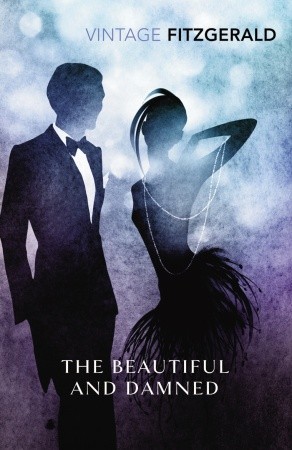
The Beautiful and Damned by F. Scott Fitzgerald

"Things are sweeter when they're lost.  I know - because once I wanted something and got it.  It was the only thing I ever wanted badly.  And when I got it, it turned to dust in my hands."

Anthony Patch is living off his grandfather's allowance in New York when he meets lively society girl, Gloria Gilbert.  Once they marry, they quickly become known for their decadent lifestyle full of alcohol, constant partying and a refusal to settle down to adult life.  At first, they are happy but when Anthony's money starts to run out, the cracks in their lifestyle and marriage begin to show.

Truly, I love Fitzgerald.  No one writes misery and disillusionment better than him, and The Beautiful and Damned fits his themes perfectly.  It's all there - the boredom that comes from not being productive, the reliance on alcohol as a crutch to get through the day, the shallowness of happiness that comes from constant partying, and the steady decline of a marriage.  This is the third Fitzgerald novel I have read (the other two being The Great Gatsby and Tender is the Night), and I know that this semi-autobiographical style of writing can become repetitive, but Fitzgerald is just so good at it that it doesn't matter at all.

It goes without saying that the writing is beautiful.  Fitzgerald particularly excels when he's writing about emotional conflicts, arguments or the consequences of them.  He has a poetic way of putting across feelings, and he's remarkably perceptive about human nature.   There's no attempt to varnish Anthony or Gloria, to make them more appealing than they are, and I loved that.  Gloria is portrayed in all her shallow desire to remain beautiful at all costs, and Anthony's lethargy and passiveness (combined with an undeserved arrogance) are shown as key flaws.

However, The Beautiful and Damned is probably my least favourite of the three Fitzgerald novels I've read so far.  It's still extremely good, but I feel like Gatsby had more polish and Tender is the Night had more emotional engagement.  The trouble with Beautiful and Damned is not that the characters are unlikeable, which they most certainly are, but that I never really bought that they had strong feelings for each other.  Tender is the Night is heart-breaking as the two central characters can't work it out despite loving each other, but Anthony and Gloria seemed to just fall into marriage and even their arguments seemed affected by their lethargy.

The Beautiful and the Damned isn't a book to pick up if you are after happily ever afters and characters you can root for, but it is a remarkably perceptive and beautifully written book.  I've now finished all of the Fitzgeralds on my classics club list, but I'll definitely be adding more when I compile volume two.

Source: Personal copy
First Published: 1921
Edition Read: Vintage UK, 2010
Score: 4 out of 5

The Classics Club

The Classics Club: Book 28/72
My full list of classics to read (and existing reviews) can be found here.

Friday, 13 June 2014

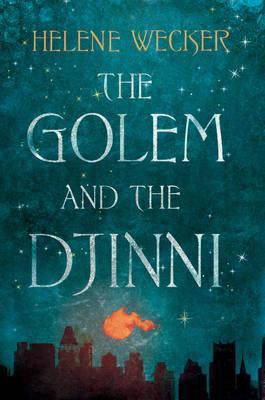
The Golem and the Djinni by Helene Wecker


Chava is a golem, a creature made of clay and bought to life using an ancient Jewish Kabbalistic ritual.  She's created to be the wife of Otto Rotfield, but he dies on their passage from Poland to New York, leaving Chava alone in the nineteenth century city, completely alien to those around her.  As she tries to fit in and suppress her differences, she has a chance encounter with Ahmad, a djinni.  After centuries of freedom in the Syrian desert, Ahmad was enslaved and bound.   Accidentally released by a tinsmith but still trapped in human form, Ahmad is desperate to regain his freedom.  As the two creatures find their way in the city and try to uncover their roots, an unusual bond grows between them.

Advance warning:  this review is going to be glowing!  I've been excited about reading The Golem and the Djinni ever since it first came out, especially as it's been compared to Jonathan Strange & Mr Norrell, one of my favourite novels ever.  The Golem and the Djinni contains so many of the elements that I love to read about; fantasy tied to a convincing mythology, an interesting historical setting, the inclusion of magical elements in a believable way, creatures straight out of Arabian Nights and an exploration of Jewish culture.  In fact, I actually put off reading this book for ages, as I was worried it wouldn't live up to my unreasonably high expectations.

But I shouldn't have worried at all - The Golem and the Djinni is probably my favourite read of the year so far and I can't see anything surpassing it.  The mythology woven into the story by Wecker just felt so plausible and I loved how authentic her nineteenth century New York was.  The mystery of Ahmad's capture and the secrets of Chava's creator was beautifully done, with small clues being dropped all throughout the story.  I loved the sections that took place in Syria amongst the Bedouin people, and also the way Wecker wrote about the Jewish immigrant community in the city.  Chava and Ahmad's friendship felt natural and unhurried, and I like that a lot about this was left ambiguous and unresolved.

It's fair to say that I liked everything about this book.  It's not going to appeal to every reader; it's quite slow paced in places, but in my mind it's a rare example of a great fantasy novel for adults that weaves in historical culture and context in a believable way.   If you liked Jonathan Strange & Mr Norrell or A Discovery of Witches, you'll love this!

Source: Personal copy
First Published: 2013
Edition Read: HarperCollins, 2013
Score: 5 out of 5

Wednesday, 11 June 2014

Lord of the Flies by William Golding


Lord of the Flies was the book chosen for me by the recent Classics Club spin.  Somehow, I managed to make it through all of secondary school and an English Literature A-Level without having to read this book, and it's always felt like a bit of a gap in my reading history.  The story centres around a group of English schoolboys, mysteriously stranded on a desert island.  In the absence of adults, they set about electing a chief and dividing up the chores necessary for survival in a fair and democratic way.  At first everything goes well, but gradually the society they have attempted to build starts to break down as their more savage natures and desires come to the forefront.

I really liked Lord of the Flies.  It's a short, easy to read classic that explores a particular theme (the darker side of humanity) very well.  Golding does a great job of showing the gradual decline of the boys into violence; at the beginning of the novel none of them can stomach even killing a pig for food, but by the end they think nothing of performing extremely violent acts against each other.  There's a lot of talk of rules, and of rules being what holds societies together, and as soon as someone breaks the rules, things do start to decline.  Lord of the Flies exposes how thin what we call civilisation really is, something that we see all too often in real life in the event of civil wars and genocides.

Something I was interested in as I read the book was the whole issue of belonging to a group, and how it can make you act in a certain way.  When Ralph is chief at the beginning of the novel and clearly in charge, the other children responded the way he wanted them to.  But when Jack forms a rival group, complete with war paint, the same children act completely differently.  Their costumes become a mask that lets them act in ways they would never have acted back in England, and their actions are sanctioned by being part of the group. Again, this is something we definitely see in real life, so Golding's analysis is spot on.

I didn't find Lord of the Flies as shocking as I thought I was going to.  I knew the basic idea of the story before starting, but not the specifics, and I knew that the thought of these nice middle-class English boys being so violent caused a stir at the time.  But it didn't shock me, as their decline into 'savagery' just made perfect sense in the novel.  We do all have a darker side and impulses that we would never normally act on, and history is full of examples of groups of people taking things too far. 

Still, Lord of the Flies was a thought provoking and enjoyable read.  I think it's more of an 'ideas' book than a story, although the plot does move along at a brisk pace and the events are engaging.  The characters fit the ideas first and foremost, which meant that I didn't have an emotional connection with them, and this stopped Lord of the Flies from becoming a favourite of mine.

Source: Personal copy
First Published: 1954
Edition Read: Penguin Modern Classics, 1964
Score: 4 out of 5


The Classics Club: Book 27/72
My full list of classics to read can be found here.

Monday, 9 June 2014

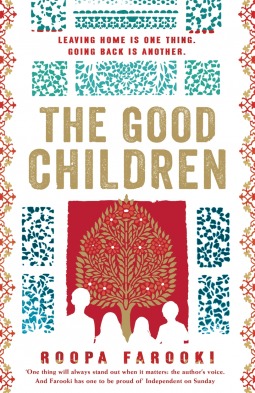
The Good Children by Roopa Farooki


Sulaman, Jakie, Mae and Lana grew up in Pakistan under the shadow of their controlling and somewhat abusive mother.  The two brothers are sent abroad to become doctors, one to England and one to America, but the two sisters are left behind and expected to make good marriages, to bring honour to the family.  But being a 'good child' is harder than it seems and in one way or another, all four children fail to meet their mother's exacting standards.  Sulaman becomes a renounced academic and expert on torture, but marries an unsuitable Hindu girl he meets in America.  Jakie does become a respected doctor, but starts a relationship with a white man in London.   Mae and Lana both marry suitable men, but their marriages suffer as they refuse to compromise their lives for the men they are married to.  When all four grown up children are called back to Lahore for a family emergency, they have to come to terms with their past, and the role their mother has played in their lives.

The Good Children is the first book I've read by Farooki, and I will definitely be reading more as soon as possible.  Prior to starting this, I was in a bit of a reading funk as I just wasn't reading anything amazing, but The Good Children restored my reading mojo almost instantly as it's simply a very good book.  It may be 600+ pages, but I raced through it in under three days.  The stories of all four children were distinct and engaging, and splitting up the narrative with their different points of view maintained the pace of the novel.  Farooki touches on a lot of important themes, such as mixed race relationships, domestic abuse, homosexuality and adoption, but The Good Children never feels like an 'issues' book, it always feels like a good story that happens to involve all of those things.

Although I enjoyed reading about all four children, I was most drawn to the stories of Jakie and Mae.  Jakie starts a relationship with Frank during a time in London when homosexuality was still a crime, and Farooki explores the prejudice he faced, and the reactions of those around him.  Mae was interesting as she was the child most like her mother, and her struggle to succeed for herself without crushing others was well done. Mae also leaves her husband when he takes a mistress, something that is frowned upon at the time, and I liked reading about her determination to ignore what others thought and forge her own path.

I'm really glad I read The Good Children, as it has introduced me to Farooki as an author.  I'm thinking of trying Bitter Sweets next, unless anyone has any other recommendations?

Source: From the publisher, in exchange for an honest review
UK Publication Date: 19th June 2014
Score: 4.5 out of 5

Saturday, 7 June 2014

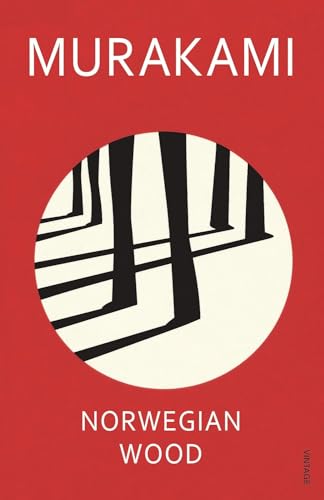
Norweigan Wood by Haruki Murakami


A coming of age story, Norwegian Wood is set in 1960s Tokyo and tells a classic tale of love and heart-break.  After the suicide of his best friend Kizuki, university student Toru finds himself drawn to Kizuki's girlfriend, Naoko.  He falls in love with Naoko, but she is damaged herself and may be incapable of giving Toru everything that he wants.  When quirky Midori marches into his life, Toru finds himself torn between the two girls, as he also struggles with the process of becoming an adult.

I am new to Murakami, and I'm also new to Japanese literature in general.  It's something I've wanted to try for a long time, but this is my first real attempt.  Having done some research since finishing the novel, it's clear that I probably shouldn't have started with Norwegian Wood, as it's not at all typical of Murakami's work in general.  I went into it expecting something kooky and slightly surreal, full of unusual elements, so was somewhat disappointed when it turned out to be a straight story.  The story of Toru's growing up is interesting, and Murakami is no doubt a talented writer, but it just didn't match what I was expecting it to be, and that made the whole experience a bit jarring.

I did enjoy Murakami's characterisation, especially that of Midori.  Midori is outgoing, lively and not afraid to say what she wants, even demanding it at times.  In fact, all of the women in the novel were like this and I found it quite refreshing.  I liked that Murakami captured the complex emotions of being a young adult, and that none of the situations were simplified.  Toru's experiences had the feel of real life experiences, full of contrasting wants and desires. A large portion of the novel deals with mental health and suicide, and again I thought this was handled well by Murakami.  Things do feel big and overwhelming when you're Toru's age, and the sections on mental health captured this perfectly.

As I'm writing this, I'm trying to work out exactly why I didn't love this novel.  It has so many strong elements, but the reading experience was underwhelming for me.  I found it a bit too long and repetitive in places, and it's not a book that I enjoyed picking up and diving into.  I could understand Toru, but it was hard to relate to him.  I'm leaving the book keen to try another Murakami (perhaps The Wind Up Bird Chronicle?), but I can't see myself ever reading this one again.

Source: Personal copy
First Published: 1987
Edition Read: Vintage, 2003
Score: 3 out of 5

Thursday, 5 June 2014

Cranford by Elizabeth Gaskell


Cranford is the first novel by Elizabeth Gaskell that I have read.  It's a Victorian novel set in the small town of Cranford, that for various reasons has come to be inhabited mainly by women.  These women are genteel, but on the verge of poverty, and much of the story details the routine matters of visits, family history and dinner parties.  In some ways more of a collection of short stories than a coherent narrative, Cranford follows the fortunes of Miss Matty, a spinster living on her own following the death of her elder sister, as told by her friend Mary Smith.

It took me quite some time to get into Cranford.  It's unquestionably well written, but it's a gentle, slow paced sort of novel that submerges you completely into Cranford life.  The first few chapters are only loosely connected, and I have to admit that I was a bit bored with the day to day lives of the Cranford ladies to start with.  There seemed to be no drama, no conflicts and way too much time spent worrying about keeping up appearances.  But Cranford is a sneaky sort of book and as I reached the half-way point, I realised that I was enjoying it very much.  It's true that nothing really happens for most of the novel, but the characters have a way of growing on you, and I gradually realised that there was more happening under of the surface of the ladies than I had given them credit for.  Miss Matty in particular is an endearing character who it is hard not to like.

Cranford is really about the dignity that can come from living a quiet sort of life, in a community where everyone looks out for each other.  The story does build into an overarching plot in the second half of the novel, and it's here that we get to see the characters come into their own as Miss Matty is faced with a problem.  Gaskell shows that there can be strength in quietness, that women are as capable as men when facing life's dilemmas, that living a good and honest life can be rewarded.  It was good for me to be reminded that you don't have to go out and achieve incredible things for your life to be worthwhile, that how you choose to live and interact with people on a day to day basis is just as important.

By the time I finished Cranford, I was a fan.  It's not a book to pick up if you are in the mood for something gripping and fast-paced, more something to enjoy slowly, a reflective sort of read.  I'm not sure if I will ever read it again, but it definitely made me think about the importance of the everyday.


The Classics Club: Book 26/72
My full list of titles can be found here.

Source: Personal copy
First Published: 1853
Edition Read: Rockliff Publishers, 1954 (and a gorgeous edition it is too)
Score: 3.5 out of 5