Thursday, 21 February 2013

Tiny Sunbirds Far Away by Christie Watson

Blessing is twelve when her comfortable life in Lagos, the capital of Nigeria, is destroyed by the separation of her parents.  She moves with her mother and older brother Ezikiel to a rural compound just outside Warri, in the oil-rich Niger Delta.  Aside from getting used to the lack of running water, electricity and hygiene, Blessing has to learn to live in a violent community where the population is increasingly politicised by the actions of the oil companies.  Her mother works night and day in an attempt to pay school fees, leaving Blessing in the care of her grandmother, a traditional midwife and her grandfather, a recent convert to Islam.  Once top of the class, Ezikiel starts to fall behind in his studies after a gun attack and becomes seduced by the Sibeye Boys, a group of local boys arming themselves with guns and trying to be 'big men'.  Tiny Sunbirds Far Away is a coming of age story set against a violent backdrop. 
I thoroughly enjoyed Tiny Sunbirds Far Away, mainly due the charismatic narrative voice of Blessing herself.  I think it's hard for adult writers to write in a child's voice successfully in a book intended for adult readers, but Watson manages it perfectly.  Blessing starts the book relatively naive, shocked at the separation of her parents and worried most about how she will go to the toilet in a school without running water.  As the novel goes on, she increasingly becomes more aware of the situation around her and comes to the realisation that the adults in her family are humans, as flawed as she is. Her coming of age was believable and very well written.  Throughout the whole story, Blessing's voice is upbeat enough to off-set some of the tragedies and violence (gun crime, death, female genital mutilation).  She's incredibly easy to identify with and it's her voice that set this novel 'alight' for me.

Tone is another challenge in a book with so many issues.  Watson is helped in this by her choice of a teenage narrator; Blessing simply relays what is going on without judgement.   Female genital mutilation is tackled in quite a bit of detail (Blessing is training to be a birth attendant with her grandmother) and the different perspectives and arguments are simply presented.  Through Ezikiel we also get to see the different perspectives around gun crime and Western oil companies.  Despite some of the heavy subject matter, the book doesn't get bogged down; Blessing keeps the pace swift and the tone just light enough.

The only criticism I have of this book is that at times, it was too sentimental.  There's a lot of romanticism of Nigeria and of traditional African life; a grandmother telling folk stories with children gathered around, traditional cooking, African dance etc.  Although this was necessary to balance the more heavy parts of the book, it felt a bit sentimental and stereotypical.  But it's a minor criticism really; Tiny Sunbirds Far Away is compelling, expertly written and full of memorable characters.  I couldn't put it down and finished it in just under two days.

Source: Personal copy (kindle)
First Published: 2011
Score: 4.5 out of 5

Read Alongside:
1. Purple Hibiscus by Chimananda Ngozi Adichie - another Nigerian coming of age story by one of my favourite authors.  Kambili lives under the shadow of an abusive father and family dynamics are explored in a lot of detail.  Also check out Adichie's other books, Half of a Yellow Sun and The Thing Around Your Neck.
2. In the Shadow of the Banyan by Vaddy Ratner - Another coming of age story, this one against the backdrop of the Cambodian genocide.  Ratner does the child narrator with as much skill as Watson.

Tuesday, 19 February 2013

The Tempest by William Shakespeare

I first read this play as a final year A-Level student and it soon became one of my favourites.  I taught the basic story of it to my class a few weeks ago and doing so made me itch to reread the whole thing properly.  Thought to be the last play that Shakespeare wrote, The Tempest is concerned with Prospero, living with his daughter Miranda on an enchanted island after his brother Antonio treacherously usurped him as Duke of Milan.  When Antonio is travelling by boat with the complicit King Alonso of Naples, Prospero uses his magic to create a mighty storm to shipwreck the boat on the island, leaving his enemies at his mercy.

I had forgotten how great this play is.  Rereading it was like sinking into a hot bath at the end of a long day and I loved revisiting all of the familiar characters and plot-lines.  I was surprised at how many lines I remembered and how all of the critical analysis I had learned came right back, but not in a way that interrupted the story.  The more I read Shakespeare, the more I learn that familiarity is essential to a magical reading experience.  It's a good to have a background in the critical response to the play, but nothing should get in the way of the story.  This is why all my rereads have been more successful than original reads so far.

One of the best things about The Tempest is the island itself.  It's enchanted, full of spirits (like the mischievous Ariel) and strange happenings.  It's a character in it's own right and Caliban describes it wonderfully in my favourite passage;

"Be not afeard; The isle is full of noises,
Sounds and sweet airs that give delight and hurt not.
Sometimes a thousand twangling instruments
Will hum about mine ears; and sometime voices
That, if I then had waked after long sleep,
Will make me sleep again; and then, in dreaming,
The clouds methought would open, and show riches
Ready to drop on me, that when I waked,
I cried to dream again."

How beautiful is that?  I remember being caught up during my first reading as a student with the idea of the story as a metaphor for colonisation.  Prospero finds this wonderful, undiscovered paradise but soon sets about enslaving the inhabitants, using their differences as moral justification. This can been seen as an analogy for slavery or for the creation of the empires, and Shakespeare appears to be reflecting the views of the time.  It seems like a simple reading of the story until you get Caliban, a stupid, ugly creature according to Prospero, delivering some of the most beautiful lines of the whole play.   Caliban is deliberately ambiguous and now that I am older (and a tiny bit wiser!), I can see that this ambiguity is a far more fitting way of describing what happened when Europeans first started to discover the world.

I also remember writing lots of essays about Prospero as a stand-in for Shakespeare, drowning his books at the end of the play just as Shakespeare metaphorically puts down his quill.  But on this reading I was struck by the love story between Miranda and Ferdinand, the son of the King of Naples.  Given that Miranda has never seen any men apart from her father and Caliban, it's no wonder she instantly falls in love with Ferdinand.  Given the beauty and wonder of the island, it's no surprise that he quickly falls in love with her too.  But there's an endless preoccupation with Miranda's virginity and Ferdinand is at pains to make it quite clear on several occasions that he will only marry her if she is still a 'maid'.  Given that this runs alongside the sub-plot of Caliban apparently attempting to 'people the isle with Calibans' using Miranda, the whole thing makes for uncomfortable reading.  I'm glad that attitudes towards women have largely changed and don't think that Miranda is one of Shakespeare's finest examples of a strong female character.

It goes without saying that the writing in The Tempest is beautiful and as always, Shakespeare captures the essence of what it is to be human perfectly.  Out of the plays I've read, it's definitely one of my favourites as it has a good balance of romance, comedy, magic and tragedy.  I'm glad I took the time to reread it and I'm sure it won't be my last read.

Source: Personal copy (kindle)
Score: 5 out of 5


The Classics Club: Book 7 of 72
My list is here

Friday, 15 February 2013

The Last Werewolf by Glen Duncan

Jacob Marlowe is the last living werewolf.  For two hundred years he has wandered the world, amassing a fortune and murdering humans every full moon.  Now, as the last of his kind, he is a target for WOCOP (World Organisation for the Control of Occult Phenomenon).  Initially, he is willing to be hunted, fed up of a life without attachment and worn down by the mundane routine of everyday life.  But when Jacob realises that he may not be the last living werewolf at all, his eagerness to live returns, even as he is slowly drawn into a trap.

I'm going to be upfront and state that I did not like this book at all.  I thought there was a gem of a story in there but unfortunately it was hidden in the most unnecessarily pretentious writing I've come across in quite some time.  Duncan writes as though he has just ingested a thesaurus and we end up with sentences like this:

"It was getting the primary admission, that we knew what we were, that we had both felt the peace that passeth understanding, that this, now, sex in human form, was the imperfect forerunner, the babbling prophet, mere Baptist to the coming Christ."

That was just a random sentence from a randomly opened page.  They are all like this!  Duncan never writes one word if he can write ten, and each sentence has so many subordinate clauses and commas that reading it becomes quite difficult at times.  And I don't mind challenging writing (I like classics after all), but it seemed so unncessary in this case. Some of the metaphors Duncan uses are bizarre and there's many pages of Jacob complaining about how bored of life he is, full of overly descriptive prose.

It's frustrating as I like the general idea of taking a horror concept and making it more mainstream. It worked for Elizabeth Kostova in The Historian and Matt Haig in The Radleys and the concept here was a good one.  The execution was just lacking.  I didn't mind the violent sex or the strangeness of the ending but the writing was just too big of an obstacle for me to get over.  Too much description and too much philosophy.

On the whole a disappointment.  I don't think I've written a review as negative as this one for quite some time!

Source: Personal copy
First Published: 2011
Score: 1 out of 5

Wednesday, 13 February 2013

Enslaved: True Stories of Modern Day Slavery edited by Jesse Sage and Liora Kasten

Most of us tend to think of slavery as something that happened in the past.  We imagine Africans at slave markets, on overcrowded ships or working on plantations.  In Enslaved, Jesse Sage and Liora Kasten, the directors of the American Anti-Slavery Group, hope to enlighten people to the fact that slavery still exists in the modern world in a number of forms, from the traditional to sex slavery to labour camps.  Inspired by the slave narratives of the nineteenth century, each chapter is the narrative of a person who has been a modern day slave, in a variety of different contexts.

Enslaved was certainly eye-opening.  Whilst I was aware that modern day slavery existed, I had no idea of the extent and scope of it.  To pick just a few narratives, in this book we meet: Micheline, a Haitian woman trafficked to the USA; Abuk, captured in a raid in Sudan; Jill, kept as a sex slave in suburban America; Beatrice, who thought she had got a job as a maid only to be enslaved and Harry, a victim of Chinese labour camps.  There's also a narrative of a slave owner in Mauritiana, that still operates what we would think of as a traditional slavery system.  Taken together, the chapters definitely raise awareness and they opened my mind to the suffering of millions of people around the world.

The more I read, the more the connection between slavery and poverty became clear.  People who are living in extreme poverty are the ones that will apply for au-pair or maid positions abroad, without knowing enough about the situation to know if they are safe.  They are the women driven to work as prostitutes, vulnerable to sex trafficking. The final chapter in the collection is about what we can do as readers and abolitionists, but it didn't really address this connection.  Whilst I agree that there's much Western citizens can do about slavery (raising awareness being the least of them), until poverty as a whole is tackled it will continue.  Corrupt governments and failing states have much to do with modern day poverty.

I think Enslaved is an important book, one to pass one and discuss with the people you see regularly.  Modern slavery is an invisible thing, suffered by people that generally aren't educated or literate enough to raise awareness or push for change.  It's not an easy read but it will make you think.

Source: Library
First Published: 2006

Sunday, 10 February 2013

Sam Sunday #4

My cat, Joseph, relaxing :)

Last week I was very disappointed at the fact that our purchase of the house we wanted to buy had fallen through.  I think I mentioned that we had found somewhere else we liked and the good news is that we managed to negotiate a really good price on it.  So for practically the same price, we're now buying a three bedroom semi-detached house that is near woodland, rather than a two bedroom terraced house.  Of course, we still have all the legal work to go through and the mortgage to update, but things seem positive so far.  We have a tentative exchange of contracts date of March 1st (my birthday), we're just trying to not get too excited about it in case something goes wrong again.

But I'm not going to write too much about it as we're trying to move away from our lives being overwhelmed by house hunting and purchasing!   The only thing I will mention is that our Game of Thrones paper cut/art finally arrived (see left) and it's even more fabulous than I had hoped.  My husband isn't a big reader but he's really into A Song of Ice and Fire so it's been nice to be able to discuss books and theories together.  We're saving it for when we (finally) move.  Bonus points for anyone who can identify all of the houses!

Next week is the last school week before the half term break and I can't wait for the week off.  The last couple of weeks have been emotionally exhausting so I plan to do nothing more than sleep, cook delicious food, perhaps visit a few places in the day and watch trashy movies.  It'll also be a good chance to spend some more time with my nephew before my sister goes back to work after her maternity leave.

How was your week?  I'm glad mine was less stressful than the last!

Friday, 8 February 2013

Fairy Tales from the Brothers Grimm by Philip Pullman

I requested this book from Netgalley purely because I love Philip Pullman.  I like fairy tales well enough but I'm not someone who grew up with them or who adores them.  To be honest, most of my exposure to them comes from Disney films, which are most certainly not true to the originals!   But Philip Pullman is another matter; I was captivated by the His Dark Materials trilogy as a teenager and very impressed by The Good Man Jesus and the Scoundrel Christ a few years ago (my review).  So I had high hopes for the writing quality in this collection, which retells fifty stories from the originals by Jacob and Wilhelm Grimm.

One of the parts I actually enjoyed the most about this book was the introduction.  As I said, I'm not that familiar with the history of fairy tales so I was interested to read about the attempts to create a German 'nationalism' at the time and how the collection of tales could feed into that.  I always imagine the source of fairy tales to be poor people living in the forests so it was also interesting to realise that most tales came from the middle classes.  There's a decent analysis of the pace of fairy tales and how this can only be achieved at the expense of creating three dimensional characters.  In fact, you could question whether the characters are conscious beings at all.  The introduction was just the right length and importantly, made it clear that Pullman wasn't trying to put a twist on the tales - they are straight-forward re-tellings.

I enjoyed the actual tales a lot more than I expected to.  Pullman does a great job of creating an overarching atmosphere or setting that links all the stories.  There's plenty of ominous forests, tricky magical beings, men named Hans and evil step-mothers.  The writing was as good as I anticipated, simple but with just the right amount of irony to bring a touch of humour to the collection ("Well, what else did you expect?  That's just the sort of thing that happens in this world.").  Interestingly enough, it wasn't always the popular tales (Cinderella, Rumplestiltksin etc.,) that I enjoyed the most, part of the fun was discovering new to me tales such as the second part of the Elves, where a girl spends what she thinks of as three days in the mountain with the elves, only to discover it was actually seven years.  At the end of each story, there's a brief commentary by Pullman with information about the source and some analysis.  I found these too short to be really informative.

The only other book I can compare this collection to is Arabian Nights.  Whilst I very much enjoyed the tales and thought that Pullman did a great job on the retellings, the stories themselves didn't compare to Arabian Nights. They feel too familiar.  But that's not a criticism of this edition at all, just a personal preference - I'm the sort of person who will always choose the unfamiliar over the familiar.

I'm glad I requested and read this volume of fairy tales and I've got some interesting titles for my reading list from the introduction (particularly Maria Tatar).  If you like fairy tales, you'll enjoy this collection.

Source: From the publisher in exchange for an honest review.
First Published: November 2012
Score: 4 out of 5

Tuesday, 5 February 2013

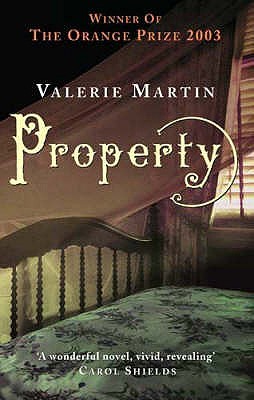
Property by Valerie Martin

It's the early nineteenth century in Louisiana and Manon Gaudet is unhappily married to the owner of a sugar plantation.  Cut off from her friends and family, Manon increasingly begins to realise that she doesn't know or like the man she married.   The slave girl she received as a wedding gift is a constant source of tension between husband and wife and the atmosphere Manon lives in is oppressive.  There are rumours of a slave rebellion and as violence in the area increases, Manon's way of life is challenged.

I picked up Property mainly because it had won the Orange Prize in 2003 and I've yet to be disappointed by the winners. The good news is that Property isn't destined to be the first disappointment; I loved it.  It's told in a bare, simplistic style but there's so much emotion and feeling in the story that each word is powerful.  Martin doesn't take the easy route of demonising slave owners, rather she attempts to paint a realistic picture of what slave owners at that time would have thought.  At times Manon can be almost kind to the slaves, but at others she dismisses them completely, as objects not worthy of human consideration.  I appreciated the ambiguity in the writing as a mark of a good writer.

The 'property' in the book doesn't just refer to the ownership of slaves, it also alludes to the ownership of Manon by her husband.  On their wedding day, Manon knows next to nothing about him, but her life is in his hands from that moment on.  Even when she inherits a property of her own from a relative, Manon isn't free to live in it to escape her domestic situation as legally the property belongs to her husband.  In some ways, she is property as much as the slaves are.  This extra angle made the book more interesting.

Property isn't a book to pick up if you are after happiness.  There's misery in the story from the very first scene and marital abuse and the misuse of slaves are constant parts of the narrative.  Even when it seems like things might be looking up for Manon, something else happens to add more misery.  But what the story lacks in happy endings, it makes up for in authenticity.  The whole thing felt very believable for nineteenth century Louisiana and the characters are so ambiguously written that as a reader, you aren't sure whether you even want them to be happy.

I'm glad I picked up Property. It's a powerfully written and subtle book that I carried on thinking about long after putting it down.  Recommended.

Source: Library
First Published: 2003
Score: 4 out of 5