Saturday, 10 August 2013

Tampa by Alissa Nutting


Tampa is certainly a controversial book.  New English teacher Celeste Price is young, attractive and married to a rich and handsome man.  But her life is consumed by her desire to have sex with fourteen year old boys.  Every single decision she makes is designed to bring this closer to reality; she accepts a run-down classroom because it has a lockable door, she drugs her husband because the idea of sex with him repulses her and she spends a small fortune on anti-ageing treatments that she doesn't need in order to look as young as possible.  When the first term of the academic year begins, Celeste begins to search for a teenage boy that fits her criteria, so that her years of preparation will not have been in vain.

I wasn't expecting to, but I found Tampa to be a disturbing book.  It's narrated in the first person and takes you right inside the head of Celeste, which isn't a happy place to be.  Her whole life is based on sex and the possibility of sex with teenage boys, literally every single decision she makes comes down to this.  Her sexual fantasies and later experiences are related in detail in a graphic way.  It wasn't this detail about sex that bothered me, more how all-encompassing, intense and yet clinical it was, and how disturbing some of her fantasies were (and not just because they were about teenage boys, even if it was about men this book would be disturbing).  Nutting isn't pulling any punches in Tampa and you can tell that from the cover alone.  She picks you up, drops you in Celeste's head and although it's a fascinating, authentic and excellent character study, it leaves you feeling grimy afterwards, like you need to wash out your brain.  There is a lot of sex in this book, but there is absolutely nothing sexy about it. I admire what Nutting has done in creating the character of Celeste and shining a spotlight on female sex offenders, but Tampa isn't a book that you can enjoy reading.

What I most appreciated about Tampa was the way it highlights the sexual double standard in society when it comes to cases of this kind.  When Celeste is eventually caught and taken to trial, her crime isn't taken seriously by some of the commentators, because doesn't every 'hot blooded' teenage male want to bed an attractive teacher?  This double standard is everywhere and it really bothers me.  Her defence lawyer even argues that Celeste is too beautiful to go to prison, as she would be in danger of being raped by other inmates.  No one would ever make this argument to defend a male sex offender! So although Tampa is difficult to read and extremely graphic, it definitely shines a light on the way we think of male and female sex offenders as a society, and that alone makes it worth reading.

As Tampa is basically an in-depth character study of a female psychopath, the secondary characters aren't developed properly and there's no real character development for Celeste herself.  This began to bother me in the latter half of the novel, as I would loved to have found out what Celeste's husband and victims were really feeling, but we only get to see them through Celeste's distorted eyes.  Celeste really has no empathy for the boys she abuses and even when some disturbing things (aside from her abuse) happen in the later stages of the book, she's unable to show any remorse or think about anything apart from her sex drive.  This gets wearying for the reader by the end of the novel.

This is one of the longest reviews I've written in a while because if nothing else, Tampa is a book that you will have opinions about.  I am of the opinion that the graphic nature of the novel is needed in order to really shine a light on female sexual predators and the double standard our society has towards them.  I didn't enjoy reading it, but I thought it was an excellent character study and Nutting certainly is capable of putting you in Celeste's head.

Source: From the publisher, via Netgalley
Published: July 2013
Score: 4 out of 5

Friday, 9 August 2013

Fables Volume 2: Animal Farm by Bill Willingham


Fables is a graphic novel series in which a host of fairy-tale characters and mythological creatures have been forced to flee their home lands because of the mysterious Adversary.  They have settled in New York, where they live parallel lives to our own, hiding their powers and gifts.  In the first volume, we met Snow White and followed her journey to find out what had happened to her sister, Rose Red.  In this second volume, Snow and Rose have journeyed to the Farm, home to all of the creatures that can not be hidden in every-day life (think giants and talking animals).  Snow is there on routine business but it soon becomes apparent that not everything is as it should be on the Farm and a violent revolution is brewing, led by the pigs.

I liked Volume One of the Fables series, it didn't set my world alight but I liked it enough to pick up this second volume whilst I was in the library.  I'm a big fan of Orwell's Animal Farm, so I was interested to see how Willingham would pay homage to the novel in his story.   Of course, there's no Russian Revolution in the Fables version, but there are striking parallel's to Orwell's original, including the leadership/ double dealing of the pigs.  I actually felt a bit sorry for the creatures forced to live on the Farm; their every wish was catered for by the human fairytale characters but they could never leave, even though their lives are practically immortal.

On the whole, I felt that Animal Farm was stronger than the previous installment, Legends in Exile.  There wasn't as much need for world-building, leaving more room for plot and adventure.  I like how we're starting to see some moral ambiguity in the series, and how there are splits in the Fabletown community.  I'm looking forward to picking up the next volume soon.

Source: Library
First Published: 2003
Score: 3.5 out of 5

Tuesday, 6 August 2013

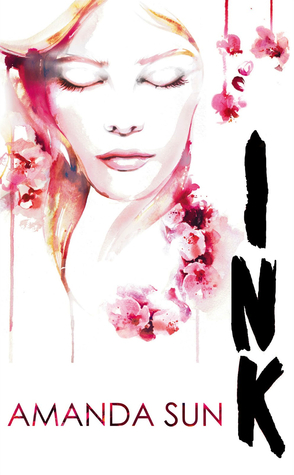
Ink by Amanda Sun


After the death of her mother, Katie moves half way across the world to live with her aunt in Shizuoka, Japan.  With only three weeks' worth of Japanese lessons and reeling from the tragedy, Katie struggles to fit in at school and in the new culture.  One day, she overhears an older student called Tomohiro breaking up with his girlfriend, who responds by ripping pages from his sketchbook.  As the papers fall to the floor, Katie sees something shocking - the ink drawings are moving.  Obsessed by this, Katie becomes determined to find out what secret Tomohiro is hiding, whatever the cost.  Soon she becomes caught up in a power struggle among the Kami, Japanese Gods, that could have deadly consequences.

I was drawn to Ink because I'm always on the look out for fantasy novels that use other cultures and their mythologies to underpin the plot.  Ultimately, I found Ink to be underwhelming, but it wasn't without positive features.  Sun studied Asian History at university and has spent time travelling through Japan, and her love of Japan came across on every page.  Lots of little details were added to the plot, with the result that the reader gets a really good 'feel' for Japanese culture.  Katie changes into school slippers in the morning, watches cherry blossom trees flower and eats authentic Japenese food.  Japan was almost a character in the novel and I loved that.  The mythology of the Kami also made a refreshing change as I have never come across them in a novel before.  

Whilst Ink had positive elements, I felt like it was let down by the romance between Katie and Tomohiro, who was a stereotypical bad-boy with a hidden secret.  Despite only just meeting him, Katie fell in love almost instantly and made a series of bad decisions all because she loved him.  Even when he was horrible to her, when she found out what his friends were mixed up in and even when her being around him could actually hurt her, she couldn't leave him alone.  I found it so frustrating because all the elements of a fantastic novel were here at the beginning of the book, only for the romance to take centre stage.  I don't mind a bit of romance, but it needs to be a better one than this for me to enjoy it.  I wanted more adventure, more mythology, more insight into the Kami, more ink drawings coming alive and less of Katie angst-ing over Tomohiro and how dangerous yet needy he was.

All in all, Ink had promising moments but was a bit of a let down overall.

Source: From the publisher via Netgalley.
Published: June 2013
Score: 2 out of 5

Monday, 5 August 2013

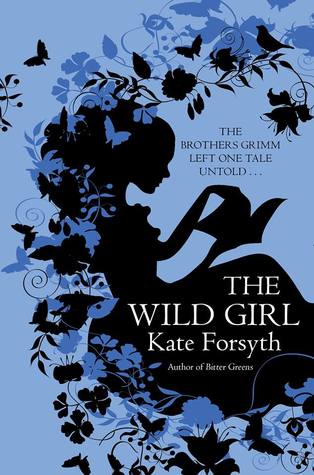
The Wild Girl by Kate Forsyth


It's a little known fact that Wilhelm Grimm married one of the women who told him many of the fairy stories the Grimm brothers were famous for.  Her name was Dortchen Wild and in The Wild Girl, Kate Forsyth imagines Dortchen's story.  Dortchen and the Grimm family were neighbours growing up in the small German Kingdom of Hessen-Cassel during the Napoleonic Wars.  Although Dortchen was attracted to Wilhelm from the start, their relationship was complicated by the poverty of the Grimms, the unstable situation they lived in and Dortchen's overbearing father.   Subject to constant criticism and verbal abuse, Dortchen is accused of being the 'wild one' by her father and forced to live according to his every wish.  As her home life grows ever more abusive, Dortchen takes refuge in the traditional stories told to her by Old Marie and helps Wilhelm to build his collection.

My synopsis honestly doesn't do this book justice.  I was lucky enough to review the excellent Bitter Greens earlier in the year and was thrilled to be offered the chance to review this one.  I was expecting it to be very good but it exceeded my expectations.  The Wild Girl is a chunky book at almost five hundred pages but I just flew through it as the story, and Dortchen in particular, captivated me. Forsyth manages to make her a quite fiery female character but at the same time keep her appropriate for the time period.  Dortchen may complain about boys getting to fight ogres and join the army, but she still feels like an authentic nineteenth century woman who helps to run her family home.

As the reader gets to see Dortchen's 'wild' personality at the beginning of the book, it makes it all the more powerful as her character gradually begins to shrink at her father's influence.  I think this was very well done and the issue of abuse was dealt with sensitively.  I'm not normally a big fan of romance but the romance between Dortchen and Wilhelm was extremely realistic and well written.  Forsyth was so good at putting you in Dortchen's shoes that her pain almost became my own pain by the end of the novel and I was certainly rooting for a happy ending.

The Wild Girl is more straight historical fiction than Bitter Greens.  I didn't know much about the Napoleonic Wars or the history of Germany at this time so it was interesting to find out a bit more in the context of the story.  Despite being historical fiction, the fairy stories are still at the heart of the book.  As Dortchen tells each tale to Wilhelm, they seem to relate to her personal life and a major theme of the novel is the redemptive power of fiction;

"Stories help make sense of things.  They make you believe you can do things.  They help you imagine that things may be different, that if you just have enough courage...or enough faith.... or goodness....you can change things for the better."

The Wild Girl is a fantastic book and I'm so glad that I read it.  It's one of those books that makes you fall in love with reading all over again.  Definitely recommended for everyone.

First Published in the UK: 29th July 2013
Score: 5 out of 5

Sunday, 4 August 2013

Sam Sunday #25


Another week of the holidays over!  I had some disappointing news this week, so I've been cheering myself up with decorating and working on the house.  The main bedroom is almost done (it WILL be done by this time next week), but while we were waiting for the carpet fitters, I decided to tackle the space under the stairs.  Until a few days ago, this was basically a junk area full of all the things we hadn't unpacked yet.  But now it's a cosy working/blogging area with a new desk.  It's still a work in progress as I'm hoping to get some storage for the folders etc to the right of the desk.  Eventually we will get the hallway re-plastered, so ignore the dark wood on the wall and the dingy colour of the wall itself.  But it's nice to have an area to sit and blog or journal.  I haven't had a desk since moving out of my parents house four and a bit years ago, so it's still a luxury at the moment.


And then because I needed even more cheering up than that, I dyed my hair red.  I used to have bright red (think Coca-Cola can red) hair as a teenager but then I got a job in a bank and had to have a more natural looking colour so it turned into brown.  For the last couple of years I have had my natural hair colour, which is mousy brown/dark blonde.  It's only a semi-permanent and it's a subtle red, but I'm happy with it.

I've been reading a lot this week.  I'm taking part in Adam's Austen in August event, for which I'm hoping to reread one Austen (Emma) and then also read a new to me Austen, which will more than likely be Northanger Abbey.  Because I can't read Austen for hours at a time, I've been reading other books concurrently too.  This week, I've been reading:


Reviews posted:

Saturday, 3 August 2013

Bout of Books 8.0


I took part in the last Bout of Books read-a-thon and it was a lot of fun, so I'm signing up again.  I'll still be on my summer holidays, so I'm hoping to get a ton of reading done.  I've already been reading a lot more than usual, so upping the ante even more should mean I get through a ton of books.  Which is awesome, because at the moment I'm in an "I want to read all of the books now, why can't I read faster?!?!" kind of mood.

The read-a-thon runs from the 19th to 25th of August, sign-ups are here if anyone else is interested in joining in.

Friday, 2 August 2013

Classics Club: Yearly Check-In 1/5


On August 1st, 2012, I signed up for the Classics Club, in which you challenge yourself to read at least fifty classic titles in the next five years.  I decided to go for a bit more than fifty books, and my final list was seventy-two books long.  As a year has passed since I started, I thought it might be a good time to write an update post and see how much progress I have made.

In the first year, I have read 13 out of 72 books, and reviewed them all.  The books I have read are the following (links go to my reviews):


I'm happy with my progress so far.  If I read one book a month for five years, that would be sixty books read so I'm aiming to read just over twelve books a year.  Thirteen isn't bad for year one.  Year two should be getting off to a good start as I'm already half-way through Emma, for the Austen in August event and plan to read Northanger Abbey too this month.  Slow and steady wins the race!


What I'm most pleased to report is that I've enjoyed each of the books I have read, although some more than others.  None of them have felt like an absolute slog to get through.  I'm glad I made such a good start on the Dickens titles this year, as I have now completed two out of the five I selected.  Dickens was one of those authors I really wasn't looking forward to reading, so I was pleasantly surprised by A Tale of Two Cities in particular, which has become a favourite.  Great Expectations I didn't love as much, but I liked it enough to be almost looking forward to reading the other three.  Of course I haven't started the one title I'm scared of on my list (Moby Dick) or the mammoth one (Les Miserables), but learning to like Dickens was enough of an achievement for the first year.

My favourite read so far has to be Tender is the Night, by F.Scott Fitzgerald.  I read it in just over a day for the Classics Club readathon and it completely ripped my heart out, it was so beautiful and devastating at the same time.  I'm saving Beautiful and the Damned, as I know I'm going to love it.  Similarly, I'm saving The Tenant of Wildfell Hall, the Anne Bronte I have yet to read.

Out of the thirteen books I read this year, six were rereads.  It sounds like a lot, but then a lot of my classics club list is made up of rereads.  Classics tend to be the only type of book that I want to pick up again and again and they usually improve each time.  I deliberately added some books that I didn't love first time round and typically on the second, they were much improved.  The award for the most surprising reread would definitely go to Around the World in Eighty Days, which I hated in secondary school.  Turns out I was missing out on all of the humour. 

I'm glad that I joined the Classics Club.  I had some reservations as I don't participate in reading challenges as a rule.  I'm a fickle reader and I don't make lists of books to read, but I think taking part has given me the push I needed to read more classics, more regularly.  Hopefully I'll enjoy the next four years just as much!