Friday, 18 January 2013

Sea of Ink by Richard Weihe


Ah, the last novella in mine and Lyndsey's (from Tolstoy is my Cat) Peirene Press readalong.  And it's a good one too.  Sea of Ink tells the life of Bada Shanren, born into the Chinese royal family in 1626, shortly before the dynasty is destroyed by rivals.  Abandoning his life as a Prince, Bada becomes a nomad painter, wandering between different towns and roles.  Disillusioned with humanity, his paintings focus on nature and become more simplistic over time.  Sea of Ink tells the story of both his life and the development of his art.

Despite not being a big fan of art, I really enjoyed Sea of Ink.  I liked how Weihe took us right into the mind of Bada Shanren as he painted and made the physical process of painting such a large part of the story.  Bada Shanren's quest to capture nature with a single brushstroke had a sense of poetic beauty about it, and I loved that the paintings were included in the book alongside the relevant chapters.

Sea of Ink is a tranquil book.  Although Bada Shanren faces some difficult life events throughout it's pages, the whole story is calm and quiet, which I appreciated.  Sometimes we all rush around, ignoring the world around us, and this novella works as an antidote to that.  It reminded me to take a moment to really see what is around me.  Sea of Ink is about perseverance and living your life in your own way;

"...besides the old role models you also have your own: yourself.  You can not hang on to the beards of the ancients.  You must try to be your own life and not the death of another."

The only issue I had with the book was that it didn't seem to flow as smoothly as some of the other translations from the series.  And the sacrifice for the calm, tranquil qualities in the story was some degree of disconnect from the main character.  I never felt Bada Shanren's losses heavily as Weihe keeps him at a distance from the reader.  The story was about more than the character, and I was OK with that.  

I'm glad we finished the Peirene Press novellas on a high note!  There'll be one more discussion post next Thursday and then it's all over.  I'll miss opening the cover of a new novella every Sunday evening...

Source: From the publisher, in exchange for an honest review.
Published: 2012
Score: 4 out of 5

Monday, 14 January 2013

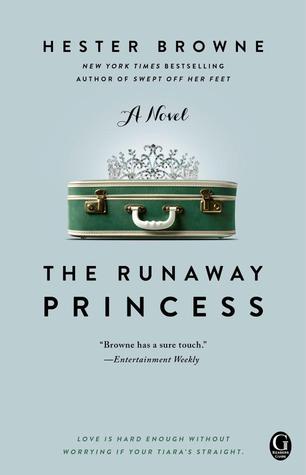
The Runaway Princess by Hester Browne


Amy Wilde is at a party one evening when she meets a man named Leo.  Only after several dates does she realise that he is in fact Prince Leopold, a member of a minor European royal family.  Sounds perfect, right? But Amy is totally unprepared for the change in her life that dating royalty brings - her every move is scrutinised in the papers and she's put on a punishing fitness regime by Leo's family.  When a chance change to the succession laws brings Leo closer to the throne, the pressure on Amy intensifies and her own secrets threaten to become public knowledge.

The Runaway Princess is certainly different from my normal reading but I was craving a bit of brain candy last week and I did dream of marrying a Prince as a young girl (My Mum always wanted me to marry Prince Harry and my older sister to marry Prince William!!).  I liked the premise of the book, how it promised to go beyond the 'happily ever after' and I was in the mood for some light relief.  And on these terms, the book delivered.  It was fluffy and fun and it was always a pleasure to pick it up after being at work all day long.  It's easy to empathise with Amy and Browne had some fun with the minor characters too.

The only problem with this book was that Leo was mind-bogglingly perfect.  I mean, come on!  I could buy that he was sick of the trappings of royalty and just wanted to meet a normal girl, but I couldn't believe that he was that accommodating and non-spoilt, in addition to of course being amazingly handsome.  In fact, a better story-line could have been Amy falling in love with his arrogant brother Rolf, that might have had some more chance for character development.  As in most of the chick-lit I've read, the ending felt very tidy and again, I couldn't believe that Leo was that perfect.

On the whole, I spent a happy few nights with this book in a happy, stress-free place.  It's not high literature, but I did enjoy escaping with it :)

Source: Personal copy (kindle)
First Published: 2012
Score: 3 out of 5

Saturday, 12 January 2013

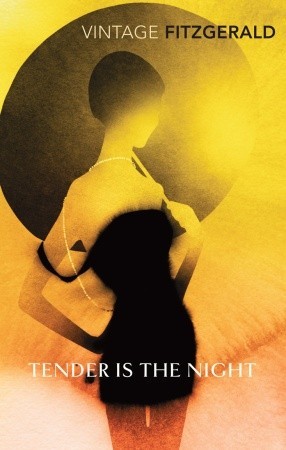
Tender is the Night by F. Scott Fitzgerald


I read Tender is the Night last weekend for the Classics Club Readathon but have only now got the time to sit down and write about my thoughts properly (I blame going back to work).  Before picking up this book, I had read The Great Gatsby (my review), which I liked but not as much as I had hoped.  I found the themes interesting but felt that the writing was too detached and failed to make an emotional connection with the characters.  Tender is the Night is the opposite of that; it's an emotionally raw, utterly miserable book and it had me captivated from the moment I picked it up.

We start the book with Rosemary Hoyt, a young actress on holiday in the French Riviera in the 1920s.  On the beach she meets Dick and Nicole Diver, a rich married couple who have drawn people to them by their wealth, charisma and lifestyle.  Rosemary imagines herself instantly in love with Dick and the story seems to be a straightforward tale of possible adultery.  But then things change about a third of the way through the novel when we jump back in time to when Dick and Nicole met, at a psychiatric facility where Nicole was being treated.  From this point on, Tender is the Night is the story of the steady decline of their marriage and nothing is spared.  Nicole's early reliance on Dick feeds into his need to be loved and adored and this forever prevents them from being happy together.  I don't know too much about Fitzgerald but much of Tender is the Night seems to be based on his experiences with his wife, Zelda, who also underwent treatment for mental illness.

Nicole is fabulously wealthy and much of the novel is taken up with their attempts to 'stay busy', by constantly visiting new places, going out every day and 'never being too tired for anything'.  I've seen reviews of the book criticising it as it's hard to feel sympathy for the ultra-rich, but this wasn't a problem for me.  Happiness doesn't depend on your bank balance and the impact of mental illness is felt right across classes.  It's soon apparent that the illusion of happiness around the Divers that draws others to them is just that, an illusion.  Sure, I'd love to own a home in the French Riveria and not have to work if I didn't feel like it, but I'd much rather be emotionally fulfilled and not have the constant need for external distractions.

It was obvious that some of the novel was based on Fitzgerald's own experiences as everything felt so real, all the complex emotions that go into a marriage, whether it is a happy one or not.  The decline of their marriage is protracted and utterly miserable to read about, as they did once genuinely love one another.  What I took from this book is the importance of both people in a relationship having the space to grow and be their own people, and to interact as equals. For the Divers, Dick was always the protector and Nicole the patient from the clinic.  This meant that whenever Nicole showed signs of independence, their relationship was threatened.   Dick's need to be adored was his weakness;

"....realising this power, he had made his choice, chosen Ophelia, chosen the sweet poison and drunk it. Wanting above all to be brave and kind, he had wanted, even more than that, to be loved."

It goes without saying that Tender is the Night is beautifully written.  It's not a book to rush through, but one to read slowly and marvel at the lyrical prose.  It didn't make me happy to read it, but it certainly had a powerful impact on me.  I'm glad I waited until I was well into my twenties and married myself before picking it up.  I know that The Great Gatsby is supposedly the 'Great American Novel', but Tender is the Night is the saddest and yet most wonderful book I've read in a long, long time.

Source: Personal copy
First Published: 1934
My Edition: Vintage, 2010
Score: 5 out of 5
Classics Club: Book 6/72 (my list is here).

Thursday, 10 January 2013

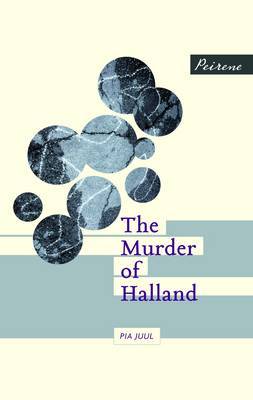
The Murder of Halland by Pia Juul


The Murder of Halland is novella eight out of the nine that Lyndsay from Tolstoy is my Cat and I are reading as part of our Peirene Press readathon, and part of the Small Epics series.  Bess is a writer living in a small, tight-knit community with her partner Halland.  One morning she is woken by the sound of a gunshot and soon receives the news that Halland has been murdered.  The police start to investigate whilst Bess starts to grieve.  Throughout the process, Bess starts to see her neighbours, friends and family in a different light, and faces up the consequences of the decisions she has made throughout her life.

I should start this review by confessing that I'm not a fan of crime/detective fiction.  I've read a few popular crime books and some Sherlock Holmes, but I just can't get into it.  I know I'm supposed to solve the puzzle of who committed the crime but that's not how I like to read.  Sure enough, whilst reading The Murder of Halland, I didn't spend any time trying to work out who murdered Halland and consequently later events were a surprise to me.  The crime aspect of the book was well written but didn't appeal to this particular reader.  I also can't judge how much it 'dismantles the rules of an entire genre' (quote from the back cover), as I'm not familiar enough with the genre to tell.

Luckily, The Murder of Halland is much more than crime-by-numbers, it's also about grief and coming to terms with the loss of a loved one.  Many of the sections dealing with this rang very true to my own experiences.  There's one chapter in the book where Bess is supposed to go to a library to give a talk (she's a writer) and checking her emails, she finds a confirmation.  In the space of a few short sentences she goes from almost flippancy ("should I create an auto-reply saying my husband had been murdered?") to despair;

"What had I written?  I didn't want to think about work.  Perhaps I would never want to think about writing again.  That belonged to the past and it didn't matter any longer."

Grief has been like that for me too; a roller-coaster of emotions and the constant worry of whether you are grieving properly or not, whether people will judge you for smiling or for leaving the house.  I think Juul's writing will relate to the experience of most people ("If normal everyday life had resumed, the washing needed attention.") and I connected well with Bess.

So a bit of a mixed bag.  The crime sections didn't appeal but the writing was simple and heart-felt, honest about the grieving process.  If you are a crime fan, you'll enjoy this book.

Source: From the publisher, in exchange for an honest review.
Published: 2012
Score: 3.5 out of 5

Monday, 7 January 2013

In Search of Dracula: The History of Dracula and Vampires


I received this book for Christmas, it's an updated version of one of the original books to delve into the life of the 'real' Dracula, Vlad the Impaler/Vlad Dracula, and to investigate the origin of Romanian folk-lore about vampires.  Regular readers of my blog will know that Dracula is one of my favourite books and that I'm fascinated with the vampire myth (though not the paranormal romance kind!).  As McNally and Florescu are both scholars who have travelled intensively in the Wallachia region and researched all over the world, I was excited to start reading this book.  As well as covering the life of Vlad Dracula, it looks at the origins of the myth and how the representation of Dracula on stage and screen has changed over time.

In Search of Dracula was concise, but packed full of interesting facts.  Although much of the information was already familiar to me, it was presented in an interesting way and there were some new facts.  I had no idea of the connections between Dracula and the Bathory family, and McNally and Florescu do a great job of portraying the context of Vlad Dracula's cruelty, while not excusing it.  Vlad Dracula was constantly fighting challengers to his power (sometimes from within his own family), as well as attempting to push back the Ottoman threat.  If you've never read anything about the historical Dracula, this book would be completely fascinating.   


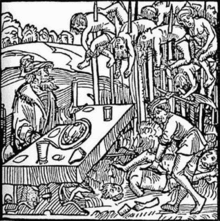
For me, the most interesting part was when the authors veered away from strict history and considered whether all the myths about Vlad Dracula could be true.  Did he really dine among a field of impaled humans, dipping his bread in their blood?  Translations of the original German anti-Dracula pamphets are included in the appendix and whilst they are grossly exaggerated, the authors conclude that the historical Dracula did probably commit some of the acts ascribed to him, those that he had the motive for.  Again, this part was morbidly fascinating to read.

The only place where the book fell down was in the later stages, where the authors moved on to considering how Bram Stoker's Dracula has been represented in film, and more broadly how books about vampires have changed over the time.  Although this had the potential to be interesting, in reality it was mainly a list of books/films with a brief description of each, which I admit to skipping over.

On the whole, this is a short but fascinating book about the life of the historical Dracula and the evolution of the vampire myth.  Fans of Elizabeth Kostova's The Historian will love it.

Source: Personal copy (Christmas gift)
First Published: 1972
Score: 4 out of 5

Read Alongside:
1. The Historian by Elizabeth Kostova - A scholar receives a mysterious book with a dragon inside it and his search for the origins of the book lead him through the history of the historical Dracula.  Gothic fiction.
2. From Demons to Dracula by Matthew Beresford - Non-fiction account of the history of vampires.
3. Vlad by C.C. Humphreys - Fictional retelling of the life of Vlad Dracula, as seen by his confessor and friend.  No vampires here.

Sunday, 6 January 2013

Classics Club Readathon - Ending Post


So my first ever readathon is now finished.  I managed to get a good chunk of reading done, although not quite as much as I had hoped.  I read about 260 pages of Tender is the Night yesterday and finished it off in bed this morning.  It was a very good book, but boy is it miserable.  When I read The Great Gatsby, I felt like there was emotional detachment all the way through, but that's not the case with Tender is the Night; there's so much raw pain in it's pages.  I'm glad that I read it, and reading it over the course of a day and a bit (normally it would take me about a week) enabled me to get right into the book and experience it more fully.  There'll be a review to follow in the next few days.

Closing questionnaire:
  1. What book(s) did you read during the event? Just Tender is the Night by F Scott FItzgerald. 
  2. What book(s) did you finish? Technically none, as I finished this morning (Jan 6th).
  3. What did you like about our event? I enjoyed visiting other blogs and finding some great new blogs to follow.  I loved the social aspect of reading together and being able to read guilt-free, putting everything else aside for the day.
  4. Do you have suggestions for future Readathons through The Classics Club? Maybe extend  the event over a whole weekend?
  5. Would you participate in future Readathons? Definitely!

Whilst I didn't quite reach my reading goals, I'm pleased with the amount of reading I managed.
How did you get on?

Saturday, 5 January 2013

Classics Club Readathon


The Classics Club readathon is here!  Even though it doesn't techincally start until 1pm GMT, I have decided to just read on the day, January 5th, rather than trying to follow American times.  I was all set to read Bonjour Tristesse, but then last night I was struck with an urge to read something 1930s and miserable.


Enter Tender is the Night by F. Scott Fitzgerald!  I read about fifty pages or so last night and so far I am enjoying it and already feel more of a connection to it than I did to The Great Gatsby.  The characters are all very rich, but aimless, bored and miserable.  Perfect for January.

I'm probably going to concentrate just on this book today, but if I need a break from it I might still pick up Bonjour Tristesse.  I'm also hoping to spend some time commenting on blogs and being social, as this is my first readathon.

Happy reading everyone!

Edited to add the classics club questionnaire:
  1. Name and Blog: I'm Sam (the female kind) and my blog is called Tiny Library.
  2. Snacks and Beverages of Choice: It's almost 2pm here, I've just had some homemade minestrone soup and croutons for lunch.  I plan to snack on Christmas chocolates throughout the afternoon (dairy milk, yum!) and then I'm visiting my parents for a chicken madras later on.  It's going to be a good food day!
  3. Where are you reading from today? My home, which is near London in the UK.  I'm moving between my sofa and comfy reading chair.
  4. What are your goals for the Readathon? Just to enjoy the day.  I go back to work on Monday so a lovely relaxing day reading is perfect preparation.
  5. What book(s) are you planning on reading? I'm reading 'Tender is the Night' by Fitzgerald.  If I finish that, I'll continue the French Riveria theme and pick up 'Bonjour Tristesse' by Francoise Sagan.
  6. Are you excited? Of course!