Thursday, 15 January 2015

The Good Earth by Pearl Buck

The Good Earth opens on Wang Lung's wedding day.  As the son of a farmer, his only option is to marry O-lan, a slave working in the great house of the village.  Although they start off as strangers and with next to nothing, Wang Lung and O-lan make a good pair, making the most of their land and growing family.  When a famine strikes and the family are forced to flee to the city, it is O-lan's determination and luck that keep them alive, and even enables them to return to their farm much richer than before.  As Wang Lung starts to accumulate more land and become more than just a peasant farmer, his expectations start to alter the family dynamics.  He starts to view O-lan as too simple, too plain and not enough for him.  As his sons grow up with more security than Wang Lung thought possible, the family begins to change for ever.

I really enjoyed The Good Earth.  Although Buck isn't Chinese, she lived in China for the majority of her life, and she presents the customs and attitudes of the time without judgement or condescension.  In fact, she doesn't even stop the story to explain things that would have been self-evident to Wang Lung, such as foot binding and the role of women, and this makes the story stronger.  Buck doesn't impose any Western ideas or views on her Chinese characters, even when their attitudes will make Western readers uncomfortable.

For me, The Good Earth was all about O-lan.  Having suffered through her childhood and adolescence, she is ready to live a quiet life with Wang Lung and devote herself to their family.  She suffers constantly throughout the book and yet is always thought of last.  Although Wang Lung does come to respect her in some way, for most of the book he ignores her presence, does not appreciate all that she does, and he is never able to love her.  When she returns to work the fields after literally just giving birth, he accepts this as what she should do.  O-lan made me wonder how many women there are like this in the world, forced by custom and attitudes to do everything for their family, never getting any reward or potential for personal growth, essentially giving up their own lives.  O-lan had so much inside her, but Wang Lung never thought to find out who she really was.

Another thing that struck me whilst reading The Good Earth was the parallels with Dickens' Great Expectations (this may sound strange, but bear with me).  Like Pip, Wang Lung starts to think of himself as grand, and therefore deserving things according to his new station.  A more attractive wife. Sons that are scholars rather than farmers.  Many rooms to their house.  Tenants that defer to him and treat him with respect.  As in Great Expectations, this can only end in misery for Wang Lung, something that is perfectly summed up in the last scene of the novel, which coincidentally was one of the strongest endings I've read in a long time.

I would definitely recommend The Good Earth.  I had my reservations about a book narrated by Chinese characters written by a Westerner, but these were unfounded.  The Good Earth is very well written with memorable characters, and I can't wait to read more of Buck's work.

Source: Personal copy
First Published: 1931
Edition Read: Simon & Schuster, 2005
Score: 5 out of 5

The Classics Club: Book 32/72
My list of titles can be found here.

Tuesday, 13 January 2015

The Viral Storm by Nathan Wolfe

With the ebola outbreak capturing headlines, it seemed like a good time to pick up this non-fiction book about viruses and how they turn into pandemics.  Wolfe is a scientist, professor and self-confessed 'virus hunter' who spends his time studying viruses, their transmission from animals to humans, and predicting which viruses have the potential to mutate and turn into pandemics.  The aim is to catch viruses before they spread - pandemic prevention rather than pandemic reaction.  The Viral Storm is split into three sections, dealing with the science of viruses, how human societies and contact with animals has enlarged the risk of pandemics, and finally what can be done to prevent them.  The science sections of the book are interspersed with parts that feel more like a memoir, with Wolfe recounting his experiences studying viruses all over the world.

The Viral Storm is a great example of a widely accessible science book.  I have a science degree, but I specialised in neuropsychology, and I am rusty to say the least with regard to anything else! Wolfe assumes no prior knowledge in the reader, and has a really clear style that means he presents his information clearly and concisely.  I loved the initial section explaining the science of viruses, even if the information about just how many are out there made me squeamish (250 million virus particles per ml of seawater!).  Although studies are referenced, Wolfe doesn't get into the nitty gritty of how they were conducted or the analysis of results, which is just what I wanted in a general introduction to a topic like this.

One of the many things I didn't know before reading The Viral Storm is that viruses in humans can almost always be traced back to animal contact.  Whether it's a bite, or contact with tissues and blood through hunting, it comes back to our interaction with the environment.  The history of HIV included was very interesting, especially as this is something that is often misrepresented in the media.  I also didn't know that when a person has two viruses, they can mutate and create mosaic viruses combining elements of both, which is how some pandemics have started.

Wolfe's key argument is that we are living in a time when the potential for pandemics is high.  When our ancestors learned to cook food, destroying microbial life, the viruses we were exposed to gradually lessened, meaning that they are all the more potent when we do catch them from animals. Poverty forces many populations into subsistence hunting, which is often linked to human transmission of animal viruses.  And our inter-connected world means that viruses have a greater than ever potential to spread rapidly, and come into contact with more people than ever,  But that's not to say the book is all doom and gloom, as Wolfe recounts some of the work being done to prevent pandemics, and the early successes of such projects.

On the whole, The Viral Storm was an accessible and enjoyable read.  I learned a lot from it, but the reading experience never felt like a chore.  The inclusion of the memoir sections really broke up the science and it was interested to see what studying viruses in the field actually entails.  My only (minor) complaint is that sometimes Wolfe was a bit repetitive, but this didn't alter my enjoyment.  Definitely recommended.

Source: Personal copy
Score: 4.5 out of 5

Monday, 12 January 2015

Project 1001 Books: Let's Go!


Last week, I posted about two new projects I have created for myself using 1001 Children's Books You Must Read Before You Grow Up and 1001 Books You Must Read Before You Die.  I've spent the weekend flipping through both of them and have selected the titles from each that I want to read. This challenge isn't time limited, but I'm aiming to read one book a month, from either list.

  • From 1001 Children's Books You Must Read Before You Grow Up, I ended up with 101 titles, which I think is a great number!  You can find my list here.
  • From 1001 Books You Must Read Before You Die, I ended up with slightly less, mainly because my classics club reading has enabled me to tick quite a few of them off already.  My final list has 80 titles, and you can find it here.  Or alternatively, you can click the tabs at the top of my blog.
Of course, I already own lots of these titles.  In fact, the reason many of them have made it on to my lists is that I own them and want to read them.  Despite this, I couldn't resist the lure of the library and I wanted to see which books I could just pick off the shelves, without having to place a hold.


Unsurprisingly, the books I could find came from the classics section, with one fantasy.  Books that are translated, or more modern titles were much harder to find, although after a quick check of the library catalogue, I should be able to put a hold on most of them.  I picked up:
  • For my children's list: Across the Nightingale Floor by Lian Hearn and The Red Pony by John Steinbeck.
  • For my adult list: The Mysteries of Udolpho by Ann Radcliffe, The Wings of the Dove by Henry James, A Room with a View by E.M. Forster, The Monk by Matthew Lewis and The Pit and the Pendulum by Edgar Allen Poe.
I'm thinking I will read one of these next.  I've already finished one title on my adult list, Michel Faber's Under the Skin, which I started on Saturday but just could not put down as it was so creepy and excellent and thought provoking.  At the moment, I'm drawn towards Henry James, as I've been a fan of all the books of his I have read so far.  I would love recommendations as to which of these I should try first.

Friday, 9 January 2015

New Projects: 1001 Books


Last week, I read this post on Iris' lovely blog about how she is intending to read books from 1001 Children's Books You Must Read Before You Grow Up, partly because she has a son who she wants to share wonderful books with.  And it really inspired me - I have my childhood favourites, but I want to be able to share as many great books as possible with Giles, to recommend to him a wide range of things, so he can find that part of the bookish world that he is going to love.  

Then I was thinking about how I can make sure that I actually read the books I intend to.  I'm terrible at TBR lists and challenges, with the one exception being the classics club, which I have stuck to for over two years, and am on track to finish.  So I've decided to apply the principles of the classics club to 1001 Children's Books You Must Read Before You Grow Up and 1001 Books You Must Read Before You Die.  

Here's what I am going to do:
  • Over the next few days, I'll post a list of books from each title that I want to read.
  • Books that I own will automatically make the list, but aside from that I'll be looking for diverse reads, books in translations, and books from authors I haven't read yet.
  • I'll make my lists tabs on my blog, then update with reviews when I finish each title.
  • I'm not going to set myself a deadline, but I'm aiming to read one book a month, which can come from either list.
As I'm not intending to buy books at the moment, I'll probably start by reading the ones I already own, then I will be fully utilising the library hold system.  Books that I read and love will be purchased and added to my collection.

I'm really excited to start these projects, and to spend some time looking through the books and choosing my titles.  Anyone who wants to join in is more than welcome, mutual encouragement might help me get through the books!

Wednesday, 7 January 2015

World War Z by Max Brooks

World War Z is about a zombie apocalypse, but rather than being told as a narrative, Brooks has instead written a faux-history book. In this world, humanity has only just come out of a devastating global war with zombies, and the 'author' is someone who has worked on a UN report into the war, examining the spread of and human response to the zombies.  Upon being instructed to leave everything personal out of the final report, he decides to use his material to make a popular history book.  And thus we get World War Z, a collection of interviews with the movers and shakers of the war, covering the initial outbreak in China through to the post-war reconstruction efforts.

I really wanted to like World War Z.  It was a favourite with my husband, and I think the premise of the novel is very clever.  I like the idea of it being a history book rather than a story, and it allows Brooks to bring in stories from people all around the world.  We get to be there when a doctor arrives on the scene of the first outbreak, when Israel decided to shut themselves off completely, when the bold decision was made to abandon parts and populations of whole countries, in order to save the few and avoid the total destruction of humanity.  I liked the descriptions of what it was like to face the zombies, and to be on the run from them.

Unfortunately, there were a few things that stopped me from enjoying World War Z.  Although it was a quick read and never hard to get through, it ultimately disappointed me.  The first problem was the lack of tension.  The 'history book' conceit of the novel means that you know that everyone who is narrating their account survives.  No matter how dangerous the situations they find themselves in, no matter how slim the chance of survival seems, you know they are going to survive, and this ruins it a bit.  Another issue was that all of the accounts were of people who made key decisions or were in key places.  Of course, that is who would make it into a history book if this were to happen, but I missed the run of the mill accounts of everyday people.  I can only think of one like this, and it's a shame there wasn't more.

However, the main problem I had with World War Z is that it was too focused on being technical and clever.  Brooks is very concerned with how the outbreak spread, the politics of the different countries and their reactions to it (and these were extremely stereotypical, another negative) and the military responses.  There are pages and pages of descriptions of weapons, and of arguments between different forces on effective responses and which weapons should be scrapped.  I can't deny that Brooks' scenario is plausible, and he has obviously thought everything through carefully, but I missed the emotional connection.  I didn't want to read about weapons and battle tactics, I wanted more human impact, more of the feelings that would come with your world being turned upside down. Perhaps diary entries of those that couldn't cope, or stories from families who had lost members could have been included, anything to make it more emotionally engaging.

Overall, the history book format is both the strength and weakness of World War Z.  It's a clever idea, and Brooks' scenarios are extremely plausible but it also completely destroys the tension and the emotional connection to the story.

Source: Personal copy
First Published: 2006
Score: 2.5 out of 5

Monday, 5 January 2015

Recommendations #1: Human Disasters


I can't remember exactly how, but as a teenager I stumbled across Romeo Dallaire's memoir, Shake Hands with the Devil.  It's about his time as the force commander of the UN troops in Rwanda during the genocide of 1994. Initially deployed to keep peace and observe, the UN forces were soon caught up in the violence and mass murder.  But they were stunted by their orders, unable to act in any decisive way to prevent more killing.  Dallaire spent his time requesting more troops (instead some were withdrawn), sending urgent memos and basically doing anything he could to give his force the power to stop the genocide, but through a mixture of bureaucracy and lack of political will, he was forced to simply observe and attempt to negotiate.  And it would have been easy to stop - the perpetrators of the genocide were largely unorganised and armed only with machetes.  Shake Hands with the Devil is both an indictment of the world political community for turning their backs on Rwanda, and a surprisingly personal account of how it felt to be in the middle of something you are powerless to prevent, and the long term effects of being a witness.  As a side note, the documentary with the same name is really worth watching if you can get your hands on it too.

Rather naively, I was shocked at the way the world ignored the genocide in Rwanda, and this led me to Samantha Power's Pulitzer Prize winning book, A Problem from Hell.  Power takes as her starting point the dreams of the UN after the Holocaust, and then shows how systematically it has failed to act in a timely or effective manner in every single genocide since then.  No matter the country, the story is the same - too much bureaucracy, countries unwilling to risk their troops, leaders reluctant as they know they will not be pressurised by their constituents.  Power's research is impeccable, and even though this book makes for grim reading, it is important, as the only way we can make organisations take more action is by exerting political pressure on them.


It's hard to discuss modern genocides without thinking of the Holocaust.  I first read Anne Frank's The Diary of a Young Girl when I was twelve or thirteen, and I instantly related to the way Anne wrote about growing up and life in her family.  Her diary is so vivid; her personality just comes off the page, and I felt as if I knew her, almost as if she was a friend.  I still remember the way the diary ends abruptly and how I felt as I read the afterword explaining what had happened to her.  It was one of the first times I came face to face with the cruelty of the world, and the unfairness of it all.  I've since read the diary many times, and it's still got that power to upset me.  Anne's experiences of growing up are so relatable, and this is what makes it such an emotional read.

Although I'm sure there are many histories of the Holocaust out there, Lyn Smith's Forgotten Voices of the Holocaust is probably one of the most powerful.  Smith visited the oral archive of interviews with survivors in London's imperial war museum, and the book consists of simply their own stories in their own words.  There's no editing and not much context, and this makes it all the more impacting.


One of the consequences of human disasters is the creation of refugees. In Human Cargo, Caroline Moorehead visits refugees around the world and asks them to share their experiences.  In doing so, she relates the inhumane ways they are sometimes treated, imprisoned in detention centres and subject to interrogations.  Moorehead offers no solution to the problem of states handling more refugees than they can deal with, but she does give the refugees themselves a voice.  Often in news reports and editorials, they are treated simply as numbers, but in this account they are humans, with often horrific pasts and simple hopes for the future.

I'm conscious of the fact that I've been recommending non-fiction books up until now.  Of course fiction can deal with human disasters beautifully, and one of the best examples of this is Stephen Galloway's The Cellist of Sarajevo.  Narrated by four different people living through the siege, it's a novel that captures the resilience of humans, and how hope can sometimes be found even in the worst circumstances.  You can read my full review of it here.

*               *             *

This is my first time writing this kind of post, full of recommendations and not reviews, so please do let me know if you enjoyed it, and if you would like to see more like this in the future.

Friday, 2 January 2015

Pride and Prejudice by Jane Austen


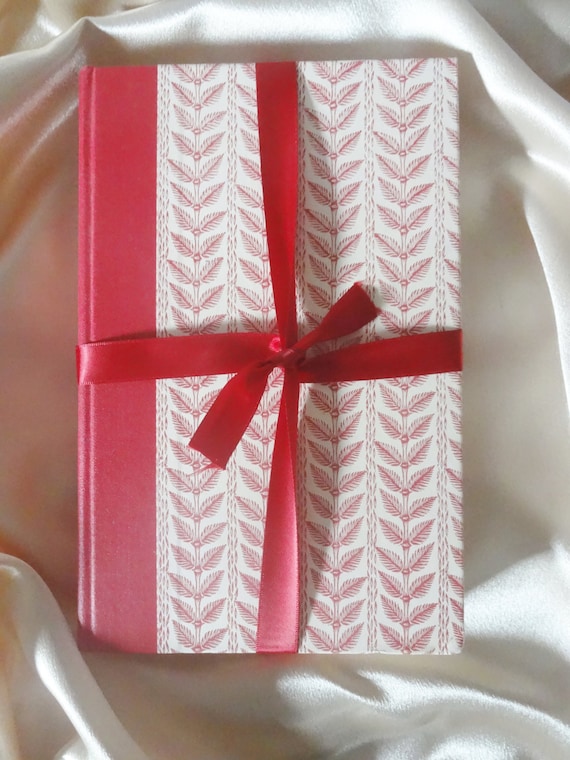
When starting this post, I was so excited to find an image of the edition of Pride and Prejudice that I have just finished.  You see, I was browsing one of my favourite second hand bookshops at the weekend when I came across a complete Folio Society set of Austens, all hardback and stunning and gorgeous, for an amazing price.  It was one of my best bookish finds in years, and I knew that as soon as I finished the book I was currently reading, I'd have to read an Austen. In the end, I chose Pride and Prejudice, it's a reread that's on my classics club list, and it felt fitting as it was my first Austen.

I'm sure that most people are familiar with the story of Elizabeth Bennet and her four sisters, who are unable to inherit their father's property and will therefore have to live in poverty unless they make sensible marriages.  But set against Elizabeth and her older sister Jane's chances are Mrs Bennet's lack of taste or social decorum, Mr Bennet's bluntness, and the silliness of their younger sister Lydia. Of course there are a lot of misunderstandings as Elizabeth navigates the marriage market, but in the end both she and her sister manage to marry for love, conveniently falling in love with men who have the fortune to support them.

Pride and Prejudice will always be a special book to me as it was the first Austen I was ever able to complete on my own.  My older sister was a huge Austen fan from her teens, and even studied her work at university, but I could just never get into any of her books.  I didn't understand the wit, the social commentary or the understatement of Austen's prose.  But finally (and only after watching the BBC mini-series), I was able to fully appreciate Pride and Prejudice and since then, I've not looked back.  The more Austen I read and re-read, the more I understand why she is as respected as she is.

On this read, I found myself thinking a lot about mistakes.  Both Jane and Lizzy make mistakes, Jane in thinking that Miss Bingley is a good friend, and Lizzy about the characters of Mr Darcy and Mr Wickham.  But both are honest about their mistakes and set about fixing them.  Although Lizzy in particular feels ashamed after discovering the truth, she is able to explain herself and move on. This is something I struggle with, as I tend to want to hide any mistakes I make and find it hard to forgive myself, let alone others.  Jane in particular was good at this - her kindness towards others was matched by her kindess towards herself, and this is something I can learn from.

Now that I have read more (but still not all) of Austen's major novels, Pride and Prejudice is no longer my favourite.  I prefer the flawed characters of Emma and particularly Catherine from Northanger Abbey.  But it's still a special book, one that I'm sure I will reread many times in the future, getting something new out of each read.


The Classics Club: Book 31/72
My list of titles and reviews can be found here.