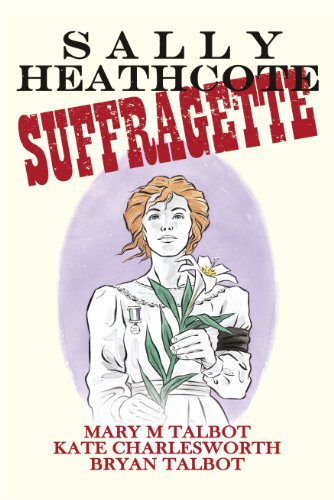
A suffragette in the early 1900s was the name given to a woman in the UK who was campaigning fiercely for the right to vote. Before reading this graphic novel, I knew a little bit about the suffragette movement, having learned about Emily Davison's death under the hooves of the King's horse in school, but I wasn't familiar with how the campaign started or the politics behind the different decisions made. I knew enough to be grateful and to always exercise my right to vote, but until reading Sally Heathcote, I had no idea how hard-won that right actually was. Talbot uses the fictional character of Sally, who starts out as a maid to one of the leading suffragettes, to explore the different factions in the movement and uphill struggle they faced.
Sally Heathcote: Suffragette is simply a stunning book. It's impeccably researched and brings this period of British history to life. We have a tendency to take our right to vote for granted, and to see women being franchised as a historical given, but this book gives the suffragette movement some immediacy. I admit that I tended to think of it as a genteel, middle class movement, so I was surprised at the amount of violence in the novel. There's lots of protests where the women are beaten (or worse) by the police and public, and Talbot doesn't shy away from the brutality of the force feedings in prison, when the suffragettes went on hunger strike. We see the violence of the tube being forced down their throats and the injuries that could occur afterwards. Sally's stay in prison is one of the most powerful sections of the book. We all talk about rights today, but there's something so inspiring about this group of women, who were willing to get arrested, beaten and starve themselves in order to endure someone forcing a tube down their throat so they could be the equals of men. When did we become so apathetic in comparison?
Talbot also manages to show the complexity of the movement, with the different factions disagreeing on how best to achieve their aims - should they be entirely peaceful, or is targeted violence to be permitted? At one point, Sally becomes involved with a more radical group who set fire to a politician's house and are considering the use of bombs. This kind of debate is still relevant today - do the ends always justify the means? Sally eventually decides to move away from this kind of campaigning, but I'm glad that Talbot included it.

On top of the wonderful content, Sally Heathcote: Suffragette is a simply beautiful graphic novel. I loved the style of the images, with the flashes of colour set against the grey drawings. Lots of the original posters and newspaper articles are reproduced, and the time period is evoked very well. I'm a bit fussy about graphic novels, and this is one of the best in terms of style that I've read yet.
As you can probably tell, I just loved this book. It combines fantastic historical research with a powerful story, and the medium of the graphic novel just makes the story more impacting. It's a book to inspire, and a book that should make every woman reading it grateful for their right to vote. The very ending of the book, which deals with modern apathy, was extremely thought-provoking, and I don't think I'll every be able to take my right for granted again. Highly recommended.
Source: Library
First Published: 2014
Score: 5 out of 5


