Sunday, 13 November 2011

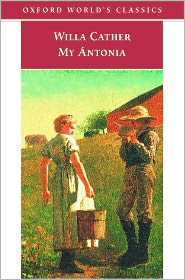
My Antonia by Willa Cather


I have to admit to not knowing much about American Literature. I know lots about English Literature but the only real American Literature I've read is Hemingway's A Farewell To Arms and I didn't like it much.  Fitzgerald and Hawthorne are strangers to me, as are Zane Grey, Henry James and Melville.  I never even read Little House on the Prairie whilst growing up.

My Antonia was a first attempt at rectifying this situation.  Jim Burden, a lawyer, recounts his childhood on the plains of Nebraska and particularly his friendship with a Bohemian immigrant girl called Antonia.  Rich in detail, it is a love letter to a way of living that has since been lost and a poem to American midwest.

I liked My Antonia as a coming of age tale.  I've read other reviews where the major complaint is that not much happens in the novel, but I enjoyed the cosy, lazy Sunday afternoon pace and the descriptions of a childhood spent in the great outdoors.  At certain times it did feel as though Cather was romanticising her own experiences of growing up on a farm, as none of the hardships ever felt particularly real.  In their first winter in America, Antonia's family are caught unprepared and have little in the way of food or warm clothes.  Antonia runs about barefoot in the snow in only a cotton dress, but even this is looked back on in a nostalgic sort of way.

Behind the cosy narrative, a lot of powerful themes were lurking.  I read this as a tale of immigrant experience, of the separate classes that grew up of 'Americans' and 'foreigners'.  In My Antonia this whole system is mocked as the foreigners are the resourceful, enterprising ones who by doing things that the Americans find distasteful, such as sending their daughters to work, are able to become more successful in the long run.  But the boundaries between the two groups remain firm; Antonia and Jim could never have married.

There was also a lot on the theme of gender.  Antonia and Jim were both androgynous characters, with Antonia taking on classically masculine characteristics such as physical strength and Jim having a lot of feminine elements.  Throughout the book, the female characters are the strong ones.  I thought this was interesting in the light of Cather's sexuality and how she herself used to dress as a man whilst she was growing up.  It was nice to read a book in a rural setting where the women do more than keep the house and prepare meals.

Overall, My Antonia was a well written coming of age story that kept my interest.  It had a cast of lively characters and evoked life on the plains very well.  I would recommend it as a good example of American literature.

Source: Library
First Published: 1918
Score: 3.5 out of 5

Friday, 11 November 2011

The Shadow Of The Sun by Ryszard Kapuscinski


I love the Penguin Celebrations series.  With this latest acquisition, I now have sixteen out of thirty-six, which is not bad, and every single one I have read has been enjoyable.  This one is from the travel and adventure range and is a series of dispatches from Africa written by the Polish journalist Ryszard Kapuscinski.  Arriving in Ghana in 1957, when many African countries were just throwing off the shackles of colonialism, his reports cover a range of countries in sub-Saharan Africa from the 1950s to the 1990s and is as much of a love letter to Africa and it's people as it is a travel journal.

Kapuscinski has the good fortune to often be in the right place at the right time.  He witnesses a coup in Zanzibar, the action of child soldiers in Liberia, another coup in Nigeria, meets key players such as Mugabe and generally witnesses history in the making.  His constant quest to experience the 'real' Africa and not remain sheltered in European areas makes for some dangerous episodes too; at times you feel as though you could be reading the plot for the next Indiana Jones film.  Kapuscinki also catches a nasty bout of malaria and when he refuses to go back to Europe, he contracts TB, which almost kills him.  He drives head first through a herd of buffalo on the Serengeti plains, gets caught in a monsoon storm whilst trying to escape in a small boat off the coast of Zanzibar and becomes delirious with thirst when his truck breaks down in the middle of the Sahara desert.


These adventures add a bit of spice to his writing and keep the pace brisk.  What I liked most about this book was the balance between factual reporting and personal impressions.  Kapuscinski does give you the background on the political situations of each country, but he also writes about what it is like to be there in the blinding heat and describes as best he can his experiences with the local people and wildlife.  This meant it wasn't unbiased reporting, but I very much enjoyed the personal touch as it gave me more of a sense of what Africa is like.

The writing itself was gorgeous too, and the love Kapuscinski felt for Africa came across in every sentence.  I'm going to end this review with my favourite quote;
 "More than anything, one is struck by the light.  Light everywhere.  Brightness everywhere.  Everywhere, the sun." 

Verdict: Engrossing travel journal of Africa during a momentous time in it's history.  Recommended.
Source: Owned
First Published: 1998
Score: 4 out of 5

Sunday, 6 November 2011

The Thing Around Your Neck by Chimamanda Ngozi Adichie


The Thing Around Your Neck is a short story collection by one of my favourite authors, Chimamanda Ngozi Adichie.  Having previously read and loved Purple Hibiscus (my review) and especially Half of a Yellow Sun (my review - go and get a copy now if you haven't read it), I couldn't wait to get my hands on this collection, her only work published in book form that I had yet to read.  And I wasn't disappointed.

The Thing Around Your Neck is a short story collection about women, the immigrant experience, things not working out the way they should and homesickness.  All of the women in the stories have a connection of some kind with Nigeria; some are on their way to America to marry Nigerian men who have already made it, some are caught up in violence, some are writing about it and some are missing it with every bone in their body.  Nigeria appears as almost a character in it's own right -  a whirl of colours, smells, sound and vibrancy compared with a grey, bland, tasteless America.


Aside from that, the other major theme that I could identify was disappointment and expectations not being met.  The stories are full of Nigerian women who have moved to America anticipating a land of milk and honey and found themselves disappointed, both with their new country and their new husbands.  In The Arrangers of Marriage, Chinaza is encouraged by her husband to cook only American food, change her name and be as American as possible, resulting in a deep homesickness.  She can't write home about her misery as her relatives all assume she will have a big house, a car and all the perks of living in America.

I had several favourite stories from the collection.  One was A Private Experience, a story of an unlikely friendship between a Hausa Muslim and Igbo Christian during race riots in Nigeria.  Another was On Monday of Last Week, about the loneliness of a woman working as a nanny for an American family.  Although Tomorrow is Too Far didn't really fit in with the themes of the rest of the collection, it was a very creepy story about sibling rivalry.

But my favourite story was Jumping Monkey Hill, about a group of upcoming African writers invited to a safari lodge in South Africa for a writing seminar by a white sponsor.  It seemed as though Adichie had used this story to vent all of her frustrations about the attitude towards and labels given to African writers as most of the stories the Africans write are disparaged by the white sponsor.  He wants them only to write of war, desperation, hunger and stereotypes, not the truth of their experiences and countries.

To sum up, I would highly recommend this well written collection, especially if you are interested in the immigrant experience.

Source: Library
First published: 2009
Score: 4.5 out of 5

Wednesday, 2 November 2011

Bookish Acquisitions

During our trip to Derby and the Peak District last week, I managed to acquire some great new books!


One of the places we visited was Chatsworth House, Mr Darcy's house in the BBC adaptation of Pride and Prejudice.  Of course it has many other features too, but from a bookish perspective it was great to visit Mr Darcy's home.  The gift shop had a great selection of Jane Austen books, sequels by other authors and non-fiction books all about the world of Austen. I managed to find Talking About Jane Austen in Baghdad.  

Synopsis from goodreads:
May's a tough-talking, hard-smoking, lecturer in English. She's also an Iraqi from a Sunni-Shi'ite background living in Baghdad, dodging bullets before breakfast, bargaining for high heels in bombed-out bazaars and battling through blockades to reach her class of Jane Austen-studying girls. Bee, on the other hand, is a London mum of three, busy fighting off PTA meetings and chicken pox, dealing with dead cats and generally juggling work and family while squabbling with her globe-trotting husband over the socks he leaves lying around the house. They should have nothing in common. But when a simple email brings them together, they discover a friendship that overcomes all their differences of culture, religion and age. "Talking About Jane Austen in Baghdad" is the story of two women who share laughter and tears, and swap their confidences, dreams and fears. And, between the grenades, the gossip, the jokes and the secrets, they also hatch an ingenious plan to help May escape the bombings of Baghdad...
I'm hoping it'll be a nice cosy read.

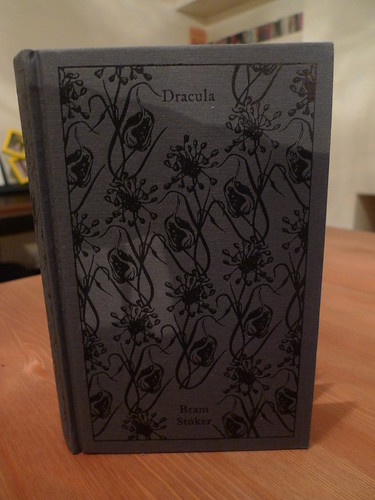
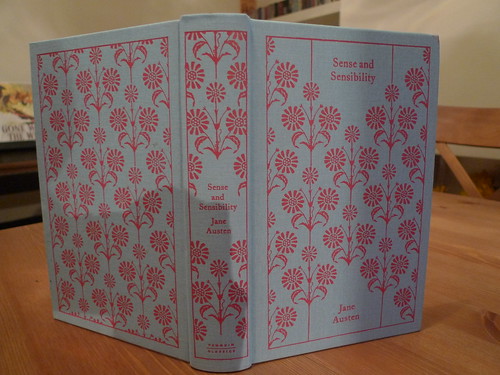
And then we found a nice independent bookshop and my husband bought me two book from the Penguin Classics hardcover series that I've been coveting for the longest time.  They are both beautiful, bound editions with page markers.


Dracula by Bram Stoker.
I already own this book, but it's one of my favourite books and I wanted a nice edition to keep.


Sense and Sensibility by Jane Austen.
Believe it or not, I haven't read this one yet.  How gorgeous are the patterning and covers on this book?


What I love about the Penguin editions is that the pages are nice and thick, the font is just the right size and type and there are page markers included.  One day I will have a whole shelf of Penguin Classic Hardcovers....


Have you acquired any great books or bookish treats lately?


Monday, 31 October 2011

84 Charing Cross Road by Helene Hanff


I've lost track just how many people and blogs had recommended this cosy volume of letters between an American book lover and a second hand book shop in London's Charing Cross Road to me.  Helene lives in New York but is a devoted Anglophile who makes a connection with England through the Marks & Co bookshop, who begin to send her books in the late 1940s.  Over time she develops a close friendship with the chief buyer of the shop, Frank Doel, and their letters become both more personal and an important part of both of their lives.  The volume I read also contained The Duchess of Bloomsbury, Helene's journal from when she finally got to visit London after 84 Charing Cross Road was published.

This book was just what I thought it would be - a cosy feel-good read.  It was a bit like watching a Richard Curtis film, Love Actually or something like that.   The London in the letters and diary entries felt like that fictionalised London that tourists want to see rather than the real thing.  Everyone was nice and went out of their way to be kind to Helene, a total stranger.  And that was the best part of the book; as it all actually happened it reminded me of the capacity for good and kindness that we all have inside of us.  And who doesn't need reminding of that now and again?

I much preferred 84 Charing Cross Road to The Duchess of Bloomsbury.  I just liked the letter format more than the diary one and the contrast between straight-forward and somewhat brash Helene and the typically-English, typically-reserved Frank.  Compared to the sparky letters the diary entries dragged and were overly detailed.  I was happy to learn that Helene finally got to make her trip, though, and it was nice to learn what had happened to Frank's family.  I just didn't want that much detail.

Verdict: A perfect Sunday afternoon read.
Source: Library
First Published: 1976
Score: For just 84 Charing Cross Road, 4 out of 5.  For both books combined, 3.5 out of 5

Sunday, 30 October 2011

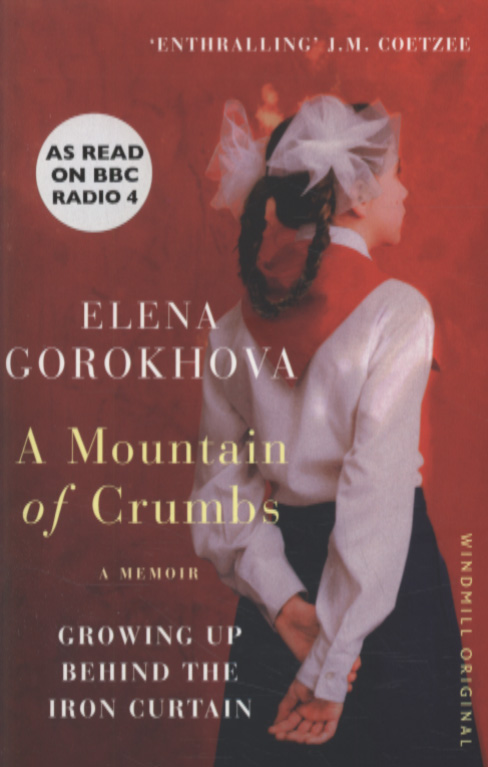
A Mountain of Crumbs by Elena Gorokhova


A Mountain of Crumbs is a memoir about growing up in the Soviet Union in the period after Stalin but before its collapse.  Born to a physician mother and much older father, Elena grows up in a strictly controlled country where even wanting to learn the English language can be a dangerous act.  Perceptive early on to the concept of vranyo, the idea of pretending everything is wonderful even when it is not, she soon grows tired of the restrictions and contradictions - when she earns real money, there is nothing in the shops to spend it on - she manages to leave by marrying an American man she isn't sure she loves and starts a new life in the USA.

A Mountain of Crumbs was a very well written memoir.  Gorokhova's intelligence and perceptiveness come across in every single page and she manages to transport the reader both back in time and to a system that no longer exists.  The small details were the ones I really savoured - the school friend who was the only girl with a proper hair cut, the people lining up for toilet roll, the girl humiliated in assembly for writing a love letter.  Gorokhova's voice in this memoir reminded me a lot of Sylvia Plath's in The Bell Jar; obviously the two books are not similar in content but there was the same perceptiveness, self awareness and a sense of not fitting with the surroundings.

One thing I did like about this memoir was that it was neither a whitewashed, sentimental account of her childhood or a harsh condemnation of the Soviet Union.  Gorokhova managed to create a balance; some passages were recounted with nostalgia but in other parts you can tall that Gorokhova was very glad to have made it out to the US.  This balance existed with her personal life too - the mother-daughter relationship is written very realistically (especially when Elena is a teenager) and she is honest about the fact that she largely got married as a passport out of the country.

But despite all of this and the fact that I knew I was reading a good book, I just couldn't connect with it or get swept away by it.  Although I admired Gorokhova's writing, it had a detached quality that made it hard for me to connect with her personally, something that I think is crucial for a very good memoir.  I enjoyed A Mountain of Crumbs whilst I was reading it, but I was never really in a hurry to pick it back up.

Verdict: Well written but impersonal memoir about growing up in the Soviet Union.
Source: Library
First Published: 2010
Score: 3.5 out of 5


Thursday, 27 October 2011

Vlad: The Last Confession by C.C Humphreys

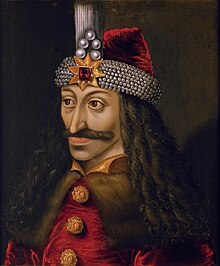
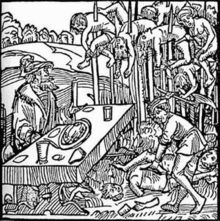
Everyone knows Dracula as a blood-sucking vampire, but in real life Vlad Dracula was the Prince of Wallachia, a lawless region bearing the brunt of Ottoman expansion into Eastern Europe.  In Vlad: The Last Confession, C.C. Humphreys uses three characters close to Dracula to tell his tale: his mistress, his priest and his closest friend.

And an interesting life it was too.  Taken into captivity in Edirne at a young age by the Ottomans to secure his father's loyalty, Vlad grew up amongst the Turks, fostering a life-long hatred.  This is also where he first witnessed impaling, his speciality method of punishment in later years.  Whilst Vlad's brother converted to Islam and chose to stay in the Ottoman Empire, Vlad himself returned to rule Wallachia sporadically before finally being captured by his Christian allies, the Hungarians.  When he was finally killed, his head was reportedly displayed at the entrance to Constantinople to show the strength of the Ottomans.

I was familiar with lots of this information before reading, being a big fan of Elizabeth Kostova's The Historian, but I do feel that Humphreys did a great job at making the novel both engagingly written and factually accurate.  Humphreys also succeeded in placing Vlad in context, and judging him against the period he was living in, rather than against modern standards.  Yes, Vlad killed tens of thousands of people, and lots of them were impaled, but he inherited a lawless place that was in many ways the buffer region between Christian Europe and the Muslim Ottoman Empire. He had to show massive strength to get his boyars (lords) to obey him. Vlad's brutal methods did work to a certain degree as reports of impalment and turbans nailed to heads apparently put the Ottoman leader, Mehmet, off attacking Wallachia directly.

The sections of the book dealing with impaling were quite graphic and not for readers with weak stomachs; I was glad to not be eating whilst reading them!  Aside from that, the only criticism I can make of this book is the device of some of the characters posthumously 'judging' Vlad.  This meant that the narrative was disrupted every now and again with asides from characters I didn't really care about, jarring the flow of the book.  Personally, I think it would have been better told as a straight fictional biography rather than with the 'confession' device.

This one comes highly recommended from me, especially for fans of The Historian or epic adventure/war novels.

Verdict: Thoroughly researched and engaging novel about the life of the real Dracula.
Source: Library
Score: 4.5 out of 5