Showing posts with label historical fiction. Show all posts

Sunday, 1 March 2015

Reading Journal #6: Catching Up


As predicted, I simply didn't have time to post during the week, and unfortunately I didn't get to visit many blogs either. By the time I have taught all day, attended meetings, got Giles home, cooked dinner, eaten dinner, given Giles his bath, put him to bed and sorted out everything for the next day, including planning and marking, I'm not in much shape for anything! Happily, one of the things I am in shape for is reading, so I've still been steadily going through books. Here's what I have read over the past two weeks or so:

Bad Pharma by Ben Goldacre is a non-fiction expose of the pharmaceutical industry and how trials, biased publications and access to doctors' training can lead to drugs being prescribed incorrectly, and patients not always getting what is the best for them. Prior to reading this, I had heard about the pharmaceutical industry in the USA, but had naively thought that we were more protected here in the UK, because we have the NHS and our medical system isn't for-profit. Goldacre quickly disabused me of this notion, pointing out how missing data, where nine unsuccessful trials could be buried and one successful one published, skews prescribing habits in all countries. It turns out that our regulators are no good at enforcing their own rules, that doctors can be paid to add their names to papers they did not write, and that drugs reps are allowed way too much sway over GPs. The single scariest fact in the book was that drugs are rarely if ever compared against the best available treatment, only against a placebo. This means we have no idea which drugs are the most effective for a whole host of common treatments.

Bad Pharma is well researched and it helps that Goldacre is a UK trained doctor, but at times his rhetoric was a bit over the top. I could have done without lots of the repeated anger, especially in a book as long as this one. It did however make me appreciate my own GP, who prescribes generic medications rather than the fancier branded ones that have the exact same ingredients, and who has explained this to me before prescribing. Bad Pharma covers an important topic and is well researched and written, so I would recommend it if you don't mind a bit of repeated anger on the part of the author.  3.5 out of 5

After non-fiction, I always need a bit of palate-cleansing fiction.  I've read White Teeth and On Beauty by Zadie Smith, and liked them both, so I decided it was time to pick up N-W. It tells the story of four Londoners from the same area - Leah, who is trying to avoid growing up and starting a family; Natalie, who has worked hard to leave her working class roots behind; Felix, who is trying to start again, and Nathan, who is angry.

Reviews of N-W seem to be very mixed, with readers tending to rank it lower than her other books. This is mainly due to the experimental writing style; parts of this novel are written in numbered sections, in fragments of sentences and in lists. Personally I loved that Smith had chosen to write like this, as she is definitely talented enough to pull it off.  The chaotic writing style matched the chaotic lives of the characters and I was hooked within a few pages. This book was challenging to read at times and the style didn't always work, but I found it thoroughly engrossing and a realistic portrait of London today.  3.5 out of 5.

And finally, an audio-book.  I was excited to start China Dolls by Lisa See, as See is one of my favourite historical fiction authors. Shanghai Girls in particular is up there with the best historical fiction I've read, and I've never read a bad book by her. Until now. China Dolls is the story of Ruby, Helen and Grace, who meet when they are auditioning to become dancers in a Chinese night-club in 1930s San Francisco. They soon become firm friends, and the narrative follows them through several decades, as they move through disappointments and traumatic times. Each is hiding a powerful secret.

To start with what I liked - I had no idea about the way 'Orientals' were treated in America at this time, and it was fascinating to learn about the 'Chop Suey Circuit' and the interment camps for American citizens of Japanese descendants during WW2. I liked the epic-ness of the story, how it covered many decades and events and gave a real sense of time passing. However, the three main characters were a major let-down. The only one I could ever really like was Grace, which wouldn't have been a problem if their storylines weren't so unbelievable.  Ruby, Helen and Grace kept on and on hurting each other, and their friendship seemed based only on jealousy and a common race. I just couldn't comprehend how they kept forgiving each other some pretty unforgivable things, and why they were so keen to hurt each other. It completely ruined what could have been an interesting novel, if only the portrayal of female friendship was more nuanced.  2 out of 5 stars.

So that's me almost up to date.  I've also finished The Bronte Myth by Lucasta Miller, but as it has led directly on to a reread of Jane Eyre, I'm going to save it for a joint post another time.  What have you been reading lately?

Tuesday, 30 December 2014

Reading Journal #2: Race, Fairies and Epic Fantasy


With Tom on Christmas holidays for the past week and a bit, I've had more time to sink into some fantastic books.  Christmas makes me crave something magical from the fantasy genre, something full of wonder and delight and escapism.  One year I devoured the whole Inkheart series by Cornelia Funke, and it was just perfect for the season.

Aside from The Hobbit, which I have a full review of here, I also decided to pick up Jo Walton's Among Others this Christmas, which I've heard great things about.  It features one of the strongest protagonists I've come across in a long time, Morwenna Phelps, a fifteen year old girl in 1979 who has just run away from her mother, a dark witch, after the death of her twin.  She ends up at an English boarding school and the book is told in the form of a diary.  The real magic in Among Others is the way that Mori's love of reading is expressed.  Any book lover will relate to her descriptions of her feelings as she reads various books, and how books have become her solace in difficult times. When she has to be thankful for something as she prays, she is thankful for the interlibrary loan system.

I think Among Others would be even more special for someone who grew up reading science fiction.  I've read my fair share, but nowhere near as much as Mori, and I didn't catch all of the references.  But as a book lover, her enthusiasm got to me and I ended up writing a list of all the books she mentioned that I must get my hands on, Ursula Le Guin prominent among them (should I start with Earthsea?).  The main plot of the book follows Mori's attempts to use magic to stop her mother and her attempts to come to terms with the death of her sister, but the fantasy elements are written with a light touch.  In fact, I'm not even sure whether I believed Mori at all, or whether she just had an over-active imagination.  I treasured the book mostly as a coming of age story, in line with Dodie Smith's I Capture the Castle. Highly recommended.

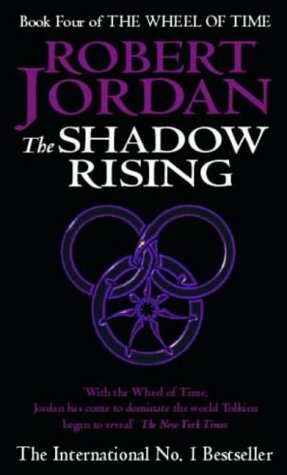
A lot of my December reading has been taken up with the fourth installment in Robert Jordan's epic Wheel of Time series, The Shadow Rising.  These are really immersive books and by now I know enough about the world and characters that reading them is just pure escapism.  As always, the writing was a bit meandering, and the way that the female characters are written leaves a lot to be desired, but I have so much fun reading them.  This volume was roughly 1000 pages, but it just flew by.  I loved visiting the Aiel Waste and finding out more about women who can channel (do magic) in the different societies of the world, and the varying ways they are treated.  I found the sections where Perrin returns to the Two Rivers, his homeland, to defend it rather boring, and I'm optimistic that he will feature less in the next volume, which I'm sure I will pick up before too long.

And now for something completely different - race relations in the Deep South.  Earlier in the month, I wrote a blog post about all the fantastic books on my kindle I have yet to get to, and Scottsboro got a lot of love in the comments.  And well deserved all of that love was.  It's based on the true case of a group of nine black boys arrested in Alabama in 1931, accused of raping two white girls, which they didn't.  One of the girls stubbornly sticks to her story, but the other keeps changing her statements, and it's soon clear to anyone with a brain that the boys are innocent.  But this is the Deep South in the 1930s, and the political powers in Alabama have no interest in freeing the boys - indeed, they think they have been remarkably fair by giving them a sham trial, rather than just lynching them on the spot.

The story is told mainly from the perspective of a female journalist from New York, who becomes part of the campaign to free the boys.  She is a great voice as she's remarkably perceptive on the subtle nuances of the different prejudices of those supporting and condemning the boys.  She points out that a lot of the support is for personal or political gain, observing that if the boys were to suddenly turn up in the middle of a New York party full of their 'friends', no one would know quite what to do with them.  We are also introduced to Ruby, one of the two girls who originally cried rape. Feldman deftly uses Ruby's poverty and life history to show why she lied, and why she would tell the truth.

In places, Scottsboro was a depressing read.  There's one point late in the novel where I had to set it aside for a minute, disgusted by the selfishness of humans in general, and how willing we as a society are to knowingly allow others to suffer for our gain.  Somehow, no one in this book is doing the right thing for the right motives, and it made for grim reading.  I take my hat off to Feldman's wonderful writing and perceptiveness, and this is surely an important book. I can't see I enjoyed all of it, but it had a powerful impact on me.

And that's my recent reading up to date.  At the moment, I'm in a bit of a classics mood, and I'm thinking of rereading Pride and Prejudice by Jane Austen over the next few days.  After that, I'm intending to look through my classics club list and pick a few more titles to immerse myself in. Happy reading in 2015!

Tuesday, 9 December 2014

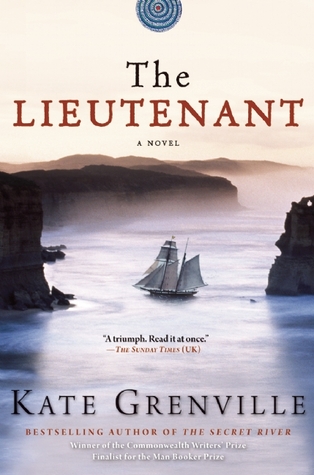
The Lieutenant by Kate Grenville

I picked up The Lieutenant because I thoroughly enjoyed Grenville's The Secret River, also about the colonisation of Australia.  Whereas The Secret River focused on a family deported after the father is convicted of theft, The Lieutenant takes as its subject Daniel Rooke, an outsider with a fascination for numbers and the stars.  He travels to New South Wales as a naval astronomer charged with charting a comet through the Southern Hemisphere.  On arrival, Daniel becomes fascinated by the language of the Aborigines and this leads to an unexpected friendship with a girl named Tagaran.  But he can not escape the fact that he is a representative of the British, and that he is compelled to follow orders or face trial.  The closer he becomes to Tagaran, the more the starts to view the Aborigines as equals, and the more he is conflicted by their treatment.  Eventually, Daniel will have to decide where his loyalties truly lie.

The Lieutenant was a quick read that dealt with some interesting issues.  Although I didn't enjoy it nearly as much as The Secret River, I appreciated Grenville's writing and how she approached big topics with a light touch.  The awakening of Daniel's conscience is gradual, and Grenville avoids any preaching.  The complexity of the Aboriginal characters establishes them as equals from the moment they are introduced, and Daniel, with his social awkwardness, is the only British character able to take them at face value.  He hasn't got the social skills to absorb stereotypes or prejudices, and his academic fascination with their language soon leads to a respect for the people.  Daniel is able to appreciate that their language and lifestyle is as complex as the British one, and therefore can not morally treat them as savages.  Sometimes it does take someone who is an outsider, who doesn't fit in, to see what should have been staring everybody in the face.

Although I liked the way Grenville wrote the Aboriginal characters, I would have liked to have seen more of them.  Their society was left largely as a mystery, and I would have liked it if Daniel had been able to interact with Tagaran more before being forced to make a big decision at the end of the novel.  I understand that Daniel is based on a real British astronomer, William Dawes, but I still think Grenville could have done more to really show that the British were disturbing a whole society.

On paper, The Lieutenant ticks all of the boxes of what I love reading about, but the reading experience somehow fell a little flat.  Daniel wasn't as compelling as the Thornhill family were in The Secret River, and I never felt any dramatic tension, as it was always clear what Daniel was going to end up doing.  Overall, I would recommend it, but you should start with The Secret River first.

Source: Personal copy
Score: 3.5 out of 5

Thursday, 9 October 2014

Water for Elephants by Sara Gruen

Jacob Jankowski is a veterinary student about to sit his final exams when he receives the devastating news that his parents have been killed.  Desperate and unable to cope, he hitches a ride on a freight train that turns out to house the Benzini Brothers Most Spectacular Show on Earth.  The circus has fallen on hard times due to the Great Depression but Jacob's background ensures him a job as the circus vet.  Jacob is seduced by the exotic animals, glamour and romance of the circus life, but there are darker currents running underneath the sequins and glitter.  When he falls in love with married performer Marlena and the circus acquires Rosie the elephant, Jacob finds himself tested.

As always, I bought this book when it was surrounded by a lot of hype but then failed to read it in a timely manner.  I also failed to see the film, so I went into Water for Elephants with completely fresh eyes.  I was expecting a light, sentimental type read, and that's exactly what it was.  Even though Water for Elephants discusses some heavier themes such as animal cruelty, murder and the brutality of circus life, it does so in a Spielberg-esque way that left me in no doubt that things would be OK in the end.  It's like life without the sharp edges, and it makes for comfortable if not challenging reading.

My favourite element of Water for Elephants was the setting.  I'm not surprised this novel was turned into a film, as it's so visually evocative of both the time period and of the circus.  I could almost smell the popcorn and taste the excitement that the circus bought to the dreary towns it stopped in.  I also really enjoyed the character of Marlena, who had more guts than I initially took her to have.  The bits dealing with Rosie and the other animals made me want to try Gruen's novel Ape House, as I liked the way the animals were characters in themselves.

However, there were some flaws.  Jacob falls in love with a married woman, which could have made for some interesting complexity in the novel, but Gruen shies away from this by making her husband to be a bad guy.  This seemed a little too convenient for the plot.  As I mentioned above, there's never any doubt that things will end well for Jacob, and this takes away some of the tension.   Despite this, Water for Elephants is a really fun, escapist read.  I loved immersing myself in the world of the circus for a while.

Source: Personal copy
First Published: 2006
Edition Read: Two Roads, 2011
Score: 3.5 out of 5

Wednesday, 23 July 2014

My Last Duchess by Daisy Goodwin

Cora Cash comes from one of the wealthiest families in America and is used to the best of everything.  Her ambitious mother arranges for them both to travel to England in the hope of securing a match with a titled but relatively impoverished English gentleman, thus raising the status of their family.  Well aware of the game her mother is playing, Cora isn't expecting to actually fall in love, and when she does, this blinds her to the intrigues around her.  Nothing in England is quite what it seems, and Cora soon finds herself vulnerable.

I picked up My Last Duchess looking for a fun, easy read and I wasn't disappointed.  It's the kind of book where you have to suspend your disbelief a little bit, plunge in head first and just enjoy it.  It's not a believable story by any stretch of the imagination, but it's certainly an entertaining one.  Cora herself is a well rounded character but some of the other characters are merely stereotypes or one-dimensional, such as Cora's mother the fortune hunter and her love interest Ivo, the mysterious and reserved English gentleman.

What I did like about this book was that it went further into Cora's story than I was expecting it to. I thought it would be a straight-forward marriage plot with Cora's wedding and happy ever after in the final chapters.  But it wasn't - Cora gets married very early on and we follow her as she attempts to be happy.  And to give credit to Goodwin, this isn't easy for her.  Cora has married for love, but it's unclear whether her husband has, and she's married into a society that isn't welcoming at all.  There's plenty of ups and downs and even at the end, it's unclear whether Cora will ever be truly happy.  I liked the lack of a definitive happy ever after, and I liked that we got to see beyond the wedding.

You'll enjoy My Last Duchess if you like books that are purely escapist and you don't mind if the story is unrealistic in parts.  I had a lot of fun reading it and it was perfect for when I was up in the small hours of the morning feeding the baby.

Source: Personal copy
First Published: 2011
Score: 3.5 out of 5

Friday, 11 July 2014

The Birth of Love by Joanna Kavenna

The Birth of Love contains three intertwining stories that deal with childbirth in different time periods.  In 1885, Dr Semmelweiss is being ridiculed by the medical profession for his suggestion that doctors washing their hands could dramatically lower the rates of childbed fever.  Cast out and pursued, the story finds him in a lunatic asylum, convinced that he is a murderer.  In 2009, Brigid is preparing for the home birth of her second child, hoping for a natural birth.  And in 2135, in a dystopian society, a group of prisoners are on trial for the crime of concealing a pregnancy.

I've been wanting to read The Birth of Love for ages, but I didn't want the depictions of childbirth to put me off before I had my own son, so I kept on delaying it.  And I'm glad I did - Kavenna doesn't shy away from any part of Birgid's experience and her labour is described in extensive detail, taking up roughly one third of the book.  The way it was described was so powerful - I know my own experience of childbirth is fresher than most people's, but I'm sure any woman reading this who has given birth would find themselves relating to Birgid's pain and fear.  I found it quite cathartic to read about birth in such an honest and unflinching way, to read about Birgid's rapidly changing emotions and her struggle to manage the pain in different ways, from her optimistic determination in the early stages, through to her dark relief at intervention in the end.  It felt like an unadornished portrayal of what labour is really like, and in this way I found it reassuring - I'm not the only one who felt like that!  My own labour was actually very similar to Birgid's (although I ended up with forceps rather than a caesarean), and this made it even more powerful to me.

The other two stories were interesting too.  It seems crazy to us that doctors in the past didn't wash their hands and indeed went straight from an autopsy to an internal examination of a woman in labour, but this is what happened, and boy did they fight against hand washing!  The dystopian story was probably the weakest - there was too much in the way of telling rather than showing, and I wanted to know why pregnancy and parenting had come to be seen as so disgusting.  I did like all of the little links between the three stories, as this reminded me a bit of Cloud Atlas, one of my favourite books.

The main flaw that The Birth of Love had was pacing.  All of the stories were slow paced, particularly the Dr Semmelweiss strand, and this made reading the book tedious at times.  It really would have benefited from a good edit, as quite a bit could have been cut out to leave a more fast paced and coherent novel.  I can imagine some readers will be put off by the slow pace of the novel.

On the whole, I really enjoyed The Birth of Love, mainly for Birgid's story.  Childbirth and pregnancy features in a lot of books, films and popular culture,  but rarely is it dealt with honestly.  My high rating of the novel is largely due to this.

Source: Personal copy
First Published: 2010
Score: 4 out of 5

Friday, 4 July 2014

Catching Up: Mini Reviews

Thank you to everyone who took the time to congratulate me and comment on last week's post about the birth of my son, Giles.  One of the best things about blogging is the friends that I have made, and I was reminded of that when I read through all of the comments :)  I'm continuing to recover very well, and am feeling almost normal again.  Of course, life itself is a bit of a blur of feeding, nappy changing and trying to get a very wide awake baby to go to sleep at 3am in the morning.  I have been able to read a bit (kindles are great for one handed reading!) but most of the following reviews are for books I finished up whilst waiting for Giles to arrive.

1. A Game of Thrones by George R. R. Martin
This was a reread that I started as soon as I became overdue and needed distraction!  I loved this book the first time around and loved it even more the second.  I picked up on more of the clues for what was to happen in the future, I was able to see how much the characters had developed and I liked the simplicity of the plot-line.  This is the only book in the series where most of the main characters are together for most of the time, which makes it more coherent than the other volumes.  Escaping to Westeros was just what I needed, even if I can't see myself re-reading the rest of the series any time soon. 5 out of 5 stars.


2. The Constant Princess by Philippa Gregory
When I first started reading historical fiction, I quite liked Philippa Gregory.  I soon grew out of her, but her books are kind of a guilty pleasure for me.  The Constant Princess is about the life of Catherine of Aragon, and focuses particularly on her marriage to Arthur, and the beginning of her subsequent marriage to Henry VIII after his brother's death.  As always, Gregory takes a bit of a liberty with the facts but this book was a quick, fun read.  3 out of 5 stars.


3.  Guns by Stephen King
As a Brit, the debate about gun ownership in the USA really fascinates me.  Here, guns are a non issue - people aren't allowed to own them, and I can't think of anyone I know who would want to.  Only small sections of the police are armed, and most people would be scared rather than reassured to have a gun in the house.  So I'm not going to comment on King's arguments, which seemed logical and practical to me, as I'm not the intended audience.  I will say that the whole thing felt a bit rushed, as if it were hurried for publication, and this ruined my enjoyment of his writing a bit.  3 out of 5 stars.


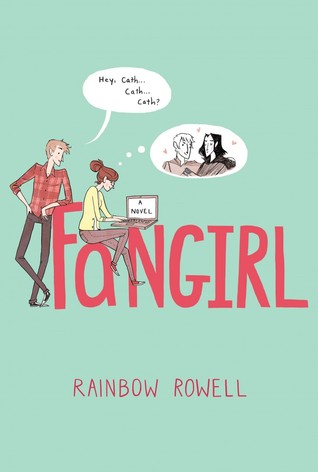
4. Fangirl by Rainbow Rowell
This one I read after Giles arrived, in the night time moments when he wasn't quite ready to be put into his Moses basket yet and just wanted to be held.  It's about twin sisters Cath and Wren, who begin to grow apart when they start university.  I really liked the main character, Cath, and could relate to her shyness and awkwardness around people.  The love story was very sweet, and the whole thing was extremely hard to put down.  I've come to the conclusion that I just enjoy Rowell's young adult fiction more than her adult books.  4.5 out of 5 stars.


Friday, 13 June 2014

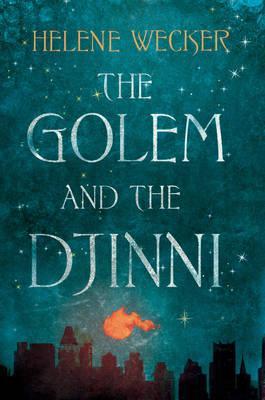
The Golem and the Djinni by Helene Wecker


Chava is a golem, a creature made of clay and bought to life using an ancient Jewish Kabbalistic ritual.  She's created to be the wife of Otto Rotfield, but he dies on their passage from Poland to New York, leaving Chava alone in the nineteenth century city, completely alien to those around her.  As she tries to fit in and suppress her differences, she has a chance encounter with Ahmad, a djinni.  After centuries of freedom in the Syrian desert, Ahmad was enslaved and bound.   Accidentally released by a tinsmith but still trapped in human form, Ahmad is desperate to regain his freedom.  As the two creatures find their way in the city and try to uncover their roots, an unusual bond grows between them.

Advance warning:  this review is going to be glowing!  I've been excited about reading The Golem and the Djinni ever since it first came out, especially as it's been compared to Jonathan Strange & Mr Norrell, one of my favourite novels ever.  The Golem and the Djinni contains so many of the elements that I love to read about; fantasy tied to a convincing mythology, an interesting historical setting, the inclusion of magical elements in a believable way, creatures straight out of Arabian Nights and an exploration of Jewish culture.  In fact, I actually put off reading this book for ages, as I was worried it wouldn't live up to my unreasonably high expectations.

But I shouldn't have worried at all - The Golem and the Djinni is probably my favourite read of the year so far and I can't see anything surpassing it.  The mythology woven into the story by Wecker just felt so plausible and I loved how authentic her nineteenth century New York was.  The mystery of Ahmad's capture and the secrets of Chava's creator was beautifully done, with small clues being dropped all throughout the story.  I loved the sections that took place in Syria amongst the Bedouin people, and also the way Wecker wrote about the Jewish immigrant community in the city.  Chava and Ahmad's friendship felt natural and unhurried, and I like that a lot about this was left ambiguous and unresolved.

It's fair to say that I liked everything about this book.  It's not going to appeal to every reader; it's quite slow paced in places, but in my mind it's a rare example of a great fantasy novel for adults that weaves in historical culture and context in a believable way.   If you liked Jonathan Strange & Mr Norrell or A Discovery of Witches, you'll love this!

Source: Personal copy
First Published: 2013
Edition Read: HarperCollins, 2013
Score: 5 out of 5

Saturday, 5 April 2014

Nefertiti by Michelle Moran


I was off sick from work one day last week, and I wanted something light and entertaining to read, that would absorb my attention as much as possible whilst I rested.  Nefertiti, historical fiction about one of Egypt's Queens, seemed to fit the bill.  Told through the eyes of her sister, Mutnodjmet, Nefertiti follows the Queen from the time of her marriage to Akhenaten, a controversial Pharaoh who renounced all of the old gods, taxed their temples heavily and insisted that everyone should worship the sun, Aten.  Akhenaten in the novel is driven, greedy and ambitious, a man who possibly murdered his older brother in order to secure the position of Pharaoh for himself.  In order to gain more power, Nefertiti must resort to playing her own games, setting different factions of the court against each other and treating her family as pawns.  As Mutnodjmet watches the lengths to which Nefertiti will go to carve out a place for herself, she becomes increasingly uncomfortable and yearns for a more simple, carefree life.  But will Nefertiti allow her to live her own life?

The quote on the front of my copy of Nefertiti states that it is 'compulsively readable', and I have to agree with that sentiment.  I powered through this novel in a day, and it was perfect reading for someone feeling under the weather.  There's not a lot of substance in Nefertiti, but there's a lot of plot and events move at a very quick pace, making the book hard to put down.  I have a feeling Moran might have been playing hard and loose with some historical facts, but she has created an extremely gripping, readable book that was a lot of fun to read.  I loved the Ancient Egyptian setting, and I enjoyed reading about the depths that Nefertiti would sink to in order to consolidate her power.

Whilst I definitely enjoyed Nefertiti, it has it's faults.  As I mentioned above, I'm not sure that the story is in keeping with what we know about Akhenaten and Nefertiti from history, and it's very much a light, scandalous type of story, in which some of the characters act like they are living in the modern day.  The descriptions of Egypt and the temples/culture were great, but it felt a bit like the main players were superimposed upon this background, rather than truly living in it.  To be honest, I normally prefer my historical fiction a bit more serious, a bit more of the time period, but this is such a fun book that it didn't really matter.  It's not one to pick up if you want historical accuracy and literary writing, but it is extremely entertaining, and sometimes that's all you want.

Source: Personal copy
First Published: 2007
Edition Read: Quercus, 2008
Score: 3 out of 5

Tuesday, 1 April 2014

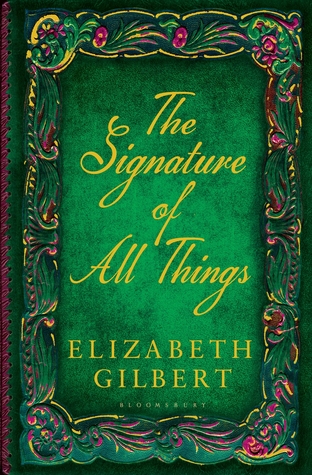
The Signature of All Things by Elizabeth Gilbert


Alma Whittaker is born in the very first year of the nineteenth century, a time of great change as the world opens up and scientific discoveries abound.  Growing up in a family that encourages her to have an open mind and better herself through intellectual development, Alma devotes herself to botany and the study of mosses.  However, she is unprepared for society in general and her personal life suffers through comparison with her beautiful adopted sister, Prudence.  A panoramic of Alma's life and the nineteenth century in general, A Signature of All Things examines the difference between intellectual and personal fulfilment, and the contrasting roles of science and spirituality.

The Signature of All Things is a very difficult book to summarise as it's an ambitious, epic book.  Alma may be the centrepiece and the main story-teller, but the book is about big topics such as science, spirituality, marriage, missionaries, the abolition of slavery, the discovery of evolution and the role of women. Gilbert has certainly aimed high, and for the most part the novel is very successful.  None of the themes felt rammed down my throat at any point, and the panoramic view of Alma's times reminded me a bit of Dickens.  Gilbert does a great job at conjuring up the ethos and atmosphere of the times, when botany was truly an exciting career and it felt as though scientists were uncovering the mysteries of God.

Although Alma is an interesting and easy to relate to main character, I found myself most drawn to the story of her adopted sister, Prudence.  Despite being very intelligent herself, she isn't quite in Alma's league and so suffers in a different way to Alma.  I enjoyed reading about her becoming drawn to the abolitionist movement, and the waves in society she was prepared to make for her beliefs.  In a similar vein, I enjoyed the latter sections of the novel, when Alma journeyed to Tahiti and came into contact with a different way of life to her own.  I love that whole nineteenth century explorer theme in historical fiction, and the meeting of different cultures.

On the whole, I really enjoyed The Signature of All Things. It was one of the titles I was most excited to read from the Baileys long-list, as the theme of women scientists was always going to draw to me.  However, it's a hard book to review as I could pretty much sum up my views by simply typing "I liked this book."  There was nothing I disliked about it, but neither did it grab me and worm it's way into my heart as a favourite.  It's simply a very well written story about a topic that engages me, and I'm glad I spent several nights with it over the last week.

Source: Library
First Published: 2013
Score: 4 out of 5

Read Alongside:

Wednesday, 26 March 2014

Kindred by Octavia Butler

"I never realised how easily people could be trained to accept slavery."

Dana is moving into a new apartment with her husband when she starts to feel dizzy and nauseous.  The next thing she knows, she is in nineteenth-century Maryland, rescuing a white boy who turns out to be her ancestor, as well as the son of a slave-owner.  Although her visit to the past is brief, Dana finds herself called back more often and for longer, and with each trip the danger intensifies.  For nineteenth century Maryland isn't a safe place for a black woman, especially one used to modern life.  But as Dana spends more time in the past, she feels herself changing as the reality of slavery wears her down, threatening the life she has built in the present.

I was expecting Kindred to be very good, as I've seen many positive reviews of it and know it to be highly regarded, but it went well beyond my expectations.  Kindred isn't just a good book, it's a truly excellent and thought provoking one.  Butler takes the simple premise of a black woman going back to the slavery era and fleshes her out by adding all of these extra dimensions and complications.  Dana has a white husband, and her ancestor is white.  Her relationship with Rufus, her ancestor, is complex, as she deplores the way slaves are treated on his property, but can't help but have a bond with him.  She finds her views changing with the reality of life for slaves, at one point advising others to keep their heads down, to not fight, despite this going against everything she believes in.  The fact that Kevin, her husband, also goes back in time at one point was also an interesting plot device, and one allowed their relationship to be explored fully.

What I loved most of all about Kindred is that Butler doesn't shy away from any of these complications. Of course slavery was wrong, but Butler really explores what it might have been like at the time, how reality and the choices of life were never simple for slaves.  We see why slaves might choose to be raped rather than run away, we witness their horrific punishments, and to a certain extent we get to see a modern woman conditioned to accept slavery through her experience in the society.  Rufus remains morally ambiguous, treating different slaves in different ways and being a realistic product of his time.  It would have been easy for Butler to demonise him, but she didn't.  Reading Kindred really made me think and reminded me that no issue is simple.  Slavery is rightly shown to be horrific, but gritty and complicated too.

As well as being thought provoking, Kindred is also a gripping read, with a fast paced plot that escalates quickly and builds up tension throughout.  I read it in just two days, which is unheard of at the moment!  It's a book I'd recommend to anyone, whether you are interested in sci-fi/time travel or not.  And I can't wait to pick up more of Butler's books in the future.

Source: From the publisher, in exchange for an honest review.
Publication Date: In this edition, March 2014
Score: 5 out of 5

Sunday, 23 March 2014

The Luminaries by Eleanor Catton


In 1866, Walter Moody arrives in New Zealand, hoping to find his fortune in the gold rush gripping the country.  Taking lodging at a hotel in Hokitika, he enters the bar only to have all conversations around him stop.  He has stumbled onto a meeting of twelve local men, who are discussing the strange events that have been happening recently.  A hermit has been found dead in his house, a prostitute has apparently tried to kill herself, a great fortune has been discovered and a prospector has gone missing.  As Walter listens to the stories, he finds himself drawn into the mystery.  What really happened, and how are the lives and fortunes of all the men intertwined?

I finished The Luminaries late last night and my honest first reaction was to be in complete awe of Catton's skill.  I don't think I've ever read a book as intricately plotted, with so many relationships between different characters.  There are at least sixteen main characters and much of the plot and mystery depends on how they relate to each other, and the things they tell each other, that the other characters aren't necessarily aware of. Not only does Catton manage to keep all of this straight in the mind of the reader, but she also manages to slowly reveal clues and subtly alter our perception of these relationships, to move the mystery on throughout the novel.  I can't even begin to imagine how you would go about planning a book as complex as this one, but I am suitably impressed.

I was also very impressed with the writing.  The Luminaries is a long book and it's not got the fastest of paces.  The writing is Victorian in style, and I found reading it to be a similar experience to reading a good Dickens novel, or like picking up Jonathan Strange and Mr Norrell.  The writing lets you really sink into the book and the world of nineteenth century New Zealand.  Which is a great place to be; I loved the frontier-like town of Hokitika with all of it's prostitutes, prospectors, illegitimate sons, plotting and gunfights.

So on an intellectual level, I was blown away by The Luminaries and can see why it was awarded the Booker Prize last year.  But books are about more than the skill involved in creating them, and thankfully The Luminaries had a good plot as well, with a story that kept me engaged.  Although I guessed some of the elements of the mystery, I enjoyed watching the whole thing unravel and just sped through the last two hundred pages, in order to find out what really happened.

If The Luminaries has a flaw, it is in characterisation.  I loved the more sinister characters in the novel, Lydia and Frank Carver, as well as the ambiguous character of Anna Wetherell, but some of the thirteen men felt a little flat.  I could relate to the Chinese characters because of the way their lives were written about in the book, but with some of the other men, Catton didn't give me any reason to feel attached to them or root for them, meaning that I sometimes felt a bit detached when reading the novel.  This stops me from giving The Luminaries 5 out of 5, but it's still one of the best, most impressive novels I've read in a long time.  I'll be extremely surprised if this one doesn't make the short-list for the Baileys Prize.

Source: Library
First Published: 2013
Baileys Longlist: Book 3/20
Score: 4.5 out of 5

Tuesday, 4 March 2014

The Shadow of the Wind by Carlos Ruiz Zafon

The Shadow of the Wind had been sitting on my bookshelf for years. I bought it back in 2005, because so many of my friends and family were loving it.  This book came highly recommended from no less than five different people, and that's ultimately the reason why I didn't read it for so long.  I kept hearing how amazing it was, and later on it drew comparisons to novels I love, like The Historian, and I thought there was no way it would be able to live up to my expectations.  So it languished on my shelf for many a year, until I started my TBR challenge in January and decided that enough was enough; The Shadow of the Wind was going to get read!

In the opening pages, Daniel is taken by his father to the Cemetery of Forgotten Books in Barcelona, and told that he can choose just one book to take away.  Daniel chooses The Shadow of the Wind by Julian Carax, and falls in love with the story immediately.  But as the years pass, Daniel notices that others are obsessed with Carax and his novels too, and that events from the story are starting to blur with real life.  With the help of his friend Fermin, who is recovering from being tortured during the Spanish Civil War, Daniel embarks on a quest to uncover the mystery surrounding Fermin.

The Shadow of the Wind is an enjoyable book.  It's fast paced and full of unexpected twists and turns, that will keep you guessing.  I thought I had several elements of the book worked out, only for Zafon to turn things on their head and surprise me yet again.  The whole ending section came as a shock, and I love it when that happens, as it makes the reading experience that bit more gripping.  The gothic atmosphere of twentieth century Barcelona is wonderful, and there's just a hint of magic pervading the whole novel, which makes it a delight to read.

Ultimately, The Shadow of the Wind suffers from having an amazing opening section, that the rest of the book can't quite live up to.  The passages where Daniel visits the Cemetery of Forgotten Books are just wonderful, full of the joy of reading.  I could spend hours just imagining the kind of books that I might find there;

"A labyrinth of passage-ways and crammed bookshelves rose from base to pinnacle like a beehive, woven with tunnels, steps, platforms and bridges that presaged an immense library of seemingly impossible geometry."

Although the rest of the novel is very good, there's nothing quite like that opening chapter, and this is the part I will remember in the future. Consequently, I felt a bit let down by the rest of the story.  Another issue I had is that the middle section felt bloated compared to the middle and end, as the mystery develops more slowly. Sometimes I found it hard to keep track of all the different characters, especially as Daniel and Carax's lives began to parallel.  Their love stories in particular were very similar, and I kept getting the two ladies confused, as they may as well have been one person.

I'm glad that I finally read The Shadow of the Wind.  It's a magical book full of twists and turns, that is sure to please anyone who likes gothic fiction.  It's not earned a place amongst my favourites, but it was a very enjoyable way to spend a few evenings.

Source: Personal copy
First Published: In Spanish, 2002
Score: 4 out of 5
TBR 2014: Book 2/12

Saturday, 22 February 2014

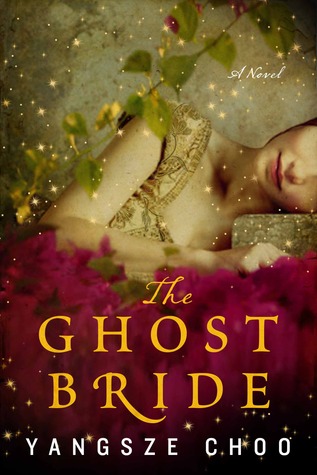
The Ghost Bride by Yangsze Choo


The Ghost Bride is a historical fantasy novel set in a Malaya ruled by the British Empire.  Li Lan is a member of the Chinese community there, the daughter of a once prosperous and respected man, who has become bankrupt following the death of his wife.  Life seems to hold few opportunities for Li Lan until she learns of an offer to become a ghost bride, the wife of the dead son of the wealthy Lim family.  At first she is horrified, but the more she learns about the family and the circumstances surrounding the death of Lim Tian Ching, the more she is drawn into the mystery of the household. Soon she finds herself exploring the spirit world of Malaya, guided by the enigmatic Er Lang, in a quest to find out what really happened and why she has been selected as a ghost bride, before she is trapped forever in the shadowy after-life.

I started The Ghost Bride expecting it to be mainly historical fiction, so the amount of fantasy in the novel surprised me.  But in a good way.  Choo has taken Chinese beliefs about the afterlife and used them to create a fascinating, fully formed fantasy world that is the unreserved star of the show.  I just loved the blending of fantasy with traditional beliefs, it lent an authenticity to the whole book.  I'm always on the look out for fantasy that isn't set in medieval Europe, and with this book I stumbled across a great example of it accidentally.

Another thing I enjoyed about The Ghost Bride was the character of Li Lan herself.  She starts off as quite shy and easily led by both her family and the Lim family, but as the book progresses we get to see some strong character development, culminating in an episode towards the end where she's in quite a sticky situation. Rather than hope for someone to come and save her, she's determined to sort things out herself, which I really liked.  It would have been easy for Choo to write a passive female, especially considering that Er Lang is technically supernatural, so I liked that she made Li Lan stick up for herself as the book went on.

This book does contain a love triangle, but thankfully the romance elements are very light and take a back-seat to the adventure and the exploration of the afterlife itself.  I found The Ghost Bride easy to read but yet unlike anything else I've read, a book that I'm sure will stick with me for some time.  Recommended for anyone who likes fantasy but is after something a bit different.

Source: Personal copy (kindle)
First Published: 2013
Score: 4 out of 5

Read Alongside:
If you're after more diverse fantasy, I've enjoyed the following (links to my reviews):
  1. Throne of the Crescent Moon by Saladin Ahmed - Arabian Nights-esque high fantasy featuring ghuls and dervishes.  Lots of fun.
  2. The Killing Moon by N.K. Jemisin - Proper epic fantasy inspired by Ancient Egypt.  A man trained to enter the dreams of others comes up against the corruption of the government and priestly sects.
  3. Alif the Unseen by G. Willow Wilson - The story of a young hacker in an Arabic country who discovers that there's more to reality than just what you can see.

Tuesday, 14 January 2014

The Paris Wife by Paula McLain


Hadley Richardson is twenty-eight and recovering from the death of her mother when she meets fledgling writer Ernest Hemingway in Chicago.  Having experienced a restricted life thanks to her mother and over-bearing sister, Hadley feels alive for the first time, and is attracted to the intensity and ambition of Hemingway. The pair soon become attached and marry quickly, before moving to Paris so Ernest can pursue his writing career.  But life is tough first of all, as they struggle to keep pace with the decadent Jazz Age lifestyle.  Hadley has modest dreams of a happy family that don't really fit with the gossip-ridden, alcohol fuelled company they keep.  Following the arrival of their son, Hadley's withdrawal from the scene causes further tension in her marriage, as more independent and 'modern' women begin to make themselves apparent.

There is much to like about The Paris Wife.  If, like me, you enjoy reading about the Jazz Age and the circle of writers living in Paris at that time, there's lots to admire.  McLain does a good job of capturing the decadence whilst also showing that everything wasn't perfect for the young writers and their families.  I loved reading the scenes where Hadley and Ernest go out on the town with the Fitzgeralds and the way the writers interacted with each other.  If I could get in a time capsule and go back to 1920s Paris, I would!

However, there were a few factors that prevented me from really loving this book.  One was to do with the writing, and one to do with Hadley herself.  Taking Hadley first, I found her characterisation irritating at times.  She devoted her whole life to Hemingway and seemed to have no interests or life of her own.  All she wanted to do was have a family and keep house, which was frustrating given the amazing experiences that were knocking on her doorstep.  Even when she travels with Hemingway to Spain, you never get the impression that she's soaking it up, she continues to think about more mundane matters.  If I was married to a dashing young writer in 1920s Paris, I would be living it up, a la Zelda Fitzgerald!  Hadley's passivity and dependence on Hemingway become especially annoying in the later sections of the novel, as her marriage starts to disintegrate.  She puts up with a lot and seems unwilling to demand any better for herself.

My other issue was more to do with the writing.  McLain has clearly done a vast amount of research, and it's admirable how close her book is to the actual events of Hadley's life.  However, being so accurate meant that occasionally the book felt a bit like 'then I did this in September 1923 and we visited here in October 1924 with our friend (insert name here).  I truly do appreciate the research done, but sometimes it felt like the emotional engagement and telling Hadley's story took a back-seat to biographical information.

Still, The Paris Wife was a fun read that definitely captured 1920s Jazz Age Paris.  It's easy to read and great if you're looking to visit another time or place, it just didn't set my world on fire.

Read for Jazz Age January


Source: Personal copy
First Published: 2011
Edition Read: Virago Press 2012
Score: 3 out of 5

Saturday, 7 September 2013

Z: A Novel of Zelda Fitzgerald by Therese Anne Fowler


I've been meaning to read Z for ages.  I just loved F.Scott Fitzgerald's Tender is the Night (my review) for it's complicated portrayal of a marriage in decline, so I was keen to find out more about the real marriage behind the story.  Z is a fictionalised account of the life of Zelda Fitzgerald from her days as Zelda Sayre from Alabama through the whirlwind days of her early marriage to the time she spent in various institutions suffering from poor mental health.  It's a portrait of both a woman struggling to be known for something other than being F.Scott Fitzgerald's wife and of a turbulent marriage.

I loved this book!  I was expecting to like it but I wasn't expecting to love it in the just-one-more-chapter, unputdownable, kind of way.  The whole issue of Scott and Zelda's marriage is a thorny one, with Zelda accused in some quarters of destroying Scott's potential and driving him to drink, and Scott accused of driving her into a mental asylum.  Fowler manages to tread a more sensitive line and present a more balanced portrayal of a marriage in which two people love each other greatly, but simply can't be happy together.

Zelda's voice is just perfect.  She declares in an initial chapter that all she wants from life is "joy and drama and passion and romance" and boy does she get it.  Zelda is reckless, high-spirited, ambitious and utterly charming and she just jumps off the page at you.  The way Fowler writes her is just full of life and energy and you can't help but fall in love with her a little bit.  I'm not the reckless sort myself so I loved reading about her bathing in a flesh-coloured swimsuit to encourage rumours that she swam nude or jumping into the fountain at Union Square.

The relationship between Zelda and Scott is portrayed very realistically.  It's clear that they love each other and Zelda, who had never been out of Alabama before, is swept away by the bright lights and lifestyle of New York.  Zelda and Scott are both reckless and they encourage this in each other, delighted in being seen as symbols of their age, acting more like characters out of a novel than real people.  Of course, all of their partying and spending comes back to bite them later in the form of Scott's dependence on alcohol and their constant money problems.  Both love drama and both lack the skills to communicate effectively, making endless promises to start over and make everything fresh.

Because Zelda and Scott really do love each other, the book is quite sad at times.  We get to see moments of them genuinely caring for each other, like Zelda picking up Scott's ego after a failure in his career, or Scott not leaving Zelda's bedside when she is ill, but ultimately they just can't work out how to be happy together.  Anyone who is married themselves or who has been in a long-term relationship will know that it takes more than love to make a relationship work and Z is about what happens when you have a lot of love, but not much else.  I love books that show complicated relationships like this, that show how love can hurt as much as it can make you happy.  Fowler did this fantastically, and this is what had me glued to the pages.

As you can tell, I loved Z and would whole-heartedly recommend it.  I've finished this book with an urge to read Zelda's own novel, Save Me the Waltz, as well as Scott's The Beautiful and the Damned.  I might even try some Hemingway again.

I'm going to conclude the review with my favourite passage from the novel;
"It just seemed like we were embarking on a great adventure, but that adventure turned into a party we couldn't resist, a five-year-long party, everybody in sparkling gowns and tuxedos with satin lapels, bottomless glasses of champagne...But that's not a marriage, that's not a way to live.  Real life has to happen sometime."

Source: Library, though I also have a review copy from Netgalley.
First Published: 2013
Score: 5 out of 5.

Thursday, 29 August 2013

A Reliable Wife by Robert Goolrick


In 1907, rural businessman Ralph Truitt places the following advert in the newspaper; "Country businessman seeks reliable wife.  Compelled by practical reasons.  Reply by letter."  He is answered by Catherine, who claims to be a 'simple, honest woman', the daughter of missionaries.  She arrives by train in the middle of winter, but isn't who she claims to be.  Catherine thinks she is leading Ralph through her own devious scheme, but little does she know that he also has plans and secrets of his own.

I really wanted to like A Reliable Wife, which I read with Elena from Books and Reviews.  I love gothic fiction, so the setting and plot of this book appealed. Unfortunately, I disliked the book almost from the first chapter and although it improved towards the middle, it never became a good read.  The plot itself was fine; it required a little stretching of the imagination in terms of how the main characters all ended up linked, but I could have done that.  Instead, the main issues were with the writing and the characterisation.

Taking the writing first, it just felt so amateurish.  Goolrick tried to make every sentence into a heartfelt statement, with the effect that some of the chapters ended up feeing a bit silly and over the top.  He was a fan of long, overly descriptive sentences followed by very short ones, which again I suppose was for effect, but it didn't really work.  Even worse than this, Goolrick couldn't keep the perspectives straight in the different chapters.  Each chapter was from the point of view of one of three characters, but every now and again someone else's thoughts would find their way in, which was jarring.  For example, when Catherine is returning to Ralph after some time away, we get a lot of description of how she is feeling and then a random sentence about how Ralph 'was struck by her calm'.  How would Catherine know this?  It's a bit of a pet peeve when writers do this, write from one perspective but then can't stick to it.  It ruins the flow of the reading experience.

The other issue I had was the characterisation.  Goolrick's characters simply don't act how people would act in the real world.  Catherine was the most fully formed, she had motivations for her behaviour and seemed to act in a realistic way.  But Ralph and his son simply didn't feel like real people.  Ralph especially, no one would be that calm and forgiving throughout the novel, given the situations Goolrick put him in.  It's almost as though Goolrick wanted the plot to go a certain way, so he invented characters to fit with that, not stopping to consider whether they were realistic.  

So on the whole, I wasn't a fan of A Reliable Wife! As I said, the middle section was better than the beginning and the end and the plot had potential.  It was just a shame about the writing.


Source: Personal copy
First Published: 2009
My Edition: Abacus, 2010
Score: 2 out of 5

Monday, 5 August 2013

The Wild Girl by Kate Forsyth


It's a little known fact that Wilhelm Grimm married one of the women who told him many of the fairy stories the Grimm brothers were famous for.  Her name was Dortchen Wild and in The Wild Girl, Kate Forsyth imagines Dortchen's story.  Dortchen and the Grimm family were neighbours growing up in the small German Kingdom of Hessen-Cassel during the Napoleonic Wars.  Although Dortchen was attracted to Wilhelm from the start, their relationship was complicated by the poverty of the Grimms, the unstable situation they lived in and Dortchen's overbearing father.   Subject to constant criticism and verbal abuse, Dortchen is accused of being the 'wild one' by her father and forced to live according to his every wish.  As her home life grows ever more abusive, Dortchen takes refuge in the traditional stories told to her by Old Marie and helps Wilhelm to build his collection.

My synopsis honestly doesn't do this book justice.  I was lucky enough to review the excellent Bitter Greens earlier in the year and was thrilled to be offered the chance to review this one.  I was expecting it to be very good but it exceeded my expectations.  The Wild Girl is a chunky book at almost five hundred pages but I just flew through it as the story, and Dortchen in particular, captivated me. Forsyth manages to make her a quite fiery female character but at the same time keep her appropriate for the time period.  Dortchen may complain about boys getting to fight ogres and join the army, but she still feels like an authentic nineteenth century woman who helps to run her family home.

As the reader gets to see Dortchen's 'wild' personality at the beginning of the book, it makes it all the more powerful as her character gradually begins to shrink at her father's influence.  I think this was very well done and the issue of abuse was dealt with sensitively.  I'm not normally a big fan of romance but the romance between Dortchen and Wilhelm was extremely realistic and well written.  Forsyth was so good at putting you in Dortchen's shoes that her pain almost became my own pain by the end of the novel and I was certainly rooting for a happy ending.

The Wild Girl is more straight historical fiction than Bitter Greens.  I didn't know much about the Napoleonic Wars or the history of Germany at this time so it was interesting to find out a bit more in the context of the story.  Despite being historical fiction, the fairy stories are still at the heart of the book.  As Dortchen tells each tale to Wilhelm, they seem to relate to her personal life and a major theme of the novel is the redemptive power of fiction;

"Stories help make sense of things.  They make you believe you can do things.  They help you imagine that things may be different, that if you just have enough courage...or enough faith.... or goodness....you can change things for the better."

The Wild Girl is a fantastic book and I'm so glad that I read it.  It's one of those books that makes you fall in love with reading all over again.  Definitely recommended for everyone.

First Published in the UK: 29th July 2013
Score: 5 out of 5

Thursday, 20 June 2013

The Gods of Heavenly Punishment by Jennifer Cody Epstein


The firebombing of Tokyo during World War Two forms the centerpiece of The Gods of Heavenly Punishment, a novel that follows the lives of several people before and after the war.  Cameron is an American pilot, newly married, who takes part in the firebombing mission only for things to go wrong afterwards.  Yoshi is the daughter of a Japanese father intent on capturing Manchuria and a Westernised mother.  She gets caught up in the bombing and must deal with the consequences.  Anton is an architect who lived in Japan but who is now involved in designing Japanese buildings in America, so the military can practise destroying them.  The lives of all the characters intertwine as they are changed by one dramatic event, the firebombing.

From the cover of The Gods of Heavenly Punishment, I was expecting quite a gentle read, but it was anything but!  The actual firebombing itself is graphically described and the novel doesn't shy away from the grittier side of life.  There are no guaranteed happy endings for any of the characters and Epstein does a great job at showing how brutal war is, as the killing is indiscriminate.  In addition to this, the novel also deals with homophobia and how cities are permanently changed after war.  Yoshi was living comfortably before the attack but after the destruction, she is forced down paths she never expected she would have to go.

I was extremely impressed by the writing in The Gods of Heavenly Punishment.  Epstein has a lot of characters to deal with but she manages to keep them all distinct in the reader's mind and manages to give a sense of their personalities in a very short time.  This meant that the book quickly sucked me in and I rushed through it in only two days, as I couldn't put it down.  I'll definitely be getting hold of her other book, The Painter from Shanghai.

The only complaint I have with the book is that sometimes the links between characters felt contrived.  A bit like how everyone knows each other in Dickens' London, all of the characters in this story were linked in ways that just wouldn't happen in real life.  I don't mind a few coincidences, but there seemed to be a few too many of them.  Despite this, I really enjoyed reading The Gods of Heavenly Punishment and think it's a great example of a historical fiction book that can pack a punch.

Source: Review copy via Historical Fiction Virtual Book Tours
Published: 2013
Score: 4.5 out of 5

Read Alongside:
  1. Shanghai Girls by Lisa See - Another novel that examines the destruction of a city in Asia, as Japanese forces occupy Shanghai.  This one also doesn't shy away from portraying the gritty effects.
  2. Next to Love by Ellen Feldman - This one links in with the Cameron storyline.  What was it like for the families of American soldiers during World War Two and afterwards, when they returned home?

Saturday, 1 June 2013

The Historian by Elizabeth Kostova (reread)


"But history, it seemed, could be something entirely different, a splash of blood whose agony didn't fade overnight, or over centuries."

When faced with a reading slump, my usual strategy is to revisit an old favourite.  And so last week, I found myself pulling The Historian off my shelf and settling in for a gothic treat. The unnamed narrator of The Historian discovers a strange book in her father's library, containing a sinister and old-fashioned woodcut of a dragon. Unable to get this image out of her mind and frustrated by her father's avoidance of the topic, her own research leads her to find out about Vlad Tepes, the historical Dracula.  As she delves deeper into his history, the story of her father and of the professor who disappeared in mysterious circumstances slowly reveal themselves.  It's the start of a journey punctuated by strange occurrences that will lead her across Europe to the tomb of the impaler himself.

I just love this book! It contains so many of the things I love in fiction; a gothic atmosphere, an intellectual mystery, a nested/embedded narrative structure, the inclusion of letters from the characters and travel to wonderful places.  Reading The Historian makes me want to walk along the bridges of Budapest, visit the archives of Istanbul and see the beautiful countryside of Eastern Europe.  I love it when a book transports you to another place so clearly as The Historian does, it completely took me away from real life and carried me along with the story.

I also love how carefully information is revealed by Kostova.  The novel has an unusual narrative structure where the girl's story is told alongside her father's and that of Professor Rossi.  Information is slowly doled out across the chapters, allowing all three stories to build up at the right moment.  The links between the three stories are clever and I love how Kostova used existing information about Vlad Tepes and twisted it subtly, just enough, to make it fit with her plot.  As someone interested in history, I enjoyed that so many of the 'original documents' in the story were reproduced and as readers, how we get to follow the thought processes of the characters.

Although this is a vampire story, readers expecting a fast pace or full-out horror will be disappointed.  The Historian is a meandering book full of twists and turns and the horror elements are more subtle than you might expect.  As I love gothic classics, this works perfectly for me.  I love this book and don't hesitate to recommend it!

You will enjoy The Historian if:
  • You liked Dracula by Bram Stoker.
  • You love reading gothic fiction curled up in front of a fire.
  • You like an intellectual mystery.
  • You're an armchair traveller
Source: Personal copy
Score: 5 out of 5