Next World Novella is the first book in the Peirene series on Male Dilemmas: The Quest for Intimacy (I have previously reviewed all of the novellas in the Female Voices series; Beside the Sea, Stone in a Landslide and Portrait of the Mother as a Young Woman). Hinrich Schepp is an ageing academic in a seemingly happy relationship with wife Doro. He enters their apartment to find her editing one of his manuscripts, a regular occurence. But things aren't as they always are - Doro has passed away and the manuscript she was editing was Hinrich's long abandoned attempt at a fiction novel. Using the disguise of story, Hinrich has revealed much about the past and he is shocked by Doro's alterations as they show she knows more than he ever realised. Sitting down next to her corpse to read, Hinrich has to face up to his past and the disintegration of his superficially happy marriage.
I really enjoyed Next World Novella, more than I expected to. I loved the wry voice of the author, the black humour and the macabre tone that pervaded the whole book. There are many details of death included, giving the novella a gothic feel that appealed to me. Politycki is clever in that he guides you to judge and poke fun at Hinrich but at the same time you can't help but feel sorry for him. One moment you're judging him for fantasising about attractive waitresses within a few minutes of discovering his wife's corpse and the next you want to stop him from embarrassing himself with his clumsy attempts at an extramarital affair that have you cringing.
Hinrich traces the decline of his marriage to an operation he had to improve his vision; "It was terrible to see the world in such detail, so sharply outlined, all of a sudden! It dazzled him with a confusingly large number of details". In a sense, this is a metaphor for the whole story. Hinrich and Doro's marriage looks happy if you only look at it quickly, or not thoroughly. As soon as you start to dig deeper, the misery becomes apparent. The majority of the novel is narrated from Hinrich's point of view and it's black comedy at it's best but doesn't elicit too much emotion. However, the final part is Doro's editorial opinion on the manuscript and this is the heart of the novel. I had been reading along, poking fun at Hinrich whilst secretly pitying him and I simply wasn't expecting the emotional punch of Doro's words. It's easy to forget the impact that one person's actions can have on another. Including Doro's voice at the end made the novella cohesive and more powerful than Hinrich's narration alone could have been.
Putting aside the death and descriptions of the decay of Doro's corpse, Next World Novella will ring true for a lot of readers. It's easy to ignore slow but serious decline in our personal relationships and it's often only when you look back that you realise how far things have gone. Hinrich and Doro never found the relationships they were hoping for and both suffered with a lonlieness that must be very common. The mix of this serious theme and the hints of comedy really worked for me. It's one of my favourite Peirene novellas so far and will be hard to beat.
Source: From the publisher, in exchange for an honest review.
Edition: Peirene Press, 2011
Score: 4.5 out of 5
Thursday, 29 November 2012
Sunday, 25 November 2012
Heads in Beds by Jacob Tomsky
As a certified nosy person, I'm a sucker for employment memoirs; I will happily sit and read about life as a doctor, nurse, vet, explorer, retail assistant - in fact I will read about anything that is different from what I do myself. So I was excited to request Heads in Beds: A Reckless Memoir of Hotels, Hustles, and So-Called Hospitality from Netgalley. In it, Tomsky details his rise through the hotel industry from valet parking through to front desk manager. Having worked many jobs within the industry, Tomsky is in the perfect position to detail what life as a hotel worker is really like and to give insider information for potential guests keen on upgrades and other perks.
Heads in Beds was very good light relief and I enjoyed reading it. I'm not a frequent hotel user, but I've checked into enough hotels to recognise lots of the situations detailed in the book. As always, I was shocked by how inconsiderate and rude members of the public can be towards service staff. Tomsky does come across as a bit angry in places, but having worked in retail myself (thankfully, many years ago now!), I'm sure that this anger was justified. There's only so long you can take being treated like the dirt on someone's shoe before you want to snap! There are mentions of polite customers and good experiences but these become less frequent as the book goes on and Tomsky becomes more disillusioned with his job. It's safe to say I won't be applying to be a front desk operator any time soon!
One thing I found very interesting was the comparison between the two main hotels Tomsky worked in, luxury hotels in New Orleans and New York. In New Orleans, the staff were valued and trusted and consequently often went above and beyond in order to provide good service to their guests. In New York, they were constantly monitored for any slip up, treated as if they were slackers and initiative was punished rather than rewarded. This led to resentment and poor service, with no one willing to go the extra mile. Even though Tomsky is writing specifically about the hotel industry in Heads in Beds, I've seen this kind of thing in every single working environment I have been in. When will managers learn that staff work better if you trust them, value them and simply leave them to it?
Heads in Beds was on the whole clearly written with lots of humour. It didn't set my world alight, but I found it interesting and enjoyable. I think it could have benefited from being edited down slightly as it dragged in the later sections, with too much page time being devoted to Tomsky's time as a front desk operator. I'm sure that fellow nosy readers will enjoy this book as much as I did!
Source: From the publisher via Netgalley
Publication Date: 20th November 2012
Score: 3 out of 5
Heads in Beds was very good light relief and I enjoyed reading it. I'm not a frequent hotel user, but I've checked into enough hotels to recognise lots of the situations detailed in the book. As always, I was shocked by how inconsiderate and rude members of the public can be towards service staff. Tomsky does come across as a bit angry in places, but having worked in retail myself (thankfully, many years ago now!), I'm sure that this anger was justified. There's only so long you can take being treated like the dirt on someone's shoe before you want to snap! There are mentions of polite customers and good experiences but these become less frequent as the book goes on and Tomsky becomes more disillusioned with his job. It's safe to say I won't be applying to be a front desk operator any time soon!
One thing I found very interesting was the comparison between the two main hotels Tomsky worked in, luxury hotels in New Orleans and New York. In New Orleans, the staff were valued and trusted and consequently often went above and beyond in order to provide good service to their guests. In New York, they were constantly monitored for any slip up, treated as if they were slackers and initiative was punished rather than rewarded. This led to resentment and poor service, with no one willing to go the extra mile. Even though Tomsky is writing specifically about the hotel industry in Heads in Beds, I've seen this kind of thing in every single working environment I have been in. When will managers learn that staff work better if you trust them, value them and simply leave them to it?
Heads in Beds was on the whole clearly written with lots of humour. It didn't set my world alight, but I found it interesting and enjoyable. I think it could have benefited from being edited down slightly as it dragged in the later sections, with too much page time being devoted to Tomsky's time as a front desk operator. I'm sure that fellow nosy readers will enjoy this book as much as I did!
Source: From the publisher via Netgalley
Publication Date: 20th November 2012
Score: 3 out of 5
Thursday, 22 November 2012
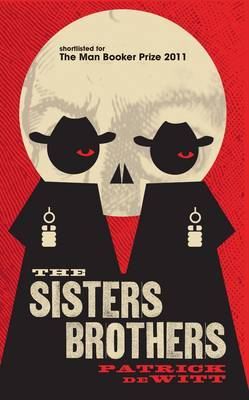
The Sisters Brothers by Patrick DeWitt
Summary from the back cover:
It is 1851, and a lust for gold has swept the American frontier. Two brothers - the notorious Eli and Charlie Sisters - are on the road to California, following the trail of an elusive prospector, Hermann Kermit Warm. On this odyssey Eli and his brother cross paths with a remarkable cast of characters - losers, cheaters and ne'er-do-wells from all stripes of life - and Eli begins to question what he does for a living, and whom he does it for. (I don't normally copy summaries, but this one is perfect).
Thoughts:
I went into this book expecting to enjoy it because of all the hype around it and the positive reviews I have seen, but I didn't expect to enjoy the Western element as much as I did. I've never read a Western before and I'm not American so I was surprised at how natural the reading experience was. I loved the grimy, cockroach infested hotels the brothers stayed in with prostitutes at the ready and men having shoot-outs in the dust. I loved the idea of burying gold dust and busting mafia-style crime rings. I have some adventure in my spirit and anyone who does will enjoy the Western elements of The Sisters Brothers. DeWitt balanced all of this rip-roaring, swash-buckling adventure by also showing the harshness of life on the frontier in 1851, not shying away from the nastier elements and this gave the novel some much-needed grit and realism.
I remember there was a lot of fuss about this book being included on the Booker short-list in 2011, with critics complaining that it's not literary enough. But I disagree; The Sisters Brothers is genre fiction, but it also transcends the genre and has a lot to say about human existence. Whereas Charlie is more of a straight-forward villain, Eli is a sympathetic character who has drifted into the killing business under the influence his big brother. He may be a contract killer, but he doesn't think much of money and dreams of giving it all up to open his own shop (Charlie wants to be the kind of gangster who gets to run a whole town). He's a romantic who falls in love easily and who won't abandon his horse when it is injured. Eli is the heart of the novel and through him DeWitt manages to make the book both funny, adventurous and sad. As the reader can see that Eli is essentially a good guy, all the way through the book you are rooting for him to be able to have the courage to leave Charlie and do something just for himself. He has some big disappointments towards the end of the novel and I was genuinely sad for him. I wasn't expecting Eli to be the character he was and it made the book so much more powerful and, dare I say it, literary.
The Sisters Brothers was one of those books I bought because it was on a short-list and because plenty of people seemed to enjoy reading it. I'm glad I did, because it's something I would never have picked out for myself and I thoroughly enjoyed every page of it. Recommended even for Western newbies like me.
Source: Personal copy
First Published: 2011
My Edition: Granta, 2012
Score: 4.5 out of 5
It is 1851, and a lust for gold has swept the American frontier. Two brothers - the notorious Eli and Charlie Sisters - are on the road to California, following the trail of an elusive prospector, Hermann Kermit Warm. On this odyssey Eli and his brother cross paths with a remarkable cast of characters - losers, cheaters and ne'er-do-wells from all stripes of life - and Eli begins to question what he does for a living, and whom he does it for. (I don't normally copy summaries, but this one is perfect).
Thoughts:
I went into this book expecting to enjoy it because of all the hype around it and the positive reviews I have seen, but I didn't expect to enjoy the Western element as much as I did. I've never read a Western before and I'm not American so I was surprised at how natural the reading experience was. I loved the grimy, cockroach infested hotels the brothers stayed in with prostitutes at the ready and men having shoot-outs in the dust. I loved the idea of burying gold dust and busting mafia-style crime rings. I have some adventure in my spirit and anyone who does will enjoy the Western elements of The Sisters Brothers. DeWitt balanced all of this rip-roaring, swash-buckling adventure by also showing the harshness of life on the frontier in 1851, not shying away from the nastier elements and this gave the novel some much-needed grit and realism.
I remember there was a lot of fuss about this book being included on the Booker short-list in 2011, with critics complaining that it's not literary enough. But I disagree; The Sisters Brothers is genre fiction, but it also transcends the genre and has a lot to say about human existence. Whereas Charlie is more of a straight-forward villain, Eli is a sympathetic character who has drifted into the killing business under the influence his big brother. He may be a contract killer, but he doesn't think much of money and dreams of giving it all up to open his own shop (Charlie wants to be the kind of gangster who gets to run a whole town). He's a romantic who falls in love easily and who won't abandon his horse when it is injured. Eli is the heart of the novel and through him DeWitt manages to make the book both funny, adventurous and sad. As the reader can see that Eli is essentially a good guy, all the way through the book you are rooting for him to be able to have the courage to leave Charlie and do something just for himself. He has some big disappointments towards the end of the novel and I was genuinely sad for him. I wasn't expecting Eli to be the character he was and it made the book so much more powerful and, dare I say it, literary.
The Sisters Brothers was one of those books I bought because it was on a short-list and because plenty of people seemed to enjoy reading it. I'm glad I did, because it's something I would never have picked out for myself and I thoroughly enjoyed every page of it. Recommended even for Western newbies like me.
Source: Personal copy
First Published: 2011
My Edition: Granta, 2012
Score: 4.5 out of 5
Friday, 16 November 2012
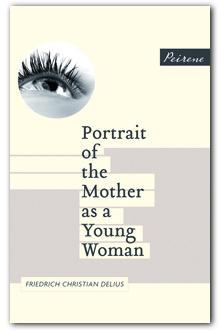
Portrait of the Mother as a Young Woman by Friedrich Christian Delius
Portrait of the Mother as a Young Woman is the third and final book in the Peirene Press series entitled Female Voices. It's an unusually structured book that takes the reader into the mind of Margarethe, a twenty-one year old German woman living in Rome in 1943, who is walking from the boarding house where she lives to a Bach concert being held at the church on Via Sicilia. Having followed her husband to Rome only to see him shipped off to Africa to help the war effort, Margarethe is alone and eight months pregnant. She speaks little Italian and is both mystified by and scared of Rome, the city of their Italian allies. As we follow Margarethe on her walk, we get an insight into her thought processes and get to see World War Two through a new lens.
I liked this book. I found the structure difficult at first; the book is basically one long sentence with no full stops or page breaks and this was challenging for me. I didn't know when to put the book down and the lack of punctuation made the novella feel longer than it was. The pace was also fairly slow towards the beginning and these two factors combined made reading heavy going initially. But as soon as I settled into the book and saw it for what it was, a character driven novel, I started to enjoy it. The pace is slow but this allows the character to get really under your skin and this is how Portrait of the Mother is effective.
I had mixed feelings about the main character, Margarethe. She was expertly written and I'm in awe at how the male author managed to get so into the mind of a young, pregnant woman. On the one hand I couldn't help but empathise with her situation, alone and unsure in a foreign city, struggling to keep her composure. I admired how she constantly battled to remain positive, to appreciate all she had rather than give in to fear, because I don't know if I could do the same. You can't help but feel sorry for her when you read about her wishing that her husband's leg wound would worsen so he could have treatment at a Roman hospital and they could be reunited. But at the same time, I found her very naive. To protect herself she has drawn a shell around herself and tries not to think of politics and the war. Although she never articulates it fully, her views from her time in the Hitler Youth contradict with her religious views and she has severe doubts about the directions Hitler is taking. But she does nothing, she has completely detached herself;
"Even in Germany she had not read the papers, it was better not to know too much, not to say too much, not to ask too much, as one always heard bad news soon enough."
There must have been many people like Margarethe but this side of her made me have very mixed feelings towards her. I suspect this is what Delius intended and that this is part of what makes the book so effective, but it challenges you as a reader. To empathise and not at the same time. After finishing this book, I'm still not quite sure what I think about the main character.
Portrait of the Mother as a Young Woman is the Peirene book that I've found the hardest going so far, mainly because of the structure. It's without a doubt beautifully written and thought-provoking but I don't know if I would describe reading it as an enjoyable experience.
Source: From the publisher, in exchange for an honest review.
First Published in the UK: 2010
First Published in Germany: 2006
Score: 3 out of 5
I liked this book. I found the structure difficult at first; the book is basically one long sentence with no full stops or page breaks and this was challenging for me. I didn't know when to put the book down and the lack of punctuation made the novella feel longer than it was. The pace was also fairly slow towards the beginning and these two factors combined made reading heavy going initially. But as soon as I settled into the book and saw it for what it was, a character driven novel, I started to enjoy it. The pace is slow but this allows the character to get really under your skin and this is how Portrait of the Mother is effective.
I had mixed feelings about the main character, Margarethe. She was expertly written and I'm in awe at how the male author managed to get so into the mind of a young, pregnant woman. On the one hand I couldn't help but empathise with her situation, alone and unsure in a foreign city, struggling to keep her composure. I admired how she constantly battled to remain positive, to appreciate all she had rather than give in to fear, because I don't know if I could do the same. You can't help but feel sorry for her when you read about her wishing that her husband's leg wound would worsen so he could have treatment at a Roman hospital and they could be reunited. But at the same time, I found her very naive. To protect herself she has drawn a shell around herself and tries not to think of politics and the war. Although she never articulates it fully, her views from her time in the Hitler Youth contradict with her religious views and she has severe doubts about the directions Hitler is taking. But she does nothing, she has completely detached herself;
"Even in Germany she had not read the papers, it was better not to know too much, not to say too much, not to ask too much, as one always heard bad news soon enough."
There must have been many people like Margarethe but this side of her made me have very mixed feelings towards her. I suspect this is what Delius intended and that this is part of what makes the book so effective, but it challenges you as a reader. To empathise and not at the same time. After finishing this book, I'm still not quite sure what I think about the main character.
Portrait of the Mother as a Young Woman is the Peirene book that I've found the hardest going so far, mainly because of the structure. It's without a doubt beautifully written and thought-provoking but I don't know if I would describe reading it as an enjoyable experience.
Source: From the publisher, in exchange for an honest review.
First Published in the UK: 2010
First Published in Germany: 2006
Score: 3 out of 5
Thursday, 15 November 2012
My Nephew!
Blogging has gone out of the window this week because on Tuesday I became an aunt for the first time! My sister had a baby boy, Joseph, and he is simply the most precious thing in the entire world. So instead of blogging I've been waiting for good news, buying baby clothes, visiting the hospital, blowing up balloons and getting in my first cuddle. He may only be days old but he already has the entire family wrapped around his little finger!
Tom and I with Joseph.
Normal service will resume shortly!
Monday, 12 November 2012
Mermaid by Carolyn Turgeon
Mermaid is a retelling of Hans Christian Andersen's fairy tale, The Little Mermaid (you can read the original here). Lenia is the youngest sister of five mermaid princesses who are granted just one day to travel to the surface and observe what the world is like for humans. On her eighteenth birthday, she takes her opportunity but gets caught up in a ferocious storm and can't resist rescuing the Prince of the Southern Kingdom. Taking him to the beach, she leaves him in the care of Princess Margrethe, daughter of the war-hungry King of the Northern Kingdom. Unable to put him from her mind and drawn to ideas of a human soul, Lenia sacrifices her tail and tongue in order to become a human, enduring agonising pain. But is her sacrifice worth it?
Mermaid is on the whole a faithful retelling of the original fairy tale, so consequently much darker than the Disney version! The main difference is that the role of the 'other woman', Princess Margrethe, is greatly expanded, to the extent that the chapters alternate between Margrethe and Lenia's points of view. However, Margarethe feels much more like a modern invention than Lenia, which can be a bit jarring. Despite these differences, Turgeon is successful at capturing the gothic, slightly creepy, slightly magical atmosphere of the original. The world she creates is one where it seems natural that mermaids exist and souls float to the heavens. There's a dark undercurrent of pain and suffering throughout the whole story which fits with Andersen too.
As this is a fairy tale, it's acceptable that the characters do things that you would never do in real life. There's a lot of love at first sight and much sacrifice for someone who doesn't seem worth it (I'm looking at you, Prince!). If this was a normal story, I'd have a big problem with Lenia's actions and how easily she gave up everything she had ever known, but I didn't mind it in the context of the original story. In fact, the only thing I really had an issue with was the ending; I felt as though it was too happy. The last sections seem to build up to a dark, depressing end but then there's a last minute reprieve and it felt like a cop-out. Andersen never shied away from unhappy endings, so it's a shame that Turgeon felt the need to.
On the whole, Mermaid was a fun read which broke up my usual reading pattern. It's not going to win any prizes and it's not going to set your world on fire, but it's a lovely way to pass a Sunday afternoon. Fans of fairy tales or fairy tale re-tellings will especially appreciate this book.
Source: Library
First Published: 2011
Score: 3 out of 5
Mermaid is on the whole a faithful retelling of the original fairy tale, so consequently much darker than the Disney version! The main difference is that the role of the 'other woman', Princess Margrethe, is greatly expanded, to the extent that the chapters alternate between Margrethe and Lenia's points of view. However, Margarethe feels much more like a modern invention than Lenia, which can be a bit jarring. Despite these differences, Turgeon is successful at capturing the gothic, slightly creepy, slightly magical atmosphere of the original. The world she creates is one where it seems natural that mermaids exist and souls float to the heavens. There's a dark undercurrent of pain and suffering throughout the whole story which fits with Andersen too.
As this is a fairy tale, it's acceptable that the characters do things that you would never do in real life. There's a lot of love at first sight and much sacrifice for someone who doesn't seem worth it (I'm looking at you, Prince!). If this was a normal story, I'd have a big problem with Lenia's actions and how easily she gave up everything she had ever known, but I didn't mind it in the context of the original story. In fact, the only thing I really had an issue with was the ending; I felt as though it was too happy. The last sections seem to build up to a dark, depressing end but then there's a last minute reprieve and it felt like a cop-out. Andersen never shied away from unhappy endings, so it's a shame that Turgeon felt the need to.
On the whole, Mermaid was a fun read which broke up my usual reading pattern. It's not going to win any prizes and it's not going to set your world on fire, but it's a lovely way to pass a Sunday afternoon. Fans of fairy tales or fairy tale re-tellings will especially appreciate this book.
Source: Library
First Published: 2011
Score: 3 out of 5
Sunday, 11 November 2012
Crossing on the Paris by Dana Gynther
It's 1921 and the transatlantic liner Paris is sailing to New York from France and England. Three passengers from three different classes and generations are onboard; Vera, Constance and Julie. Vera Sinclair is an ex-pat American who has spent years in Paris and is now returning home after receiving the news that she hasn't got long to live. Constance Stone is returning from an unsuccessful mission to bring her younger sister Faith home from Paris to help their mentally ill mother. And Julie Vernet is working in steerage class on her first ocean crossing. The three women are very different but all will be changed in some way by the voyage.
I enjoyed Crossing on the Paris a lot more than I expected to. I thought it would be shallow and possibly a bit cheesy, but it wasn't at all. The atmosphere of the 1920s and the glamour and squalor of ocean liners was captured well by Gynther and this made a great back-drop to the story. The three women were vividly written and easily distinguishable from each other. I liked the technique of splitting the book up in to chapters, with each one relating to a different day of the five-day crossing.
Of the three women, I found it easiest to relate to Julie. Having lost all of her brothers in the First World War, she's desperate for a chance to get away from the grief and poverty of her home in France and jumps at the opportunity to work on the boat. But she is assigned to serve in steerage class (3rd class) and the liner isn't as glamorous as she had hoped. Suffering with low self-esteem, she's overjoyed when a handsome engineer takes an interest in her and is swept away in what she thinks is a romantic fairy tale only to learn a very hard lesson about life. I really felt for Julie as I was reading her story and it's here that Gynther makes the plot more heavy going than I had anticipated it would be. This book definitely isn't as sweet as the cover makes it look.
I also enjoyed Constance's story. She's married to a man that she doesn't really love and gets a taste of freedom on board the Paris. With no one to answer to but herself, she fools people into thinking she isn't married and is tempted to have an affair with another passenger. Jealous of her sister's freedoms, Constance has to choose whether to live in the moment or remember all of her responsibilities I think this is something we all face in life, not necessarily with adultery, but we all have moments where we have to choose between what we want to do and what is the right thing to do. I didn't enjoy Vera's story as much as those of the other two women, but her voice was still engaging enough to make reading the book pleasant.
All in all, I enjoyed the time I spent with Crossing on the Paris. It's a lovely escapist read with more depth than I had anticipated. Fans of historical fiction would enjoy this title.
Source: From Simon & Schuster, via NetGalley
Published: 13th November 2012
Score: 4 out of 5
I enjoyed Crossing on the Paris a lot more than I expected to. I thought it would be shallow and possibly a bit cheesy, but it wasn't at all. The atmosphere of the 1920s and the glamour and squalor of ocean liners was captured well by Gynther and this made a great back-drop to the story. The three women were vividly written and easily distinguishable from each other. I liked the technique of splitting the book up in to chapters, with each one relating to a different day of the five-day crossing.
Of the three women, I found it easiest to relate to Julie. Having lost all of her brothers in the First World War, she's desperate for a chance to get away from the grief and poverty of her home in France and jumps at the opportunity to work on the boat. But she is assigned to serve in steerage class (3rd class) and the liner isn't as glamorous as she had hoped. Suffering with low self-esteem, she's overjoyed when a handsome engineer takes an interest in her and is swept away in what she thinks is a romantic fairy tale only to learn a very hard lesson about life. I really felt for Julie as I was reading her story and it's here that Gynther makes the plot more heavy going than I had anticipated it would be. This book definitely isn't as sweet as the cover makes it look.
I also enjoyed Constance's story. She's married to a man that she doesn't really love and gets a taste of freedom on board the Paris. With no one to answer to but herself, she fools people into thinking she isn't married and is tempted to have an affair with another passenger. Jealous of her sister's freedoms, Constance has to choose whether to live in the moment or remember all of her responsibilities I think this is something we all face in life, not necessarily with adultery, but we all have moments where we have to choose between what we want to do and what is the right thing to do. I didn't enjoy Vera's story as much as those of the other two women, but her voice was still engaging enough to make reading the book pleasant.
All in all, I enjoyed the time I spent with Crossing on the Paris. It's a lovely escapist read with more depth than I had anticipated. Fans of historical fiction would enjoy this title.
Source: From Simon & Schuster, via NetGalley
Published: 13th November 2012
Score: 4 out of 5
Subscribe to:
Comments (Atom)


.jpg)