Friday, 9 January 2015

New Projects: 1001 Books


Last week, I read this post on Iris' lovely blog about how she is intending to read books from 1001 Children's Books You Must Read Before You Grow Up, partly because she has a son who she wants to share wonderful books with.  And it really inspired me - I have my childhood favourites, but I want to be able to share as many great books as possible with Giles, to recommend to him a wide range of things, so he can find that part of the bookish world that he is going to love.  

Then I was thinking about how I can make sure that I actually read the books I intend to.  I'm terrible at TBR lists and challenges, with the one exception being the classics club, which I have stuck to for over two years, and am on track to finish.  So I've decided to apply the principles of the classics club to 1001 Children's Books You Must Read Before You Grow Up and 1001 Books You Must Read Before You Die.  

Here's what I am going to do:
  • Over the next few days, I'll post a list of books from each title that I want to read.
  • Books that I own will automatically make the list, but aside from that I'll be looking for diverse reads, books in translations, and books from authors I haven't read yet.
  • I'll make my lists tabs on my blog, then update with reviews when I finish each title.
  • I'm not going to set myself a deadline, but I'm aiming to read one book a month, which can come from either list.
As I'm not intending to buy books at the moment, I'll probably start by reading the ones I already own, then I will be fully utilising the library hold system.  Books that I read and love will be purchased and added to my collection.

I'm really excited to start these projects, and to spend some time looking through the books and choosing my titles.  Anyone who wants to join in is more than welcome, mutual encouragement might help me get through the books!

Wednesday, 7 January 2015

World War Z by Max Brooks

World War Z is about a zombie apocalypse, but rather than being told as a narrative, Brooks has instead written a faux-history book. In this world, humanity has only just come out of a devastating global war with zombies, and the 'author' is someone who has worked on a UN report into the war, examining the spread of and human response to the zombies.  Upon being instructed to leave everything personal out of the final report, he decides to use his material to make a popular history book.  And thus we get World War Z, a collection of interviews with the movers and shakers of the war, covering the initial outbreak in China through to the post-war reconstruction efforts.

I really wanted to like World War Z.  It was a favourite with my husband, and I think the premise of the novel is very clever.  I like the idea of it being a history book rather than a story, and it allows Brooks to bring in stories from people all around the world.  We get to be there when a doctor arrives on the scene of the first outbreak, when Israel decided to shut themselves off completely, when the bold decision was made to abandon parts and populations of whole countries, in order to save the few and avoid the total destruction of humanity.  I liked the descriptions of what it was like to face the zombies, and to be on the run from them.

Unfortunately, there were a few things that stopped me from enjoying World War Z.  Although it was a quick read and never hard to get through, it ultimately disappointed me.  The first problem was the lack of tension.  The 'history book' conceit of the novel means that you know that everyone who is narrating their account survives.  No matter how dangerous the situations they find themselves in, no matter how slim the chance of survival seems, you know they are going to survive, and this ruins it a bit.  Another issue was that all of the accounts were of people who made key decisions or were in key places.  Of course, that is who would make it into a history book if this were to happen, but I missed the run of the mill accounts of everyday people.  I can only think of one like this, and it's a shame there wasn't more.

However, the main problem I had with World War Z is that it was too focused on being technical and clever.  Brooks is very concerned with how the outbreak spread, the politics of the different countries and their reactions to it (and these were extremely stereotypical, another negative) and the military responses.  There are pages and pages of descriptions of weapons, and of arguments between different forces on effective responses and which weapons should be scrapped.  I can't deny that Brooks' scenario is plausible, and he has obviously thought everything through carefully, but I missed the emotional connection.  I didn't want to read about weapons and battle tactics, I wanted more human impact, more of the feelings that would come with your world being turned upside down. Perhaps diary entries of those that couldn't cope, or stories from families who had lost members could have been included, anything to make it more emotionally engaging.

Overall, the history book format is both the strength and weakness of World War Z.  It's a clever idea, and Brooks' scenarios are extremely plausible but it also completely destroys the tension and the emotional connection to the story.

Source: Personal copy
First Published: 2006
Score: 2.5 out of 5

Monday, 5 January 2015

Recommendations #1: Human Disasters


I can't remember exactly how, but as a teenager I stumbled across Romeo Dallaire's memoir, Shake Hands with the Devil.  It's about his time as the force commander of the UN troops in Rwanda during the genocide of 1994. Initially deployed to keep peace and observe, the UN forces were soon caught up in the violence and mass murder.  But they were stunted by their orders, unable to act in any decisive way to prevent more killing.  Dallaire spent his time requesting more troops (instead some were withdrawn), sending urgent memos and basically doing anything he could to give his force the power to stop the genocide, but through a mixture of bureaucracy and lack of political will, he was forced to simply observe and attempt to negotiate.  And it would have been easy to stop - the perpetrators of the genocide were largely unorganised and armed only with machetes.  Shake Hands with the Devil is both an indictment of the world political community for turning their backs on Rwanda, and a surprisingly personal account of how it felt to be in the middle of something you are powerless to prevent, and the long term effects of being a witness.  As a side note, the documentary with the same name is really worth watching if you can get your hands on it too.

Rather naively, I was shocked at the way the world ignored the genocide in Rwanda, and this led me to Samantha Power's Pulitzer Prize winning book, A Problem from Hell.  Power takes as her starting point the dreams of the UN after the Holocaust, and then shows how systematically it has failed to act in a timely or effective manner in every single genocide since then.  No matter the country, the story is the same - too much bureaucracy, countries unwilling to risk their troops, leaders reluctant as they know they will not be pressurised by their constituents.  Power's research is impeccable, and even though this book makes for grim reading, it is important, as the only way we can make organisations take more action is by exerting political pressure on them.


It's hard to discuss modern genocides without thinking of the Holocaust.  I first read Anne Frank's The Diary of a Young Girl when I was twelve or thirteen, and I instantly related to the way Anne wrote about growing up and life in her family.  Her diary is so vivid; her personality just comes off the page, and I felt as if I knew her, almost as if she was a friend.  I still remember the way the diary ends abruptly and how I felt as I read the afterword explaining what had happened to her.  It was one of the first times I came face to face with the cruelty of the world, and the unfairness of it all.  I've since read the diary many times, and it's still got that power to upset me.  Anne's experiences of growing up are so relatable, and this is what makes it such an emotional read.

Although I'm sure there are many histories of the Holocaust out there, Lyn Smith's Forgotten Voices of the Holocaust is probably one of the most powerful.  Smith visited the oral archive of interviews with survivors in London's imperial war museum, and the book consists of simply their own stories in their own words.  There's no editing and not much context, and this makes it all the more impacting.


One of the consequences of human disasters is the creation of refugees. In Human Cargo, Caroline Moorehead visits refugees around the world and asks them to share their experiences.  In doing so, she relates the inhumane ways they are sometimes treated, imprisoned in detention centres and subject to interrogations.  Moorehead offers no solution to the problem of states handling more refugees than they can deal with, but she does give the refugees themselves a voice.  Often in news reports and editorials, they are treated simply as numbers, but in this account they are humans, with often horrific pasts and simple hopes for the future.

I'm conscious of the fact that I've been recommending non-fiction books up until now.  Of course fiction can deal with human disasters beautifully, and one of the best examples of this is Stephen Galloway's The Cellist of Sarajevo.  Narrated by four different people living through the siege, it's a novel that captures the resilience of humans, and how hope can sometimes be found even in the worst circumstances.  You can read my full review of it here.

*               *             *

This is my first time writing this kind of post, full of recommendations and not reviews, so please do let me know if you enjoyed it, and if you would like to see more like this in the future.

Friday, 2 January 2015

Pride and Prejudice by Jane Austen


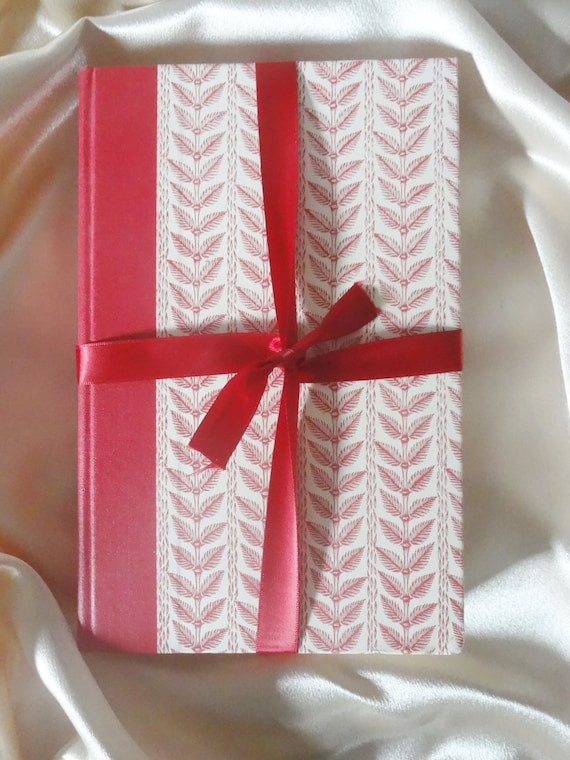
When starting this post, I was so excited to find an image of the edition of Pride and Prejudice that I have just finished.  You see, I was browsing one of my favourite second hand bookshops at the weekend when I came across a complete Folio Society set of Austens, all hardback and stunning and gorgeous, for an amazing price.  It was one of my best bookish finds in years, and I knew that as soon as I finished the book I was currently reading, I'd have to read an Austen. In the end, I chose Pride and Prejudice, it's a reread that's on my classics club list, and it felt fitting as it was my first Austen.

I'm sure that most people are familiar with the story of Elizabeth Bennet and her four sisters, who are unable to inherit their father's property and will therefore have to live in poverty unless they make sensible marriages.  But set against Elizabeth and her older sister Jane's chances are Mrs Bennet's lack of taste or social decorum, Mr Bennet's bluntness, and the silliness of their younger sister Lydia. Of course there are a lot of misunderstandings as Elizabeth navigates the marriage market, but in the end both she and her sister manage to marry for love, conveniently falling in love with men who have the fortune to support them.

Pride and Prejudice will always be a special book to me as it was the first Austen I was ever able to complete on my own.  My older sister was a huge Austen fan from her teens, and even studied her work at university, but I could just never get into any of her books.  I didn't understand the wit, the social commentary or the understatement of Austen's prose.  But finally (and only after watching the BBC mini-series), I was able to fully appreciate Pride and Prejudice and since then, I've not looked back.  The more Austen I read and re-read, the more I understand why she is as respected as she is.

On this read, I found myself thinking a lot about mistakes.  Both Jane and Lizzy make mistakes, Jane in thinking that Miss Bingley is a good friend, and Lizzy about the characters of Mr Darcy and Mr Wickham.  But both are honest about their mistakes and set about fixing them.  Although Lizzy in particular feels ashamed after discovering the truth, she is able to explain herself and move on. This is something I struggle with, as I tend to want to hide any mistakes I make and find it hard to forgive myself, let alone others.  Jane in particular was good at this - her kindness towards others was matched by her kindess towards herself, and this is something I can learn from.

Now that I have read more (but still not all) of Austen's major novels, Pride and Prejudice is no longer my favourite.  I prefer the flawed characters of Emma and particularly Catherine from Northanger Abbey.  But it's still a special book, one that I'm sure I will reread many times in the future, getting something new out of each read.


The Classics Club: Book 31/72
My list of titles and reviews can be found here.

Tuesday, 30 December 2014

Reading Journal #2: Race, Fairies and Epic Fantasy


With Tom on Christmas holidays for the past week and a bit, I've had more time to sink into some fantastic books.  Christmas makes me crave something magical from the fantasy genre, something full of wonder and delight and escapism.  One year I devoured the whole Inkheart series by Cornelia Funke, and it was just perfect for the season.

Aside from The Hobbit, which I have a full review of here, I also decided to pick up Jo Walton's Among Others this Christmas, which I've heard great things about.  It features one of the strongest protagonists I've come across in a long time, Morwenna Phelps, a fifteen year old girl in 1979 who has just run away from her mother, a dark witch, after the death of her twin.  She ends up at an English boarding school and the book is told in the form of a diary.  The real magic in Among Others is the way that Mori's love of reading is expressed.  Any book lover will relate to her descriptions of her feelings as she reads various books, and how books have become her solace in difficult times. When she has to be thankful for something as she prays, she is thankful for the interlibrary loan system.

I think Among Others would be even more special for someone who grew up reading science fiction.  I've read my fair share, but nowhere near as much as Mori, and I didn't catch all of the references.  But as a book lover, her enthusiasm got to me and I ended up writing a list of all the books she mentioned that I must get my hands on, Ursula Le Guin prominent among them (should I start with Earthsea?).  The main plot of the book follows Mori's attempts to use magic to stop her mother and her attempts to come to terms with the death of her sister, but the fantasy elements are written with a light touch.  In fact, I'm not even sure whether I believed Mori at all, or whether she just had an over-active imagination.  I treasured the book mostly as a coming of age story, in line with Dodie Smith's I Capture the Castle. Highly recommended.
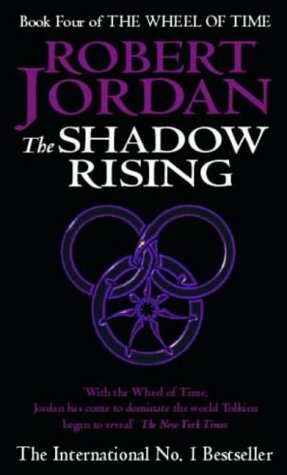
A lot of my December reading has been taken up with the fourth installment in Robert Jordan's epic Wheel of Time series, The Shadow Rising.  These are really immersive books and by now I know enough about the world and characters that reading them is just pure escapism.  As always, the writing was a bit meandering, and the way that the female characters are written leaves a lot to be desired, but I have so much fun reading them.  This volume was roughly 1000 pages, but it just flew by.  I loved visiting the Aiel Waste and finding out more about women who can channel (do magic) in the different societies of the world, and the varying ways they are treated.  I found the sections where Perrin returns to the Two Rivers, his homeland, to defend it rather boring, and I'm optimistic that he will feature less in the next volume, which I'm sure I will pick up before too long.

And now for something completely different - race relations in the Deep South.  Earlier in the month, I wrote a blog post about all the fantastic books on my kindle I have yet to get to, and Scottsboro got a lot of love in the comments.  And well deserved all of that love was.  It's based on the true case of a group of nine black boys arrested in Alabama in 1931, accused of raping two white girls, which they didn't.  One of the girls stubbornly sticks to her story, but the other keeps changing her statements, and it's soon clear to anyone with a brain that the boys are innocent.  But this is the Deep South in the 1930s, and the political powers in Alabama have no interest in freeing the boys - indeed, they think they have been remarkably fair by giving them a sham trial, rather than just lynching them on the spot.

The story is told mainly from the perspective of a female journalist from New York, who becomes part of the campaign to free the boys.  She is a great voice as she's remarkably perceptive on the subtle nuances of the different prejudices of those supporting and condemning the boys.  She points out that a lot of the support is for personal or political gain, observing that if the boys were to suddenly turn up in the middle of a New York party full of their 'friends', no one would know quite what to do with them.  We are also introduced to Ruby, one of the two girls who originally cried rape. Feldman deftly uses Ruby's poverty and life history to show why she lied, and why she would tell the truth.

In places, Scottsboro was a depressing read.  There's one point late in the novel where I had to set it aside for a minute, disgusted by the selfishness of humans in general, and how willing we as a society are to knowingly allow others to suffer for our gain.  Somehow, no one in this book is doing the right thing for the right motives, and it made for grim reading.  I take my hat off to Feldman's wonderful writing and perceptiveness, and this is surely an important book. I can't see I enjoyed all of it, but it had a powerful impact on me.

And that's my recent reading up to date.  At the moment, I'm in a bit of a classics mood, and I'm thinking of rereading Pride and Prejudice by Jane Austen over the next few days.  After that, I'm intending to look through my classics club list and pick a few more titles to immerse myself in. Happy reading in 2015!

Monday, 29 December 2014

Best of 2014: January - June

2014 was a reading year of two halves for me.  For the first six months, I was pregnant and this contributed to me reading so many books.  Especially towards the end of my pregnancy, I was so tired that I would literally come home from work, eat dinner, and then snuggle in bed with a book.  Reading was also a great companion during the first part of my maternity leave as I had a very late baby!  After Giles was born, I stopped reading for about a month, and then slowly started to fit it back into my life again. Now that he is six months and going to bed at a regular time, I have time for a bit of bedtime reading again, and it's been lovely to rediscover all of my books.

Here are my monthly top reads from January to June, with the rest of the year to follow at a later date.


January:

The World Until Yesterday by Jared Diamond
This is a really interesting non-fiction book about what we in the modern world can learn from traditional societies, and the way we lived for most of human history.  It covers child care, war, the elderly, health and religion and it made me think about the way I live my own life.


February:


Brave New World by Aldous Huxley
In a dystopian society, human emotion has been controlled so that no one suffers.  But is a life without experience, even negative experience and pain, worth living?  Does our emotional pain make us who we are?  I really enjoyed this classic sci-fi novel, as it combined really interesting concepts and stories with a fast moving plot.


March:


Kindred by Octavia Butler
Dana, a modern African American, is flung back through time to the slave-era South.  This is a really interesting look at slavery that doesn't shy away from complex situations and moral ambiguities,  I need to pick up more Butler in 2015.


April:


The Painted Veil by W. Somerset Maugham
Kitty must accompany her husband into a cholera-stricken area of China as punishment for having an affair.  All of the characters in this novel are immensely unlikeable, but the character growth and development is superb.


May:


We Need New Names by NoViolet Bulawayo
An unflinching look at the life of Darling, growing up in a shanty town in an unnamed African country.  She dreams of moving to America, but when she actually gets the opportunity, it's not all she thought it would be.  Darling is one of the best protagonists I've read all year.


June:


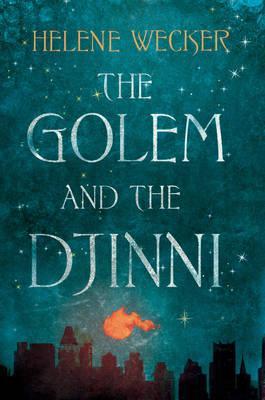
The Golem and the Djinni by Helene Wecker
I love stories that blend fantasy into the real world, and this one follows Chava, a golem made out of clay to be a bride, and Ahmad, a djinni accidentally released into nineteenth century New York.  This book is so atmospheric and magical, and I just adored it.

Have you read any of these books, or do you want to?
Also, if you've done a 'top reads of 2014' list, I'd love to hear about it!

Saturday, 27 December 2014

The Hobbit by J.R.R. Tolkein


I have a bit of a long history with The Hobbit. I tried (and failed) many times to read it as a child, but never got out of the Shire.  It was enough to make to decide that Tolkein was just not for me, but then I saw the Lord of the Rings films, loved the books on a second reading, and now I've come full circle and picked up The Hobbit again.  It's the story of Bilbo Baggins, a hobbit who accidentally gets caught up with a group of dwarves off to kill the dragon who is guarding the stolen treasure of their ancestors.  Along the way, Bilbo will learn a lot about himself.

The Hobbit was a surprising read for me, in that it didn't turn out in the way I expected it to at all. From the initial chapters, I had Thorin, the leader of the dwarves, pegged as the hero of the novel, and was imagining him smiting Smaug and generously sharing his treasure in the final chapters. But it wasn't like that at all, and the characterisations were surprisingly complex for a children's novel. Thorin is shown as brave, determined, and a good leader, but he is also greedy and blinded by his desire for Smaug's treasure.  Similarly, the Master of one of the towns is morally ambiguous too.

Really, The Hobbit is all about Bilbo.  Like most good children's books, it's main themes are centred around growing up and developing as a person.  Bilbo starts the novel as reluctant to leave his home, scared of the world around him, and overly dependent on Gandalf and the other dwarves. When Gandalf leaves the group around half-way through the story, Bilbo gets a chance to come into his own.  He starts making decisions, believing in himself, and in the end he emerges as one of the few characters untainted by greed for Smaug's treasure.  There are a lot of opportunities for him to learn to be resolute, and to never give up, even when the going gets tough.

The other main theme of the novel is money and greed.  We see good characters caught up in their desire to hoard the treasure, even when there is more than enough of it.  Thorin doesn't want to give any of it away, even though there is no way he could use or transport more than a small quantity of it. The Hobbit is very much focused on friendships, personal strength and doing the right thing, as opposed to acquiring money or possessions.  So it was perhaps a good read for the Christmas season!

I was surprised by how much I enjoyed The Hobbit, even more so than I did the  Lord of the Rings trilogy.  Perhaps because it is aimed at children, the adventure moves on at a brisk pace, and there is always something going on.  Highly recommended.

Source: Personal copy
Score: 4.5 out of 5


The Classics Club: Book 30/72
My list of titles and reviews can be found here.