Sunday, 6 April 2014

Sam Sunday #48: Looking Back on March


Friday was my last day at work before the two week Easter holidays, and I could not be more relieved.  It's starting to become difficult to get through the days at work now, so two weeks of rest is just what I need before going back for my final half-term. I'm currently seven months pregnant, so very much on the home run and starting to feel both excited that it's almost over and also scared that I'm actually going to have to give birth soon!

March was a great reading month.  Most evenings after work I was so tired that relaxing in bed with a book seemed like the perfect option. This has led to me getting through a lot of books, including some hefty chunksters.  I'm well ahead of pace for my goodreads goal of 80 books, and I'm sure that I'll get through a lot more books during my break from work, long may my reading mojo continue!

March reads:


I don't think I've ever read 9 books in one month before! (Links to my reviews)
  1. The Marriage Plot by Jeffrey Eugenides - Much more literary than Eugenides' previous books, a satire of the study of English literature and an examination of whether straightforward love stories have any place in the modern world.  4/5
  2. Their Eyes Were Watching God by Zora Neale Hurston - Powerful story of a black woman finding herself through three marriages and the hardships of life. 5/5
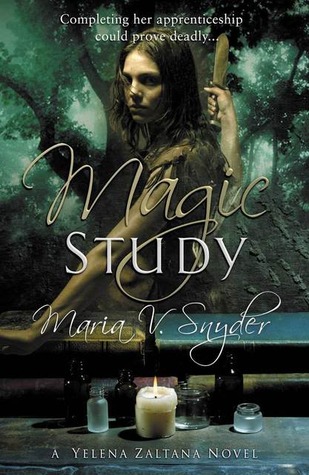
  3. Magic Study by Maria V Snyder - Disappointing sequel to Poison Study, best avoided. 2/5
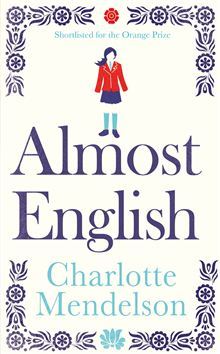
  4. Almost English by Charlotte Mendelson - Promising plot line about a young Czech girl seeking to become as British as possible by attending boarding school, but unfortunately the immigration theme was never fully explored and the execution was a bit of a let down. 3/5
  5. The Merry Wives of Windsor by William Shakespeare - Not my favourite Shakespeare, but a fun read, and I liked the portrayal of women.  4/5
  6. The Luminaries by Eleanor Catton - Every bit as impressive as it has been made out to be, a truly epic mystery set in gold rush New Zealand.  Don't let the length put you off. 4.5/5
  7. Kindred by Octavia Butler - A young black woman is transported back in time to the slavery era.  A really gritty read with no moral simplicities.  5/5
  8. Pregnancy for Modern Girls by Hollie Smith - I appreciated how straight-forward and plain-talking this pregnancy guide was. 3.5/5
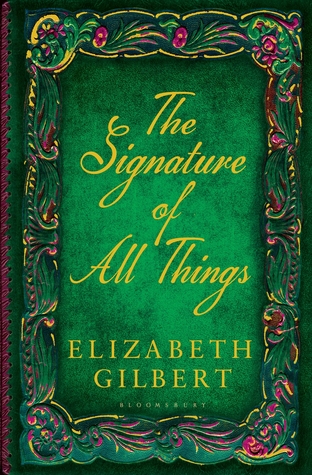
  9. The Signature of All Things by Elizabeth Gilbert - Panoramic of the nineteenth century, told through the eyes of botanist Alma Whittaker.  Lots of big themes. 4/5

Looking ahead to April, I'm going to continue to read according to my mood, and just pick up whatever I feel like reading.  I've got a few Baileys long-list books checked out from the library, and hopefully I'll make it through at least some of the those, but I'm not going to make myself pick up anything.  

How was your reading in March?  Any plans for April?

Saturday, 5 April 2014

Nefertiti by Michelle Moran


I was off sick from work one day last week, and I wanted something light and entertaining to read, that would absorb my attention as much as possible whilst I rested.  Nefertiti, historical fiction about one of Egypt's Queens, seemed to fit the bill.  Told through the eyes of her sister, Mutnodjmet, Nefertiti follows the Queen from the time of her marriage to Akhenaten, a controversial Pharaoh who renounced all of the old gods, taxed their temples heavily and insisted that everyone should worship the sun, Aten.  Akhenaten in the novel is driven, greedy and ambitious, a man who possibly murdered his older brother in order to secure the position of Pharaoh for himself.  In order to gain more power, Nefertiti must resort to playing her own games, setting different factions of the court against each other and treating her family as pawns.  As Mutnodjmet watches the lengths to which Nefertiti will go to carve out a place for herself, she becomes increasingly uncomfortable and yearns for a more simple, carefree life.  But will Nefertiti allow her to live her own life?

The quote on the front of my copy of Nefertiti states that it is 'compulsively readable', and I have to agree with that sentiment.  I powered through this novel in a day, and it was perfect reading for someone feeling under the weather.  There's not a lot of substance in Nefertiti, but there's a lot of plot and events move at a very quick pace, making the book hard to put down.  I have a feeling Moran might have been playing hard and loose with some historical facts, but she has created an extremely gripping, readable book that was a lot of fun to read.  I loved the Ancient Egyptian setting, and I enjoyed reading about the depths that Nefertiti would sink to in order to consolidate her power.

Whilst I definitely enjoyed Nefertiti, it has it's faults.  As I mentioned above, I'm not sure that the story is in keeping with what we know about Akhenaten and Nefertiti from history, and it's very much a light, scandalous type of story, in which some of the characters act like they are living in the modern day.  The descriptions of Egypt and the temples/culture were great, but it felt a bit like the main players were superimposed upon this background, rather than truly living in it.  To be honest, I normally prefer my historical fiction a bit more serious, a bit more of the time period, but this is such a fun book that it didn't really matter.  It's not one to pick up if you want historical accuracy and literary writing, but it is extremely entertaining, and sometimes that's all you want.

Source: Personal copy
First Published: 2007
Edition Read: Quercus, 2008
Score: 3 out of 5

Tuesday, 1 April 2014

The Signature of All Things by Elizabeth Gilbert


Alma Whittaker is born in the very first year of the nineteenth century, a time of great change as the world opens up and scientific discoveries abound.  Growing up in a family that encourages her to have an open mind and better herself through intellectual development, Alma devotes herself to botany and the study of mosses.  However, she is unprepared for society in general and her personal life suffers through comparison with her beautiful adopted sister, Prudence.  A panoramic of Alma's life and the nineteenth century in general, A Signature of All Things examines the difference between intellectual and personal fulfilment, and the contrasting roles of science and spirituality.

The Signature of All Things is a very difficult book to summarise as it's an ambitious, epic book.  Alma may be the centrepiece and the main story-teller, but the book is about big topics such as science, spirituality, marriage, missionaries, the abolition of slavery, the discovery of evolution and the role of women. Gilbert has certainly aimed high, and for the most part the novel is very successful.  None of the themes felt rammed down my throat at any point, and the panoramic view of Alma's times reminded me a bit of Dickens.  Gilbert does a great job at conjuring up the ethos and atmosphere of the times, when botany was truly an exciting career and it felt as though scientists were uncovering the mysteries of God.

Although Alma is an interesting and easy to relate to main character, I found myself most drawn to the story of her adopted sister, Prudence.  Despite being very intelligent herself, she isn't quite in Alma's league and so suffers in a different way to Alma.  I enjoyed reading about her becoming drawn to the abolitionist movement, and the waves in society she was prepared to make for her beliefs.  In a similar vein, I enjoyed the latter sections of the novel, when Alma journeyed to Tahiti and came into contact with a different way of life to her own.  I love that whole nineteenth century explorer theme in historical fiction, and the meeting of different cultures.

On the whole, I really enjoyed The Signature of All Things. It was one of the titles I was most excited to read from the Baileys long-list, as the theme of women scientists was always going to draw to me.  However, it's a hard book to review as I could pretty much sum up my views by simply typing "I liked this book."  There was nothing I disliked about it, but neither did it grab me and worm it's way into my heart as a favourite.  It's simply a very well written story about a topic that engages me, and I'm glad I spent several nights with it over the last week.

Source: Library
First Published: 2013
Score: 4 out of 5

Read Alongside:

Saturday, 29 March 2014

Recent Acquisitions

I've been quite busy on the book acquiring front lately, here's what I've picked up:

Books I Get To Keep:


Most of these were impulse buys from this morning.  I had a pretty tough week at work last week and could not resist the buy one, get one half price deals in Waterstones:
                                   
                                  
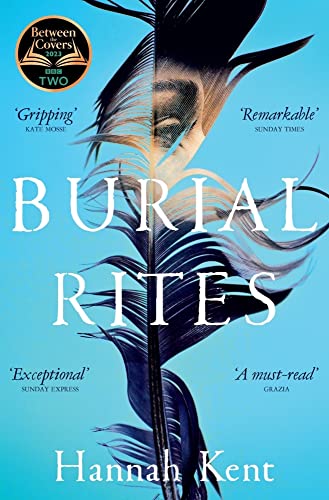
  • Burial Rites by Hannah Kent - This is one of the books on the Baileys long-list that I am the most keen to read.  I already had it reserved at the library, but couldn't resist this gorgeous paperback edition with black edged pages.  It's the story of the last woman to be executed in Iceland, and I can't wait to start it.
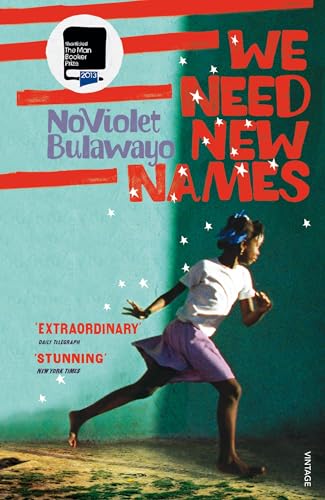
  • We Need New Names by NoViolet Bulawayo - I've wanted to read this one ever since it first came out.  Darling lives in a shanty-town in Zimbabwe and dreams of moving to America.  When she finally does, it isn't what she expected.
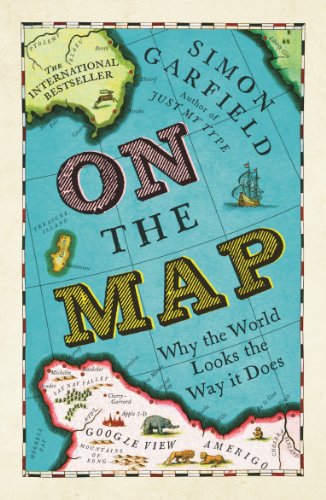
  • On the Map by Simon Garfield - I love a quirky non-fiction book, and this seems to fit the bill nicely.  It's a history of maps and how we have attempted to make sense of the world.
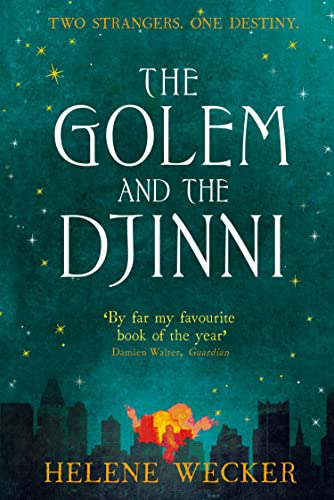
  • The Golem and the Djinni by Helene Wecker - Another book that has been on my wishlist for the longest time.  It's about two supernatural creatures in nineteenth century New York, and the back cover compares with Jonathan Strange & Mr Norrell.  This can only be a good thing!
Mixed in are some review copies:

                                              
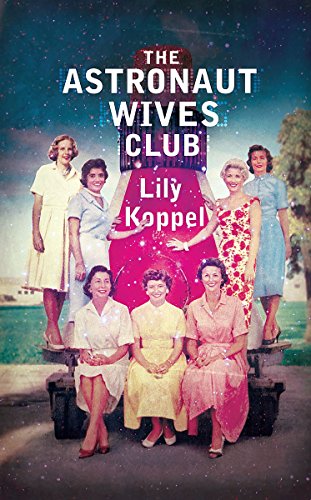
  • The Astronaut Wives Club by Lily Koppel - A non-fiction title about the women married to the famous American astronauts of the 1950s and 60s.  I've seen some great reviews of this one.
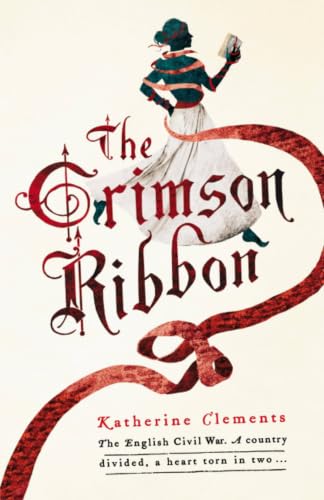
  • The Crimson Ribbon by Katherine Clements - Historical fiction set in the English Civil War.  This book promises to include Oliver Cromwell and witchcraft, so I am intrigued.
And finally, some random acquisitions:

                                             
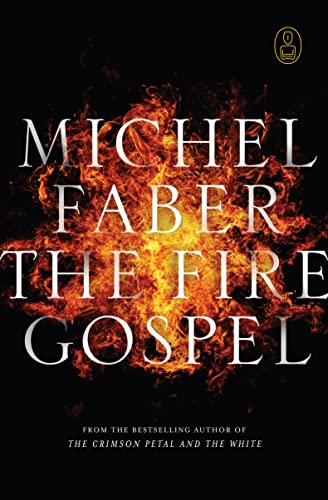
  • The Fire Gospel by Michel Faber - Picked up in a charity shop.  The Crimson Petal and the White is one of my favourite books, ever, so the author alone was enough to make me buy this one. The story is about the uncovering of a new gospel, and is from the Canongate Myth series.
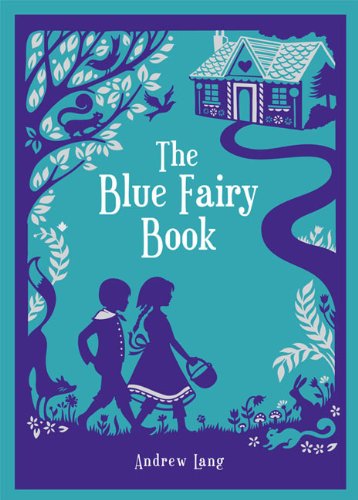
  • The Blue Fairy Book by Andrew Lang - Lovely hard-cover version found in Homesense, of all places.

Books I Have to Give Back (Library Books):

                             
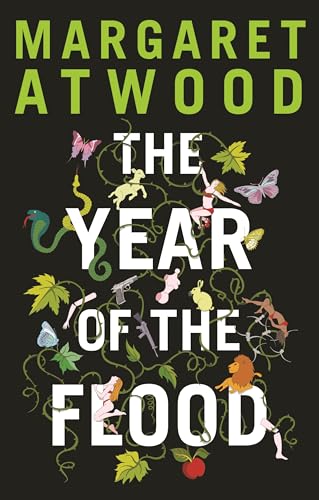
  • The Year of the Flood by Margaret Atwood - Borrowed so I can read Madaddam, which I own, and which is on the Baileys long-list.  I loved Oryx and Crake, so I have high hopes.
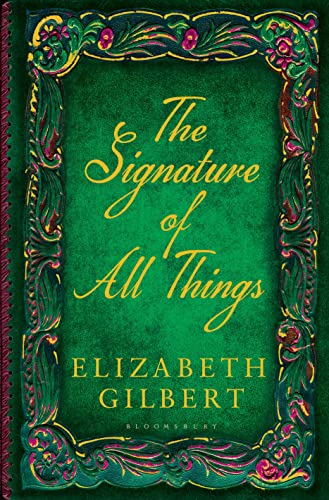
  • The Signature of All Things by Elizabeth Gilbert - Another Baileys book, and one I am currently half-way through.  It's a historical epic about a female botanist, and so far I am very much enjoying it.
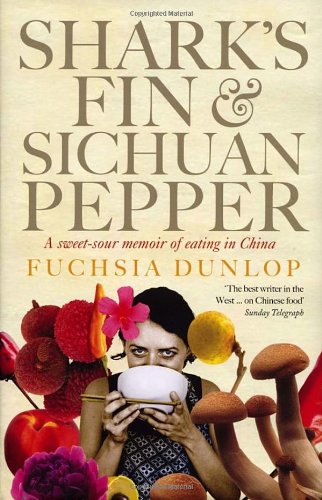
  • Shark's Fin & Sichuan Pepper - I love a foodie memoir, and this one about eating and living in China promises to be very interesting.
                                              
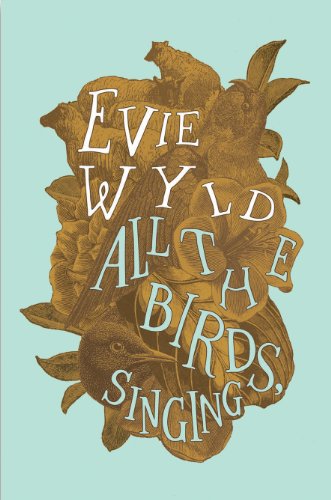
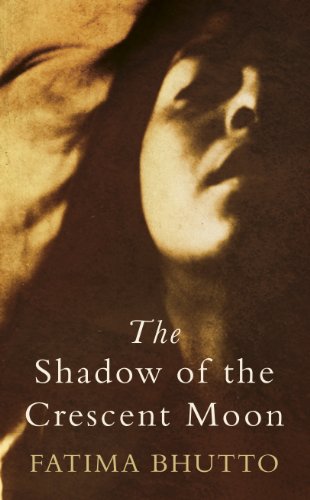
  • All the Birds, Singing by Evie Wyld and The Shadow of the Crescent Moon by Fatima Bhutto - Two more from the Baileys long-list.  I hope I get a chance to get to these titles, but they aren't the highest priority on my list.
Have you read any of these titles?  What did you make of them?


Wednesday, 26 March 2014

Kindred by Octavia Butler

"I never realised how easily people could be trained to accept slavery."

Dana is moving into a new apartment with her husband when she starts to feel dizzy and nauseous.  The next thing she knows, she is in nineteenth-century Maryland, rescuing a white boy who turns out to be her ancestor, as well as the son of a slave-owner.  Although her visit to the past is brief, Dana finds herself called back more often and for longer, and with each trip the danger intensifies.  For nineteenth century Maryland isn't a safe place for a black woman, especially one used to modern life.  But as Dana spends more time in the past, she feels herself changing as the reality of slavery wears her down, threatening the life she has built in the present.

I was expecting Kindred to be very good, as I've seen many positive reviews of it and know it to be highly regarded, but it went well beyond my expectations.  Kindred isn't just a good book, it's a truly excellent and thought provoking one.  Butler takes the simple premise of a black woman going back to the slavery era and fleshes her out by adding all of these extra dimensions and complications.  Dana has a white husband, and her ancestor is white.  Her relationship with Rufus, her ancestor, is complex, as she deplores the way slaves are treated on his property, but can't help but have a bond with him.  She finds her views changing with the reality of life for slaves, at one point advising others to keep their heads down, to not fight, despite this going against everything she believes in.  The fact that Kevin, her husband, also goes back in time at one point was also an interesting plot device, and one allowed their relationship to be explored fully.

What I loved most of all about Kindred is that Butler doesn't shy away from any of these complications. Of course slavery was wrong, but Butler really explores what it might have been like at the time, how reality and the choices of life were never simple for slaves.  We see why slaves might choose to be raped rather than run away, we witness their horrific punishments, and to a certain extent we get to see a modern woman conditioned to accept slavery through her experience in the society.  Rufus remains morally ambiguous, treating different slaves in different ways and being a realistic product of his time.  It would have been easy for Butler to demonise him, but she didn't.  Reading Kindred really made me think and reminded me that no issue is simple.  Slavery is rightly shown to be horrific, but gritty and complicated too.

As well as being thought provoking, Kindred is also a gripping read, with a fast paced plot that escalates quickly and builds up tension throughout.  I read it in just two days, which is unheard of at the moment!  It's a book I'd recommend to anyone, whether you are interested in sci-fi/time travel or not.  And I can't wait to pick up more of Butler's books in the future.

Source: From the publisher, in exchange for an honest review.
Publication Date: In this edition, March 2014
Score: 5 out of 5

Sunday, 23 March 2014

The Luminaries by Eleanor Catton


In 1866, Walter Moody arrives in New Zealand, hoping to find his fortune in the gold rush gripping the country.  Taking lodging at a hotel in Hokitika, he enters the bar only to have all conversations around him stop.  He has stumbled onto a meeting of twelve local men, who are discussing the strange events that have been happening recently.  A hermit has been found dead in his house, a prostitute has apparently tried to kill herself, a great fortune has been discovered and a prospector has gone missing.  As Walter listens to the stories, he finds himself drawn into the mystery.  What really happened, and how are the lives and fortunes of all the men intertwined?

I finished The Luminaries late last night and my honest first reaction was to be in complete awe of Catton's skill.  I don't think I've ever read a book as intricately plotted, with so many relationships between different characters.  There are at least sixteen main characters and much of the plot and mystery depends on how they relate to each other, and the things they tell each other, that the other characters aren't necessarily aware of. Not only does Catton manage to keep all of this straight in the mind of the reader, but she also manages to slowly reveal clues and subtly alter our perception of these relationships, to move the mystery on throughout the novel.  I can't even begin to imagine how you would go about planning a book as complex as this one, but I am suitably impressed.

I was also very impressed with the writing.  The Luminaries is a long book and it's not got the fastest of paces.  The writing is Victorian in style, and I found reading it to be a similar experience to reading a good Dickens novel, or like picking up Jonathan Strange and Mr Norrell.  The writing lets you really sink into the book and the world of nineteenth century New Zealand.  Which is a great place to be; I loved the frontier-like town of Hokitika with all of it's prostitutes, prospectors, illegitimate sons, plotting and gunfights.

So on an intellectual level, I was blown away by The Luminaries and can see why it was awarded the Booker Prize last year.  But books are about more than the skill involved in creating them, and thankfully The Luminaries had a good plot as well, with a story that kept me engaged.  Although I guessed some of the elements of the mystery, I enjoyed watching the whole thing unravel and just sped through the last two hundred pages, in order to find out what really happened.

If The Luminaries has a flaw, it is in characterisation.  I loved the more sinister characters in the novel, Lydia and Frank Carver, as well as the ambiguous character of Anna Wetherell, but some of the thirteen men felt a little flat.  I could relate to the Chinese characters because of the way their lives were written about in the book, but with some of the other men, Catton didn't give me any reason to feel attached to them or root for them, meaning that I sometimes felt a bit detached when reading the novel.  This stops me from giving The Luminaries 5 out of 5, but it's still one of the best, most impressive novels I've read in a long time.  I'll be extremely surprised if this one doesn't make the short-list for the Baileys Prize.

Source: Library
First Published: 2013
Baileys Longlist: Book 3/20
Score: 4.5 out of 5

Wednesday, 19 March 2014

Almost English by Charlotte Mendelson


From now on, you are going to be seeing a lot of reviews of books long-listed for the Baileys Women's Prize for Fiction.  Almost English, the story of a part Hungarian school-girl trying to find her place, is the second off the list I have read.  It's the story of Marina and her mother Laura, living in London with Marina's Hungarian relatives.  Her Dad, Peter, has vanished without a trace, leaving English Laura struggling to fit in with Hungarian family life and Marina just wanting to be normal.  Having decided that the best way to be properly English is to attend a prestigious boarding school, Marina moves to Combe Abbey, only to find that her romantic fantasies of the new person she would become there have little to do with reality.

I was really looking forward to Almost English.  Despite not being an immigrant myself, I am really attracted to stories about the immigrant experience as they appeal to something deep inside all of us, that need to fit in, to belong to something.  The blurb really plays up Marina's heritage and I was interested in the juxtaposition of Marina with her very British boarding school environment.  But Almost English isn't really about that.  It's really a story of emotional insecurity and distance, of a mother and daughter that torture themselves with anxiety but who are unable to reach out to each other.  And it was still a good story, but it wasn't the one I was expecting it to be.

The thing I most enjoyed about Almost English was the character of Marina herself.  I was a painfully awkward, anxious teenager (some days not much has improved!), and I really related to her constant indecision and worry.  Mendelson perfectly captures that teenage experience of feeling like everyone is watching you, that your every move will be criticised and judged by the silent hoards around you.  Combine that with an active imagination and you end up with Marina; someone who thinks herself in love with a boy that she has never even spoken to, who lies awake agonising over a throwaway comment and who attaches great importance to small events.  I could relate to her so well that reading the book wasn't always a comfortable experience!

Almost English was one of those books that had a lot of potential but ultimately didn't really go anywhere. The characterisation was excellent but the plot was a bit weak, with too many threads that either didn't tie together, or which felt contrived.  Marina's 'seduction' by her boyfriend's very-British father felt a bit plot-by-numbers, and Laura's anxiety was never fully resolved.  

Ultimately, Almost English failed to live up to my expectations. I needed a stronger plot and more overall direction.  I'll be surprised if it makes it on to the short-list.

Source: Library
First Published: 2013
Score: 3 out of 5