Thursday, 10 January 2013

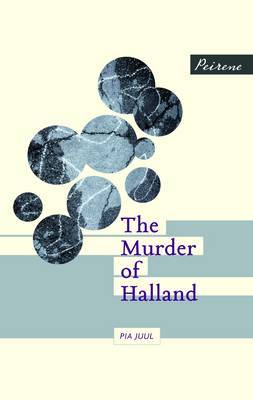
The Murder of Halland by Pia Juul


The Murder of Halland is novella eight out of the nine that Lyndsay from Tolstoy is my Cat and I are reading as part of our Peirene Press readathon, and part of the Small Epics series.  Bess is a writer living in a small, tight-knit community with her partner Halland.  One morning she is woken by the sound of a gunshot and soon receives the news that Halland has been murdered.  The police start to investigate whilst Bess starts to grieve.  Throughout the process, Bess starts to see her neighbours, friends and family in a different light, and faces up the consequences of the decisions she has made throughout her life.

I should start this review by confessing that I'm not a fan of crime/detective fiction.  I've read a few popular crime books and some Sherlock Holmes, but I just can't get into it.  I know I'm supposed to solve the puzzle of who committed the crime but that's not how I like to read.  Sure enough, whilst reading The Murder of Halland, I didn't spend any time trying to work out who murdered Halland and consequently later events were a surprise to me.  The crime aspect of the book was well written but didn't appeal to this particular reader.  I also can't judge how much it 'dismantles the rules of an entire genre' (quote from the back cover), as I'm not familiar enough with the genre to tell.

Luckily, The Murder of Halland is much more than crime-by-numbers, it's also about grief and coming to terms with the loss of a loved one.  Many of the sections dealing with this rang very true to my own experiences.  There's one chapter in the book where Bess is supposed to go to a library to give a talk (she's a writer) and checking her emails, she finds a confirmation.  In the space of a few short sentences she goes from almost flippancy ("should I create an auto-reply saying my husband had been murdered?") to despair;

"What had I written?  I didn't want to think about work.  Perhaps I would never want to think about writing again.  That belonged to the past and it didn't matter any longer."

Grief has been like that for me too; a roller-coaster of emotions and the constant worry of whether you are grieving properly or not, whether people will judge you for smiling or for leaving the house.  I think Juul's writing will relate to the experience of most people ("If normal everyday life had resumed, the washing needed attention.") and I connected well with Bess.

So a bit of a mixed bag.  The crime sections didn't appeal but the writing was simple and heart-felt, honest about the grieving process.  If you are a crime fan, you'll enjoy this book.

Source: From the publisher, in exchange for an honest review.
Published: 2012
Score: 3.5 out of 5

Monday, 7 January 2013

In Search of Dracula: The History of Dracula and Vampires


I received this book for Christmas, it's an updated version of one of the original books to delve into the life of the 'real' Dracula, Vlad the Impaler/Vlad Dracula, and to investigate the origin of Romanian folk-lore about vampires.  Regular readers of my blog will know that Dracula is one of my favourite books and that I'm fascinated with the vampire myth (though not the paranormal romance kind!).  As McNally and Florescu are both scholars who have travelled intensively in the Wallachia region and researched all over the world, I was excited to start reading this book.  As well as covering the life of Vlad Dracula, it looks at the origins of the myth and how the representation of Dracula on stage and screen has changed over time.

In Search of Dracula was concise, but packed full of interesting facts.  Although much of the information was already familiar to me, it was presented in an interesting way and there were some new facts.  I had no idea of the connections between Dracula and the Bathory family, and McNally and Florescu do a great job of portraying the context of Vlad Dracula's cruelty, while not excusing it.  Vlad Dracula was constantly fighting challengers to his power (sometimes from within his own family), as well as attempting to push back the Ottoman threat.  If you've never read anything about the historical Dracula, this book would be completely fascinating.   


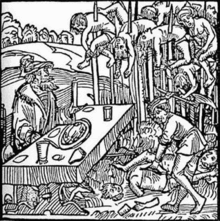
For me, the most interesting part was when the authors veered away from strict history and considered whether all the myths about Vlad Dracula could be true.  Did he really dine among a field of impaled humans, dipping his bread in their blood?  Translations of the original German anti-Dracula pamphets are included in the appendix and whilst they are grossly exaggerated, the authors conclude that the historical Dracula did probably commit some of the acts ascribed to him, those that he had the motive for.  Again, this part was morbidly fascinating to read.

The only place where the book fell down was in the later stages, where the authors moved on to considering how Bram Stoker's Dracula has been represented in film, and more broadly how books about vampires have changed over the time.  Although this had the potential to be interesting, in reality it was mainly a list of books/films with a brief description of each, which I admit to skipping over.

On the whole, this is a short but fascinating book about the life of the historical Dracula and the evolution of the vampire myth.  Fans of Elizabeth Kostova's The Historian will love it.

Source: Personal copy (Christmas gift)
First Published: 1972
Score: 4 out of 5

Read Alongside:
1. The Historian by Elizabeth Kostova - A scholar receives a mysterious book with a dragon inside it and his search for the origins of the book lead him through the history of the historical Dracula.  Gothic fiction.
2. From Demons to Dracula by Matthew Beresford - Non-fiction account of the history of vampires.
3. Vlad by C.C. Humphreys - Fictional retelling of the life of Vlad Dracula, as seen by his confessor and friend.  No vampires here.

Sunday, 6 January 2013

Classics Club Readathon - Ending Post


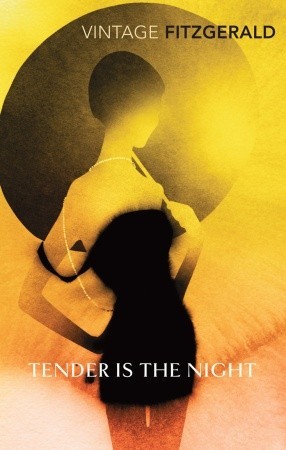
So my first ever readathon is now finished.  I managed to get a good chunk of reading done, although not quite as much as I had hoped.  I read about 260 pages of Tender is the Night yesterday and finished it off in bed this morning.  It was a very good book, but boy is it miserable.  When I read The Great Gatsby, I felt like there was emotional detachment all the way through, but that's not the case with Tender is the Night; there's so much raw pain in it's pages.  I'm glad that I read it, and reading it over the course of a day and a bit (normally it would take me about a week) enabled me to get right into the book and experience it more fully.  There'll be a review to follow in the next few days.

Closing questionnaire:
  1. What book(s) did you read during the event? Just Tender is the Night by F Scott FItzgerald. 
  2. What book(s) did you finish? Technically none, as I finished this morning (Jan 6th).
  3. What did you like about our event? I enjoyed visiting other blogs and finding some great new blogs to follow.  I loved the social aspect of reading together and being able to read guilt-free, putting everything else aside for the day.
  4. Do you have suggestions for future Readathons through The Classics Club? Maybe extend  the event over a whole weekend?
  5. Would you participate in future Readathons? Definitely!

Whilst I didn't quite reach my reading goals, I'm pleased with the amount of reading I managed.
How did you get on?

Saturday, 5 January 2013

Classics Club Readathon


The Classics Club readathon is here!  Even though it doesn't techincally start until 1pm GMT, I have decided to just read on the day, January 5th, rather than trying to follow American times.  I was all set to read Bonjour Tristesse, but then last night I was struck with an urge to read something 1930s and miserable.


Enter Tender is the Night by F. Scott Fitzgerald!  I read about fifty pages or so last night and so far I am enjoying it and already feel more of a connection to it than I did to The Great Gatsby.  The characters are all very rich, but aimless, bored and miserable.  Perfect for January.

I'm probably going to concentrate just on this book today, but if I need a break from it I might still pick up Bonjour Tristesse.  I'm also hoping to spend some time commenting on blogs and being social, as this is my first readathon.

Happy reading everyone!

Edited to add the classics club questionnaire:
  1. Name and Blog: I'm Sam (the female kind) and my blog is called Tiny Library.
  2. Snacks and Beverages of Choice: It's almost 2pm here, I've just had some homemade minestrone soup and croutons for lunch.  I plan to snack on Christmas chocolates throughout the afternoon (dairy milk, yum!) and then I'm visiting my parents for a chicken madras later on.  It's going to be a good food day!
  3. Where are you reading from today? My home, which is near London in the UK.  I'm moving between my sofa and comfy reading chair.
  4. What are your goals for the Readathon? Just to enjoy the day.  I go back to work on Monday so a lovely relaxing day reading is perfect preparation.
  5. What book(s) are you planning on reading? I'm reading 'Tender is the Night' by Fitzgerald.  If I finish that, I'll continue the French Riveria theme and pick up 'Bonjour Tristesse' by Francoise Sagan.
  6. Are you excited? Of course!

Friday, 4 January 2013

Upcoming Events

I don't tend to sign up for yearly reading challenges but what I have discovered over the last year or so is that it's much more fun to read cooperatively than alone.  In the spirit of reading togetherness, here are two reading events I'm taking part in soon:

1. Classics Club Readathon - 5th January 2013


Believe it or not, this will be my first ever readathon!  No way will I manage twenty-four hours (I love sleep too much), but my husband is out for most of the morning so I intend to get a good chunk of reading done then.  Unfortunately, I have packed most of my classics away for our upcoming house move, and War and Peace won't have arrived yet (see below), so I think I'm going to start with Bonjour Tristesse, as I have a copy of it to hand and it's nice and short, therefore satisfying for a readathon.  To be honest, I'll be pleased to finish just the one book but I might also root around and start something new.

Information and sign up: here


2. War and Peace Read-along - All Year


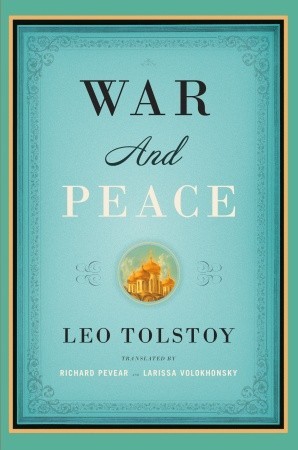
War and Peace isn't even on my classics club list, but I loved Anna Karenina so much that I've jumped at the chance to read War and Peace in a group.  Reading solo, it intimidates me but chunky books like this are so much easier when read with friends.  The schedule is quite relaxed and runs all year, so I should still have plenty of time to read other books alongside it. I've ordered the Peaver and Volokhonsky translation as I thoroughly enjoyed their translation of Anna K.  

Information and sign-up: here

I'm excited, lots of classics reading in the upcoming months!  At the moment, all I want to read is classics, fantasy epics and 1000+ page chunksters.

Thursday, 3 January 2013

The Brothers by Asko Sahlberg


The Brothers is the sixth book out of a total of nine that Lyndsay from Tolstoy is my Cat and I are reading as part of a read-along of novellas published by Peirene Press.  We've completed the Female Voices and Male Dilemmas series; The Brothers is the first in the series entitled Small Epics.  I've been looking forward to this series all along as I love epic fiction, although I'm more used to it in chunkster rather than novella form!

The Brothers is about Henrik and Erik, Finnish brothers in 1809 who fought on opposing sides of the war between Sweden and Russia, that made Finland a part of the Russian Empire.  Although they share blood, there has long been conflict between them, and when Henrik finally returns home, it's to a broken house full of people that hide secrets of their own.  In the wintery wilderness, Henrik and Erik must face up to each other and the revelations that are to come.

I enjoyed The Brothers, mainly for the atmosphere.  I read this novella in one go on New Year's Day, snuggled up in a blanket with the heating turned up.  So it was wonderful to read about the icy Finnish winter, the rugged Farmhand, the distant wife and the frozen rivers.  On the back cover, it states that The Brothers is a 'Shakespearean drama from icy Finland' and the atmosphere reminded me a cross between Hamlet and a Brothers Grimm fairy tale.  I wanted to dive right into this book, the setting was that vivid.

Despite the historical elements, The Brothers is mainly a story about what can happen to people when they live in isolation from larger communities.  Some of the drama and secrets centre around Erik's wife, Anna, but in a way that's inevitable as she's the only woman we read about existing in the community of what seems to be only two houses.  When you live so shut off, boundaries between relationships blur and people have to take on multiple roles in your life.  That said, I didn't guess the big reveal near the end (although there are plenty of smaller reveals along the way) and I loved that Sahlberg was able to surprise me.

Although I very much enjoyed this book, there was a distance from the characters that stopped me loving it. I don't mind less than perfect characters, so the flaws of Henrik didn't concern me, but it was written in a style that reflected the cold, icy Finnish winter.  Whilst I admired the writing, this technique also stopped me from connecting with any of the characters properly, and it was this that made me only like the book, rather than love it.  It is a wonderfully written book though, and well worth reading for the atmosphere alone.

Source: From the publisher, in exchange for an honest review.
Published: 2011
Score: 4 out of 5

Tuesday, 1 January 2013

Little Women by Louisa May Alcott


Back in September, I started a Little Women read-along hosted by Risa at Breadcrumb Reads (you can see my thoughts here and here).  It covered the first volume of the story Little Women but not the second part, which is sometimes known as Good Wives.  Indeed, growing up, I always knew the two parts as two separate novels but that isn't always the case and my Penguin Threads edition contains both.  So before the end of 2012, I decided to clear the reading decks by finishing the second half of the novel.  This review will cover the whole story but focus mainly on Good Wives.  There are spoilers ahead!

Good Wives opens three years after the events of Little Women, with the wedding of the oldest March sister Meg to John Brooke. It's a far more grown up story than the first, with all of the sisters reaching adulthood and trying to find their own way in the world.  Jo jumps at an opportunity to go to New York and pursue a career in writing, but is in for some hard knocks along the way.  Amy still wants to be a 'lady', but has learned to control her vanity and has to decide whether to marry purely for the money that the family needs.  Meg learns that being a wife and running a home can be a challenge and Beth is still the same kind soul she was from the first volume.

I first read Good Wives as a teenager, and I remember not being too impressed with it.  My young, romantic heart was very disappointed that Jo and Laurie didn't end up together and the concerns of the sisters didn't really relate to my own life.  But now, in my mid-twenties, the book makes a lot more sense.  Like the March girls, I grew up in a happy home with a sister I'm close to and growing up and away is both a lovely and sad experience.  I read that in the book too, the happiness to be achieving dreams and getting married but the sadness and nostalgia that things will never be the same again.  I've been married for eighteen months and I'm now an aunt, which is wonderful, but sometimes I miss being young and living at home with my Mum, Dad and sister.  There was a sense of that throughout the whole second half of the novel which spoke to me.  I completely missed the bitter-sweet tone of the story as a teenager.

Reading Good Wives, I feel justified in choosing Amy as my favourite of the March girls.  In Little Women she's always struggling to catch up with her older sisters but in Good Wives she has matured.  On this read, I could appreciate how well suited Amy and Laurie were, her calmness offsetting his hot-headedness.  Obviously this means my young, romantic heart has well and truly left the building!

Reading Little Women was like sitting down with old friends, the whole experience was very comforting.  I was thoroughly into the story and felt the emotions along with the sisters (especially when a certain tragic event takes place).  I'm glad I made the time to re-read this book.


Classics Club: Book 5/72 

Source: Personal copy
First Published: 1868
My Edition: Penguin Threads, 2012
Score: 5 out of 5